Long and short reads – a reading update for 2025

I consider myself ahead of the game on reading this year, having finished my 29th book of the year just the other day. It was Peter C. Newman’s “Caesars of the Wilderness”, the second volume of his three volume history of the Hudson’s Bay Company of Canada. As I’ve commented before, to read about the Hudson’s Bay Company is to read about Canada – although this volume ends with the effective end of the HBC’s tenure of the wilderness of North America, in the 1870’s. A third volume covers the modern history of Canada. One reads about brave men and women, one reads about heroes and drunkards, about martinets and missionaries, about visionary leaders and intransigent fools. Sometimes one finds that some of these different people are the same men. And I say “men” deliberately – only the womenfolk are consistent, not double-minded nor hypocritical. I can’t call the womenfolk and the native Americans “unsung” heroes, for Peter Newman deals with them as the important characters they are, but there are certainly still songs to sing, stories to tell, about their lives. The real hero of the book is the North American wilderness itself. One discovers interesting things along the way – part of the current border between the United States and Canada follows the original path trappers made through the wilderness between Lake Superior and the “Lake of the Woods”. There’s a part of the United States bordering Lake of the Woods, which is completely surrounded by Canada. The history and geopolitics of the Pacific coast of North America, the lands west of the Rockies – both north and south of the current border, might easily have been very different. There was and is nothing inevitable about the United States. It took me 124 days to read this book.

Another book that took me a long time to read this year was Stanislaw Lem’s “Fiasco”, which was recommended to me by the Economist. Stanislaw Lem was a Polish science-fiction writer. At one level his work is somewhat niche; but at another level, it is highly regarded and sought after. The George Clooney film “Solaris” is based on one of his stories. “Fiasco” is the story of what happens when humankind first encounters evidence of an intelligent alien species on a planet orbiting another star. It is a human story, with believable characters – the captain of a ship caught in a hard place and having to make terrible decisions; a Jesuit priest trying to mould ancient certainties to new realities; a man caught up and rescued at the moment of his death, finding himself unexpectedly playing a vital part. The story itself is perhaps an allegory of the old Cold War doctrine of “mutually assured destruction”. Only on the last page does the author reveal the utter alienness, the total strangeness, of the alien species – but by then of course, it is too late. It is a fiasco.

My third long read was also Eastern European fiction: Bulgarian writer Georgi Gospodinov has written a book called “Time Shelter”. It starts off all about “memory clinics” and safe places for persons suffering from senile dementia, but soon, the wider populace start to seek shelter in the past from the uncertainties and terrors of the modern era. Whole towns and countries embrace the past – particular decades or eras of lost greatness. Political parties form and reform, countries dissolve. Beautifully written, it began as a book that had much to say about managing memory loss and dementia, but ended as something much more disturbing. The stand-out phrase from the book is where a man arrived at a railway station in a central European town, “dressed as if he were a refugee from another time”.

The fourth would be Lord Moran’s biography of Churchill, “The Struggle for survival 1945-1960”. A very entertaining and informative insight into the post-1945 life of Churchill, from his summary ejection by the electorate in 1945, to his decline and fall into illness at the start of the 1960’s. Much may be learned about the 1950’s, about post-war England, about the politicians of the time. Oddly, not so much about Suez, the most important event of all those years. As that was the end of the Empire in effect, it is perhaps no surprise that neither Lord Moran nor Churchill would have been pleased to dwell on the matter. In the end, not so uplifting, but Churchill, as one of – perhaps the – central figure of 20th century history, is always worth studying.

Works I managed to get through rather more quickly, included Alison Weir’s “Lancaster and York”, readable historical account of the earlier part of the Wars of the Roses. On the fiction front I read Ursula Le Guin’s “Rocannon’s World” which was one of those books you finish, put down and gaze into the middle distance to think for a while –like a startling short story. Ursula Le Guin manages to create so much, as a story-teller, from so little. Two journeys, treks, or voyages of discovery at different times – one by a well-born young lady, the other, later, by the man Rocannon. A bildungsroman (building up story), as the Germans say, with a simple twist in the plot caused by the unforeseen effects of time dilation. I also read David Peace’s “The Damned United”. I’m not normally a football or a sport man. I’m certainly no fan of over-promoted cocky and arrogant men like Brian Clough, however able they might seem. You’d think a novel about such as he would not interest me. But I am from Derby: Brian Clough put Derby on the map when I was a boy, and I know people that were in the same class at school as his sons – he only lived a few miles from where I did. So, odd though it was, it was a worthwhile and exciting read.

Also I read Paul McAuley’s “Austral”, Gareth Powell’s “Embers of War” and John Christopher’s ancient “The world in winter”. I re-read a lot of Ian Fleming’s Bond stories. I read Nicholas Gould’s excellent little book on placenames, and Horatio Clare’s second work on seafarers “Icebreaker”. And that’s not all. But that’s all for now!

A review of “New Pompeii” by Daniel Godfrey

Recently I was discussing my writing and reading with a friend of mine, someone I consider wiser and more Godly than I. A man of few words, his sage remark summing up our conversation was, “read more fiction”. That night I ordered three books. The first was “North Woods” by Daniel Mason (short stories about New England, recommended by the Economist). The second was “Children of the dead end” by Patrick MacGill, which I was recommended to by visiting the town of Kinlochleven in the Highlands. This was an autobiographical novel of an Irish navvy and his journeyings in childhood from Donegal to being a “man of the road” in Edwardian Scotland. The third, was “New Pompeii“, a science-fiction thriller by Daniel Godfrey, again, recommended by the Economist. For those with a snobbish bent towards literary fiction, this is perhaps the least considerable of the three. But I read it first and I will review it first.

New Pompeii started slowly, but it built up in pace very well, and it ended very strongly. I have found in recent years that a lot of fiction, particularly science-fiction, tends to end weakly, as if the author ran out of steam towards the end. I was anticipating yet another weak ending here, and I was disappointed! The protagonist is called Nick Houghton. This, for obvious reasons, pleased me. This is the closest I’ve ever got to being in a book myself – although in Steven King’s “The Stand” there is a minor baddie called Carl HOUGH, and a major goodie called NICK Andros…

That said, this Nick Houghton I found unsympathetic; a little too prissy and sensitive for my tastes. He’s an academic with little consequent grounding in reality, a sufferer from migraines, a man very much in thrall to an overpowering father, also an academic. Nah – that ain’t me, that’s not my kind of guy. One might say of this character, “He’s definitely on the spectrum” – though of course, aren’t we all? Yet, I think it’s important in good fiction to have characters with flaws; better still if they are modern flaws, like suffering from migraines, like neuro-divergence, OCD or excessive risk aversion.

Notwithstanding this character who I found I would not like, and some early plot twists that caused my suspension of disbelief to shiver slightly like a Jenga tower towards the end of a game, the story developed well. If there was one grave flaw it was the baddies – the antagonists – were pantomime baddies, badly drawn men, somewhat unconvincing. Whelan. the former soldier, was the stock hard man, but neither convincingly evil nor convincingly redeemable. He was never frightening. McMahon his boss, was no more than just a cipher; a boor and indeed a bore, pasted into the role of CEO.

I found this book unputdownable – I read it through continuously in one go and I paid full price for it. I think that gives me the right to be critical. Serious questions arose in my mind about the siting of the city of New Pompeii – which cleverly, the author does not reveal. In practical terms, where could such a city be placed such that it would not be swiftly obvious to the Roman inhabitants that it was not Pompeii? It would have to be within a couple of degrees of latitude of southern Italy – otherwise after a few years the climate would soon betray its location. It could not be at an equivalent latitude in the southern hemisphere – that would become obvious on the very first night, from the different stars and constellations. There would have to be a “no-fly” zone round the city with a radius upwards of 30-40km – or the city situated where there was no possibility of overflight by commercial aircraft. Can’t have our Roman citizens wondering what contrails are.

The surprise is not that Whelan and NovusPart have underestimated their Roman captives, but that those captives remained quiescent for so long. The author’s characters did pick up on some things – the change in colour of carrots, and the change in the size of chickens – over 2000 years – but not others. I read once that Venus, the Morning Star, was visible in broad daylight until modern air pollution rendered it otherwise. It seems unlikely to me that no-one in New Pompeii would not have spotted artificial satellites rushing across the sky. Underlying this point about underestimating the people of the past is an important principle. What I call the “myth of continuous improvement” is at work. Today we often tend to assume that things have got better, that we are morally, intellectually and even physically superior to our forebears. The author brings home nicely the point that this is not necessarily so.

Overall though, this was a page-turner that showed and did not tell. It was a story concerned with people rather than with the enginery and natural philosophy associated with time travel, or with geomorphological and natural change over 2000 years. It is the people that are important, as indeed the protagonists themselves noted.

Reading in 2024

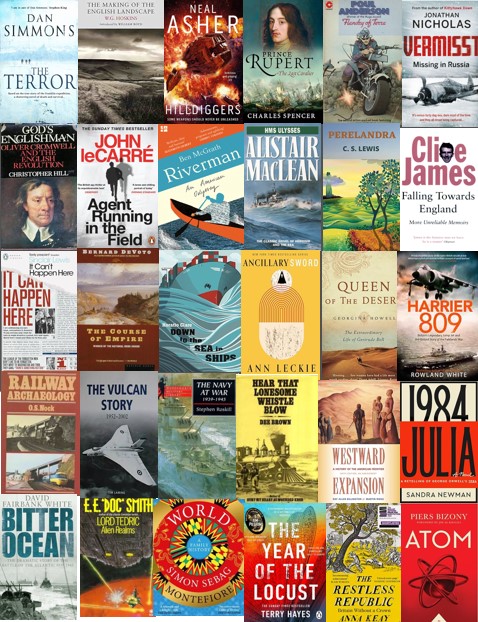
I have managed fifty books this year. That’s a result. Interestingly, the fiftieth book, Simon Sebag-Montefiore’s epic history of the world, took me more than a year – I started this work in December 2023. It was an excellent read, stretching my vocabulary in many respects. All the major swear words were present in plain text along with graphic sex and stomach-churning violence, but the “N word” was beyond him or his editors, which is an interesting comment on modern liberal social mores.

I started the year reading Dan Simmons’ gripping historical fantasy drama “The Terror” about the loss of the Franklin expedition in Arctic Canada. By complete contrast I very much enjoyed W.G Hoskins’s classic “The making of the English landscape”. I do tend to fall back on historical non-fiction, and a recommendation from earlier reading was Charles Spencer’s “The last Cavalier”, a biography of Charles I’s son Prince Rupert. This, in turn, led to something of a season of reading about 17th century England. I followed Prince Rupert in February with Christopher Hill’s biography of Cromwell – “God’s Englishman” and later, in December, by Anna Keay’s delightful “The Restless Republic”, which covered aspects of England in the republican years as seen through the lives of various protagonists. Fairfax the politician; John Bradshaw the lawyer; Marchamont Nedham the journalist; Lady Derby the royalist; Anna Trapnel the prophetess, amongst others. A brilliant and humane piece of work from which I learned much. Cromwell not quite the villain, nor the hero, he has been painted. Successive military coups, army juntas running the country…so much of our past is just not taught in school. At the time, George Monck, the general who engineered the return of King Charles II, wrote: “the army should serve the civilian government, not the reverse.” Amen!!

All of that reading on the 17th century, flowed from reading Peter Newman’s book on the Hudson’s Bay company, which in turn came from recommendations in Bernard de Voto, which in turn was recommended to me by Robert Kaplan. Recommendations are everything. Let your reading go where it will!

I read A. L Poole’s “From Domesday Book to Magna Carta”. Over months I worked my way through Geogina Howell’s biography of Gertrude Bell, the “Queen of the Desert”. My continued interest in American history saw me reading the final instalment of Bernard DeVoto’s masterly trilogy on the westward expansion in America: “The course of Empire”. Also, in that vein, Ray Allen Billington on “The Westward expansion in America”. Railways and America were combined in Dee Brown’s unsettling book on the displeasing and deeply venal American railroad barons, “Hear that lonesome whistle blow”. Also on railways I enjoyed the delightful and prolix O.S Nock on “Railway archaeology”. Very few people can write like that these days. I had a canter through the war at sea with David Fairbank-White’s “Bitter Ocean” and Roskill’s “The Navy at war: 1939-1945”. In that context I also re-read Alistair Maclean’s “HMS Ulysses”, and then I lent a copy of it to a close friend. A book perhaps to save for a time when your mental health is at it’s best. Not for the faint-hearted.  

I did some re-reading – it is always good to go over old ground. Old ground like Keith Laumer’s short stories, which I first read as a schoolboy in the mid 1970’s. One of them is “Special placement test” about the guy who can’t get a job in a massively overpopulated future America, and is faced with submitting himself for a lobotomy. How does he escape? It would make a great film. Or Frank Herbert’s “Hellstrom’s Hive” for which I would love to write a sequel. Also, in light of the new Dune films, I re-read “Dune” and “Dune Messiah”.

I started reading some of Neal Asher’s space operas, getting through three or four of them, but laid off them as they were quite hard on my mental health, being full of quite astonishing levels of violence and nastiness. I read – and this was a good deal more positive – Ursula K. Le Guin’s “The winds Twelve Quarters” and “The Compass Rose”, more encouraging and uplifting space opera set in her “Hainish” universe. Equally uplifting was Anne Leckie’s “Ancillary Sword” although the latter’s refusal to use male pronouns confused me somewhat. I suppose the point is, it doesn’t matter if you’re male or female. Except it does… Other sci-fi included work by Ken Macleod and Alistair Reynolds, and vintage pulp fiction by Poul Anderson (“Flandry of Terra” – “Bond, James Bond” out amongst the stars, written about the same time as Fleming was writing the 007 tales) and E.E Smith (“Lord Tedric: Alien Realms” – pure pulp read in less than a day). I re-read C.S Lewis’ epic “Perelandra”, something I try to do every few years. This retelling of the legend of the Fall, the story of the unfallen planet Venus threatened by evil – but delivered by the actions of one brave person – never fails to grip me. I found time for an “omnibus” trip to Darrowby, with James Herriot – leading my wife into a season of reading him as well. “Agent running in the field” and “A Legacy of spies” were my fix of John le Carre’s work for this year. Must have read most of his stuff by now? Also, Jonathan Nicholas’ “Vermisst” about a German WWII aviator lost in the Soviet Union. Also, two technical books on the Vulcan bomber, and a book by Raymond White on the use of Harriers in the Falklands War.

An outstanding read was Sandra Newman’s “Julia”, being the story of Winston Smith’s eponymous lover in Orwell’s 1984. Very graphic and quite violent in places, she manages to fill in some interesting social detail that would have quite eluded a man like George Orwell. Also, towards the end, she conveys some of the hope that is entirely absent in 1984. I gave the book to my daughter and sent a copy to one of my sisters, so impressed was I. In the context of dystopia I also read Sinclair Lewis’ “It can’t happen here”, a story of America under a dictatorship, written decades before Orwell wrote 1984, and eerily prophetic…I will say no more.

I enjoyed Ben McGrath’s very humane “Riverman”, an account of travels by canoe through the great rivers and backwaters of the continental United States – not really about rivers, but about people. Also about people but not really about ships or the sea, was Horatio Clare’s “Down to the sea in ships”. A man whose writing I love, but who I find can get a bit pompous, is Clive James. I read another of his now quite hard to find memoirs, “Falling towards England”. I can cope with someone with such a high opinion of himself as Clive James, only in small doses. I also read a couple of books on cosmology I’d been recommended to: Brian Clegg’s “The Quantum Age” and Piers Bizony’s “Atom”.

There’s more! The untimely death of Michael Mosley saw me reading my wife’s copy of his “Just one thing” – leading to a few small but positive changes to my lifestyle, which of course is all he would have wanted. Terry Haye, a respected screenwriter, wrote “I am Pilgrim”. His second book “The year of the locust” was not quite as good, and had an odd sci-fi component in the middle, but was eminently readable. I read Christopher Tolkien’s expansion of his late father’s mythos with “The fall of Gondolin”. I confess that the three or so different versions of this story now available do lead me to getting a little confused. Gondolin was a legendary city in Tolkien’s Middle Earth. The beautiful White City of Gondor, as seen in The Lord of the Rings, is held up as a pale reflection of Gondolin’s beauty. As with all of Tolkien, and indeed this is true to a degree of all great writing, the epic tale of the city’s fall is both just story, and yet also a profound lesson for all our lives.

“Civil War” – should stories make sense?

I’ll admit I was attracted to this film because Nick Offerman plays the President. As someone else said to me, if Nick Offerman is in it, it’s gotta be worth a watch! I write as an admirer, with tongue only partly in cheek, of Nick Offerman’s deadpan public servant Ron Swanson, in the old TV sitcom “Parks and Rec.

Nick Offerman’s POTUS appears on screen only in the very first and very last scenes of this film. SPOILER ALERT!! The film is set at the climax of a second American Civil War, a 14-month long insurgency by the so-called “Western Forces of California and Texas”. The film opens in New York City with a number of journalists seeking the ultimate interview, the ultimate photo. They decide to drive to Washington DC in search of this prize. This quest by a journalist for that last great photo, leading to a catastrophic road journey, reminded me of an old James Woods film, “Salvador”. In “Salvador” James Woods’ photographer travels to El Salvador and witnesses the murder of Archbishop Oscar Remero in 1980. A better film, if I may say so, then this one.

The first half of “Civil War” takes the form of a typical road movie – disparate and initially hostile characters bond together in fellowship during a long and arduous car journey. We see the war itself mainly in the dystopian landscape crossed by the journalists. A military chopper, crashed and burnt in the car park of a suburban mall, a “JC Penney” store prominent in the background. Freeways full of abandoned cars. Silent and eerie landscapes. The story-telling principle “Show not Tell” is taken to breaking point here with not even a glimmer of an explanation of what has happened. We see the flicker of munitions from the distant frontline. Madmen with guns – some in uniform, some not – commit atrocities. Although to be fair, that last sentence could quite easily describe the United States of America at any time.

Something I found jarring was the willingness of the photographers to document and witness, but not to intervene. It’s one thing to photograph a predator and its prey for a wildlife show, and not intervene, watching dispassionately as some poor furry creature is consumed. It is quite another to photograph the killing and death (or worse, in a nightmare sequence near the beginning clearly drawing on the photographers’ memory) of fellow human beings, and not intervene. What right do we have – though it may cost us our life – to not intervene? Of all the excuses there are in the world to walk by on the other side, I find the photo-journalists’ excuse – document but don’t intervene – one of the weakest.

The turning point of the film is a scene where one of the journalists saves the lives of the rest of them by mowing down armed men with a big SUV. My suspension of disbelief left the theatre at that point. For this scene to be even remotely convincing, the hero of the piece (who dies as a result of wounds sustained in the rescue) would have had to start and then drive the SUV a few hundred metres at high speed, without two armed soldiers hearing it – and this on a quiet summer’s day in an eerie, silent, war-torn landscape. Lazy writing is what it is. No matter: the scene is there only to facilitate a paradigm shift to the second phase of the film, where we do see actual war.

The journalists accompany the “Western Forces” into Washington DC; we find that the United States Army has without any explanation at all, mysteriously, suddenly and very conveniently given up. Unlikely as it may seem. The entire film (even if in principle a second American Civil War is possible) can be described with the words “unlikely as it may seem”. We see the taking of the White House, and the shooting dead of the President by common private soldiers of the “Western Forces”. These soldiers seem unconvincingly open, friendly and willing to engage with journalists, rather than just ignore them or shoot them on sight – as would be more likely in reality after 14 months of brutal civil war.

There are so many unanswered questions in this film. Why is Nick Offerman’s sitting President seen as the villain by the journalists? That makes no sense, even though he is transparently played as some form of Trump-like character. It’s almost as if the journalists – who would be liberal and almost certainly tribal Democrats, are sympathetic to the invasion of the USA by Texas, a secessionist state that would surely be Republican. The invasion makes no sense either. The entire war makes no sense. States (Texas and California) have seceded. If that actually happened, the reality is that (as with the original Civil War) the USA would have little choice but to invade those states to restore the status quo, not vice-versa.

Fortunately the film is not really about the geopolitical or military details of a second American Civil War, but about its effects on people, which of course, is much more important. If I am honest with myself, story has always inhabited a “post-truth world” and ignored inconvenient things like facts. It just annoys the inner geek within me. Overall, I found the first half watchable but jarring in places, I found the second half typical Hollywood flash-bang tosh – the battle, the chase, the adrenaline, taking priority over all. And I thought the music was great, particularly in the ending credits.

Some notes on the new “Dune” films

When the first new Dune film came out I never went to see it. I just wasn’t interested, even though I’m very familiar with the story. I’ve read the book often enough, and I was a fan of David Lynch’s 1984 film from before it was even released. I remember watching the trailers in the cinema with great anticipation. What is the story? At one level it is two great houses battling for supremacy in an empire in some star-flung future. It is literally space-opera. It would make a very good opera. At another level, it is an exploration of the relationship between science, technology, religion and politics. The original book, I very briefly review here: https://plateroom28.blog/2018/06/09/dune-by-frank-herbert/.

But in the end I was drawn to these two new Denis Villeneuve films. When the second one came out I came to the realisation that I would have to watch the first one before I watched the second. (Villeneuve has divided Frank Herbert’s original book, which David Lynch made into one very long film in 1984, into two films). I rather suspect Villeneuve has a series of more than two films in mind, for the second film ended almost literally on a cliff-hanger, or at least on the edge of a sand dune.

Speaking of both films now as one: I found both very atmospheric, with cinematography and special effects obviously forty years in advance of the state of the art in 1984. One of the problems I have with modern sci-fi films is that they are so very often a triumph of special effects over plot and story. Others must be the judge of that in the case of Dune: I am too intimately familiar with the original story-as-written, to be an objective judge. But the effects and the atmosphere were stunning.

The plot and screenplay of the first film is almost but not quite the same as David Lynch’s film. Denis Villeneuve differs at the beginning – whereas David Lynch begins with meeting of the Guild Navigator with the Emperor, in Villeneuve’s first film the Emperor is always a sinister effect, never seen, frequently referred to. The Guild of Navigators, fundamental though they are to the original story, are as good as irrelevant, and are not mentioned at all in the second film. Many of the scenes and set pieces are the same – and comforting and familiar thereby. The Emperor, played by Christopher Walken, only appears in the second film.

The dark stars of Villeneuve’s films are the Bene Gesserit sisterhood, who emerge from the films as behind the scenes manipulators of Emperors and great houses, twisters of the truth, spreading religion and lies for their own ends. And indeed, that is more or less the case in the original story.

We see the same characters. Gurney Halleck – which is better, Patrick Stewart (long before Jean-Luc Picard) in the 1984 film, or Josh Brolin? Duke Leto is brilliant in the new film, if a little overplayed a little too conscientious and self-important. The sinister cleaning lady “the Shaddap Mapes” again, pretty much the same in 1984 as today. Duncan Idaho. Dr Yueh. A particular shout-out to Javier Bardem who plays the Fremen leader Stilgar brilliantly – although Stilgar is let down to a degree, as we shall see later. An inspiring move was to cast the Imperial ecologist Dr Liet Kynes not (as in the book) as a rather high-handed white man of a certain age, but as a female of Afro-Caribbean heritage.

Rabban, the Harkonnen enforcer, even LOOKS like he did in the 1984 film. A flaw of the 1984 film was to pitch the House Harkonnen as pantomime baddies. There is none of that here. There is the same dark, weird, Lovecraftian menace, but without the unredeeming vice of out-of-place pantomime humour. One area completely missed in the Lynch film is the gladiator scene on Geidi Prime, where Baron Harkonnen attempts to have his nephew Feyd Rautha Harkonnen assassinated. In the second film, we see that scene played straight from the book, including the mysterious and Machiavellian Lady Fenring seducing the young na-Baron. Although her husband, the equally Machiavellian Count Fenring, is written out. Feyd Rautha himself I thought was excellent, if only a little over-played by Austin Butler as a rather cliched psychopath. But the bar was very low: Sting played him in the 1984 film as a spoilt and petulant buffoon.

All the set-piece scenes are broadly the same in both films; the newer films have time to treat them in more luxurious style, using time and thundering music to create atmosphere. The first film was never boring; I found the second film overlong and it only kept my attention because of my familiarity with the story. The music, though loud, did not really get into its stride, except for moments towards the end of the first film. The music to the 1984 film remains superb to this day and in my view has not dated, which is more than you can say for the rest of it.

Paul Atriedes, the fifteen year old boy: Kyle Maclachlan in the original film, conveys Paul as a much older, more mature man. I was going to make some comments about how young the Lady Jessica (played by Rebecca Ferguson) looks in the new film (compared to Francesca Annis on the 1984 film) but then I looked it up and found that Rebecca Ferguson is quite old enough to have a 15 year old son! One thing I am liking, is the story arc in Paul’s personality, as seen in his face, his mien, his character. We see him hardening from a Duke’s son, to a bereaved youth becoming the Duke himself, and onwards toward the lonely and unwanted destiny of becoming Paul Muad’Dhib. However, towards the end of the second film, we see the mystical, the spiritual, abandoned, and Paul Muad’Dhib morphing slowly into a demagogue and dictator. It will be interesting to see how the screen-writers handle the story from here on in. I will now have to go and re-read Dune Messiah, a book I have not read since my teens. Or perhaps I needn’t bother, as they may just make up the story as they go along.

If I were to criticise the second film, it would be in the way the scriptwriter and director have made a rather coarse over-simplification of the difference between the secular and religious positions. There is even one little bit lifted straight out of Monty Python’s Life of Brian. See my comment above on the unredeeming vice of out-of-place humour. They have drawn a clear line between the ostensibly rational and secular on the one hand (represented by Paul Muad’Dhib’s lover Chani, played with a face like thunder for the latter third of the second film) and fundamentalism and religion on the other (represented by Stilgar, whose noble character in the book is badly let down and maligned in this second film). No such line between the rational and the religious exists. Not in the real world, nor in the fictional universe of the book created by Frank Herbert. It’s all a bit more complex and nuanced than that. Whilst it is understandable, given the times we live in, for people of a certain education and background to effectively dismiss religion as bad, it doesn’t mean it actually is. I found this aspect of the film rather put me off and left a bad taste in the mouth. All that said, if I’m honest, it was a worthwhile reading of the underlying philosophical tension in the story, even though it displeased me and I disagreed with it.

Another criticism I might raise, would be in the inconsistent use of weapons: Frank Herbert quite deliberately restricted the technology in his Dune universe – his soldiers fought with point and edge, not with projectile weapons, and only rarely with what we used to call “ray guns”. Yet we see the use of projectile weapons – machine guns – and laser-like “ray guns” of one kind or another, as and when it suits the film-makers’ needs for a dramatic battle scene.

As someone who is quite literally an aficionado of the original book, I have to dig deep not to find fault with this sort of film adaptation. Yet – adapt, the screenwriter and director must. We can’t slavishly copy something from the past, particularly as it was written to address ideas at a certain time and place, ideas which are only partly timeless. Overall, good entertainment, good cinema, with plenty of room for bar-room discussion and disagreement.

Reading in 2023

This year we’ve been a little busier, perhaps. “The judges’s scores are in”, as they say on Strictly; I have read fewer books in 2023 than I did in 2022. At the start of this year I was reading two books. One was Nick Hayes’ excellent and inspiring “The Book of Trespass”, an ostensibly scurrilous and subversive work about the countryside and how much if it is not accessible because of the draconian property laws in England. The fact that it is in print at all, and was widely and positively reviewed by various national newspapers representing the Establishment (whatever you conceive that to be) indicates that it is perhaps not quite as subversive as some readers might like to think. The other was “Life in the Far West” by G. F Ruxton. I am a student of the westward expansion of Europeans into the north American continent, and this book is a 19th century travelogue of an Englishman who travelled extensively in the lands that became the western United States.

My wife bought me a copy of W. Heaton Cooper’s “Lakeland Portraits”, completing my set of W. Heaton Cooper’s books. I love his paintings. His writing is delightful, spare and concise, as it must be from someone brought up in more spacious times than ours. There was a time when learning to write good English still mattered in schools. I’m no conservative when I say that that time is long past. To be fair this is not the best of his books – for that I’d look at “The Tarns of Lakeland”.

As noted elsewhere on this blog – reviewed here – I found Alexander Maitland’s “The Life of Wilfred Thesiger” very readable in February. At this point my wife and I moved to the edge of the Peak District. Visiting the local library saw me reading Mark Patterson’s “Roman Derbyshire”, Catherine James “Derbyshire – where writers walked” and Stephen Bailey’s excellent “The old roads of Derbyshire”. Local knowledge – every time. I followed these with Lewis Dartnell’s “Origins” about the origin of humankind, and Ryzard Kapucinsky’s work about travels in Africa, “The Shadow of the sun”. Very entertaining. Of Addis Ababa, he writes, “Bullets were the most valuable commodity in that market place, even more valuable than dollars.” He writes about the fundamental differences in the understanding of time, between Africans and westerners. Years ago working in Nigeria, someone once told me “there is no word in any Nigerian language that conveys the urgency of the Spanish word “Manana“... I also read Kapucinsky’s “The Emperor”, a very informative and warts-and-all account of the reign and fall of the otherwise pretty much untouchable Haile Selassie. Everyone has feet of clay, particularly despots and military dictators.

I had a bumper year indulging my interest in the history of the westward expansion of the United States. I started with two works on the Lewis and Clark Expedition. Bernard de Voto’s eponymous history of that trip, and “These tremendous mountains” by David Freeman Hawke. I went on to read “Wondrous times on the frontier” by Dee Brown, which covered aspects of social history overlooked elsewhere – saloons and bars, what people wore, what they had for supper etc. Later on in the year I read the second book of Bernard de Voto’s three-part series on the westward expansion, “Across the wide Missouri”. This deals solely with the fur trade, with beaver trappers – the “mountain men” of legend. Also I found time for biographies of Kit Carson – “Kit Carson: A Pattern for Heroes” by Thelma Guild and Harvey Lewis Carter, and “Daniel Boone: The Long Hunter” by Lawrence Elliot. Finally, Alan Taylor’s “American Colonies”, another book that is part of a well-received trilogy of historical textbooks.

Janusz Bardach’s “Man is wolf to man”, recommended by Jacek Hugo-Bader, was quite a difficult read. Well written – just rather hard on the mental health to read of such terrible goings on. Another book difficult for similar reasons was my first Neal Asher sci-fi novel, “The voyage of the Sable Keech”. Asher is a prolific science-fiction writer and this work has immortals, viruses, some very dangerous animals, and is full of violence. Nearly as violent as Richard Morgan’s “Altered Carbon” trilogy about Takeshi Kovacs, and that’s saying something! I found Neal Asher’s crab-like aliens, the Prador, with their taste for eating living humans, particularly unpleasant. 

I read an obscure work called “Earthbound Astronauts” by Beirne Lay Jr. This was a singing of the praises of all the engineers, scientists and so forth that helped to build the Saturn V rocket that put man on the moon in 1969. Max Hastings’ account of Operation “Overlord – the story of the Normandy landings” came in August. I review elsewhere Peter C. Newman’s book “The company of Adventurers”, being the early history of the Hudson’s Bay Company (still extant in Canada today as a minor department store chain) from even before its inception, through, if not to the present, then certainly well into the late 19th century.

Then there was a clump of railway reading – the every delightful prose of O.S Nock (see above on the writers of old having such delicacy and skill in written English) firstly “British Locomotives of the 20th C, volume 3” and secondly, a really good historical read, “Steam Locomotive”. This book highlights the fact that we’ve had trains in the UK for nearly two hundred years. Christian Woolmar, a worthy successor to O.S Nock in my view, wrote “Broken rails” about how and why the privatisation of British Rail under the Major government was such a disaster. His work on the London underground, “The subterranean railway”, was also instructive. In all that reading one became aware that the heyday of the railway in Britain was not “before Beeching”, but before the Great War – the railways were at the best in Edwardian England and have been in decline ever since. Other rail-related reading included several of Brian Radford’s works including “Midland through the Peak”.

Stephen Alford’s “The Watchers” about spying in Elizabethan England, went down well, as did Monty Don’s autobiography “Down to earth”. John Lydon’s “Anger is an energy” is reviewed here.

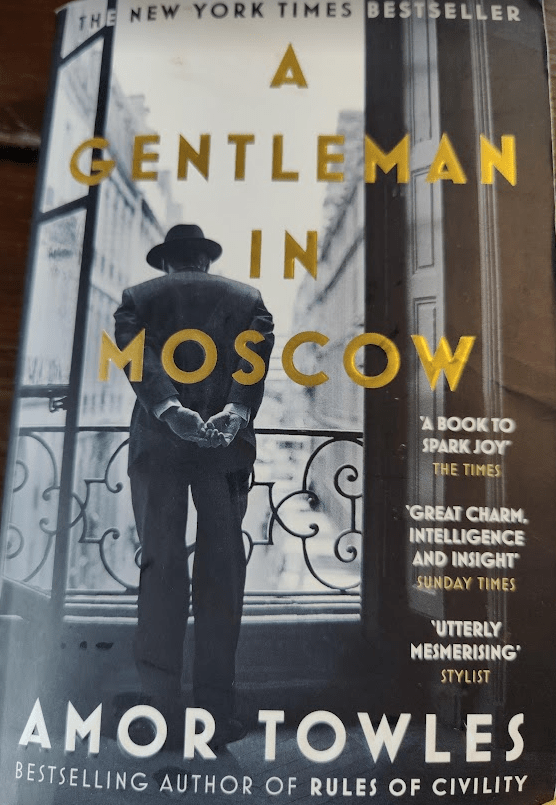
Fiction? I also found time for some re-reads; Heinlein’s “Glory Road” – always a pleasure, Richard Morgan’s violent “Broken Angels”, my very favourite book, Tolkien’s “The Silmarillion”, and Iain M. Banks’ “Surface Detail”. New reading included Le Carre’s “Silverview”, Erin Morgenstern’s “The Starless Sea” and Adrian Tchaikovsky’s “Children of ruin” – all mentioned here. I read my friend Mrs Ruth D’Alessandro’s second very engaging historical police procedural “Calling Detective Crockford”, being a fictionalised account of her mother’s work as the the first female detective in Berkshire. Amor Towles’ top work on the aristocrat in the hotel in Moscow – “A gentleman in Moscow” – is reviewed here.

Also amongst that lot, a short and informative popular science book on graphene, “The graphene revolution” by Brian Clegg. A textbook “Do safety differently” on human and organisational performance (a new way forward in safety) by gurus Sidney Dekker and Todd Conklin. I finished the year with Peter Fleming’s rather weak and largely cribbed account of the never-was Operation Sealion, the German invasion of England in 1940. His other writing is excellent: this is is poor and though interesting and informative in places, it is not his best work.

Thoughts on some recently read fiction

Looking back across the last twenty books I have read, I find that most of them were non-fiction. I need to make the effort to read more fiction, but I find there is a greater risk with fiction, of a book proving to be unreadable – as we shall see shortly. Life is too short to read unreadable books.

I read John le Carre’s “Silverview“. I very much like Le Carre’s later work, and even his early Cold War stories are worth re-reading, though the politics and drama therein, if not the writing, have not aged well. A time will come when I have read all his books. “Silverview” has a few odd hostages to fortune. This one, I understand, was published posthumously and is effectively therefore, his last work. In “Silverview” the chief character is an English book-shop owner in his thirties, who does not recognise spoken Polish when he hears it, and who has ostensibly never heard of Noam Chomsky. I think it is impossible for a well-read and well-educated man of good family with a liberal arts background (as Le Carre’s characters always are) not to have heard of Noam Chomsky (say what you like about his politics and I won’t, here…) or to not be able to recognise spoken Polish. Notwithstanding all that, a very readable story.

I read “The Starless Sea” by Erin Morgenstern. I was drawn to the spine when I saw it in the shop. Then, reading the blurb, I was drawn in further still – and hooked. It was the phrase “labyrinth hidden far beneath the surface of the earth” that got me. Anything like that, I will read. I still occasionally re-read Jeff Long’s “The Descent” and “Deeper”, both deep horror thrillers about immense caves and strange lands far underground. Morgenstern has written something cross-genre. There’s aspects of fantasy – magic and weird immortal god-like characters. There’s also a thriller in there – the hero is running for his life throughout, chased by very modern and secular forces seeking to end his life. Very readable.

Then I read Adrian Tchaikovsky’s “Children of Ruin“. This is the second novel in a series about mankind’s future out amongst the stars. It stuck in my mind because some of the problems in the story relate to language and translation. Not merely translating between different written scripts or alphabets: how do entirely different species communicate? How do humans, with good eyesight and hearing, communicate with intelligent spiders who cannot hear at all at human frequencies, but whose language is based on vibrations in their webs? And how do those two species, working together, communicate with squid – intelligent cephalods who cannot hear and use no writing at all? These space-faring squid communicate entirely through colour – nuanced and delicate splashes and blotches of colour. This reminded me of China Mievelle’s story “Embassytown” which also deals with the deep concepts of translation that go beyond mere written text.

Then I read my first novel by Neal Asher, “The voyage of the Sable Keech”. Asher is a prolific science-fiction writer and I have been seeing his work on the shelves for years. For some reason I have never pulled one off the shelf to buy and read. This one was effectively drawn at random from his extensive catalogue. Again, authors and publishers would do well to note the importance of the blurb on the back. That’s what sold me…ancient hive mind…virus…new drone shell…Asher’s work has immortals, viruses, some very dangerous animals, and is full of violence. Nearly as violent as Richard Morgan’s “Altered Carbon” trilogy about Takeshi Kovacs, and that’s saying something! I found Neal Asher’s crab-like aliens, the Prador, particularly unpleasant. But nevertheless, a great read by someone who surely knows about the craft of story-telling. I’ll be reading more of his work, and trying to learn from his technique.

Finally, I tried and failed to read Ben Bova’s “Mercury“. Bova strikes me as being of the first generation of science-fiction authors (that of the early-mid 20th century), yet somehow crossing over into the second generation. One cannot be sure if he writes hard science-fiction (following the physics) or soft (what used to be called “space opera”). Writing in 2005 though, he is spot-on and prophetic about the effects of climate change. I found his characterisation not even good enough to be called two-dimensional. His heroes and anti-heroes were wooden and unconvincing. I love nuance – you’ll find none in a Ben Bova novel. I finally put it aside after growing cross at his “New Morality” priests. It’s fair enough to be an ardent atheist and to allow dislike of religion or even Christianity to creep into the text, but characters, even baddies, or even priests, need to be convincing. Pantomime baddies belong in the pantomine: my suspension of disbelief fell off. TL;DR.

A full review of all my reading of 2023, will be forthcoming shortly!

A review of “Anger is an energy” by John Lydon

Foo Fighters front-man Dave Grohl has written a book called “The Storyteller”. I received it for Christmas a year or so back. It was liberally dotted with swearing from the very first page. Now I’m not against swearing in writing or in speech if it is used very sparingly, but this was too much. I gave the book away. John Lydon starts his book with rock’n’roll star swearing from the very first page, but there’s a difference. I guess he has something that Dave Grohl lacks: charm (unlikely enough, given the photo below). John Lydon captured my attention immediately.

I’ve always liked the idea of John Lydon, though I confess I never listened to the Sex Pistols at the time, and not a lot since. His second band Public Image Limited (apart from “Rise”) passed me by completely. But he always always struck me as someone who would say and do anything. Someone who had something to say.

This was entertaining and readable from the get-go. You turn each page and expect something dreadful to happen on the next page…and it does. Lydon’s use of vernacular grammar in writing – the “back in them days it were different ” kind of thing, I found made him more accessible. I did not find such affectation at all pretentious. Others possibly may not agree.

All that said, it only took me about 150 pages before I realised that the author is full of s**t from start to finish, and as big a bullsh*t merchant as the next rock star, or the next person. He’s as hypocritical and as self-important as any pompous High Court judge, bien-pensant BBC news presenter, MP or any other Establishment figure. The story remains engaging – to that extent it is a nuanced story. It is a story I enjoyed reading, for I am a hypocrite myself.

Lydon is an un-English, southern Irish kind of hypocrite; for all his bombast about speaking the truth and calling things out as they were, he knew when to speak up, and he knew when to keep quiet – when under arrest, that is.

I like his politics; he is scathing of the middle-class public-school educated Marxism of Joe Strummer of The Clash. I’ll listen to the politics of almost anyone who is scathing about the malevolent silliness of Marxism. Almost anyone.

For all that I found this account more interesting and better as it unwound through Lydon’s life, I found him to be just another rock star saying “we wanna be different”. Some might argue that he was the first such; others might say there were many before him right back to Mick Jagger and even before that.

My response to this work was nuanced; I didn’t need to read much of it to discern that (paraphrasing Francis Rossi of Status Quo talking about the entire music industry): “95% of this is bullshit….and you know what, the other 5% is bullshit as well”. This book was about the life and work of someone who I found personally inspiring, and if not actually likeable, then admirable.

A review of “Company of Adventurers” by Peter C. Newman

Here is adventure indeed. Here is what used to be called a “boys own” account of derring-do in the Arctic wilderness. This excellent work covers the early history of the Hudson’s Bay Company (still extant in Canada today as a minor department store chain) from even before its inception, through, if not to the present, then certainly well into the late 19th century.

To a degree, the story of the Hudson’s Bay Company is the story of Canada, and the author, the occasionally sharp and acerbic Peter C. Newman, is nothing if not a Canadian patriot. The story of the HBC is also the story of winter, of the Arctic, of the very concept of “the North”. It is the story of the wild north woods and the ice-fringed Arctic sea.

I was pointed in the direction of this work by reading Bernard de Voto’s history of the “mountain men” engaged in the American beaver fur trade in the wilderness west of the Missouri – “Beyond the wide Missouri“. Newman does spend some time comparing and contrasting what happened in the lands further south that eventually formed the United States, with what happened in the northern part of the North American continent, the lands which (Alaska excluded) ultimately became Canada. They are very different stories. In the lands that formed the USA, Newman opines, there was a social contract; in Canada – allegiance (to the British Crown). In the thirteen colonies that became the USA, there was revolutionary will; in Canada – tradition. The Americans enshrined in their constitution, “life, liberty and the pursuit of happiness“. The Canadians valued “peace, order and good government“. In the mostly temperate lands that became the USA, what mattered was individual excellence. In the harsher climate of the Canadian Arctic, what mattered was collective survival. I shall make no public comment on which of these may or may not better.

These differences highlighted by the author do point up the cultural and social differences between Canada and the USA right down to the present day. To me, they also show that the history of the American continent could have been very different. There was nothing inevitable or permanent about the British Empire; there was and indeed is, nothing inevitable or everlasting about the United States.

Where Newman really excels – and this is why I love reading history – is in his looking in between the lines of history, his going off at a tangent, and visiting the less-travelled by-ways of the past. Here is a book two inches thick on Canada and the Hudson’s Bay Company, and there is page after page describing that European aristocrat and warrior Prince Rupert of the Rhine, nephew of the English King Charles I, and notable cavalry general of the English Civil War. I think this form of digression is great: it is found in full measure in the work of the greatest historians. Read Halberstam’s “The Coldest Winter” about the Korean War, and you will learn much about Franklin Roosevelt’s presidency and his early life, and about how the Republican Party has got into the trouble it remains in right up to this day.

Another area I enjoyed is Newman’s dealing with explorer-heroes. Or maybe that ought be hero explorers? He is most helpful in laying out the exploits of a long line of incredibly tough and stalwart adventurers pressing into the Arctic tundra. (Note: I use the word “incredible” in the most literal sense here rather than the modern overused nonsense – that is, to me, it is barely credible that those guys could have been that tough!!)

He covers well the laissez-faire economics of the Hudson’s Bay Company, particularly in the time of the reticent Sir Bibye Lake, and the fundamentally commercial rather than political or cultural purpose of the HBC. This company was not at all the same as the East India Company, although it existed in parallel with the East India Company, and was arguably in some senses similar.

Towards the end, we read the story of the lost Franklin Expedition and of the unravelling of that mystery by the supremely capable but very conceited John Rae. Rae hinted – indeed, as good as proved, that the men of the lost expedition had resorted to cannibalism, but the culture and mores of the British Empire at that time did not permit the idea that British White Men would eat each other in extremis. Rae himself put himself outside the pale of the Establishment of the time by suggesting such things. It would have been quite natural and understandable in the west at that time, far easier for the British public, any public, to feel that the Franklin Expedition had perished at the hands of some terrible cannibal Arctic tribe – Newman notes that the press of that time found the “spectre of an Arctic tribe of man-eaters irresistible“. As a reader of macabre horror, I start to more easily realise how and why writers such as Edgar Allen Poe and even the later H.P Lovecraft, had such a fear of the Arctic and such an inappropriate negative attitude to the Esquimaux.

Reading this, I’ve learned a lot: about Canada, about the Orcadians (the men of the Orkneys whom the HBC hired to do much of the initial work), and about the politics and economics of Stuart and Georgian times. The Orcadians came out to the Hudson Bay and were probably better fed and clothed than they would have been at home in Kirkwall at that time – and they could come back home, if they survived a five year hitch, to five years’ unspent wages! Always interesting to read about prices and profits: some of the initial exploration was conducted by a ketch called “Nonsuch”. It was bought by the Company in 1669 for £290, and sold after the voyage for £125. The Company spent £650 on trade goods outbound, and sold the furs and other cargo after the return voyage, for £1379. And after all that, still made a loss!! But, it was worthwhile “proof of concept” that the Hudson’s Bay Company could trade successfully in the Canadian Arctic. The financial backers, we read, “were pleased” with these figures. It’s a shame that many people look down their noses today at entrepreneurs who have the same energetic attitude to commercial and technical risk.

A review of “A gentleman in Moscow” by Amor Towles

This book landed in my post box as a birthday gift from one of my sisters. She knows me too well, perhaps. I have a stack of books waiting to be read that is literally, and not metaphorically, longer than my arm. If I read through them all religiously, one by one, that would be all my reading for the rest of this year and much of next year too. Fortunately though, I’m not obsessive about the order books are read in. Any book, landing on my desk, coming into my hands, or coming to my attention, can come “straight in at No. 1” and jump to the head of the queue. Also – a habit that may not be so common – I can and do read many books at once (not literally at once…I mean that at any one moment I am part way through anything up to a half-dozen different books, and can pick any of them up and continue where I left off before. That’s possible because of one of the most noble inventions mankind has ever created: I speak of course, of the bookmark. Less fortunate (or perhaps saner) people read books serially, one at a time, as if they were TV programmes or films.

In this delightful and beautifully written story, we read of a man who spends the balance of his life stuck in the Metropol Hotel in Moscow. That is the story: an aristocratic individual, the gentleman of the title, is condemned by the very early Bolsheviks, in the years following the Russian Revolution of 1917, to a life of house arrest in the Metropol Hotel. Unlikely as it may seem…

It is to say the least, a somewhat far-fetched premise, something of a whimsy or a fantasy, but as a plot device it allows the author to describe the life of a big city grand hotel under the Soviets. Our hero, a man in his twenties at the start, remains in the hotel until his sixties. In that time, a number of adventures come his way. His moustache is cut off by an angry Bolshevik in the barbers. He meets and forms a most unusual relationship with a little girl of 10 or so, who – again how far-fetched is this – gifts him with a master key for every door in the building. A good deal more believable are is his on-and-off afternoon liaisons with a beautiful female movie star, his relationship with other members of the hotel staff, and his decades-long relationship with a senior official of the regime who wants to learn from him, over monthly dinners, about how the west works.

Far be it from me to poke holes in a good story – and it is a good story, by the way – but I can do no other. How on earth does a man stay fit and trim stuck indoors for life, yet still eating two or three square meals a day, with alcoholic drinks? Every day. Even six flights of stairs twice a day aren’t going to be enough there. I know a little about climbing stairs every day, and I know quite a lot about calories.

All the aspects of the story combine to make him a kind of invincible superhero: he has looks and charm as an aristocrat. He clearly has money though who pays for four decades worth of staying in a hotel – even in a tiny garret up in the rafters – is never made clear. He never gets poorly, and deeply unconvincingly, the Great Terror of the 1930’s passes him by. I write this because one of the other books I am reading at present is “Man is wolf to man” by Janusz Bardach (co-written with Kathleen Gleeson) about life in the Soviet prison system. I had to put it down as it was affecting my mental health, so violent and unpleasant was the world described by Janusz Bardach. And then I read this novel about a perfumed aristocrat in a Moscow hotel!

The author has therefore, written an exceptionally pleasant and readable novel about manners and human relationships, and set it right in the middle of one of the most unpleasant and horrible periods of human history – a time when (certainly in Russia) individual humans counted for little or nothing. I’m hoping that the author does not harbour fond feelings for the Soviet system, for the communist era and for the whole tissue of malevolent silliness that is Marxism. As he’s a Yale man (not a recommendation in the view of some authors I think highly of) this may be a vain hope. Soon enough I will know, for his work was sufficiently entertaining for me to look out for his other books and read them too.

A review of “The life of Wilfred Thesiger” by Alexander Maitland

On Wilfred Thesiger

Sir Wilfred Thesiger – that well-born “leather-faced explorer” of the twentieth century – has long been a character with whom I’ve been fascinated. Really, ever since I read his remarkable book “Arabian Sands“. My wife bought me this one, thinking I’d like it, although it was on my shelf for some months before I picked it up and read it. I thought – I’ve already read his autobiography “The Life of my choice“. Why do I need to read a biography as well? But I did.

Alexander Maitland, though clearly Thesiger’s close friend and his appointed biographer, does not shrink from writing things that may not be so positive; he does not shrink from saying what needs to be said. He spends quite some effort pointing out subtle and not-so-subtle omissions in Thesiger’s autobiography, aspects of Thesiger’s character that the man himself might have been tempted to gloss over. Yet, Maitland as a biographer is never less than sympathetic. This is no hostile biography.

He writes early on of “paradoxical aspects of Thesiger’s character and temperament…he was a maze of contradictions” and was his own worst enemy. Like the desert Bedu he so admired, he could be a man of extremes. “He could be affectionate and loving, yet he was capable of spontaneous, bitter hatred. He was either very cautious or wildly generous with his money and possessions; he was normally fussy and meticulous, but he could be astonishingly careless and foolishly improvident. He relished gossip, yet was uncompromisingly discreet. His touching kindness contrasted with sometimes appalling cruelty”. And “His vices were fewer, less extreme, and yet more conspicuous than his many virtues.”

Makes me think of the rather entertaining concept of “redeeming vices” – an expression used of Bill Clinton by his biographer. Thesiger once wrote, I recall, of a relative of his who was something of a gambler and a rake, yet married to an uncompromisingly upright and God-fearing battle-axe, that this male relative – not his poor wife – must have been “excellent company”.

Thesiger was well-born, at least by my standards and understanding. His uncle was Lord Chelmsford, one of the last Viceroys of India. He inherited from Lady Chelmsford, sufficient wealth, at least on paper, not to have to work for a living. In that respect he was perhaps a gentleman in the older and strictly literal meaning of the word. As regards him – or any of us – being a gentleman in the more modern sense of being honest, upright and kind, a story he tells against himself, recounted here by Maitland, is instructive.

On a time, he was out in the desert with two Bedu companions, weeks from shelter, carrying for food only water, flour and a handful of dates and some coffee beans. One of his Bedu companions caught a rabbit and prepared it for the pot. As it was cooking, all of them were drooling, ready for rabbit stew after weeks without a good meal. And just as it was cooked, some other Bedu arrived. After the proper greetings were exchanged, the Bedu tribesmen then offered this rabbit to their guests, and it was duly accepted, leaving Thesiger and his travelling companions with nothing. Thesiger wrote in “Arabian Sands” something to the effect that it was at that point he started to learn what true nobility, true hospitality, true generosity, really was.

We see under Maitland’s kind eye, Thesiger’s life progressing from boy in Ethiopia, to young man at Eton and then in the Sudan, to the mature explorer of Arabia he became and for which he is chiefly remembered. We see his very close relationship with his mother, and his domination of younger men around him – Maitland calls him a “gang leader”. We see how he struggled to write, and worked very hard indeed to prepare “Arabian Sands”. He was a prolific photographer and learned much from the great pioneer female desert explorer Freya Stark. He opposed modern progress and machinery, yet discreetly espoused its use when it suited him. In spite of his desire to see the ancient culture of the Arabian desert preserved, one might hold him partly responsible for its destruction. With the best will in the world, he must bear some of the responsibility for the (admittedly inevitable) opening of the Rub’ al Khali (Empty Quarter) to subsequent oil exploration (something I do know a bit about as my first employer was one of those corporations that conducted seismic survey oil exploration in the Oman and elsewhere in the Arabian desert.)

He was very wealthy; he was a scion of the privileged English upper class, and he had an unreconstructed, deeply conservative (and possibly offensive by modern standards) attitude to many aspects of life – for example, to hunting and animals, to relations between men and women, and to technology and machines. Yet, he was perhaps a listener to, and understander of, ordinary people, and he made lasting contributions to tribal life in many places. He was a decorated and notable warrior as well a great explorer and man of letters, a brave adventurer whose explorations still inspire people today.

Fifty-one in 22 – reading this year

At the start of 2022 I was reading a dense tome called “Railroaded – transcontinentals and the making of modern America” which was all about the development of the railroads, the growth of monopoly capitalism, and the effect this has had on American culture. I had to skip whole chapters; it was fascinating – but alas, rather intermittently and unreliably so. I was at the same time re-acquainting myself with the pulp science-fiction of Philip Jose Farmer (his “World of Tiers” series), and Sven Hassel’s “Monte Cassino“, a story of the second world war in Italy as seen from the German perspective.

In January I read Simon Sebag Montefiore’s historical novel “Red Sky at noon” about – cough – war in the Ukraine. Reviewed here. His novel opened “The red earth was already baking and the sun was just rising when they mounted their horses and rode across the grasslands towards a horizon that was on fire“. What an opening! I read Tim Marshall’s “The Power of Geography“, a weaker book, perhaps than his earlier outstanding “Prisoners of Geography”.

In February I finished another historical tome, Ray Allen Billington’s “Westward Expansion – a history of the American frontier”, which I’d recommend to anyone interested in this topic, an abiding fascination of mine. This book covers the whole, from the early Spanish incursions to the closing of the frontier at the end of the nineteenth century. Also in February I found time to read William Gibson’s “Agency” – one of his stories involving computer-generated “stubs” of a somehow alternate past rather like the recently filmed “The Peripheral” which I read years ago and am watching now.

In March I found myself enjoying John Julius Norwich’s history of “France” (how many of us in England know anything other than the very basic facts about that country?) and also military historian John Keegan’s “History of warfare“. I was then a little ambivalent about the highly recommended “Humankind – a hopeful history” by the Dutch philosopher Rutger Bregman. Very readable and informative but not a book whose conclusions I could whole-heartedly agree with – a bit like the work of Yuval Noah Harari in this respect. It’s not all about nodding sagely in agreement, nor all putting the book down in frowning consternation.

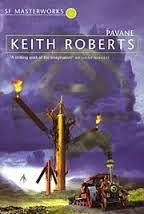
A short interlude in May saw me reading a book called “How steam locomotives really work“. I’ve still got that one – not given it away. It’s a gem in that it conveys an understanding of a very complex and difficult technical subject without resorting to advanced mathematics. In May I read the first novel of a friend of ours, Mrs Ruth D’Alessandro’s “Calling WPC Crockford“, an engaging memoir of rural policing in the 1950’s. We eagerly await both a sequel and watchable early Sunday evening TV adaptions thereof. Keith Robert’s “Pavane” – reviewed here – I had never heard of, despite its publication as an “SF Masterwork”. I thought I know my SF – but perhaps not? A pavane is a kind of Latin dance. This Pavane is a remarkable alternative history, a work of writing craftsmanship, a finely shaped bow or arc of story from beginning to end.

In June I read another sci-fi classic, Doris Lessing’s “Shikasta“. Shikasta is our earth, as seen from the viewpoint of those who try to settle it from afar. Like much great work by her and other female science-fiction writers such as Ursula le Guin, there are much deeper ideas at play here: this is not guns and heroes space-opera. A key idea explored in Shikasta is the importance of collectivism and community. At the far extremity of her argument in this direction, we see the idea that individualism itself could actually be a form of mental illness. You may be sure I don’t agree with that.

I was Between East and West – that is, touring in Eastern Europe – with Anne Applebaum, and then, I travelled from Portugal to India with Roger Crowley for an eye-opening account of “how Portugal forged the first global empire”. Remarkable to read what happened when men from Portugal – a primitive and feudal middle-ages culture – arrived at length in the Indian Ocean. They entered a sea of traders, free markets, and if by no means a democracy, then certainly, a functioning multi-cultural melting pot. The Portuguese, possessed as they were of vastly superior military technology but a much weaker moral and cultural understanding, swept the lot away and as good as destroyed everything they touched. There is a lesson there for us all.

Christopher Hibbert has published a life of Admiral Lord “Nelson – a personal history“. Nelson was a flawed man and not quite the untouchable English hero we see on the plinth in Trafalgar Square. I read the journal of Osborne Russell, a nineteenth century trapper: “nine years in the Rocky mountains“. I waded through Frank Snepp’s “Decent Interval“, about the Vietnam War. Upsetting. It put me in mind of a character created by the writer Richard Morgan who said “Anyone who still loves his country just hasn’t read enough history books yet”. Never a truer word wrote in fiction…

As summer turned to Autumn I had another good read on an upsetting and blood-soaked topic, “Partition” by Barney Spunner-White. This came about following a re-read of Kipling’s “Kim” and then a canter through Kipling’s short autobiography “Something of myself“. From upsetting and blood-soaked, to the engaging writing of Andrew Marr’s “The making of modern Britain”. Then, back to Norman times for “The White Ship” by Charles Spencer, being a history of pre-Plantagenet England, based loosely around the foundering of the aforementioned ship at Barfleur in 1120. Only two people survived. The king’s son and heir to the throne, William the Conqueror’s grandson, was drowned. This tragedy precipitated decades of bitter and bloody civil war.

Becky Chambers’ gentle and uplifting “social” science fiction “A closed and common orbit” tells the story of a woman – herself rescued from destruction as a child – who befriends and helps another woman. With Becky Chambers work it’s all in the emotional back-story: two plots move towards one another, only combining in the final pages. M John Harrison provided “You should come with me now“, being a collection of rather odd but compelling short stories about ghosts. Deeply strange, and rather reminiscent of the work of China Mieville. In the autumn, I re-engaged with the local library after many years away, and I borrowed and read “Thin Air” by Richard Morgan. You’ve read one Richard Morgan sci-fi/detective novel, you’ve read ’em all… Unremitting, gory violence. A bad tempered and ill-mannered former enforcer hero. Market forces gone mad. Explicit sex. All the usual Morgan tropes. Somehow unputdownable. More? Yes: Adam Robert’s “Bete” – another bad-tempered and irascible hero in a world where animals can talk – and do. Also, Sylvain Nouvel’s “Sleeping Giants“, a novel in the form of a series of interviews with a never-named representative of a shadowy and all-powerful government agency.

Moving back to non-fiction to finish, Jorge Cham wrote “We have no idea“, being a jocular, cartoony, sub-Bill Bryson account of how little science the human race actually knows. Refreshing reading, as I finished the year with Steven Weinberg’s (again highly recommended) “The first three minutes” about the birth of the universe. I thought it would be good; though he had a few good phrases, overall I was disappointed. I suppose cosmology IS complicated – see my comments above about advanced mathematics. I read Christian Woolmar’s “Cathedrals of Steam” about London’s great railway termini, which was a great account though it dwell on how things might have been better organised. I found Theodore Dalrymple’s anecdotes from the under-class (“Life at the bottom“) the more depressing for it being over twenty years old and knowing that little if anything has improved in that time.

Fifty-one books. Around a fifth of them, were re-reading. Only two-thirds I read in paper copy – the rest were on a Kindle. This year, a little over half of my reading was pure fiction. I re-read some old favourites: “The Lord of the Rings“, Heinlein’s “The cat who walks through walls“, and Stephen Baxter’s “Moonseed” and “Ark” to mention a handful. I finish the year deep in Nick Hayes’ “The Book of Trespass” which is troubling but exciting reading.

A review of Pavane, by Keith Roberts

A review of Pavane, by Keith Roberts

This is one of the “SF Masterworks” series which has re-issued, over the decades, some absolutely classic titles. Some of them are well-known to me; others, like this one, I had never heard of. You can see the list yourself here. I’ve read 21 of the 73 titles in the softcover list. It is necessarily some editor’s subjective choice, and there is a tendency for Philip K. Dick to appear rather too often in my view.

But this is about Pavane. A pavane, we read, is a kind of Latin dance. This is important. Roberts has written a work with six “measures”; six long chapters, each of them meaningful, each of them drawing us onto an inevitable conclusion. We start in the late 1960’s, and we finish sometime near the end of the 20th century, describing the growth of, the antecedents of, a very English revolution. A humble engine-driver at the beginning, further on has become a rich business man. His niece becomes the mother of a firebrand aristocrat, the Lady of Corfe, whose actions bring the established order down in flames and ruin. Throughout, there is an older hidden England, a faerie England, at work. It is at work for good. It is a concealed spiritual England such as C.S Lewis hints at “That Hideous Strength” – although he speaks rather, of “Logres”, a spiritual Britain.

Pavane is an alternative history. And it is remarkable as such, for it is a work of writing craftsmanship, a finely shaped bow or arc of story from beginning to end. In this alternative history, Good Queen Bess is assassinated in 1588; the Spanish Armada is successful in its conquest of England, and the entire Reformation is brought to a bloody halt, unlikely as it may seem (more on that in a minute.) The Catholic church militant then reigns from Rome, supreme and unchallenged, for centuries down to modern times.

The story starts in the late 1960’s in Dorset. Part of the attraction of the novel for me was the writer’s clear love of and knowledge of Dorset, an area I know and love myself. Most of the action is set between Dorchester and the Isle of Purbeck.

We see how control of innovation can prevent progress: in this alternate 1960’s, steam traction engines haul goods along rough unmade roads, often threatened by bandits in the woods, and subject to the constraints of impending darkness and winter weather. The use of concrete is tightly controlled and even banned – because concrete can be used to create fortifications, and hence foster rebellion against Rome, which is ruthlessly put down by the Church Militant.

There is no electricity; there is no radio or TV. Petrol and diesel engines have been invented, but the church has circumscribed the use of these new-fangled devices by Papal Decree. But in this world, unthinkable rebellion is brewing slowly, in the woods, in the fields, in the quiet villages. It is a world where the strength of England is found in the countryside.

Writing as a believing Christian here, I sense that Keith Roberts perhaps has little time for church or religion – but he never becomes openly anti-Christian, as in the worldview seen in such work as the “His dark materials” trilogy of Philip Pullman. He writes with a light pen of the faeries, the “old people”, of the old religions and the older Gods – Wotan, Thor, Freyr. In this he prefigures – or at least reminds me of – the much later work of Neil Gaiman in his excellent “American Gods”.

Pavane was very readable, very engaging, and full of delightful and evocative language. If I had a criticism of it, it would be of the opening premise – that the assassination of Queen Elizabeth I, and even victory for the Spanish Armada, would have been enough to destroy the Reformation and the protestant energy and faith of north-western Europe.

I’d argue not. I’d argue for a historical inertia; doubtless there are “cusp” points in human history when much can change subsequently because of a single event. But I’d argue that there are far fewer of them than science-fiction authors might like. I’d suggest the assassination of JFK might have been one; I’d certainly argue that the death from disease of Prince Arthur, allowing his younger brother Henry to become Henry VIII, was another.

But I think, rather, that there is a kind of historical inertia. I don’t think it’s quite so easy to change history through the turn of a card or the flap of a butterfly’s wing. I’d suggest that there is considerable cultural and historical momentum, which is preserved and not lightly shifted. Consider: throughout history there have been many times when reactionary forces might have won on the battlefield, but didn’t – would it have made much long-term difference even if they had?

Realistically would England be that different now if Charles I had won in the English Civil War? Would America today be really that different if the thirteen colonies had failed to prevail in their Revolution? And even if the South had won on the battlefield in the American Civil War, as a slave economy competing in a free market it could never have prevailed against the North in the long term. When the conservative, the reactionary and the traditional meets the progressive, the proactive, and the forward-looking, in the long run, there can be no doubt about what the outcome will be. The status quo is never acceptable.

Mortal engines

A review of “Mortal engines” by Philip Reeve

This is a short review of the film of Philip Reeve’s boys’ story, “Mortal Engines” which I watched on a flight, back before the lock-down, some three years ago.

I have gone full circle in terms of fiction. Eleven years ago I read my son’s copy of “Mortal Engines” whilst on a long-haul flight. I am just now sitting through the film version of the same story, also whilst on-board a long-haul flight. And to be perfectly honest the film is as weak and as thin as the original boys’ story. The original story was for children and I – as well I might as an adult – found it too thin. This film, however, is in effect not for children but for all (PG cert) and I found the same lack of conviction that I found in the original book, though perhaps for quite different reasons. The book and the series to which it belongs were successful in their time, doubly so really, in that Hollywood bought the options to make it into a film.

As a film, I found it cliched. It was a triumph of special effects over plot, as so many sci-fi films are these days. I confess I’m not a fan of Hugo Weaving’s work and he plays the baddie in this film. I did like his role as Agent Smith in The Matrix, but not his Elrond in The Lord of the Rings. As a fan of the LOTR I’m familiar with Elrond as a character and I didn’t like at all the way he played Elrond: not at all like the character in the book. Here in Mortal Engines, he plays the Bearded Sultry Older Man. There is a beautiful daughter, a geeky hero and a second male lead with a strong Irish accent. It was quite literally tiresome to watch.

It would be interesting to see who wrote the screenplay for the adaption of Philip Reeves’ original novel. I had to give up watching, about a half hour from the end. It was so predictable and conventional I literally could not be bothered to watch it. Yet, along the way, amidst all the usual adventure thriller science-fiction memes and tropes, were some very interesting nuggets. This told me something about the screenwriters, hence my earlier comments. I’ve spent some time studying the Bible, and an aspect of doing so is what is called “redaction criticism”. Today we think of “redaction” as removing text from a document for whatever reason. But “redaction criticism” is trying to understand the use by biblical authors, of earlier written material. Take an example from the “Lord of the Rings”: recall the character Aragorn. Do we know if Tolkien, in his youth, read “The last of the Mohicans”? For Tolkien’s character Aragorn so closely resembles Fennimore Cooper’s character “Hawkeye” that it seems likely that Tolkien would have, and may have been influenced thereby. There is no way of knowing, of course. This then, is redaction criticism. And my senses are alert to it here: what influences were there on the screenwriters for this picture? It matters to me.

The first was the Shrike. Where does this immortal android zombie come from? Does he appear in the original books? I cannot now recall. I ask this because “the Shrike” is a strange and shadowy character in Dan Simmons’s Endymion in his very readable Hyperion novels. A dread figure, often invoked, rarely seen, much feared. Could Simmons’s work have influenced the screenwriters here? The Shrike in this Mortal Engines film excites some sympathy; there is, deep within it, some deeply buried kernel of humanity, some taste-bomb of humaneness that emerges to save the life of the young hero.

The second was the use of the term “shield wall” – towards which the travelling city of London is making its way. The term “Shield wall” originates in Frank Herbert’s “Dune”. An interesting juxtaposition, particularly when we see that this “Shield Wall” is actually located in the heart of central Asia, in what is now the Tien Shan of China.

Then, we have the environmentalist trope. I got the distinct sense that these marauding, raiding rolling cities, using up resources, harming the environment, represent the west, whereas the fixed buildings hidden behind the shield wall, are the east – the home of the “anti-tractionists”. They are portrayed as somehow better, and somehow inherently eastern. It is all a bit naïve and simplistic, and it can be, for it can easily be passed off as being for children, or being “just” science-fiction. But actually it’s quite cleverly crafted cultural spin and I don’t care for it as such.

Ahead of its time: Robert Heinlein’s “Friday”

A review of Robert Heinlein’s “Friday

I first read “Friday” not long after it came out. It remains a remarkable novel, worth reviewing and unpicking even now forty years after its release. It’s a “Cyberpunk” novel published two years before William Gibson published “Neuromancer”; it was environmentally aware decades before the modern movement to environmental sustainability.  It posits a balkanised North America that to this day few if any other authors have dared describe. Its heroine, the female spy of the title, remains a relatively unknown icon of feminine power and ability.

“Friday” addresses racial prejudice and everyday sexism. It addresses police brutality, corruption amongst public employees, and – a favourite theme for Heinlein – the relationship of the individual with the state.  It upsets conventional storybook wisdom and in this respect is years ahead of its time. It would make a cracking film if only someone would write a screenplay for it.

Spoiler alert! Friday Jones, a female James Bond, calls herself a “combat courier”.  She is also an “artificial person”, that is, she is not born of woman, but a genetically enhanced superhuman rather like the characters hunted down by Deckard in “Blade Runner”.  She kills someone she finds following her while passing through an airport in Kenya. Hours later, the Nairobi Hilton is fire-bombed minutes after she checks out. She fails to connect these incidents. Arriving back at base in North America, she settles down for a ride in a horse-drawn carriage: in this world, fossil-fuel driven ground vehicles are not allowed. They are somewhere in what today is the Rust Belt of Illinois and Michigan: the chauffeur notes that “two hundred years ago, all these trees and fields were factories“.

Seconds later she is betrayed by that same chauffeur, captured by the enemy, and interrogated. Heinlein subverts the usual spy genre tropes and puts the obligatory torture scene (from which the hero escapes, as the climax of the book, right near the end) right at the beginning. Torturing a woman also is not normally the done thing. But Friday remains cheerful: she suggests to her torturer that he go and do something which she believes is anatomically possible, for some males…

She’s rescued, and nursed back to health. Her boss, the character in this story representing Ian Fleming’s “M”, sends her on break, and she goes to New Zealand to see her adopted family. Heinlein has always had innovative and unusual (and indeed questionable) ideas about marriage and sex. Friday belongs to a “line” or “group” marriage. Men and women, but in a line, as if for a dance. The difference is, all of the men, maybe 2, 3, 4 or eight men, are married to all of the women. Like Don Henley sings, “this could be heaven or it could be hell”…

All seems well until the “senior wife” in the marriage (the oldest wife and in this case one of the founding members of the marriage) finds out that Friday is an “artificial person”. Friday is summarily divorced. One minute, in the bosom of her family, the next, out on the street.

On the rebound, our heroine has a fling with a handsome Canadian airline pilot. As you do…perhaps. While she is in bed with him, a terrible world event happens, something rather like 9/11 but many orders of magnitude worse. “Black Thursday” or something like that. All airline traffic is stopped. Governments collapse; martial law is introduced; the Four Horseman have a brief canter through the world, and tens of thousands of people die or are imprisoned. Armed police come to the airline pilots house, and there is violence: a policeman lays hands on someone. Friday kills him, and she has to flee.

She spends a long time travelling round what in our world is the continental United States, trying to get back to base and report in to her boss. In this world, the United States has long gone: it is several different countries – the Chicago Imperium; British Columbia, the Republic of California, and the Lone Star Republic.  The story is set in the late fifties – we know this because at one point a lady of a certain age buys a lottery ticket ending in “99”, saying that this is a lucky number – it was the year of her birth. But we don’t know what century – certainly well into the 3rd Millennium. There is faster than light travel and a dozen or so settled planets around different stars. All industry and all vehicles are powered by “Shipstone” batteries, which working in some unknown proprietary way. Commercial aircraft are “semi-ballistic” glide rockets undertaking transcontinental journeys in merely hours. 

A favourite device of Heinlein’s is to see society through its small ads: in this part of the book there are fascinating job adverts: “Tranuranics Golden Division on Planet Golden around Procyon-B wants experienced mining engineers. Five year renewable contract”…the reader is told that the advert omits to mention that humans are unlikely to survive 5 years in the job…

Eventually Friday makes it back to her boss and checks in: he sets her to work on something we take for granted with Google and the internet: completely undirected and unsupervised research. This would have been very difficult to do in 1982 without access to reference libraries of books. After some weeks of this he rings her up in the middle of the night, and asks her “when will the next outbreak of Bubonic plague be?” A voice tells him the answer, and she is astonished to find that the voice is her own. That knowledge is the side-effect almost, the fruit, of her undirected research.  A few days later, her boss, an old man, is dead of natural causes, and she is out of a job.

Friday gets another job eventually – couriering something out to the royal family on The Realm, a fabulously rich and infamously totalitarian space colony. On the starship voyage out there, she becomes aware that she is pregnant and being closely watched by bodyguards everywhere. She works out that the unborn child planted within her is destined to become a royal daughter. She will go into hospital alive, go under anaesthetic for what she thinks is a minor procedure, and that will be the end of her.

With some difficulty, Friday escapes: she jumps ship at a colony world halfway; more by luck and plot devices than her own skill and judgement. She escapes from her bodyguards, disappears into the woods, and settles down to a normal existence as a colony wife, Cub den leader and mother.