Long and short reads – a reading update for 2025

I consider myself ahead of the game on reading this year, having finished my 29th book of the year just the other day. It was Peter C. Newman’s “Caesars of the Wilderness”, the second volume of his three volume history of the Hudson’s Bay Company of Canada. As I’ve commented before, to read about the Hudson’s Bay Company is to read about Canada – although this volume ends with the effective end of the HBC’s tenure of the wilderness of North America, in the 1870’s. A third volume covers the modern history of Canada. One reads about brave men and women, one reads about heroes and drunkards, about martinets and missionaries, about visionary leaders and intransigent fools. Sometimes one finds that some of these different people are the same men. And I say “men” deliberately – only the womenfolk are consistent, not double-minded nor hypocritical. I can’t call the womenfolk and the native Americans “unsung” heroes, for Peter Newman deals with them as the important characters they are, but there are certainly still songs to sing, stories to tell, about their lives. The real hero of the book is the North American wilderness itself. One discovers interesting things along the way – part of the current border between the United States and Canada follows the original path trappers made through the wilderness between Lake Superior and the “Lake of the Woods”. There’s a part of the United States bordering Lake of the Woods, which is completely surrounded by Canada. The history and geopolitics of the Pacific coast of North America, the lands west of the Rockies – both north and south of the current border, might easily have been very different. There was and is nothing inevitable about the United States. It took me 124 days to read this book.

Another book that took me a long time to read this year was Stanislaw Lem’s “Fiasco”, which was recommended to me by the Economist. Stanislaw Lem was a Polish science-fiction writer. At one level his work is somewhat niche; but at another level, it is highly regarded and sought after. The George Clooney film “Solaris” is based on one of his stories. “Fiasco” is the story of what happens when humankind first encounters evidence of an intelligent alien species on a planet orbiting another star. It is a human story, with believable characters – the captain of a ship caught in a hard place and having to make terrible decisions; a Jesuit priest trying to mould ancient certainties to new realities; a man caught up and rescued at the moment of his death, finding himself unexpectedly playing a vital part. The story itself is perhaps an allegory of the old Cold War doctrine of “mutually assured destruction”. Only on the last page does the author reveal the utter alienness, the total strangeness, of the alien species – but by then of course, it is too late. It is a fiasco.

My third long read was also Eastern European fiction: Bulgarian writer Georgi Gospodinov has written a book called “Time Shelter”. It starts off all about “memory clinics” and safe places for persons suffering from senile dementia, but soon, the wider populace start to seek shelter in the past from the uncertainties and terrors of the modern era. Whole towns and countries embrace the past – particular decades or eras of lost greatness. Political parties form and reform, countries dissolve. Beautifully written, it began as a book that had much to say about managing memory loss and dementia, but ended as something much more disturbing. The stand-out phrase from the book is where a man arrived at a railway station in a central European town, “dressed as if he were a refugee from another time”.

The fourth would be Lord Moran’s biography of Churchill, “The Struggle for survival 1945-1960”. A very entertaining and informative insight into the post-1945 life of Churchill, from his summary ejection by the electorate in 1945, to his decline and fall into illness at the start of the 1960’s. Much may be learned about the 1950’s, about post-war England, about the politicians of the time. Oddly, not so much about Suez, the most important event of all those years. As that was the end of the Empire in effect, it is perhaps no surprise that neither Lord Moran nor Churchill would have been pleased to dwell on the matter. In the end, not so uplifting, but Churchill, as one of – perhaps the – central figure of 20th century history, is always worth studying.

Works I managed to get through rather more quickly, included Alison Weir’s “Lancaster and York”, readable historical account of the earlier part of the Wars of the Roses. On the fiction front I read Ursula Le Guin’s “Rocannon’s World” which was one of those books you finish, put down and gaze into the middle distance to think for a while –like a startling short story. Ursula Le Guin manages to create so much, as a story-teller, from so little. Two journeys, treks, or voyages of discovery at different times – one by a well-born young lady, the other, later, by the man Rocannon. A bildungsroman (building up story), as the Germans say, with a simple twist in the plot caused by the unforeseen effects of time dilation. I also read David Peace’s “The Damned United”. I’m not normally a football or a sport man. I’m certainly no fan of over-promoted cocky and arrogant men like Brian Clough, however able they might seem. You’d think a novel about such as he would not interest me. But I am from Derby: Brian Clough put Derby on the map when I was a boy, and I know people that were in the same class at school as his sons – he only lived a few miles from where I did. So, odd though it was, it was a worthwhile and exciting read.

Also I read Paul McAuley’s “Austral”, Gareth Powell’s “Embers of War” and John Christopher’s ancient “The world in winter”. I re-read a lot of Ian Fleming’s Bond stories. I read Nicholas Gould’s excellent little book on placenames, and Horatio Clare’s second work on seafarers “Icebreaker”. And that’s not all. But that’s all for now!

A review of “New Pompeii” by Daniel Godfrey

Recently I was discussing my writing and reading with a friend of mine, someone I consider wiser and more Godly than I. A man of few words, his sage remark summing up our conversation was, “read more fiction”. That night I ordered three books. The first was “North Woods” by Daniel Mason (short stories about New England, recommended by the Economist). The second was “Children of the dead end” by Patrick MacGill, which I was recommended to by visiting the town of Kinlochleven in the Highlands. This was an autobiographical novel of an Irish navvy and his journeyings in childhood from Donegal to being a “man of the road” in Edwardian Scotland. The third, was “New Pompeii“, a science-fiction thriller by Daniel Godfrey, again, recommended by the Economist. For those with a snobbish bent towards literary fiction, this is perhaps the least considerable of the three. But I read it first and I will review it first.

New Pompeii started slowly, but it built up in pace very well, and it ended very strongly. I have found in recent years that a lot of fiction, particularly science-fiction, tends to end weakly, as if the author ran out of steam towards the end. I was anticipating yet another weak ending here, and I was disappointed! The protagonist is called Nick Houghton. This, for obvious reasons, pleased me. This is the closest I’ve ever got to being in a book myself – although in Steven King’s “The Stand” there is a minor baddie called Carl HOUGH, and a major goodie called NICK Andros…

That said, this Nick Houghton I found unsympathetic; a little too prissy and sensitive for my tastes. He’s an academic with little consequent grounding in reality, a sufferer from migraines, a man very much in thrall to an overpowering father, also an academic. Nah – that ain’t me, that’s not my kind of guy. One might say of this character, “He’s definitely on the spectrum” – though of course, aren’t we all? Yet, I think it’s important in good fiction to have characters with flaws; better still if they are modern flaws, like suffering from migraines, like neuro-divergence, OCD or excessive risk aversion.

Notwithstanding this character who I found I would not like, and some early plot twists that caused my suspension of disbelief to shiver slightly like a Jenga tower towards the end of a game, the story developed well. If there was one grave flaw it was the baddies – the antagonists – were pantomime baddies, badly drawn men, somewhat unconvincing. Whelan. the former soldier, was the stock hard man, but neither convincingly evil nor convincingly redeemable. He was never frightening. McMahon his boss, was no more than just a cipher; a boor and indeed a bore, pasted into the role of CEO.

I found this book unputdownable – I read it through continuously in one go and I paid full price for it. I think that gives me the right to be critical. Serious questions arose in my mind about the siting of the city of New Pompeii – which cleverly, the author does not reveal. In practical terms, where could such a city be placed such that it would not be swiftly obvious to the Roman inhabitants that it was not Pompeii? It would have to be within a couple of degrees of latitude of southern Italy – otherwise after a few years the climate would soon betray its location. It could not be at an equivalent latitude in the southern hemisphere – that would become obvious on the very first night, from the different stars and constellations. There would have to be a “no-fly” zone round the city with a radius upwards of 30-40km – or the city situated where there was no possibility of overflight by commercial aircraft. Can’t have our Roman citizens wondering what contrails are.

The surprise is not that Whelan and NovusPart have underestimated their Roman captives, but that those captives remained quiescent for so long. The author’s characters did pick up on some things – the change in colour of carrots, and the change in the size of chickens – over 2000 years – but not others. I read once that Venus, the Morning Star, was visible in broad daylight until modern air pollution rendered it otherwise. It seems unlikely to me that no-one in New Pompeii would not have spotted artificial satellites rushing across the sky. Underlying this point about underestimating the people of the past is an important principle. What I call the “myth of continuous improvement” is at work. Today we often tend to assume that things have got better, that we are morally, intellectually and even physically superior to our forebears. The author brings home nicely the point that this is not necessarily so.

Overall though, this was a page-turner that showed and did not tell. It was a story concerned with people rather than with the enginery and natural philosophy associated with time travel, or with geomorphological and natural change over 2000 years. It is the people that are important, as indeed the protagonists themselves noted.

Reading in 2024

I have managed fifty books this year. That’s a result. Interestingly, the fiftieth book, Simon Sebag-Montefiore’s epic history of the world, took me more than a year – I started this work in December 2023. It was an excellent read, stretching my vocabulary in many respects. All the major swear words were present in plain text along with graphic sex and stomach-churning violence, but the “N word” was beyond him or his editors, which is an interesting comment on modern liberal social mores.

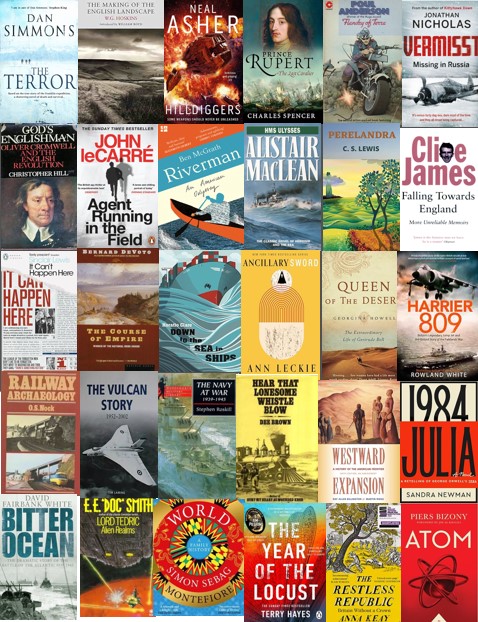
I started the year reading Dan Simmons’ gripping historical fantasy drama “The Terror” about the loss of the Franklin expedition in Arctic Canada. By complete contrast I very much enjoyed W.G Hoskins’s classic “The making of the English landscape”. I do tend to fall back on historical non-fiction, and a recommendation from earlier reading was Charles Spencer’s “The last Cavalier”, a biography of Charles I’s son Prince Rupert. This, in turn, led to something of a season of reading about 17th century England. I followed Prince Rupert in February with Christopher Hill’s biography of Cromwell – “God’s Englishman” and later, in December, by Anna Keay’s delightful “The Restless Republic”, which covered aspects of England in the republican years as seen through the lives of various protagonists. Fairfax the politician; John Bradshaw the lawyer; Marchamont Nedham the journalist; Lady Derby the royalist; Anna Trapnel the prophetess, amongst others. A brilliant and humane piece of work from which I learned much. Cromwell not quite the villain, nor the hero, he has been painted. Successive military coups, army juntas running the country…so much of our past is just not taught in school. At the time, George Monck, the general who engineered the return of King Charles II, wrote: “the army should serve the civilian government, not the reverse.” Amen!!

All of that reading on the 17th century, flowed from reading Peter Newman’s book on the Hudson’s Bay company, which in turn came from recommendations in Bernard de Voto, which in turn was recommended to me by Robert Kaplan. Recommendations are everything. Let your reading go where it will!

I read A. L Poole’s “From Domesday Book to Magna Carta”. Over months I worked my way through Geogina Howell’s biography of Gertrude Bell, the “Queen of the Desert”. My continued interest in American history saw me reading the final instalment of Bernard DeVoto’s masterly trilogy on the westward expansion in America: “The course of Empire”. Also, in that vein, Ray Allen Billington on “The Westward expansion in America”. Railways and America were combined in Dee Brown’s unsettling book on the displeasing and deeply venal American railroad barons, “Hear that lonesome whistle blow”. Also on railways I enjoyed the delightful and prolix O.S Nock on “Railway archaeology”. Very few people can write like that these days. I had a canter through the war at sea with David Fairbank-White’s “Bitter Ocean” and Roskill’s “The Navy at war: 1939-1945”. In that context I also re-read Alistair Maclean’s “HMS Ulysses”, and then I lent a copy of it to a close friend. A book perhaps to save for a time when your mental health is at it’s best. Not for the faint-hearted.  

I did some re-reading – it is always good to go over old ground. Old ground like Keith Laumer’s short stories, which I first read as a schoolboy in the mid 1970’s. One of them is “Special placement test” about the guy who can’t get a job in a massively overpopulated future America, and is faced with submitting himself for a lobotomy. How does he escape? It would make a great film. Or Frank Herbert’s “Hellstrom’s Hive” for which I would love to write a sequel. Also, in light of the new Dune films, I re-read “Dune” and “Dune Messiah”.

I started reading some of Neal Asher’s space operas, getting through three or four of them, but laid off them as they were quite hard on my mental health, being full of quite astonishing levels of violence and nastiness. I read – and this was a good deal more positive – Ursula K. Le Guin’s “The winds Twelve Quarters” and “The Compass Rose”, more encouraging and uplifting space opera set in her “Hainish” universe. Equally uplifting was Anne Leckie’s “Ancillary Sword” although the latter’s refusal to use male pronouns confused me somewhat. I suppose the point is, it doesn’t matter if you’re male or female. Except it does… Other sci-fi included work by Ken Macleod and Alistair Reynolds, and vintage pulp fiction by Poul Anderson (“Flandry of Terra” – “Bond, James Bond” out amongst the stars, written about the same time as Fleming was writing the 007 tales) and E.E Smith (“Lord Tedric: Alien Realms” – pure pulp read in less than a day). I re-read C.S Lewis’ epic “Perelandra”, something I try to do every few years. This retelling of the legend of the Fall, the story of the unfallen planet Venus threatened by evil – but delivered by the actions of one brave person – never fails to grip me. I found time for an “omnibus” trip to Darrowby, with James Herriot – leading my wife into a season of reading him as well. “Agent running in the field” and “A Legacy of spies” were my fix of John le Carre’s work for this year. Must have read most of his stuff by now? Also, Jonathan Nicholas’ “Vermisst” about a German WWII aviator lost in the Soviet Union. Also, two technical books on the Vulcan bomber, and a book by Raymond White on the use of Harriers in the Falklands War.

An outstanding read was Sandra Newman’s “Julia”, being the story of Winston Smith’s eponymous lover in Orwell’s 1984. Very graphic and quite violent in places, she manages to fill in some interesting social detail that would have quite eluded a man like George Orwell. Also, towards the end, she conveys some of the hope that is entirely absent in 1984. I gave the book to my daughter and sent a copy to one of my sisters, so impressed was I. In the context of dystopia I also read Sinclair Lewis’ “It can’t happen here”, a story of America under a dictatorship, written decades before Orwell wrote 1984, and eerily prophetic…I will say no more.

I enjoyed Ben McGrath’s very humane “Riverman”, an account of travels by canoe through the great rivers and backwaters of the continental United States – not really about rivers, but about people. Also about people but not really about ships or the sea, was Horatio Clare’s “Down to the sea in ships”. A man whose writing I love, but who I find can get a bit pompous, is Clive James. I read another of his now quite hard to find memoirs, “Falling towards England”. I can cope with someone with such a high opinion of himself as Clive James, only in small doses. I also read a couple of books on cosmology I’d been recommended to: Brian Clegg’s “The Quantum Age” and Piers Bizony’s “Atom”.

There’s more! The untimely death of Michael Mosley saw me reading my wife’s copy of his “Just one thing” – leading to a few small but positive changes to my lifestyle, which of course is all he would have wanted. Terry Haye, a respected screenwriter, wrote “I am Pilgrim”. His second book “The year of the locust” was not quite as good, and had an odd sci-fi component in the middle, but was eminently readable. I read Christopher Tolkien’s expansion of his late father’s mythos with “The fall of Gondolin”. I confess that the three or so different versions of this story now available do lead me to getting a little confused. Gondolin was a legendary city in Tolkien’s Middle Earth. The beautiful White City of Gondor, as seen in The Lord of the Rings, is held up as a pale reflection of Gondolin’s beauty. As with all of Tolkien, and indeed this is true to a degree of all great writing, the epic tale of the city’s fall is both just story, and yet also a profound lesson for all our lives.

Reading in 2023

This year we’ve been a little busier, perhaps. “The judges’s scores are in”, as they say on Strictly; I have read fewer books in 2023 than I did in 2022. At the start of this year I was reading two books. One was Nick Hayes’ excellent and inspiring “The Book of Trespass”, an ostensibly scurrilous and subversive work about the countryside and how much if it is not accessible because of the draconian property laws in England. The fact that it is in print at all, and was widely and positively reviewed by various national newspapers representing the Establishment (whatever you conceive that to be) indicates that it is perhaps not quite as subversive as some readers might like to think. The other was “Life in the Far West” by G. F Ruxton. I am a student of the westward expansion of Europeans into the north American continent, and this book is a 19th century travelogue of an Englishman who travelled extensively in the lands that became the western United States.

My wife bought me a copy of W. Heaton Cooper’s “Lakeland Portraits”, completing my set of W. Heaton Cooper’s books. I love his paintings. His writing is delightful, spare and concise, as it must be from someone brought up in more spacious times than ours. There was a time when learning to write good English still mattered in schools. I’m no conservative when I say that that time is long past. To be fair this is not the best of his books – for that I’d look at “The Tarns of Lakeland”.

As noted elsewhere on this blog – reviewed here – I found Alexander Maitland’s “The Life of Wilfred Thesiger” very readable in February. At this point my wife and I moved to the edge of the Peak District. Visiting the local library saw me reading Mark Patterson’s “Roman Derbyshire”, Catherine James “Derbyshire – where writers walked” and Stephen Bailey’s excellent “The old roads of Derbyshire”. Local knowledge – every time. I followed these with Lewis Dartnell’s “Origins” about the origin of humankind, and Ryzard Kapucinsky’s work about travels in Africa, “The Shadow of the sun”. Very entertaining. Of Addis Ababa, he writes, “Bullets were the most valuable commodity in that market place, even more valuable than dollars.” He writes about the fundamental differences in the understanding of time, between Africans and westerners. Years ago working in Nigeria, someone once told me “there is no word in any Nigerian language that conveys the urgency of the Spanish word “Manana“... I also read Kapucinsky’s “The Emperor”, a very informative and warts-and-all account of the reign and fall of the otherwise pretty much untouchable Haile Selassie. Everyone has feet of clay, particularly despots and military dictators.

I had a bumper year indulging my interest in the history of the westward expansion of the United States. I started with two works on the Lewis and Clark Expedition. Bernard de Voto’s eponymous history of that trip, and “These tremendous mountains” by David Freeman Hawke. I went on to read “Wondrous times on the frontier” by Dee Brown, which covered aspects of social history overlooked elsewhere – saloons and bars, what people wore, what they had for supper etc. Later on in the year I read the second book of Bernard de Voto’s three-part series on the westward expansion, “Across the wide Missouri”. This deals solely with the fur trade, with beaver trappers – the “mountain men” of legend. Also I found time for biographies of Kit Carson – “Kit Carson: A Pattern for Heroes” by Thelma Guild and Harvey Lewis Carter, and “Daniel Boone: The Long Hunter” by Lawrence Elliot. Finally, Alan Taylor’s “American Colonies”, another book that is part of a well-received trilogy of historical textbooks.

Janusz Bardach’s “Man is wolf to man”, recommended by Jacek Hugo-Bader, was quite a difficult read. Well written – just rather hard on the mental health to read of such terrible goings on. Another book difficult for similar reasons was my first Neal Asher sci-fi novel, “The voyage of the Sable Keech”. Asher is a prolific science-fiction writer and this work has immortals, viruses, some very dangerous animals, and is full of violence. Nearly as violent as Richard Morgan’s “Altered Carbon” trilogy about Takeshi Kovacs, and that’s saying something! I found Neal Asher’s crab-like aliens, the Prador, with their taste for eating living humans, particularly unpleasant. 

I read an obscure work called “Earthbound Astronauts” by Beirne Lay Jr. This was a singing of the praises of all the engineers, scientists and so forth that helped to build the Saturn V rocket that put man on the moon in 1969. Max Hastings’ account of Operation “Overlord – the story of the Normandy landings” came in August. I review elsewhere Peter C. Newman’s book “The company of Adventurers”, being the early history of the Hudson’s Bay Company (still extant in Canada today as a minor department store chain) from even before its inception, through, if not to the present, then certainly well into the late 19th century.

Then there was a clump of railway reading – the every delightful prose of O.S Nock (see above on the writers of old having such delicacy and skill in written English) firstly “British Locomotives of the 20th C, volume 3” and secondly, a really good historical read, “Steam Locomotive”. This book highlights the fact that we’ve had trains in the UK for nearly two hundred years. Christian Woolmar, a worthy successor to O.S Nock in my view, wrote “Broken rails” about how and why the privatisation of British Rail under the Major government was such a disaster. His work on the London underground, “The subterranean railway”, was also instructive. In all that reading one became aware that the heyday of the railway in Britain was not “before Beeching”, but before the Great War – the railways were at the best in Edwardian England and have been in decline ever since. Other rail-related reading included several of Brian Radford’s works including “Midland through the Peak”.

Stephen Alford’s “The Watchers” about spying in Elizabethan England, went down well, as did Monty Don’s autobiography “Down to earth”. John Lydon’s “Anger is an energy” is reviewed here.

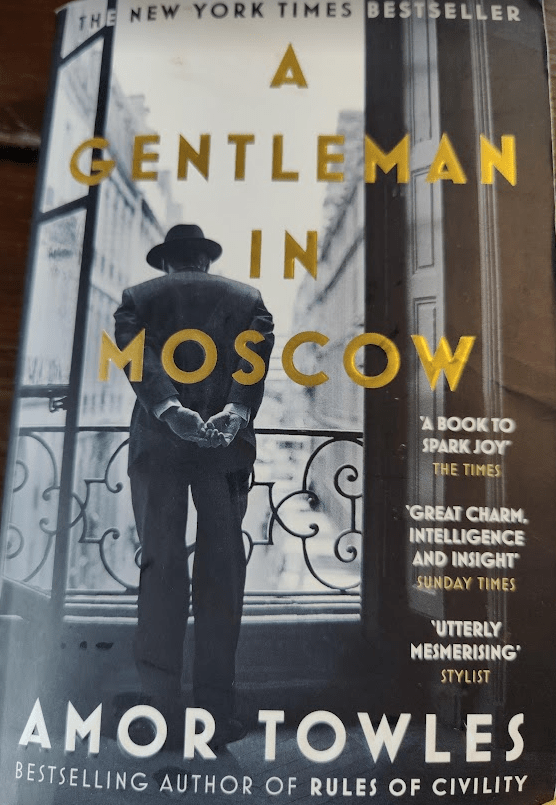
Fiction? I also found time for some re-reads; Heinlein’s “Glory Road” – always a pleasure, Richard Morgan’s violent “Broken Angels”, my very favourite book, Tolkien’s “The Silmarillion”, and Iain M. Banks’ “Surface Detail”. New reading included Le Carre’s “Silverview”, Erin Morgenstern’s “The Starless Sea” and Adrian Tchaikovsky’s “Children of ruin” – all mentioned here. I read my friend Mrs Ruth D’Alessandro’s second very engaging historical police procedural “Calling Detective Crockford”, being a fictionalised account of her mother’s work as the the first female detective in Berkshire. Amor Towles’ top work on the aristocrat in the hotel in Moscow – “A gentleman in Moscow” – is reviewed here.

Also amongst that lot, a short and informative popular science book on graphene, “The graphene revolution” by Brian Clegg. A textbook “Do safety differently” on human and organisational performance (a new way forward in safety) by gurus Sidney Dekker and Todd Conklin. I finished the year with Peter Fleming’s rather weak and largely cribbed account of the never-was Operation Sealion, the German invasion of England in 1940. His other writing is excellent: this is is poor and though interesting and informative in places, it is not his best work.

Thoughts on some recently read fiction

Looking back across the last twenty books I have read, I find that most of them were non-fiction. I need to make the effort to read more fiction, but I find there is a greater risk with fiction, of a book proving to be unreadable – as we shall see shortly. Life is too short to read unreadable books.

I read John le Carre’s “Silverview“. I very much like Le Carre’s later work, and even his early Cold War stories are worth re-reading, though the politics and drama therein, if not the writing, have not aged well. A time will come when I have read all his books. “Silverview” has a few odd hostages to fortune. This one, I understand, was published posthumously and is effectively therefore, his last work. In “Silverview” the chief character is an English book-shop owner in his thirties, who does not recognise spoken Polish when he hears it, and who has ostensibly never heard of Noam Chomsky. I think it is impossible for a well-read and well-educated man of good family with a liberal arts background (as Le Carre’s characters always are) not to have heard of Noam Chomsky (say what you like about his politics and I won’t, here…) or to not be able to recognise spoken Polish. Notwithstanding all that, a very readable story.

I read “The Starless Sea” by Erin Morgenstern. I was drawn to the spine when I saw it in the shop. Then, reading the blurb, I was drawn in further still – and hooked. It was the phrase “labyrinth hidden far beneath the surface of the earth” that got me. Anything like that, I will read. I still occasionally re-read Jeff Long’s “The Descent” and “Deeper”, both deep horror thrillers about immense caves and strange lands far underground. Morgenstern has written something cross-genre. There’s aspects of fantasy – magic and weird immortal god-like characters. There’s also a thriller in there – the hero is running for his life throughout, chased by very modern and secular forces seeking to end his life. Very readable.

Then I read Adrian Tchaikovsky’s “Children of Ruin“. This is the second novel in a series about mankind’s future out amongst the stars. It stuck in my mind because some of the problems in the story relate to language and translation. Not merely translating between different written scripts or alphabets: how do entirely different species communicate? How do humans, with good eyesight and hearing, communicate with intelligent spiders who cannot hear at all at human frequencies, but whose language is based on vibrations in their webs? And how do those two species, working together, communicate with squid – intelligent cephalods who cannot hear and use no writing at all? These space-faring squid communicate entirely through colour – nuanced and delicate splashes and blotches of colour. This reminded me of China Mievelle’s story “Embassytown” which also deals with the deep concepts of translation that go beyond mere written text.

Then I read my first novel by Neal Asher, “The voyage of the Sable Keech”. Asher is a prolific science-fiction writer and I have been seeing his work on the shelves for years. For some reason I have never pulled one off the shelf to buy and read. This one was effectively drawn at random from his extensive catalogue. Again, authors and publishers would do well to note the importance of the blurb on the back. That’s what sold me…ancient hive mind…virus…new drone shell…Asher’s work has immortals, viruses, some very dangerous animals, and is full of violence. Nearly as violent as Richard Morgan’s “Altered Carbon” trilogy about Takeshi Kovacs, and that’s saying something! I found Neal Asher’s crab-like aliens, the Prador, particularly unpleasant. But nevertheless, a great read by someone who surely knows about the craft of story-telling. I’ll be reading more of his work, and trying to learn from his technique.

Finally, I tried and failed to read Ben Bova’s “Mercury“. Bova strikes me as being of the first generation of science-fiction authors (that of the early-mid 20th century), yet somehow crossing over into the second generation. One cannot be sure if he writes hard science-fiction (following the physics) or soft (what used to be called “space opera”). Writing in 2005 though, he is spot-on and prophetic about the effects of climate change. I found his characterisation not even good enough to be called two-dimensional. His heroes and anti-heroes were wooden and unconvincing. I love nuance – you’ll find none in a Ben Bova novel. I finally put it aside after growing cross at his “New Morality” priests. It’s fair enough to be an ardent atheist and to allow dislike of religion or even Christianity to creep into the text, but characters, even baddies, or even priests, need to be convincing. Pantomime baddies belong in the pantomine: my suspension of disbelief fell off. TL;DR.

A full review of all my reading of 2023, will be forthcoming shortly!

A review of “A gentleman in Moscow” by Amor Towles

This book landed in my post box as a birthday gift from one of my sisters. She knows me too well, perhaps. I have a stack of books waiting to be read that is literally, and not metaphorically, longer than my arm. If I read through them all religiously, one by one, that would be all my reading for the rest of this year and much of next year too. Fortunately though, I’m not obsessive about the order books are read in. Any book, landing on my desk, coming into my hands, or coming to my attention, can come “straight in at No. 1” and jump to the head of the queue. Also – a habit that may not be so common – I can and do read many books at once (not literally at once…I mean that at any one moment I am part way through anything up to a half-dozen different books, and can pick any of them up and continue where I left off before. That’s possible because of one of the most noble inventions mankind has ever created: I speak of course, of the bookmark. Less fortunate (or perhaps saner) people read books serially, one at a time, as if they were TV programmes or films.

In this delightful and beautifully written story, we read of a man who spends the balance of his life stuck in the Metropol Hotel in Moscow. That is the story: an aristocratic individual, the gentleman of the title, is condemned by the very early Bolsheviks, in the years following the Russian Revolution of 1917, to a life of house arrest in the Metropol Hotel. Unlikely as it may seem…

It is to say the least, a somewhat far-fetched premise, something of a whimsy or a fantasy, but as a plot device it allows the author to describe the life of a big city grand hotel under the Soviets. Our hero, a man in his twenties at the start, remains in the hotel until his sixties. In that time, a number of adventures come his way. His moustache is cut off by an angry Bolshevik in the barbers. He meets and forms a most unusual relationship with a little girl of 10 or so, who – again how far-fetched is this – gifts him with a master key for every door in the building. A good deal more believable are is his on-and-off afternoon liaisons with a beautiful female movie star, his relationship with other members of the hotel staff, and his decades-long relationship with a senior official of the regime who wants to learn from him, over monthly dinners, about how the west works.

Far be it from me to poke holes in a good story – and it is a good story, by the way – but I can do no other. How on earth does a man stay fit and trim stuck indoors for life, yet still eating two or three square meals a day, with alcoholic drinks? Every day. Even six flights of stairs twice a day aren’t going to be enough there. I know a little about climbing stairs every day, and I know quite a lot about calories.

All the aspects of the story combine to make him a kind of invincible superhero: he has looks and charm as an aristocrat. He clearly has money though who pays for four decades worth of staying in a hotel – even in a tiny garret up in the rafters – is never made clear. He never gets poorly, and deeply unconvincingly, the Great Terror of the 1930’s passes him by. I write this because one of the other books I am reading at present is “Man is wolf to man” by Janusz Bardach (co-written with Kathleen Gleeson) about life in the Soviet prison system. I had to put it down as it was affecting my mental health, so violent and unpleasant was the world described by Janusz Bardach. And then I read this novel about a perfumed aristocrat in a Moscow hotel!

The author has therefore, written an exceptionally pleasant and readable novel about manners and human relationships, and set it right in the middle of one of the most unpleasant and horrible periods of human history – a time when (certainly in Russia) individual humans counted for little or nothing. I’m hoping that the author does not harbour fond feelings for the Soviet system, for the communist era and for the whole tissue of malevolent silliness that is Marxism. As he’s a Yale man (not a recommendation in the view of some authors I think highly of) this may be a vain hope. Soon enough I will know, for his work was sufficiently entertaining for me to look out for his other books and read them too.

A review of “The life of Wilfred Thesiger” by Alexander Maitland

On Wilfred Thesiger

Sir Wilfred Thesiger – that well-born “leather-faced explorer” of the twentieth century – has long been a character with whom I’ve been fascinated. Really, ever since I read his remarkable book “Arabian Sands“. My wife bought me this one, thinking I’d like it, although it was on my shelf for some months before I picked it up and read it. I thought – I’ve already read his autobiography “The Life of my choice“. Why do I need to read a biography as well? But I did.

Alexander Maitland, though clearly Thesiger’s close friend and his appointed biographer, does not shrink from writing things that may not be so positive; he does not shrink from saying what needs to be said. He spends quite some effort pointing out subtle and not-so-subtle omissions in Thesiger’s autobiography, aspects of Thesiger’s character that the man himself might have been tempted to gloss over. Yet, Maitland as a biographer is never less than sympathetic. This is no hostile biography.

He writes early on of “paradoxical aspects of Thesiger’s character and temperament…he was a maze of contradictions” and was his own worst enemy. Like the desert Bedu he so admired, he could be a man of extremes. “He could be affectionate and loving, yet he was capable of spontaneous, bitter hatred. He was either very cautious or wildly generous with his money and possessions; he was normally fussy and meticulous, but he could be astonishingly careless and foolishly improvident. He relished gossip, yet was uncompromisingly discreet. His touching kindness contrasted with sometimes appalling cruelty”. And “His vices were fewer, less extreme, and yet more conspicuous than his many virtues.”

Makes me think of the rather entertaining concept of “redeeming vices” – an expression used of Bill Clinton by his biographer. Thesiger once wrote, I recall, of a relative of his who was something of a gambler and a rake, yet married to an uncompromisingly upright and God-fearing battle-axe, that this male relative – not his poor wife – must have been “excellent company”.

Thesiger was well-born, at least by my standards and understanding. His uncle was Lord Chelmsford, one of the last Viceroys of India. He inherited from Lady Chelmsford, sufficient wealth, at least on paper, not to have to work for a living. In that respect he was perhaps a gentleman in the older and strictly literal meaning of the word. As regards him – or any of us – being a gentleman in the more modern sense of being honest, upright and kind, a story he tells against himself, recounted here by Maitland, is instructive.

On a time, he was out in the desert with two Bedu companions, weeks from shelter, carrying for food only water, flour and a handful of dates and some coffee beans. One of his Bedu companions caught a rabbit and prepared it for the pot. As it was cooking, all of them were drooling, ready for rabbit stew after weeks without a good meal. And just as it was cooked, some other Bedu arrived. After the proper greetings were exchanged, the Bedu tribesmen then offered this rabbit to their guests, and it was duly accepted, leaving Thesiger and his travelling companions with nothing. Thesiger wrote in “Arabian Sands” something to the effect that it was at that point he started to learn what true nobility, true hospitality, true generosity, really was.

We see under Maitland’s kind eye, Thesiger’s life progressing from boy in Ethiopia, to young man at Eton and then in the Sudan, to the mature explorer of Arabia he became and for which he is chiefly remembered. We see his very close relationship with his mother, and his domination of younger men around him – Maitland calls him a “gang leader”. We see how he struggled to write, and worked very hard indeed to prepare “Arabian Sands”. He was a prolific photographer and learned much from the great pioneer female desert explorer Freya Stark. He opposed modern progress and machinery, yet discreetly espoused its use when it suited him. In spite of his desire to see the ancient culture of the Arabian desert preserved, one might hold him partly responsible for its destruction. With the best will in the world, he must bear some of the responsibility for the (admittedly inevitable) opening of the Rub’ al Khali (Empty Quarter) to subsequent oil exploration (something I do know a bit about as my first employer was one of those corporations that conducted seismic survey oil exploration in the Oman and elsewhere in the Arabian desert.)

He was very wealthy; he was a scion of the privileged English upper class, and he had an unreconstructed, deeply conservative (and possibly offensive by modern standards) attitude to many aspects of life – for example, to hunting and animals, to relations between men and women, and to technology and machines. Yet, he was perhaps a listener to, and understander of, ordinary people, and he made lasting contributions to tribal life in many places. He was a decorated and notable warrior as well a great explorer and man of letters, a brave adventurer whose explorations still inspire people today.

Ahead of its time: Robert Heinlein’s “Friday”

A review of Robert Heinlein’s “Friday

I first read “Friday” not long after it came out. It remains a remarkable novel, worth reviewing and unpicking even now forty years after its release. It’s a “Cyberpunk” novel published two years before William Gibson published “Neuromancer”; it was environmentally aware decades before the modern movement to environmental sustainability.  It posits a balkanised North America that to this day few if any other authors have dared describe. Its heroine, the female spy of the title, remains a relatively unknown icon of feminine power and ability.

“Friday” addresses racial prejudice and everyday sexism. It addresses police brutality, corruption amongst public employees, and – a favourite theme for Heinlein – the relationship of the individual with the state.  It upsets conventional storybook wisdom and in this respect is years ahead of its time. It would make a cracking film if only someone would write a screenplay for it.

Spoiler alert! Friday Jones, a female James Bond, calls herself a “combat courier”.  She is also an “artificial person”, that is, she is not born of woman, but a genetically enhanced superhuman rather like the characters hunted down by Deckard in “Blade Runner”.  She kills someone she finds following her while passing through an airport in Kenya. Hours later, the Nairobi Hilton is fire-bombed minutes after she checks out. She fails to connect these incidents. Arriving back at base in North America, she settles down for a ride in a horse-drawn carriage: in this world, fossil-fuel driven ground vehicles are not allowed. They are somewhere in what today is the Rust Belt of Illinois and Michigan: the chauffeur notes that “two hundred years ago, all these trees and fields were factories“.

Seconds later she is betrayed by that same chauffeur, captured by the enemy, and interrogated. Heinlein subverts the usual spy genre tropes and puts the obligatory torture scene (from which the hero escapes, as the climax of the book, right near the end) right at the beginning. Torturing a woman also is not normally the done thing. But Friday remains cheerful: she suggests to her torturer that he go and do something which she believes is anatomically possible, for some males…

She’s rescued, and nursed back to health. Her boss, the character in this story representing Ian Fleming’s “M”, sends her on break, and she goes to New Zealand to see her adopted family. Heinlein has always had innovative and unusual (and indeed questionable) ideas about marriage and sex. Friday belongs to a “line” or “group” marriage. Men and women, but in a line, as if for a dance. The difference is, all of the men, maybe 2, 3, 4 or eight men, are married to all of the women. Like Don Henley sings, “this could be heaven or it could be hell”…

All seems well until the “senior wife” in the marriage (the oldest wife and in this case one of the founding members of the marriage) finds out that Friday is an “artificial person”. Friday is summarily divorced. One minute, in the bosom of her family, the next, out on the street.

On the rebound, our heroine has a fling with a handsome Canadian airline pilot. As you do…perhaps. While she is in bed with him, a terrible world event happens, something rather like 9/11 but many orders of magnitude worse. “Black Thursday” or something like that. All airline traffic is stopped. Governments collapse; martial law is introduced; the Four Horseman have a brief canter through the world, and tens of thousands of people die or are imprisoned. Armed police come to the airline pilots house, and there is violence: a policeman lays hands on someone. Friday kills him, and she has to flee.

She spends a long time travelling round what in our world is the continental United States, trying to get back to base and report in to her boss. In this world, the United States has long gone: it is several different countries – the Chicago Imperium; British Columbia, the Republic of California, and the Lone Star Republic.  The story is set in the late fifties – we know this because at one point a lady of a certain age buys a lottery ticket ending in “99”, saying that this is a lucky number – it was the year of her birth. But we don’t know what century – certainly well into the 3rd Millennium. There is faster than light travel and a dozen or so settled planets around different stars. All industry and all vehicles are powered by “Shipstone” batteries, which working in some unknown proprietary way. Commercial aircraft are “semi-ballistic” glide rockets undertaking transcontinental journeys in merely hours. 

A favourite device of Heinlein’s is to see society through its small ads: in this part of the book there are fascinating job adverts: “Tranuranics Golden Division on Planet Golden around Procyon-B wants experienced mining engineers. Five year renewable contract”…the reader is told that the advert omits to mention that humans are unlikely to survive 5 years in the job…

Eventually Friday makes it back to her boss and checks in: he sets her to work on something we take for granted with Google and the internet: completely undirected and unsupervised research. This would have been very difficult to do in 1982 without access to reference libraries of books. After some weeks of this he rings her up in the middle of the night, and asks her “when will the next outbreak of Bubonic plague be?” A voice tells him the answer, and she is astonished to find that the voice is her own. That knowledge is the side-effect almost, the fruit, of her undirected research.  A few days later, her boss, an old man, is dead of natural causes, and she is out of a job.

Friday gets another job eventually – couriering something out to the royal family on The Realm, a fabulously rich and infamously totalitarian space colony. On the starship voyage out there, she becomes aware that she is pregnant and being closely watched by bodyguards everywhere. She works out that the unborn child planted within her is destined to become a royal daughter. She will go into hospital alive, go under anaesthetic for what she thinks is a minor procedure, and that will be the end of her.

With some difficulty, Friday escapes: she jumps ship at a colony world halfway; more by luck and plot devices than her own skill and judgement. She escapes from her bodyguards, disappears into the woods, and settles down to a normal existence as a colony wife, Cub den leader and mother.

Fifty-two shades of…something better than grey

Well I’ve done it! I’ve read fifty-two books this year! I think I can be proud of that. Some of them I have even reviewed properly. We’ll not go through them all in excruciating detail here, but we will discuss broadly, my year’s reading. I never set out to read a book a week, but I did set out for sure, to read many dozens of books in the year.

Of the 52, 15 of them were in my Kindle – I can do both paper books and e-reading. Eight of the books were re-reads. A few of those only, will I highlight. Nicholas Monsarrat’s “The Cruel Sea” which I re-read after seeing the film one Sunday afternoon. C.S Lewis’ “The Great Divorce” remains one of my favourite reads, being an account of a man who dreamt of going on a day trip to Heaven – from a certain another place. Another re-read was R.A Heinlein’s “The moon is a harsh mistress”, at one level, a story about a rebellion in a prison colony in 2075: at another, the greatest manifesto for libertarian political views, you will ever read. Eighteen of the 52 books were fiction – an oddly low number, although it just means that my interests have been well satisfied by non-fiction.

I started the year reading Dr J.H. B Bell’s “A progress in mountaineering”. Bell, as a 16-year old in 1910, cycled 47 miles from Newtonmore to the foot of Ben Nevis, and climbed Nevis alone. And then he cycled back 47 miles again: the account does not make it clear if he cycled 90+ miles in hobnail boots, or if he climbed Nevis in plimsolls. What seems clear, is that when compared with our elders, we have become a nation of wuss.

I enjoyed Jonathan Nicholls’ “Kittyhawk down”, a well-researched story about RAF pilots in the Western desert during WWII. In February I also read Murray Rothbard’s short pamphlet “The Anatomy of the State” (Murray Rothbard also wrote “The fatal conceit” about the errors of socialism), and a book called “The road to Mecca” by Muhammed Asad, a Jewish convert to Islam, who later became a senior diplomat for the government of Pakistan. In March I read Robert Winder’s “The hidden springs of Englishness”, and started Neil Sheehan’s “A bright shining lie” reviewed here – if you read one book about Vietnam, make it this one.

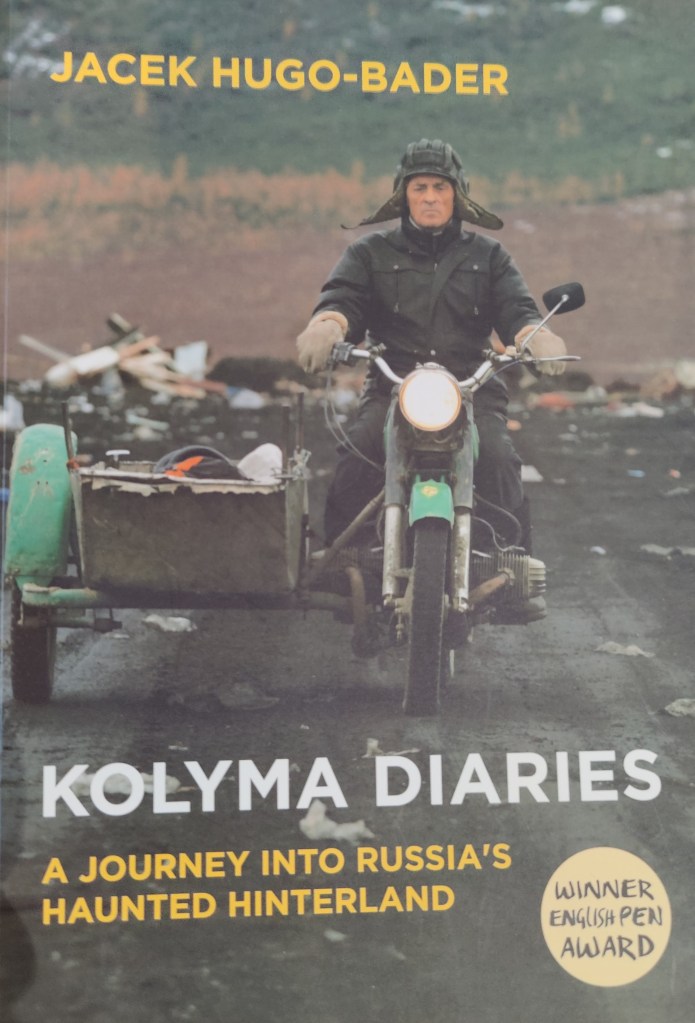
My sister sent me an old copy of Rich Roll’s “Finding Ultra” about an overweight man who turned his life around and became one of the fittest ultra-marathon runners in the world. As much for the appendices on plant-based diet, did I find that book interesting. William Wordsworth’s original travel guide to the Lake District proved oddly relevant centuries after it was written. Having tried and failed to source a copy of Varlam Shalamov’s rare Kolyma Tales, instead I read Hugo Jacek-Bader’s excellent “Kolyma diaries” and “White fever”, about travels in Eastern Russia – startling stuff about a very different world.

I read some science-fiction: Amongst others, Paul McAuley (“The war of maps”), Iain M Banks (“The Algrebraist” – again), an old Keith Laumer novel and two works of the modern writer Adrian Tchaikovsky. Also Heinlein – “Glory Road” (is that even sci-fi??) and “Harsh mistress” as already mentioned. Becky Chambers’ “The Long Way to a Small, Angry Planet” I review here.

I read three books about India: Shashi Tharoor’s (perhaps understandably) bitter and twisted “Inglorious Empire”, William Dalrymple’s account of the East India Company entitled “The Anarchy”, and finally Katie Hickman’s “She-merchants, buccaneers and gentlewomen: British women in India”. All very informative and enabling one to gain a more accurate perspective of world history. The lesson from Shashi Tharoor’s “Inglorious Empire” is that bitterness and negativity, however arguably justifiable, is deeply unattractive.

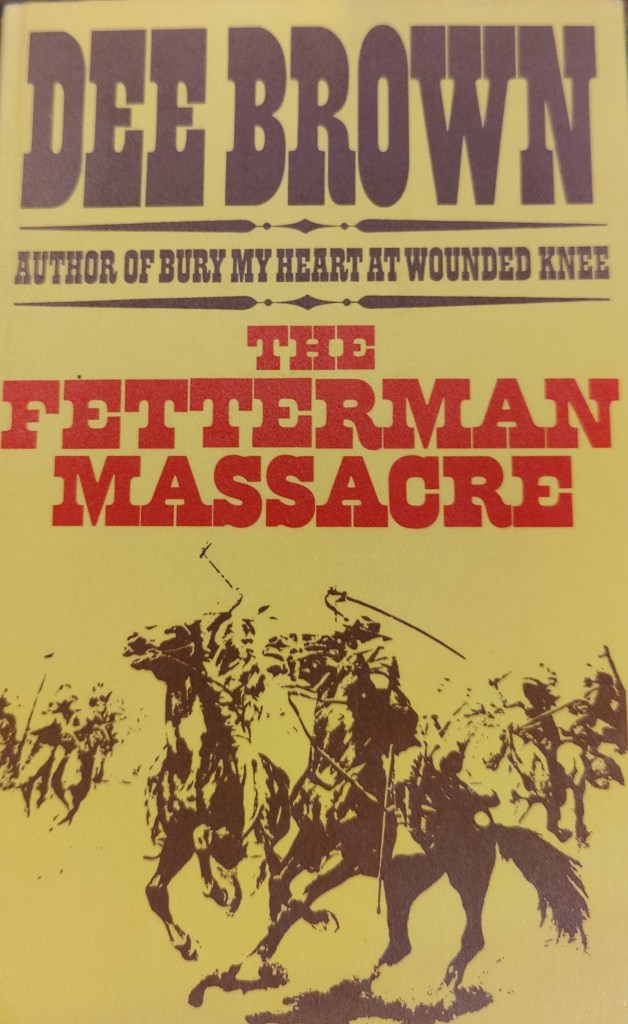
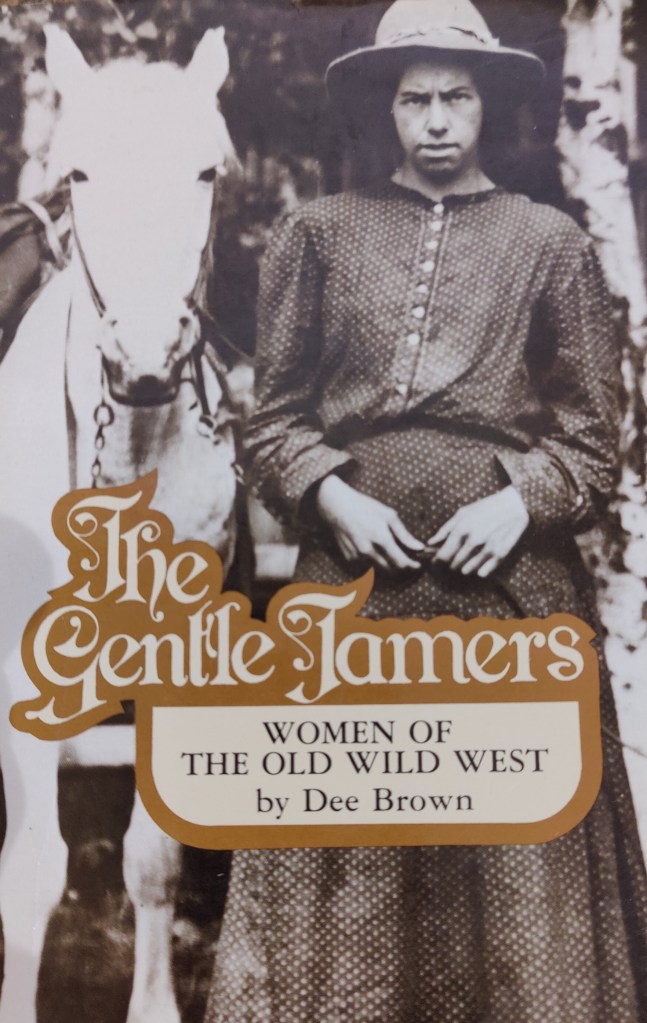
I have read much about America: I am a fan of America. I believe in what America stands for, though it seem to be in trouble in these times and full of vice and failings. Robert Kaplan’s “Earning the Rockies: How Geography Shapes America’s Role in the World”, reviewed here, proved very interesting at the start but perhaps a little disingenous towards the end. A great interest of mine is American history, particularly the westward expansion. I read Bernard Devoto’s; “1846: the year of decision” and John Anthony Caruso’s “The Appalachian Frontier” , was well as several of Dee Brown’s books – one on the Fetterman Massacre, the other on women in the wild west. Dee Brown’s greatest and most famous book, all should read: that is “Bury my heart at Wounded Knee”, an account of the destruction of the native American tribes.

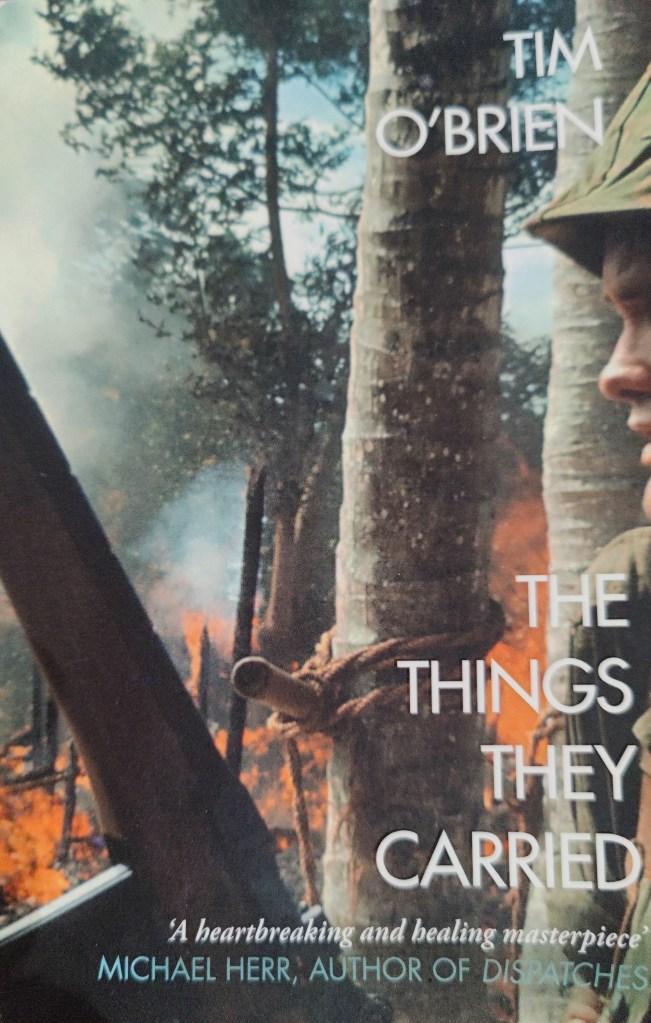
Later in the year I read Tim O’Brien’s “The things they carried” – the Vietnam war as seen through the lens of what soldiers carried with them. One soldier carried a pair of his girlfriend’s tights as a neckscarf, and wore them even after she dumped him. Also, I read Stephen Hough’s “The Great War at sea” – most informative – and Alice Roberts’ “Tamed – ten species that changed our world”. Self-explanatory title there, and rather a lot of detailed biology which I had to skip.

I read Ed Husain’s troubling account of journeys in certain cities in the UK – “Among the mosques”. In order to get published, Ed Husain has to be upbeat and positive about what is happening with Islam in the United Kingdom today, but I find that he can’t possibly be as naive as he comes across in his writing. A deeply worrying travelogue.

Tim Butcher wrote “Blood River”. The age of great explorers, opines one of the reviewers, is not dead. Butcher attempts with only partial success to navigate overland by motorcycle and boat, from the eastern Congo through to the Atlantic coast. The Congo is a messed-up place, and it is deeply messed up for a number of very complicated reasons. It will get worse – much worse. Certain important minerals essential for modern Lithium-ion batteries, required for what some people call “the energy transition”, are most easily sourced in the Congo. In the coming decades the extraction of those minerals, to salve the western conscience and enable electric cars, will do as much damage to Africans in the Congo as King Leopold ever did in his extraction of rubber in the early 20th century.

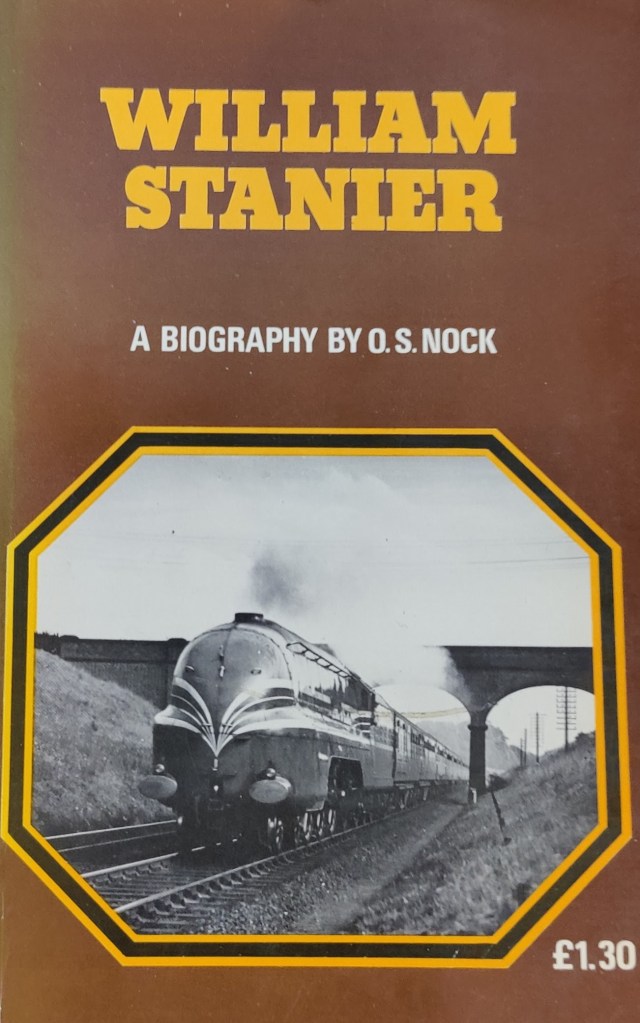
I read a useful and informative biography of Sir William Stanier by the ever-readable and prolific railway author O.S Nock. This one I found in an excellent second-hand bookshop in Bridport. I read Ryzard Kapuchinsky’s “Imperium” about Soviet Russia – including an unforgettable two-page interlude on how to make peach brandy. What drives my reading, is this – not what is in plain view, but what is not. Sometimes something tangential – a fact or anecdote of paramount importance or of deep interest, is almost literally found “in between the lines”.

I ended the year with David Halberstam’s “The Coldest Winter”. This is a brilliant account of the Korean War. Another great Pulitzer prize winning author covering vast sweeps of American culture and history. Though some of the descriptions of battles are a little too detailed for me, what made the book is the wide arc of history, the bigger picture. In a book about Korea, I learned much about the “New Deal” and the life and times of Franklin Roosevelt. I learned about changes to domestic politics in the USA that are still very much of importance today. I learned about McCarthyism, and also about Douglas MacArthur – a horribly fascinating, perhaps deservedly reviled, but nonetheless important 20th century figure. What’s it like to have no self-doubt at all? Lack of self-doubt is not one of my qualities.

Earlier in the year, I chanced across Francis Rossi & Rick Parfitt’s “Just for the record”, being an autobiography of Status Quo. This rock autobiography was a disappointment for me; it was potentially great story written in the most perfunctory manner. You would think that lyricists could write! No, obviously not. One thing I recall though is Rick Parfitt writing of himself as a teenager (when his guitar teacher patronised him) “No-one calls me laddie“. See my point above about lack of self-doubt.

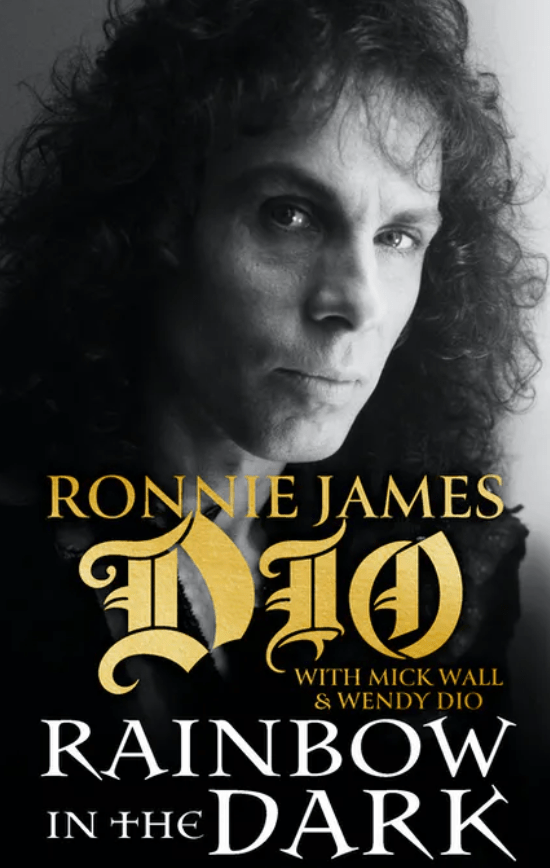
Over Christmas I was given “Rainbow in the dark”, the autobiography of Ronnie James Dio. We learn that as a boy he swore to himself that one day he would headline at Madison Square Garden, in his own name – and he did! A readable enough tale of ambition fulfilled, of the virtues of hard work and persistence, and of some of the other less agreeable habits of rock ‘n roll stars. Reading it, I’d like also to read a biography of the guitarist Ritchie Blackmore, if and when such a book becomes available.

This is for balance, for unfortunately, Dio’s account of those years is somewhat self-serving. It is a shame, for I regard him as a great lyricist, and the distinctive sound of his voice, be it in the heavy metal music of Rainbow, or Black Sabbath, formed a background to my youth.

The full list here:

Chris Anderson The official TED guide to public speaking
Paul McAuley The war of maps
J. H B Bell A Progress in mountaineering
Iain M Banks The Algebraist
Jonathan Nicholls Kittyhawk Down
Murray Rothbard Anatomy of the state
Muhammed Asad The road to Mecca
Robert Winder The Last Wolf: the Hidden Springs of Englishness
Adrian Tchaikovsky Cage of souls
Nicholas Monsarrat The Cruel Sea
C.S Lewis The Great Divorce
Neil Sheehan A bright shining lie
Jacek Hugo-Bader Kolyma Diaries
Rich Roll Finding Ultra
William Wordsworth The Lakes
Keith Laumer Doorstep
Jacek Hugo-Bader White Fever
Shashi Tharoor Inglorious Empire
Robert D. Kaplan Earning the Rockies: How Geography Shapes America’s Role in the World
Ryzard Kapuchinsky Imperium
Dee Brown The Fetterman Massacre
Bernard Werber Empire of the ants
William Smethurst Writing for television
William Dalrymple The Anarchy
Sven Hassel Court Martial
Becky Chambers The Long Way to a Small, Angry Planet
Bernard DeVoto 1846:The year of decision
Len Deighton Blitzkrieg
Dee Brown The Gentle Tamers: Women of the Old Wild West
John Anthony Caruso The Appalachian Frontier
Larry McMurtry Lonesome dove
Larry McMurtry Dead man’s walk
Larry McMurtry Comanche Moon
Francis Rossi & Rick Parfitt Just for the record – autobiography of Status Quo
Michael Bonavia The birth of British Rail
R.A Heinlein Glory Road
R.A Heinlein The moon is a harsh mistress
O.S Nock William Stanier
Katie Hickman She-merchants, buccaneers and gentlewomen: British women in India
Stephen Longstreet War cries on horseback
George Orwell Animal Farm
Ed Husain Among the mosques
Richard Hough The Great War at sea
Tim O’ Brien The things they carried
Tim Butcher Blood River
C.S Lewis That Hideous Strength
O.S Nock The Settle and Carlisle railway
Adrian Tchaikovsky Children of time
Alice Roberts Tamed – ten species that changed our world
Jeff Long Deeper
David Halberstam The coldest winter: America and the Korean war
Ronnie James Dio Rainbow in the dark

A review of “The Pigeon Tunnels”, by John le Carre

A review of “The Pigeon Tunnels”, by John le Carre

I was at the same time inspired and daunted by “The Pigeon Tunnels”. It’s a kind of autobiographical work, consisting of a series of short essays, just a few thousand words each. The essays detail some of the people he has met, and the places he has been, as a world-famous writer, researching novels in trouble spots; hob-nobbing with the great and the good; burying old ghosts. Inspired – because a thousand-word essay, almost anyone can write. Daunted, because le Carre’s craft, and his connections and background, both seem miles from my own.

For someone like me who comes from dust, out of a comprehensive school/polytechnic background, he makes little of his own patrician roots. For this I am thankful. But it is clear that many of his heroes are in fact he, or possibly, more likely, his father. That said, le Carre does note (of the writer’s trade) that at some point, you have to get out and meet people – stories come from people, and the people are out in the world.

In an account (“In deep cover”) of burying an old Cold Warrior, some old spy, he speaks well of the Cold War infiltration of subversive groups. But he writes that he is ostensibly repelled by such infiltration today, arguing that it is not justified. I think this is disingenous. But then, later, in “Son of the author’s father”, le Carre writes about “the writer as conman“. He describes the similarity between himself (a successful writer) and his father (a successful conman) relating the two arts – that of conman and writer.

The writer and the conman:

  • Spin stories out of the air, from nothing
  • Sketch characters that do not exist
  • Paint golden opportunity where none exist
  • Blind you with bogus detail
  • Clarify knotty points
  • Withhold great secrets
  • Whisper those same secrets in your ear

This chapter on his father Ronnie is as moving and as revelatory a chapter as ever I have read, and was most enlightening. How far from my own experience. I have been a very different kind of father, and my own father, though perhaps not much more flawed than I, a very different kind of man again.

I always used to say of his writing, you could read a dozen early John Le Carre novels, and you would learn little or nothing about the writer’s own personal politics. You need read only a dozen or so pages of a Tom Clancy “Patrick Ryan” novel to know his. But that’s not true of his later, post-Cold War material – stuff like “Our kind of Traitor”, where his politics – and his anger – almost boils off the page.

Writing about documenting and reporting on the horror of the Eastern Congo, he says that “cameras don’t work for me. When I write a note, my memory stores the thought. When I take a picture, the camera steals my job”. This is important. The writer paints pictures with words: the camera exists; it cannot be un-invented. But just as pen and paper render memory less necessary, even as GPS erodes our innate sense of direction, and even as wristwatches mean we no longer need a sense of time or duration, so the rise of the universal camera is making the written story rarer and harder to create.