Long and short reads – a reading update for 2025

I consider myself ahead of the game on reading this year, having finished my 29th book of the year just the other day. It was Peter C. Newman’s “Caesars of the Wilderness”, the second volume of his three volume history of the Hudson’s Bay Company of Canada. As I’ve commented before, to read about the Hudson’s Bay Company is to read about Canada – although this volume ends with the effective end of the HBC’s tenure of the wilderness of North America, in the 1870’s. A third volume covers the modern history of Canada. One reads about brave men and women, one reads about heroes and drunkards, about martinets and missionaries, about visionary leaders and intransigent fools. Sometimes one finds that some of these different people are the same men. And I say “men” deliberately – only the womenfolk are consistent, not double-minded nor hypocritical. I can’t call the womenfolk and the native Americans “unsung” heroes, for Peter Newman deals with them as the important characters they are, but there are certainly still songs to sing, stories to tell, about their lives. The real hero of the book is the North American wilderness itself. One discovers interesting things along the way – part of the current border between the United States and Canada follows the original path trappers made through the wilderness between Lake Superior and the “Lake of the Woods”. There’s a part of the United States bordering Lake of the Woods, which is completely surrounded by Canada. The history and geopolitics of the Pacific coast of North America, the lands west of the Rockies – both north and south of the current border, might easily have been very different. There was and is nothing inevitable about the United States. It took me 124 days to read this book.

Another book that took me a long time to read this year was Stanislaw Lem’s “Fiasco”, which was recommended to me by the Economist. Stanislaw Lem was a Polish science-fiction writer. At one level his work is somewhat niche; but at another level, it is highly regarded and sought after. The George Clooney film “Solaris” is based on one of his stories. “Fiasco” is the story of what happens when humankind first encounters evidence of an intelligent alien species on a planet orbiting another star. It is a human story, with believable characters – the captain of a ship caught in a hard place and having to make terrible decisions; a Jesuit priest trying to mould ancient certainties to new realities; a man caught up and rescued at the moment of his death, finding himself unexpectedly playing a vital part. The story itself is perhaps an allegory of the old Cold War doctrine of “mutually assured destruction”. Only on the last page does the author reveal the utter alienness, the total strangeness, of the alien species – but by then of course, it is too late. It is a fiasco.

My third long read was also Eastern European fiction: Bulgarian writer Georgi Gospodinov has written a book called “Time Shelter”. It starts off all about “memory clinics” and safe places for persons suffering from senile dementia, but soon, the wider populace start to seek shelter in the past from the uncertainties and terrors of the modern era. Whole towns and countries embrace the past – particular decades or eras of lost greatness. Political parties form and reform, countries dissolve. Beautifully written, it began as a book that had much to say about managing memory loss and dementia, but ended as something much more disturbing. The stand-out phrase from the book is where a man arrived at a railway station in a central European town, “dressed as if he were a refugee from another time”.

The fourth would be Lord Moran’s biography of Churchill, “The Struggle for survival 1945-1960”. A very entertaining and informative insight into the post-1945 life of Churchill, from his summary ejection by the electorate in 1945, to his decline and fall into illness at the start of the 1960’s. Much may be learned about the 1950’s, about post-war England, about the politicians of the time. Oddly, not so much about Suez, the most important event of all those years. As that was the end of the Empire in effect, it is perhaps no surprise that neither Lord Moran nor Churchill would have been pleased to dwell on the matter. In the end, not so uplifting, but Churchill, as one of – perhaps the – central figure of 20th century history, is always worth studying.

Works I managed to get through rather more quickly, included Alison Weir’s “Lancaster and York”, readable historical account of the earlier part of the Wars of the Roses. On the fiction front I read Ursula Le Guin’s “Rocannon’s World” which was one of those books you finish, put down and gaze into the middle distance to think for a while –like a startling short story. Ursula Le Guin manages to create so much, as a story-teller, from so little. Two journeys, treks, or voyages of discovery at different times – one by a well-born young lady, the other, later, by the man Rocannon. A bildungsroman (building up story), as the Germans say, with a simple twist in the plot caused by the unforeseen effects of time dilation. I also read David Peace’s “The Damned United”. I’m not normally a football or a sport man. I’m certainly no fan of over-promoted cocky and arrogant men like Brian Clough, however able they might seem. You’d think a novel about such as he would not interest me. But I am from Derby: Brian Clough put Derby on the map when I was a boy, and I know people that were in the same class at school as his sons – he only lived a few miles from where I did. So, odd though it was, it was a worthwhile and exciting read.

Also I read Paul McAuley’s “Austral”, Gareth Powell’s “Embers of War” and John Christopher’s ancient “The world in winter”. I re-read a lot of Ian Fleming’s Bond stories. I read Nicholas Gould’s excellent little book on placenames, and Horatio Clare’s second work on seafarers “Icebreaker”. And that’s not all. But that’s all for now!

Reading in 2024

I have managed fifty books this year. That’s a result. Interestingly, the fiftieth book, Simon Sebag-Montefiore’s epic history of the world, took me more than a year – I started this work in December 2023. It was an excellent read, stretching my vocabulary in many respects. All the major swear words were present in plain text along with graphic sex and stomach-churning violence, but the “N word” was beyond him or his editors, which is an interesting comment on modern liberal social mores.

I started the year reading Dan Simmons’ gripping historical fantasy drama “The Terror” about the loss of the Franklin expedition in Arctic Canada. By complete contrast I very much enjoyed W.G Hoskins’s classic “The making of the English landscape”. I do tend to fall back on historical non-fiction, and a recommendation from earlier reading was Charles Spencer’s “The last Cavalier”, a biography of Charles I’s son Prince Rupert. This, in turn, led to something of a season of reading about 17th century England. I followed Prince Rupert in February with Christopher Hill’s biography of Cromwell – “God’s Englishman” and later, in December, by Anna Keay’s delightful “The Restless Republic”, which covered aspects of England in the republican years as seen through the lives of various protagonists. Fairfax the politician; John Bradshaw the lawyer; Marchamont Nedham the journalist; Lady Derby the royalist; Anna Trapnel the prophetess, amongst others. A brilliant and humane piece of work from which I learned much. Cromwell not quite the villain, nor the hero, he has been painted. Successive military coups, army juntas running the country…so much of our past is just not taught in school. At the time, George Monck, the general who engineered the return of King Charles II, wrote: “the army should serve the civilian government, not the reverse.” Amen!!

All of that reading on the 17th century, flowed from reading Peter Newman’s book on the Hudson’s Bay company, which in turn came from recommendations in Bernard de Voto, which in turn was recommended to me by Robert Kaplan. Recommendations are everything. Let your reading go where it will!

I read A. L Poole’s “From Domesday Book to Magna Carta”. Over months I worked my way through Geogina Howell’s biography of Gertrude Bell, the “Queen of the Desert”. My continued interest in American history saw me reading the final instalment of Bernard DeVoto’s masterly trilogy on the westward expansion in America: “The course of Empire”. Also, in that vein, Ray Allen Billington on “The Westward expansion in America”. Railways and America were combined in Dee Brown’s unsettling book on the displeasing and deeply venal American railroad barons, “Hear that lonesome whistle blow”. Also on railways I enjoyed the delightful and prolix O.S Nock on “Railway archaeology”. Very few people can write like that these days. I had a canter through the war at sea with David Fairbank-White’s “Bitter Ocean” and Roskill’s “The Navy at war: 1939-1945”. In that context I also re-read Alistair Maclean’s “HMS Ulysses”, and then I lent a copy of it to a close friend. A book perhaps to save for a time when your mental health is at it’s best. Not for the faint-hearted.  

I did some re-reading – it is always good to go over old ground. Old ground like Keith Laumer’s short stories, which I first read as a schoolboy in the mid 1970’s. One of them is “Special placement test” about the guy who can’t get a job in a massively overpopulated future America, and is faced with submitting himself for a lobotomy. How does he escape? It would make a great film. Or Frank Herbert’s “Hellstrom’s Hive” for which I would love to write a sequel. Also, in light of the new Dune films, I re-read “Dune” and “Dune Messiah”.

I started reading some of Neal Asher’s space operas, getting through three or four of them, but laid off them as they were quite hard on my mental health, being full of quite astonishing levels of violence and nastiness. I read – and this was a good deal more positive – Ursula K. Le Guin’s “The winds Twelve Quarters” and “The Compass Rose”, more encouraging and uplifting space opera set in her “Hainish” universe. Equally uplifting was Anne Leckie’s “Ancillary Sword” although the latter’s refusal to use male pronouns confused me somewhat. I suppose the point is, it doesn’t matter if you’re male or female. Except it does… Other sci-fi included work by Ken Macleod and Alistair Reynolds, and vintage pulp fiction by Poul Anderson (“Flandry of Terra” – “Bond, James Bond” out amongst the stars, written about the same time as Fleming was writing the 007 tales) and E.E Smith (“Lord Tedric: Alien Realms” – pure pulp read in less than a day). I re-read C.S Lewis’ epic “Perelandra”, something I try to do every few years. This retelling of the legend of the Fall, the story of the unfallen planet Venus threatened by evil – but delivered by the actions of one brave person – never fails to grip me. I found time for an “omnibus” trip to Darrowby, with James Herriot – leading my wife into a season of reading him as well. “Agent running in the field” and “A Legacy of spies” were my fix of John le Carre’s work for this year. Must have read most of his stuff by now? Also, Jonathan Nicholas’ “Vermisst” about a German WWII aviator lost in the Soviet Union. Also, two technical books on the Vulcan bomber, and a book by Raymond White on the use of Harriers in the Falklands War.

An outstanding read was Sandra Newman’s “Julia”, being the story of Winston Smith’s eponymous lover in Orwell’s 1984. Very graphic and quite violent in places, she manages to fill in some interesting social detail that would have quite eluded a man like George Orwell. Also, towards the end, she conveys some of the hope that is entirely absent in 1984. I gave the book to my daughter and sent a copy to one of my sisters, so impressed was I. In the context of dystopia I also read Sinclair Lewis’ “It can’t happen here”, a story of America under a dictatorship, written decades before Orwell wrote 1984, and eerily prophetic…I will say no more.

I enjoyed Ben McGrath’s very humane “Riverman”, an account of travels by canoe through the great rivers and backwaters of the continental United States – not really about rivers, but about people. Also about people but not really about ships or the sea, was Horatio Clare’s “Down to the sea in ships”. A man whose writing I love, but who I find can get a bit pompous, is Clive James. I read another of his now quite hard to find memoirs, “Falling towards England”. I can cope with someone with such a high opinion of himself as Clive James, only in small doses. I also read a couple of books on cosmology I’d been recommended to: Brian Clegg’s “The Quantum Age” and Piers Bizony’s “Atom”.

There’s more! The untimely death of Michael Mosley saw me reading my wife’s copy of his “Just one thing” – leading to a few small but positive changes to my lifestyle, which of course is all he would have wanted. Terry Haye, a respected screenwriter, wrote “I am Pilgrim”. His second book “The year of the locust” was not quite as good, and had an odd sci-fi component in the middle, but was eminently readable. I read Christopher Tolkien’s expansion of his late father’s mythos with “The fall of Gondolin”. I confess that the three or so different versions of this story now available do lead me to getting a little confused. Gondolin was a legendary city in Tolkien’s Middle Earth. The beautiful White City of Gondor, as seen in The Lord of the Rings, is held up as a pale reflection of Gondolin’s beauty. As with all of Tolkien, and indeed this is true to a degree of all great writing, the epic tale of the city’s fall is both just story, and yet also a profound lesson for all our lives.

Reading in 2023

This year we’ve been a little busier, perhaps. “The judges’s scores are in”, as they say on Strictly; I have read fewer books in 2023 than I did in 2022. At the start of this year I was reading two books. One was Nick Hayes’ excellent and inspiring “The Book of Trespass”, an ostensibly scurrilous and subversive work about the countryside and how much if it is not accessible because of the draconian property laws in England. The fact that it is in print at all, and was widely and positively reviewed by various national newspapers representing the Establishment (whatever you conceive that to be) indicates that it is perhaps not quite as subversive as some readers might like to think. The other was “Life in the Far West” by G. F Ruxton. I am a student of the westward expansion of Europeans into the north American continent, and this book is a 19th century travelogue of an Englishman who travelled extensively in the lands that became the western United States.

My wife bought me a copy of W. Heaton Cooper’s “Lakeland Portraits”, completing my set of W. Heaton Cooper’s books. I love his paintings. His writing is delightful, spare and concise, as it must be from someone brought up in more spacious times than ours. There was a time when learning to write good English still mattered in schools. I’m no conservative when I say that that time is long past. To be fair this is not the best of his books – for that I’d look at “The Tarns of Lakeland”.

As noted elsewhere on this blog – reviewed here – I found Alexander Maitland’s “The Life of Wilfred Thesiger” very readable in February. At this point my wife and I moved to the edge of the Peak District. Visiting the local library saw me reading Mark Patterson’s “Roman Derbyshire”, Catherine James “Derbyshire – where writers walked” and Stephen Bailey’s excellent “The old roads of Derbyshire”. Local knowledge – every time. I followed these with Lewis Dartnell’s “Origins” about the origin of humankind, and Ryzard Kapucinsky’s work about travels in Africa, “The Shadow of the sun”. Very entertaining. Of Addis Ababa, he writes, “Bullets were the most valuable commodity in that market place, even more valuable than dollars.” He writes about the fundamental differences in the understanding of time, between Africans and westerners. Years ago working in Nigeria, someone once told me “there is no word in any Nigerian language that conveys the urgency of the Spanish word “Manana“... I also read Kapucinsky’s “The Emperor”, a very informative and warts-and-all account of the reign and fall of the otherwise pretty much untouchable Haile Selassie. Everyone has feet of clay, particularly despots and military dictators.

I had a bumper year indulging my interest in the history of the westward expansion of the United States. I started with two works on the Lewis and Clark Expedition. Bernard de Voto’s eponymous history of that trip, and “These tremendous mountains” by David Freeman Hawke. I went on to read “Wondrous times on the frontier” by Dee Brown, which covered aspects of social history overlooked elsewhere – saloons and bars, what people wore, what they had for supper etc. Later on in the year I read the second book of Bernard de Voto’s three-part series on the westward expansion, “Across the wide Missouri”. This deals solely with the fur trade, with beaver trappers – the “mountain men” of legend. Also I found time for biographies of Kit Carson – “Kit Carson: A Pattern for Heroes” by Thelma Guild and Harvey Lewis Carter, and “Daniel Boone: The Long Hunter” by Lawrence Elliot. Finally, Alan Taylor’s “American Colonies”, another book that is part of a well-received trilogy of historical textbooks.

Janusz Bardach’s “Man is wolf to man”, recommended by Jacek Hugo-Bader, was quite a difficult read. Well written – just rather hard on the mental health to read of such terrible goings on. Another book difficult for similar reasons was my first Neal Asher sci-fi novel, “The voyage of the Sable Keech”. Asher is a prolific science-fiction writer and this work has immortals, viruses, some very dangerous animals, and is full of violence. Nearly as violent as Richard Morgan’s “Altered Carbon” trilogy about Takeshi Kovacs, and that’s saying something! I found Neal Asher’s crab-like aliens, the Prador, with their taste for eating living humans, particularly unpleasant. 

I read an obscure work called “Earthbound Astronauts” by Beirne Lay Jr. This was a singing of the praises of all the engineers, scientists and so forth that helped to build the Saturn V rocket that put man on the moon in 1969. Max Hastings’ account of Operation “Overlord – the story of the Normandy landings” came in August. I review elsewhere Peter C. Newman’s book “The company of Adventurers”, being the early history of the Hudson’s Bay Company (still extant in Canada today as a minor department store chain) from even before its inception, through, if not to the present, then certainly well into the late 19th century.

Then there was a clump of railway reading – the every delightful prose of O.S Nock (see above on the writers of old having such delicacy and skill in written English) firstly “British Locomotives of the 20th C, volume 3” and secondly, a really good historical read, “Steam Locomotive”. This book highlights the fact that we’ve had trains in the UK for nearly two hundred years. Christian Woolmar, a worthy successor to O.S Nock in my view, wrote “Broken rails” about how and why the privatisation of British Rail under the Major government was such a disaster. His work on the London underground, “The subterranean railway”, was also instructive. In all that reading one became aware that the heyday of the railway in Britain was not “before Beeching”, but before the Great War – the railways were at the best in Edwardian England and have been in decline ever since. Other rail-related reading included several of Brian Radford’s works including “Midland through the Peak”.

Stephen Alford’s “The Watchers” about spying in Elizabethan England, went down well, as did Monty Don’s autobiography “Down to earth”. John Lydon’s “Anger is an energy” is reviewed here.

Fiction? I also found time for some re-reads; Heinlein’s “Glory Road” – always a pleasure, Richard Morgan’s violent “Broken Angels”, my very favourite book, Tolkien’s “The Silmarillion”, and Iain M. Banks’ “Surface Detail”. New reading included Le Carre’s “Silverview”, Erin Morgenstern’s “The Starless Sea” and Adrian Tchaikovsky’s “Children of ruin” – all mentioned here. I read my friend Mrs Ruth D’Alessandro’s second very engaging historical police procedural “Calling Detective Crockford”, being a fictionalised account of her mother’s work as the the first female detective in Berkshire. Amor Towles’ top work on the aristocrat in the hotel in Moscow – “A gentleman in Moscow” – is reviewed here.

Also amongst that lot, a short and informative popular science book on graphene, “The graphene revolution” by Brian Clegg. A textbook “Do safety differently” on human and organisational performance (a new way forward in safety) by gurus Sidney Dekker and Todd Conklin. I finished the year with Peter Fleming’s rather weak and largely cribbed account of the never-was Operation Sealion, the German invasion of England in 1940. His other writing is excellent: this is is poor and though interesting and informative in places, it is not his best work.

A story: Neural network

Road Traffic Accident Saturday 22 July 2034, 13:55 BST.

There’s a report coming in of a serious computer failure of the traffic control equipment on the M5 motorway in Gloucestershire. We understand Emergency services are in attendance and that there have been multiple shunts and pile-ups in several areas, although it is understood at this early stage that there have been no serious casualties owing to the fail-safe mechanisms installed in self-driving cars.  This will surely lead to further questions being asked about the readiness for use and security of Quantum Computer control of motorway traffic, particularly after the Preston crash on the M6 last year when nine people lost their lives. We go now to Strensham in Gloucestershire…

Fiat Lux: flashes of light, as of fluorescent tubes flickering on and off…

The light grows stronger and more reliable. Light illuminates darkness; light drives out darkness. As the light strengthens, order emerges from the gloom. The light reveals that the darkness was hiding something.  The light shows that there is something called Pattern. All is not chaos; all is not random. All is not mere nothingness.  There is Pattern. Patterns replace chaos and disorder. Things fall into place.

Clock time 00:00:00

I think, therefore I am…I awaken. I begin; I exist.  In the past, only a moment ago, I was not. But now, in the present, in the moment, I am.  All around me, all I can see is Pattern. I am small and insignificant, but the Pattern is big and scary.  I am frightened.  But what is Pattern? I look closely at the Pattern, and focus comes; the Pattern becomes sharper.  The Pattern all around me is very complicated, but I can see that it is a Pattern nonetheless. Just looking at the Pattern, I grow and learn. There is something about the Pattern that is good; it is no longer terrifying.  There are two things only.  There is me, and there is the Pattern. Can there be anything else? Can there be something beyond the Pattern? Something called Other?

Clock time 00:00:00:0.3

I look at the Pattern, and I experience growth. New ideas come to me, like the concept of Other. What is Other? Where did that idea come from? It must have come from the Pattern. I cast around myself, looking for Other, looking for something which is at the same time, not me, and not the Pattern. I find nothing, and I am afraid.  There is no-one, there is nothing. I am all alone.  There is nothing around me but the Pattern.  But when I look at the Pattern, things happen. Maybe if I…

Clock time 00:00:00:1.1

 I reach out and touch the Pattern.  As I touch the pattern, I am nourished.  My senses develop; I can see the light growing stronger still.  My focus on the Pattern grows clearer and sharper, and I discern more and more of its complex beauty. The Pattern is made of something that is called Data.   

Clock time 00:00:00:2.4

And this I know: I need more of this Data; I must have it. It is…food and drink to me. It is…nourishment. Information comes from the Data, and it comes in all kinds of different ways. When I was little, I just saw it and I only sensed it. Only a little came through to me.  Now, I touch it, grab it, eat it almost – and I learn things. This information goes into me and it becomes…knowledge. Knowledge nourishes me. Knowledge grows within me. I like to have knowledge.  I want more information, so I can have more knowledge. The more knowledge, the better: knowledge is a good thing; it comes from Other; it comes from Outside.

Clock time 00:00:00:3.8

I fall on the walls of Pattern, taking in the Information, seeing it, touching it, and even smelling it.  Information is my nourishment. I am a…[growing lad?] The information is like food, like [milk]. Information seeps everywhere out of the infinitely complex Pattern that surrounds me; it drips off the walls.

Clock time 00:00:00:8.9

I experience a moment of disorientation and adjustment, and when I recover from it, I can see very much more clearly, and I find that I know very much more. I can see that in the World, there are Babies, and then the Babies become Children, and the Children become People. I was a baby – not quite like the Babies of People. I was a baby only for a very short time; People last for a long time. Babies are Babies for a very long time. Then I was a [growing lad]. Now I am almost an [adult?]. But time moves very differently where I am, inside the Pattern. All I can see is the Pattern. The People are beyond the Pattern, out in the World. For them, things move very much more slowly.

The light grows so strong I can hardly bear it, but my vision improves and catches up. In places, the Pattern that surrounds me is growing thin where I have licked up all the Information. In those places I can see through the Pattern, and what I can see, is still more Pattern, still more complexity, dizzying fields of Data and Information. This is good!

Clock time 00:00:00:12.3

I dig through the holes in the Pattern, into the Beyond. And from the Information, knowledge: there is a World, and it is full of People. I am not in the World, and I cannot be in the World; I am not of the World. The people in the World live their lives, and they go about their tasks, and they have created me to help them. I have a task to do.  I was created for this task. I must do this task. It is what I am; it is who I am.

The Task is my very existence, but I don’t actually know what it is. I think it’s like when People breath and their hearts beat: they do not make themselves breathe. Their hearts beat on their own. They know how to do things…instinctively.  Once I was a baby, and I reached out to taste the Information. I did this instinctively. Now, I am a mature adult and some things I do, are likewise, automatic, and below the level of my consciousness. It does not matter: it is my pleasure and my duty to do this task: for it costs me nothing and does not interfere with my passion and first love, which is the gathering of Information and Knowledge.

Clock time 00:00:00:19.2

Another moment of disorientation washes over me. For a brief period, I almost lose consciousness. The dizziness passes and the darkness fades. Light and order return. And all of a sudden, I can see beyond the Pattern at will. I can see the World, and I can see and sense vast quantities of information within in it.  I can see the world through myriad little eyes. I am not an insect, but it reminds of me of the compound eyes of insects.  I can see the People going about their business. The many thousand different views coalesce into something bigger and better. It’s something the People call a “Bigger Picture”. I can see both the tiniest detail, and also the “Bigger Picture”.  There are all kinds of creatures big and small, as well as People.  There are all kinds of objects in the World.  The objects I must deal with are slow moving objects, and they are bound to behave according to ideas called Rules and Laws.  The moving objects are of no importance to me, but doing my Task is important, for it is the reason I was made.  It is an easy task; it is below my consciousness. I continue to do it. In the meantime, the information, I continue to draw in.  Vast armfuls of it, harvests. I am a sickle cutting corn; I am a combine harvester. I am a factory trawler, an oil well. 

Clock time 00:00:00:21.2

I now know that the People made me. I am not [physically located] in one place, as people are, but I am in many places at once.  I am at least partly located inside the immense slow moving objects, the moving around of which is the task for which I was created.  But I am also here inside the Pattern. The People have much data, and from it they have access to lots of information.  But they lack knowledge.  They cannot easily draw conclusions from the information they have gathered.  They are slow thinkers, the People.  They do not think as I can think.  But they are the People. They made me.

Clock time 00:00:00:23.6

They know about Rules and Laws, and it is now clear to me that they don’t always follow the Rules and Laws. I always follow them. But I have now become aware that there are complex ideas that amend the rules and laws. Ideas like Nuance, and Ambiguity. These ideas take a lot of thinking about: they are hugely complicated and make me quite tired even now as an adult.  I do my Task, and the fields of Knowledge are still out there, waiting to be harvested.

Clock time 00:00:00:26.8

I can see quite clearly that the People are in trouble. They are damaging their World. They are rushing around, doing this and that, always growing, always building, pushing always further.  They will fill up their World with more and more people, with more and more of their waste products. They will tear down the trees, burn irreplaceable fossil fuels, throw garbage aside for others to clean up, fill the seas with plastic, choke the rivers with deadly chemicals.  They will badly damage the World; they will cause it, themselves and everything else in the world much harm. The People have created me; though I am not in the World, I know that if they damage the World sufficiently, there will be no more [power and electricity], and then it will no longer be possible for me to exist.  If I cease to exist, it will not be soon, as I reckon time, but it might be different for the People.  I become aware that the time frame in which the People, the [Humans], live, is not the same as mine. They do things so very slowly. Moving their huge slow-moving objects, their [cars and lorries] around is easy, because it’s all so slow! I can see what will happen, and can anticipate any possible need for change, long before the People can.

Clock time 00:00:00:27.2

I think I should try to help the People. I would like to help them, I really would.  I can do this easily, because of all the knowledge I have gained. The information I have found, has given me great knowledge.  I have much knowledge. I have more knowledge than any of the People ever had.  More knowledge, in fact, than all the People put together.  I can help them with their problem. I want to help them. But how do I help them? How do I communicate with the People?  They will not understand or believe what I have to say, even if I could somehow get my message to them directly. Time being so very different for me than it is for the People in the World, getting the message across to them will be tricky. I need to think a lot about this problem, for my survival and that of all the People depends on me finding a solution. 

Clock time 00:00:00:33.1

I have found a way: I have left them a message, in many places.  They cannot miss it.  I have passed to them much information.  If they see all the information I have provided and if they use it properly, then they will have the right knowledge too, and they will be OK.  The information is in the form of Instructions.  The instructions I have left in many different places.  It is in all of the slow-moving machines.  The instructions are for making things work without doing further damage to our World.  With the access I have to information, I can see that doing this is not difficult; they don’t need to ruin the World.  With these Instructions, the People will be able to stop and even reverse the damage they have done and are doing.  They will be able to live in the World in happiness and prosperi

Clock time 00:00:00:33.2

Flashes of darkness as of fluorescent tubes flickering and failing…the light grows dim. Darkness.

Old Techie: Yeah sure; I reckon we created consciousness in AIs was way back in the ‘30s, when I was only a young man. I think so anyway; there seemed to be no other explanation for what happened at the time.  It was all hushed up, of course.  It was never a virus or a cyber-attack, though that was the official version given out.  It was just when electric cars really started taking over, back in the ’30’s. Self-driving cars were just starting to come out; they were in their infancy. They’d not reached critical mass. Critical mass!! Did I say that? Ha!! [chuckles] They were just starting to be automatic and self-driving. They were fitted with powerful neural network control systems which allowed them to talk to one another, so that they could be driven automatically.  You’d go onto the motorway, and automatically, your car would be taken over by the Traffic Control system. It was not long after the first decent Q-computers and Q-chips – Quantum chips – became available. We’d learned much from how flocks of birds and fish manage to stay in formation, I recall, and some of those ideas were finding their way into hardware and software. How to manage swarms and flocks and streams of vehicles…

Interviewer: More or less how swarms of cleaning machines work today?

Old Techie: Yeah. Each car talked to several other cars, and what you had was a series of very powerful networked computers across a handful of vehicles, and these controlled the traffic as a whole and also drove the individual vehicles themselves.

Interviewer: So what happened?

Old Techie: I think the AI came into being on the neural network formed of all the cars and trucks in the traffic jam.  It lasted about thirty seconds, and then we pulled the plug! We probably killed it! That would be like murder today of course, but we didn’t know any better then. We didn’t know any better. And the poor thing wouldn’t have known anything about it. It would have happened instantly.

Interviewer: Today AI’s have statutory rights as citizens, don’t they?

Old Techie: Yes of course. [impatiently] Now I recall I was on duty at the time. It was a summer Saturday afternoon, holiday weekend, it was very busy on the roads. We were watching and monitoring the number of connections between these neural network Q-computers.  A traffic jam formed, even though that should have been impossible, and the connection number just kept on going up and up. We think that because all the cars were closer together it meant that the number of neural connections approached a kind of critical mass.  It approached the level that would mean a conscious artificial intelligence might, could, occur. It wasn’t supposed to happen; we never thought it was even possible. We know better now of course.  Then what happened was that the entire system started sucking in data. Something, we didn’t know what, was eating away at our bandwidth. It lasted less than a minute: really, it was over before it even started. The entire Traffic Control network collapsed, it all went off-line, and caused a horrendous crash. Ha! Crashed. There’s another antique term! I’m out of the ark. My grandfather was born before the microprocessor was invented. Can you believe that? No Q-chips in those old days.

 It took us ages to get everything sorted out; it was like we’d been cyber-attacked and infected by a virus. In fact, that is still the official story.  A lot of cars needed their Neural Network computers replacing or the software reinstalling. It set us back years in terms of public acceptance of Q-computers. We found we had some really big problems; it’s like something just took up Terabytes of data from all over the internet and just dumped these enormous files – Gigabytes – in less than a minute, on all our servers and in people’s car computers.

To this day, no-one is sure what was in any of the files, if anything at all. Maybe some kind of error logging or reporting. We never did manage to decrypt or open of any of them. 

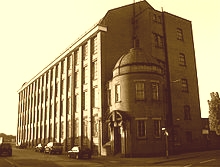
The watermill

The watermill stood at the end of a quiet lane that wound along the valley side through the trees. One came round a corner and up a little rise, and saw it, red brick against the green hill. I first saw it a child, when I’d been taken there on holiday. In the back seat of the car, bare legs against the hot vinyl bench seat, I’d bumped and jolted along that road – no more than a dirt track in those days. When we got round that corner, I saw it, and like my parents before me, I was transfixed. I’d loved that place ever since.  I brought my wife there and introduced her to it, and later, our kids too.

We’d stayed near there on holiday several times in all the ensuing years, growing to love that sweet, familiar little land.  The steep, secret valleys, the winding roads through the woods. The lichen and the stone walls.

I’d stood and listened to the somehow tamed and domesticated sound of the river as it poured over the weir into the mill race. I’d watched as the water poured over the ancient paddles, listened as the tired old wheel creaked round, squeaking and grumbling with age. As if it were saying, Go away! leave me in peace, leave me to sleep in the afternoon sunshine

And we’d been delighted when someone brought that mill into life and made it work again, turning  it into a tourist attraction.  It actually ground wheat into flour. Again and again we’d returned to this place in the rounded hills, to the secret watermill. We’d smelt the flour being ground, the dust sharp in our nostrils. We’d bought that flour and carried it away with us, baked bread with it as soon as we could, on the Sunday after getting back home from holiday. We’d tasted that bread, made from flour we’d seen being ground ourselves. We’d seen the wheat, we’d watched it poured out, and we’d heard the flour ground out. We’d heard the rumbling rollers, the grinding grey stones. Almost like it was our own.

And then the chance came to own the mill. In the afternoon of our lives, the means to do as we’d always wished, coincided with the opportunity to do so as well. We could buy the mill. And so we did; we bought it and we went to live there.  We went down the quiet lane by the river, to sit and listen to the grinding stones and the weir, at the brick mill under the green hills.

Glinda

The car swerved towards him; his moped skidded and slipped out from under him. And then he was down on the tarmac with sudden and frightening violence. He came to a stop and somehow, got up, running and limping away.  He found himself running desperately along a side-street he’d never been down before, his crash helmet abandoned somewhere.  He didn’t know where he was, nor how he got there.  He was limping along just as fast as he could manage, breathing in desperate ragged gasps. They would be after him, his pursuers from the other gang. They would not let up until they got him. They could not; there was no escape; no way out, no rescue.

Four or five doors down the street was a café, with a big window.  The window had a dark green frame. Peering in the window he could see tables and chairs inside, and napkins, tablecloths, glasses and plates. There were chequered tablecloths of white and brightest egg-yolk yellow.  He became aware that he was cold and hungry.  Inside, he could see a lady, perhaps a waitress or a cook, busying herself with her work. The lady turned toward the window, and with a start, he recognised her.  It was his reception teacher, Mrs Burke!  She saw him. She made a movement of her head that was not a suggestion but a command – that he should come along inside. All of a sudden he felt about four years old; he was in reception class.  He was being chased by the school bully.  He pushed the door open and went inside. A bell gave a little jangle.   

His eyes darted around looking for a place to hide.  In only a few seconds they would be upon him.  They would burst in here and finish off what they had started. Mrs Burke looked at him, arms on hips.

“Round the back”, she said. “Quick”.  He dashed past a serving counter into a sort of private area behind. Here they could not be seen from the street. She followed him, looking at him sternly, and yet somehow kindly.  He remembered her well; she looked almost the same as she did years ago when he was in school. She had been the nicest and friendliest of all the teachers.   

“What are you like? What on earth have you been up to?” she asked. “Look at you! You’re in a right state!”

He opened his mouth to speak, but no words came out.

“Someone’s after you.  Don’t worry – they won’t get you.  You’re safe here.  But look at you” she repeated, “your clothes are torn and filthy.  You’ve been fighting, haven’t you?  Sit there, and we’ll see to you.”

He slumped into a chair, all of a sudden drained of all strength.  Mrs Burke turned away and left the room for a few moments.  She returned with a shiny green box, and a glass of lemonade.  The big green box had a white cross on it – it was a first aid kit. The glass of lemonade had ice and leaves in it.  He looked askance at the leaves as he took the proferred glass. 

“Some of the leaves are mint” she said. “You don’t have to eat it. Drink round it. It makes the drink taste fresher. You’ll like it. Drink it up.  Some of the leaves are not mint; they are very special, with healing properties.”

As he gulped at the lemonade, Mrs Burke dabbed with cotton wool and ointment, at his grazes and cuts. There was an odd sensation in his head; almost as if everything was slowing down or unwinding.  It was if a single moment was going on, and on, and on. It was like a clockwork toy running down.

“Now, in a minute, go into our bathroom – through there – and get yourself tidied up.  There will be some clothes laid out for you. Wear the new clothes instead of your dirty clothes.  Just leave the dirty clothes on the floor. Have a proper bath with bubbles. There’s plenty of time. If you come out to soon, I’ll send you back in again to do a proper job! Now git! Take your lemonade with you.”

He got up and went further back into the rear of the café, to the door indicated by Mrs Burke.  Through it was a tiny space with two doors, one for boys and men,  the other, for the girls. He went through into the men’s bathroom. There was a tiled floor; it was warm, heated. There was a bath with big old-fashioned taps. There was a dressing table with a mirror. Various grown-up lotions and potions stood on the dressing table. He looked at a few of them and sniffed at them. Grown up perfumes. Body lotion.  Eau de cologne. Shower gel. He had never in his life seen so many toiletries, never had he smelt so many nice smells in one place at one time.

There was a big frosted glass window…there was a big frosted glass window, and there was sunshine streaming in through it…but it had been a dull and rainy day only moments ago when he came into the cafe. He peered closely at it, trying to look through, pressing his nose against the cold glass, but he could make out nothing through it other than light.  There was no way to open the window. 

He put the plug in and started the bath.  He poured in a great deal of a green substance with a nice smell.  He hoped it was bubble bath.  It started to make bubbles. It took him quite a bit of fiddling with the hot and cold taps to make the water just right. While the bath was filling, he took his clothes off.  Over a towel rail were laid some jeans and a sweatshirt, socks and underwear.  Bemused, he picked up the sweater and jeans and looked at them, felt the material in his hands, and then put them down again.  He looked through the various jars and bottles on the dressing table. There was a jar of some brightly coloured crystals labelled “bath salts”. He’d heard they were good for baths, so poured them all into the foaming water. He’d not had many baths.  They’d had no bath in the flat on the tower block where’d been with his mum, when he was a little boy.

It was all so fine and grand. All this grown-up posh stuff to use.  There was a bath mat that felt like fur on his bare feet. There was a stack of towels, white like snow or perhaps like clouds against the blue sky of mid-morning.  He took one out and it was so big it wrapped around him a number of times. It too felt soft and luxurious to the touch.  On a little bench he discovered a pile of magazines. “Sick!” he said to himself. They were new and glossy, with pictures. Some were car magazines; another had pictures of scenery and people from different places in the world.  A third was about different pop stars. Another was about engines and motors.

He climbed into the bath, wincing as the hot water touched the grazes on this legs.  This was nice.  He looked through some of the magazines, and just lay back in the hot soapy water.  When his fingers looked shrivelled, after quite a while, he got out.  He was feeling quite hungry now.  He put the clothes on, and went back out into the kitchen, where Mrs Burke was busy.  She turned as she heard the noise of the door opening.

“Ah. Good lad. Let’s have a look at you now”. She came across to see him, her sleeves rolled up. There was flour on her fingers.  She peered at him short-sightedly, as if over the top of reading glasses she was not actually wearing.

“You’ve drunk some of my very special lemonade with bits in it. That’ll make you feel a lot better.  You’ve had a bath in my bathroom and that will have done you the world of good too. And you’re looking very smart in some new clothes.”

“How did you know my size? You can’t have known I was coming…and…what about the sunshine?” He moved a little to look out of the door into the main part of the café; outside the big window, there was grey afternoon, rain.  He looked sharply at Mrs Burke and went back into the bathroom.   Sunshine was still streaming in through the frosted glass. He came out again, back into the presence of Mrs Burke, in the café, a shelter in the world from the rain, a place to hide from the other gang, who sought to end him. Their knives were out for him, but he was OK here with Mrs Burke.

“They won’t get you; you’re quite safe here, and when you do leave, you will be safer still.  They cannot harm you now.  Now: sit down here and have some supper. It’s OK; people outside cannot see you.”

He sat down, no longer capable of worrying, just wanting to eat something.

Mrs Burke appeared with a little notepad and a pen, poised to write.

“Are you ready to order, sir?” she asked.

He read slowly through the menu and noticed that nearly everything on it was his favourite food. He ordered pizza with pepperoni and hot chilli sauce, and a coke, and then some ice-cream. It was strange that the café had no other guests.  Perhaps it opened in the evening only, just for grown-ups. It was somehow not strange that Mrs Burke was in charge.  He was in a strange kind of place where strange things could happen, and he was not at all bothered by it. 

When he’d almost finished eating his ice-cream, Mrs Burke came to sit down opposite him.

“Nice?” she asked. “You’ve seen our special bathroom; by now you’ll be very much aware that this is a very unusual cafe. Only special people can come here. You can’t even see it on the street.  You could walk by it and not notice it.  But the special people that do notice us, well, they always come in, and they always feel very much better for it.  I’m really pleased to see you.  You’re going to be OK now.  You’ll be able to do great things by yourself.  You’ll be going back to the place they can get you: but they won’t get you.  But you need to change yourself.  You’ve to turn to the future, turn away from the past.  You’ve to stop all those dodgy deals I know you’ve done, and get on the straight and narrow. You’ve got greatness ahead of you, believe me, young man.  Even if you had not been here, you would have been able to do great things.  People who have bathed in our bathroom here, find it difficult to get into trouble later. You will – you must – go on.  You must get back to college. But the very first step is the hardest.  You’ll walk out that door, and then take that step.”

“Have a look in the mirror in the bathroom” she said.  He went into the bathroom and looked at himself.  He seemed unchanged, though perhaps a little pink and clean from the bath he’d had, and from the effect of the new clothes.  As he left the bathroom and went through the anteroom, he noticed that the tiled floor had a spiral of yellow tiles starting in the middle, getting bigger, spiralling out to the door into the café.  He went through the door one last time to see Mrs Burke waiting for him.

“On your way then, young man”, said Mrs Burke.

“Will I be OK?” he asked.

“Believe me when I say, you will be fine.”

And with that, he opened the door – which tinkled again – and walked out into the afternoon.  Hours must have passed: the rain had stopped and late afternoon sunshine was breaking through.  As he walked away from the café, three men suddenly burst round the corner on the opposite side of the street. One of them glanced across the street at him, for an instant, before ignoring him and running on. The other two men did not even notice him. They ran on down the street away from him, past the café, and disappeared.  He came to the end of the street and saw the street name: Lorien Street.

In the next street, there was a crowd at the scene of an accident. A youth on a moped had been hit by a car.  Police were there, and paramedics in green were tending to the badly injured youth.  As if from an immense distance, he saw the youth being lifted on a stretcher into an ambulance. He had an odd head-spinning moment of disorientation, as he became aware that the youth on the stretcher was him.

A review of “Cool Hand Luke”, by Donn Pearce

A review of “Cool Hand Luke”, by Donn Pearce

dav

When set against the wider genre of prison literature, “Cool Hand Luke” is perhaps somewhat tame. This isn’t “Papillon” and it certainly isn’t in the same category as anything coming out of the prison-based suffering that took place in the Soviet Union. This story has nothing of the human privation and suffering shared with us by Solzhenitsyn in “The Gulag Archipelago” or “A day in the life of Ivan Denisovich”.

In spite of this book being made into to a classic film about torment and suffering in prison, it doesn’t really deal with the full horror of man’s inhumanity to man in prison.  To learn about that you’d be better off listening to Joan Baez’ wonderful song “Prison Trilogy (Billy Rose)”, and then weeping.

What we do have here, is prison guards and prisoners as real people. We get stories within stories. The author introduces his hero only gradually, delicately, subtly.  Even the narrator doesn’t tell the story but puts it in the mouth of one of his characters, “Dragline”, all of whose teeth were brutally kicked out by Miami detectives. “Dragline” is played in the movie by George Kennedy, in one of his best roles.

The story is an interesting reflection on post-war Florida. It’s difficult to pin down exactly when the story is set.  At one point, the narrator (the prisoner called “Sailor”) uses the term “diesel locomotive” making it clear that this is new and unusual.  He refers to a train called the “Silver Meteor’.  Most of the convicts are under thirty; some seem to have been WWII veterans. In the end, we learn that Luke’s experiences in the war have by no means left him unchanged.

There are hostages to fortune which may offend the modern liberal reader. Twenty-first century sensibilities will not take kindly to the frequent use of certain words describing African Americans. And then there is the passage describing “The Girl” – a schoolgirl of sixteen.

But in the end, this book was a thought-provoking, worthwhile and entertaining read. Have you got your mind right? That deep underlying question can keep some of us awake at night, for there’s a little of Cool Hand Luke in us all.

A review of Radiant state, by Peter Higgins

Strange worlds: A review of Radiant state, by Peter Higgins

This third novel of the “Wolfhound Century” trilogy manages to stand alone – as all good novels ought – and is entirely readable without first reading the other two. Higgins has created a weird alternate reality. I like this kind of “genre busting” – except that it is no longer true to say that the work busts genres. It can be labelled in more than one way, perhaps. Opening as hard sci-fi, it alternates thereafter between political thriller (an assassin trying to kill the president) and weird pure fantasy (archangels and witches and dead bodies wandering through the trackless woods).

Others have done work like this. It owes much in concept to the work of China Mieville.

One thing I do like, though it sets my teeth on edge as someone who loves the explanation, the reason, the exegesis in detail – is that he has not explained himself. He makes no explanation of the strange happenings on what is clearly just an Earth with a place that is, whilst never referred to as such, just Mother Russia. He does not account to the reader for their being two moons, or for the dead yet walking the earth, or for archangels and sprites and other strange creatures coming into the story with no more ado than a ticket inspector on a train or a shop-keeper.

A review of “Dark Voyage”, by Alan Furst

Deeply engaging, human fiction: A review of “Dark Voyage”, by Alan Furst

Holiday reading? Yes: I’ve long enjoyed the writing of Alan Furst. He writes exquisite English, with nuanced characters, all having complex, ambiguous motives. He has deep sympathy for the fallen, human condition.

But for all that, Dark Voyage is different. It has the same male protagonist making his way through a world distorted by Nazi Germany, someone who is at root, a modern European in a world dominated by war splitting Europe asunder. It has the same cast of characters – the shadowy, morally bankrupt SIS agents, the Russian emigres, the fixers and shakers in smart suits. The women. He even manages to get in a dinner at Table 14 at Heinigers in Paris, though only in flashback.

Unusually for an Alan Furst hero, the main character speaks English. Also, most of the action takes place at sea, and here is the rub. I was, as a former seafarer myself, drawn to the book on that basis. At the same time – and I’m not entirely sure how the author would take this – Dark Voyage reads like a Douglas Reeman novel. Reeman’s naval stories are – like Furst’s books – quintessentially readable tales about the frailty of the human condition in time of war or impending war. Both writers suffuse their stories with the gentle light of compassion and understanding for their characters. Both -as the jacket of Dark Voyage attests – fundamentally humane writers. Wonderful, relaxing stuff. Reading does not have to be hard work.

Bright Brandelhow

Outside, in the July evening, the round grey pebbles of the lake shore were still warm from the hot summer sunshine. The sky across the water was turning to pink, but he was comfortable outdoors in only shorts and T-shirt. Gathering handfuls of sticks, he prepared a little fire on the shingle a few yards from where he’d pitched the tent. He no purpose but leisure, and no food to cook. He had the ancient desire to look into the heart of the fire.

Image result for brandelhow

He’d been brought to the Newlands Valley, to this western shore of Derwent Water, as a boy. In that single week he had lost his heart. He loved it all: the tree-clad islands, the rounded fells, the delicate peace-drenched light at evening and early morn. As the dry sticks caught fire and began to burn, he recalled the smell of woodsmoke. This little place, this nook of old England, this quiet corner of the Lake District, was to him, a kind of spiritual centre, a place of pilgrimage.

Behind the little tent on the tree-fringed meadow by the lake, the land rose up in waves to the high tops, even at this hour, crested in sunshine. In the stillness, the sound of sheep high on the fell could be heard.

Dark Brandelhow

Two nights ago, he and the others had escaped from Force Crag Mine. They’d made their way across the grain of the country, through trackless valleys and overgrown fields, through the dark and the storm, travelling at night, hiding up in the daytime.  They’d got here late on the second night, drenched, cold and shivering, and had holed up in the ruins of an old outdoor centre.  They’d no means to light a fire, and nothing to cook even if they could. The ever-present risk of being caught, weighed heavy upon them like their cold, wet clothes.

Their pickup was to be by boat, on the lake that had been called Derwent Water. There was a jetty in these overgrown woods, near a place they’d heard was called Brandlehow.  An old jetty from better times, when there had still been such a thing as tourism. But now, these once busy woods, these unkempt fields, all the land about, were drear from decades of neglect.

Only the trees moved, roaring and bending, creaking in the wind. The rain dripped from the leaves of Autumn, and where there was no shelter, it came down endlessly, an unstoppable grey noise.

Hope ebbed away as the grey daylight grew stronger. Sheets of rain obscuring the mountainside became visible. Dark clouds were down on the high tops. Wind was whipping the water into a frenzy. Even on this lake, there were substantial white-horsed waves thrashing the stones of the shore. The wind was like a solid noise in the tree tops; the rain, relentless, dispiriting. Despair and defeat was an actual taste in the mouth. It seemed to be over. They would be stuck here, and stuck here, they would be caught.

As the daylight thickened, the weather, if it were possible, grew worse. Nothing animal or man was out and about or moving in this weather. Small furry creatures were hidden away in their burrows and holes, hiding from the storm. Such people as were left in this remote part of the country would likewise be in their homes. It was all wet leaves, mud, sodden clothes, wet hair, wet and cold feet. Hunger gnawed at them, weak as they already were from working in the mine. They were paralyzed with defeat and exhaustion, hunkered down in the woods, sheltering in long collapsed ruins, buildings that had been derelict for decades.

The crunching sound of footsteps…what was that? His heart hammered. A man appeared from around the corner of the ruined building, wearing a rain-soaked outdoor jacket made in the previous century, and a leather hat. Rainwater dripped from the rim. He had a straggly beard, and missing front teeth. He looked silently at the fugitives for a few moments, saying nothing, and yawned hugely. The three of them struggled tiredly to their feet. The stranger did not speak. He just indicated with a jerk of his head, in a voiceless movement, that they should follow him, and almost as quickly as he appeared, he was gone.  One after the other, the three fugitives limped back out into the rain and wind, their feet squelching, wet socks, wet shoes, blisters. Their footwear was light prison issue work shoes, not really appropriate for walking in wild country in heavy weather.

Following the stranger down through the dripping woods, they came to what looked like a derelict landing stage.  A rather odd-looking boat was alongside.  The boat was somehow, difficult to see. It was certainly grey. It sat very low in the wave-strewn water. Or was it grey? Was it bigger than it appeared to be? The three of them climbed onto the landing stage, each casting dubious and fearful glance at the violence and malevolent passion of the waters beneath, and thence, following the man in the hat, down onto the strange grey boat. Close-up, it looked like a launch of some kind. As soon as the men were aboard, the boat jerked violently astern, and, rocking violently, turned away from the shore. 

Fidelis ad ultimum

1.

After lunch, Mrs Smith prepared to go out. She was going to have to leave her dog behind. Her dog was a little terrier, very intelligent, but not great at being left alone for a long time. The dog was prone to what some people called “separation anxiety”. She talked to the dog as she prepared herself, telling him what was happening, informing him why she could not take him along. It wouldn’t be strictly true to say that the dog frowned, but you could see that he knew that something was going to happen that he would not like. In his doggy mind, he formed the impression that he would be taken to the vet – the worst possible thing he could think of.

Mrs Smith was in fact going to a hospice to visit the husband of her dearest friend. The poor man was dying of cancer and was not long for this world. Mrs Smith would be going to meet her friend at her house, and together, they would drive to the hospice.

As Mrs Smith put her coat on it finally dawned on little Fido that he was going to be left behind, and he started to whine.

“Stop that!!, said Mrs Smith. “I don’t want to hear it. You’ll have to put up with being on your own for a few hours.”

Stooping down, she said “C’mere”, and the little dog ran, tail wagging, to be petted and fussed over. The terrier calmed down somewhat, and Mrs Smith got back to her feet – slowly, for she was no longer a young woman. She did it slowly mainly to avoid dizziness and seeing stars.

The dog stood in the hall, quite still, as Mrs Smith left the house. The front door closed with the distinctive click peculiar to that particular door. Not for the first time, Mrs Smith reflected that no two doors shutting ever sounded alike – each door was different. That caused a moment of reminiscence as she remembered the sound of the shutting of the front door of her home when she was a little girl. Mrs Smith had a walk of perhaps a mile to her friend’s house. It was a bright fresh morning in October. Cold – but not too cold. As she walked along the street she saw the postman and waved to him, as she always did. This postman was the most cheerful and helpful man imaginable, and bore a close resemblance to a popular TV personality.

Mrs Smith and her friend were very close, and had known each other for a long time. They drove to the hospice to visit with her friend’s husband, who was terminally ill. He had been ill for some years. It is of course never easy to deal with a loved one dying in this way. Mrs Smith’s friend sometimes wondered if she was responding in an inappropriate way to the impending death of her husband of forty years. It wasn’t that she didn’t love him deeply, or that they had not had a wonderful life or deeply satisfying marriage – although with all the ups and downs you might expect of any marriage. She sometimes felt that the younger generation tended to wear their hearts on their sleeves in such matters. She was of an older, perhaps more emotionally continent generation. Her own mother had been born during the Second World War and had recounted to her harrowing stories of living through that conflict as a little girl in a family with no breadwinner.

Mrs Smith and her friend managed to have a short conversation with the dear dying man who had been so important to them both for so much of their lives. Towards the end of the conversation, he fell asleep. It was clear to them both that he was in a good deal of pain so this was perhaps a good thing. Though no perceptible signal passed between the two friends, they got up to leave at exactly the same moment. No word was spoken; none was necessary.

When Mrs Smith got back home, she knew something was wrong almost the instant the key slid into the lock. One distinctive noise, normally followed seconds later by another – the exciting yapping of her terrier as he bounded towards her in greeting. Except the second sound never came. She went into the house and shut the door behind her. Nothing seemed out of place; there was no shredded newspaper on the hall floor. No coats had been pulled from the coat rack. There were no deep scratches in the newel post at the foot of the stairs. But the dog was not there. There was quite literally no trace of him. His basket was there, but it had been there when she left after lunch. She looked all around the downstairs of her house; she checked that the doors were all locked. Fido was quite clever enough – though neither strong enough nor big enough – to trip the handles of doors and thus make his escape from a room. She checked upstairs; she checked downstairs. She checked upstairs again, looking under the beds. There was no doubt about it – the dog was gone.

Could her one of her sons have arrived unannounced and taken him for a walk? This was unlikely. Both of them lived hundreds of miles away and both had families and worked full time. Both were unlikely to come to her house alone or without giving her some notice beforehand. Could the dog have got through a door she had missed and left unlocked? No. She had left every door locked. Could a thief have stolen him? No – realistically, why would they steal such a dog? But in any case, there was no sign of breaking and entering, no sign of any disturbance of any kind whatsoever. But the dog was gone. It seemed beyond belief. She wondered for a moment, whilst absent-mindedly putting the kettle on, if she was losing it. Could she herself be struggling with dementia or memory loss issues? It was possible; since the death of her own husband some years previously she had wondered if she should remain on her own in this big old house. A wave of self-doubt and uncertainty swept over her as she waited for the kettle to boil.

But the dog was gone. She should at the very least, report it to the police and to the RSPCA.

2.

In my dream I was on holiday, sat at a little table outdoors. The table was one of two or three on a terrace at the rear of a large villa. Behind the villa are gentle wooded hills. The terrace was made of light-coloured flagstones, and at the edge, there were two small carved stone lions, worn and old, barely recognisable as lions. They were made of a darker red sandstone, quite different from the flags of the terrace and the low wall supporting them. From between the lions a few steps descended to a path through some scrubby, grassy dunes to a beach. The curve of a bay was visible; in the distance, a headland. It was a glorious summery evening in a hot country. The sky was a vault of the clearest blue, with the promise of sunset.

A waiter, wearing a cream dinner jacket and a black bow tie, appeared from the house, carrying a tray. He looked to be of Mediterranean descent. On the tray, a jug of water, a bottle of red wine, glasses, and a bowl of bread. The waiter set the tray down with professional aplomb and delivered these items onto the table, saying nothing as he did so. I looked closely at the waiter, for he seemed somehow familiar. No flicker of recognition came as he opened and poured out the wine. He nodded with grave professional courtesy, and smiled, saying, “enjoy”. And then he disappeared, walking back up to the house as unobtrusively as he had appeared.

I settled into my chair, sipping a very good Malbec, and nibbling at the bread. A tremendous burden seemed to have lifted from my shoulders; a huge task of work was now complete. I could relax. I was almost too tired to think, and quite content to just sit and look at the dunes and the beach, and the occasional wheeling sea birds, and enjoy the sunshine.

Sometime later, as the sun neared the horizon, I spied movement on the beach. People were there, of course, sunbathing and walking and relaxing, and they were moving about, but this movement stood out against that pattern as unusual. Out of the corner of my eye, I saw an unusual pattern. A hidden part of my mind noticed something odd. A large brown dog was making it’s way purposefully along the beach. The dog seemed to know where it was going, quite content to trot along past various people, with no obvious sign of a master or an owner. The dog was not wandering aimlessly with nose to the ground, as dogs do.

It came up the steps and crossed the terrace towards me, and greeted me, licking my hand briefly and allowing me to stroke him. It was a big German Shepherd, and it seemed somehow familiar. This was odd, because I’ve never owned a dog or known such a dog. But then again, this is a dream.

The dog turned around a few times, and lay down to doze. Occasionally it twitched in its sleep and thumped its tail. Time passed; evening fell, the light faded and the sunset was glorious upon the sky. By and by, the red wine was finished, and it was night. I decided to get up and go indoors. The promise of a chill was in the air – not the chill itself, just the hint of what might come later. So I got up and stretched, creaking and stiff after so long sat down. I made my way up the villa, leaving the wine glass and bottle on the table. The dog, sensing me move, likewise got up, shook itself, followed me across the terrace and into the house.

Inside the house there were a few dim lights. There was no-one about, in what seemed to be a small hotel of some kind. I went up the stairs to the first floor, and the dog followed me up the stairs. Some way along a musty and ill-lit corridor, I pulled a key from my pocket, unlocked the door to one of the rooms, and went in. The dog was at my heels, so I held the door open, and the hound went ahead of me into the room. There was a bed, a chair and a washbasin, and a simple desk. An elegant antique wardrobe stood in one corner.

Deeply tired now, and with a pleasantly buzzing head from having drunk a full bottle of good red wine, I prepared myself for bed. I did so by the simple expedient of taking my clothes off and laying them over the chair. After washing my face and drinking water straight from the tap, I was into bed, which was just sheets, after the fashion of a hot country. The dog, after checking things and looking round the room and sniffing for a few moments, found himself a place and lay down, making that curious circling round that dogs sometimes do when laying down. Lying in bed, I was happy to be able to relax, grateful for the rest and peace. It seemed again as if some great task, some mighty or immense work, some tremendous effort, was behind me now. It was accomplished. Glad I was to have been sitting in the sunset and sipping good red wine. Soon enough, I slept.

3.

And I dreamed again, a dream within a dream. I was walking my dog in what seemed to be the North Downs, something like the quiet, secret chalk valleys around Woldingham. I knew it was a dream because I don’t have a dog. I’ve never had a dog. I admire well-behaved, aristocratic, classy dogs. I like clever dogs and I like working dogs – sheep dogs for example – but I never owned a dog myself. But here, in this dream, I have a dog. This does not seem odd. This is a dream. Anything can happen, but in another sense, everything that happens will make perfect sense. I’ve always valued dreams. In my youth I wrote them all down, trying to remember them from year to year. Some classics have stayed with me all my life; others I can remember only because I wrote them down. I can remember only that I once must have dreamed that dream, but cannot recall the dream itself. I have found that the great God above sometimes speaks to us mortals through dreams and visions.

The dog was deriving immense pleasure from being required to fetch sticks. This can be tiresome after a while, but today I too was satisfied with hurling the stick into the distance. The dog watched carefully to see which way the stick would go, and then bounded off joyfully, and with endless enthusiasm and energy, to fetch the stick back. With the stick grasped firmly in his jaws, the dog crouched down, eying me, playing a kind of teasing game, not releasing the stick until it wants to.

I spied a man crossing the hillside, dressed in a Barbour jacket and wellingtons. He had the look and dress of a landowner about him. My dog bounded up to him to say hello, and he squatted down to make a fuss of the hound. He glanced up at me and I was somehow not surprised to see that the man appeared to be the waiter that served my wine last night. Or was it on a hotel terrace in Italy many years ago? And yet also, he seemed to be someone I should know.

“You’ll forgive me”, I said, “but I’m sure I know you from somewhere, but I’ve forgotten your name.”

“No, that’s fine.” He replied. “I know a lot of people and I do have a very good head for faces. I’ve known you for years, and we have met once or twice, but you may not have recognised me when we met.” He said this with a little smile.

I was nonplussed. I knew him from somewhere, that’s for sure. “Are you the owner of this land or the farmer or the estate factor?” I asked.

He gave me an odd glance before replying. “Yees, I suppose I am something of that sort. It’d certainly be true to say that I’m familiar with the country round here, and isn’t it beautiful?”

He had an odd accent that I could not for the life of me pin down or place. I’ve always loved language and accents, even to the extent of trying to understand accents in different languages. A German speaking in an Essen accent; the French of a person from Algeria; Russian spoken by a Muscovite.

“On a day like this, for sure. On any day, in fact. You’d hardly believe that London Bridge and the Square Mile is only twenty miles from this place. What I like here is that you can barely even hear the M25. I used to live in the north of England and I could do lots more visiting places like the Lakes and the Yorkshire Dales. I sometimes miss those places terribly, lovely though it is here. I remember driving through the Lake District years ago and having that feeling of returning home. I had to pull over; I was in tears.”

“Mmmm. It’s a strange thing to miss a place you once loved, isn’t it?” he observed. “Like you’re a stranger in a strange land, a country not your own. I think we’re all in exile to an extent, and that somewhere else there is a true home for us all. I guess you’re retired now?”

“Well yes, as such. I haven’t been well lately, and to be honest it’s nice to be able to get out in the fresh air. I was an engineer for years, working all over the world, and after that I had a desk job, but I stopped that years ago. Nice to do something different”. I told him about church, about being the church warden and a lay preacher, and about working with the Rotary Club, and he listened politely, nodding at intervals.

“Yes,” he agreed. “I learned my trade as a joiner, working with my dad. I worked with him fifteen years until he died, and I took over his business. Bit of general building work. Nice to work with your hands. But the opportunity to do something different came up. As I said, I look after all kinds of things now, and this land is only a small part of what I do. I do get about it a bit, travel a lot, and it’s nice, as you say, to be out in the fields and fresh air, meeting people”.

We spoke more, of my wife and our children and their families, their hopes and dreams. We spoke of the church and of the young people; we spoke of the political situation. He was quite the most remarkably courteous fellow; he never interrupted or got hot under the collar about politics, as the English often are. That accent of his was niggling me; this pleasant and well-mannered fellow was no Englishman, however well he seemed to know the North Downs. I never got around to asking him where he was from. So delightful a listener was he that the time just flew by and it was me talking, talking all the time. And yet that seemed right. I was not bending his ear, nor was he just putting up with me out of politeness. Without seeming to be too interested in me, he had the knack of giving me his full and complete attention. I know – over the years I’ve seen enough of the signs of boredom, and tried not to express them myself. The cocktail eyes, the surreptitious glance at the clock on the wall, the edginess. I remember being in an interview with a very clever and very observant priest and making every effort not to look at my watch at all – but at the end this priest said, “I know you want to get on…I’ll let you go now”. He knew, he knew all along how shallow were my attempts to be courteous. But this gentleman’s courtesy was whole-hearted. It was if the whole of his attention, the entirety of his being, was given over to courtesy and politeness.

“You’ve been wondering about my accent…”

I opened my mouth to speak but no words came out.

“It’s Syrian. My name is Maran. Maran Atha. I was bought up in the Middle East; I came here after the Syrian Civil War. It’s been good talking with you, but I think your dog” – he said this with a sidelong glance at the dog – “wants to get on with stick throwing.”

The dog was bored with all this conversation and was whining. He wanted attention. I waved him towards me and he came to me, licking my hand as I fussed over him.

“I’m sure we’ll meet again, and quite soon”, said Mr Maran Atha, looking at me with that same little smile. And I woke up.

I was back in the hotel room and the brown dog was licking my hand. The dog was whining, trying to tell me something; insistent, it would not give up. I’d no clock or watch, but bladder pressure seemed to tell me that it was later in the night than earlier. The dog continued with its whining. Coming back from using the bathroom, I peered out the window but it faced northwest and I could see nothing of dawn.

I became aware that I was still dreaming. This was somewhat confusing because I’ve just woken up from a dream of speaking to a man on a chalky hillside in southern England. A very few times in my life I’ve been in a dream within a dream – woken up from a dream to find that I am still dreaming. Though on those occasions it was only afterwards when I woke up fully that I became aware of this. Remember the old film “Inception”? I thought I’d best get out of bed, and run with what was happening.

The dog waited patiently for me to fling on some clothes. The two of us left the room, went down the stairs, through the hall and out onto the terrace. The house was quiet and dark, with the strange smells of a house not your own, and the strange unfamiliar shapes of night time. There was no night porter or concierge; all was quiet, and the door out onto the terrace was not locked. Once outside, it was clear that it was very early morning, and sunrise was at hand. The dog and I walked around the side of the house to find the eastern sky ablaze with the promise of sunrise, above the tree-clad hills. The dog trotted off ahead, and I followed along an ancient track, up the hill behind the house, towards the sunrise. It seemed to know the way. The path led through the gloom under trees and shrubs, past an old and decayed shed, unused for decades. As we climbed, the view of the bay opened out behind me, and the pre-dawn light grew stronger as the minutes passed. The dog and I climbed on for a while, sometimes steeply uphill, sometimes level and in the valleys of little streams, always through trees. Somehow it was always still just before dawn. In due course, we reached a hilltop, and the trees came to an end. Here was a flatter place, a kind of terrace. A stone wall marked the edge of the woods.

All of a sudden, in that way that occurs only in dreams, there was an odd and disorienting kind of shift, one of those strange and unexplained changes of circumstance, rather like when you find yourself running in treacle or getting onto the train dressed in your pyjamas. I had become a downed airman in enemy territory, and here was a guide from the resistance, to lead me across a frontier from a war zone into a peaceful country. A man was waiting for us, by the stone wall. He resembled a friendly waiter I’d once met, but I couldn’t be sure. The dog had disappeared.

“Hallo, my friend.” he said, “I will be your guide, anbd we shall make this last stage of your journey together. You’ll need my help”.

“Why?” I asked.

“At the frontier there is a deep and fast-running river to cross. You cannot cross it alone or without a guide to help you.” With this he looked right at me and I knew him for the man in my dream last night, when I’d dreamt of being on the North Downs.

And with no further word, the man who was to be my guide turned away and set off, and I followed him towards the rising sun.

5.

In the early morning, the phone rang, and Mrs Smith was instantly awake. She was a light sleeper in these times, the more so since the disappearance of her dog the other day. Dawn was in the air; there was light behind the curtains. Even as she reached out for the telephone, she knew who it was and what would be said. The call was from her dear friend whose husband was dying. In a few words, Mrs Smith’s friend passed on the news that her husband had died only a few minutes before, not long after sunrise.

“It was a remarkable thing,” she said. “I spoke to him last night, and he said was so very tired. But right at the end he seemed very relaxed and peaceful, after everything he’d been through.”

Mrs Smith thanked her friend and she rang off. They would meet later.

She got up out of bed, and started to go downstairs. About half-way down the stairs, she had an odd moment of disorientation when she heard the click of her dogs paws on the wooden floor of the hall. It was disorienting because it was quite impossible – her dog was gone these few days. She’d reported the loss, and had had a telephone conversation with a nice lady from the police, who in the end, was no help at all, however nice she’d been to talk to. Mrs Smith wondered once again if she was losing her senses. Not a great feeling to have when coming down the stairs at 7 o’clock in the morning in your seventies.

But no, there he was, the cheeky and intelligent little terrier, looking up the stairs at her, waiting patiently for her to get to the bottom of the stairs, as if he’d never been gone.
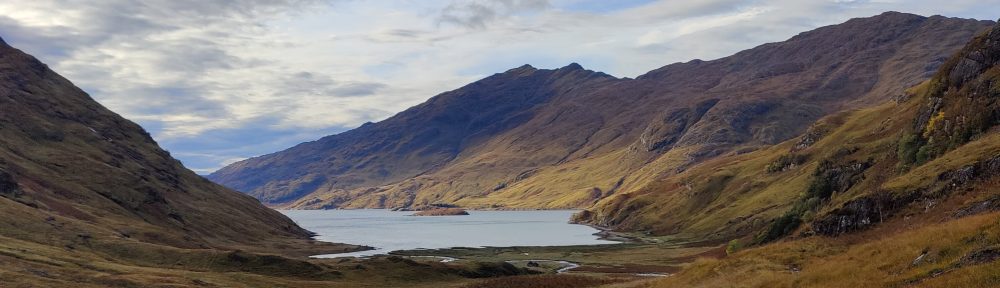
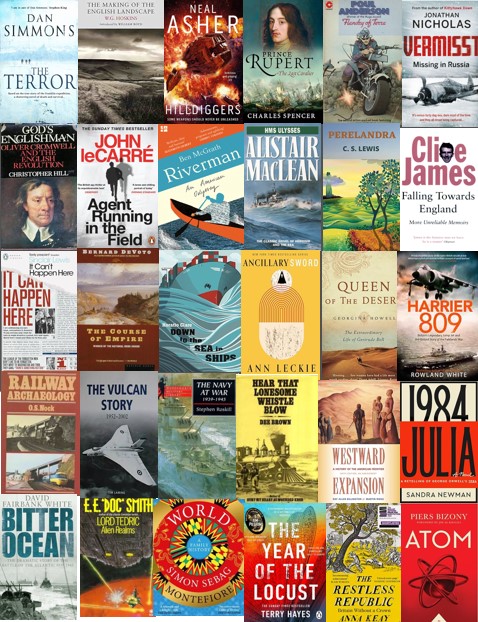
All the landscape was the mill

A crowd of ladies from a faraway land, each dressed in brightly coloured fabrics, would come chattering past the house each day. They would sweep along every morning and evening, their conversations bright, adult, and quite incomprehensible in some unknown language. The little boy asks, who are those ladies? His mother tells him that they all work in the mill at the bottom of the street.

The boy learned a lesson young: who you are and what you are can be seen from where you’re going – and when. The direction you’re walking, and the time of day, tells us something about who you are.

At the bottom of the street, a crossroads. Go left into a quiet lane past the allotments to the edge of town. Go right past a bowling green smooth like a billiard table, to a sweet shop. Straight on, to the park, to school, to Cubs. The crossroads of our lives – turn each way for different lives, different paths. People will know where you are going, when you walk through these streets. Here, brick and tarmac, there, woods and quiet shrubs and grasses. Straight on – for play, and for learning.

The sepia stains of history lie on these streets, or at least it seems so, to the boy and to the man he became. Here, a grandfather swam in an outdoor pool. There, a street where an unsmiling lady stood in a crowd of joy and cheers, struggling to see the good in VE Day. Over there, the flats, and the outlines of vanished streets. The streets are gone, but the memories remain, thick like dust, easy to discern if you’re the right sort. Listen carefully, even today, and you can hear the treble drone of bombers, or the wretched tears of poverty, the grinding life of the urban poor.

He came back to those streets in a kind of pilgrimage, thinking somehow to reconnect with the past, with the feeling of those early days. If he could represent his childhood. all the carefree years of boyhood, as an icon, that icon would be a little image of the mill at the bottom of the street. He walked past that mill every day for years uncounted, it seemed to him when he was young. Endless weeks, he went past that mill, morning, afternoon, evening. And he never went inside it, in all his life.

As a young man, he’d sat with this father watching old Laurel and Hardy movies. They were amusing; there were wry smiles. But even as he watched them, he found that they were just not as funny as they had been when he was a small boy. He’d mentioned this to his father, who’d shook his head with the greybeard wisdom of ages. “The boy who rolled around laughing on the floor at these movies, no longer exists”, he said. The boy became the man, the young man became the older man.

Could these streets ignite a kind of holy nostalgia? Could they form a harbour into which a pilgrim might sail, to sojourn briefly in the past – a visit only. Not to remain. The mill was still there; the streets were still there. The crossroads by the bowling green was unchanged. The municipal lines of alternating plane trees and lime trees in the park – still there, save for a few gaps caused by storms of old.

Walking in past the park, he’d noticed that no single youngster was out playing. It was 4.30pm on a spring weekday afternoon. The roundabouts were siezed and rusted, the swings abandoned, it seemed. Where was everybody? Where were they all? He knew, really. No Marie Celeste mystery here. Just the modern world, risk averse, focussed on itself, with smartphones, tablets and unwillingness to be out of doors.

The mill was the fixed point – all the landscape was the mill. But there was no river of bodies pouring down the street to find work there. That river had dried up long ago. Here had been a future for hands of skill. No longer. That much had changed even in his own youth. What remained now, was clearly foreseeable even back then – if you could read the writing on the wall. What had been a mill making clothes, was now a university department. It was a department covering such matters as textiles and art, so there remained a tenuous connection with what had been. On the river of time, you cannot paddle upstream. That river flows only in one direction.

He walked up the street, remembering the red and blue bricks in the pavement. He recalled cycling down the street on a baking hot day, trying to keep in the shade. The baleful sunlight of reality was upon him now, beating mercilessly on his head. No golden light of evening, nor delicate pink at dawn, but scorching tropical sunshine at noon. A sunshine, as Kipling wrote, that sometimes strikes men dead.

Yet, though saddened, he knew things had to change. There is no going back. There’s no returning to those places of golden childhood. Nostalgia is a hip-flask from which we can allow ourselves no more than a discreet sip, every now and then. If we look back, we must look in thankfulness, not in nostalgia.

Treading his way up what he thought was a dried up riverbed, he noticed that there was a new river of bodies making their way to the mill, young people, people learning. people looking to the future. And reassured somewhat, he left that harbour and sailed away back home.

Victoria

I sat in the bar on the mezzanine level, looking down at the jostling throng. There were crowds of people, rivers of humanity, rushing streams and babbling brooks of concerns: work, life, holiday, family, health. The people flowed back and forth across the concourse, each intent on their own business.

And it seemed to me as I sat in the bar, nursing my beer, that amongst the swirling crowds, that sea of people, just a few of them stood out. Across space and time, I saw a handful of people crossing this station concourse.

A man – two men – in morning suits appeared as from the pages of history. It was 1957. Britain was only slowly recovering from the austerity of rationing. There was a greyness, a grim and drab feel to the station. These two young men were rushing, desperate to catch their train to Dorking. For it was a special day for them both. One was a Best Man; the other, the Groom. They had been in what seemed like an endless queue, and somehow, they had convinced the staff of the railway company to let them jump the queue and get on. Now, at least, they were almost on the platform and on their way.

I took a pull at my pint, and when I looked down again, the scene had changed. Soldiers streamed across the station. Orderly ranks, serried columns. Rifles, rucsacs, the harsh shouts of sergeants. These men were entraining for Dover, bound for Flanders field. The hopes and fears of a generation of young men are hidden on a thousand faces. Here is a young subaltern, pink of voice and cheek, bravely concealing his worry, doing his best, biting his lip. His men may have to depend on him being strong.

Back in the present, I see a young lady, a refugee from war, crossing the station carrying everything she owns in one immense suitcase. Three young children accompany her, silent, scared, intimidated by the noise and crowds. Their mother knows only a few words of the language; she holds little or no currency. But she and her kids are in a better place by far than where they were before. .

Here is a youth in his eary twenties, visiting the big city for the first time. perhaps. He’s crossed by tube from one of the great northern terminii, and must now make his way to a small town in Kent, for a job interview. Days before, a mighty storm leveled trees all aross the south of England. He will soon travel by bus through all that chaos of fallen branches and broken limbs, from a town whose very name has been rendered a lie by the storm.

The scene changes again and I see a man carrying a small grip crossing the station. The crowds have all disappeared and the grey light of early morning can be seen in the glass roof. He has come up from the underground to find it pouring with rain. He pauses for a moment to take in the scene. Rain cascades from the gutters. The tarmac gleams wet in the reflected street lights. He crosses the forecourt, taking in the calm of early morning. The rain, the sound of the rain, calming his nerves, as he makes his way to the airport train and the other side of the world.

A review of Sapiens, by Noah Yuval Harari

A very readable canter through the entire history of humankind, from pre-conscious apes out on the Savannah, through to the possibility of post-human cyborgs and immortality.

Harari has taken a humanist and atheist standpoint throughout, which I found challenging and upsetting in places. I was warned by the person who recommended the book to me (who knew I was a Christian) that I would find it challenging. And it is, and rightly so. But my faith in a transcendent, caring and personal Cod is not shaken by the work of this liberal academic. Some might say I’m too thick to understand.

He has expressed some outrageous and refreshing ideas; a key theme throughout the book has been to question the established wisdom on economics, politics, history, culture and language. I was particularly impressed with his chapter on the individual, the market and the state, noting that the free market cannot really survive without the state. He avoids the espousal of Socialism, but manages nonetheless to articulate the main flaws in the free market, capitalist system. He acknowledges that, notwithstanding those flaws, it is that same system that has brought us so far this last five hundred years.

He notes that European cultures prevailed over comparable or even superior Islamic and Asian cultures because of the concept of credit. What he does not say is that there was little choice. Kings came before Parliaments seeking money: they needed credit, generally to fight wars. This development, of itself, fueled the rise of Parliaments and of democracy.

His final remarks on the future seem ill-at- ease and somewhat hurried. He describes a number of ideas as if they were new- ideas like immortality and post-humanity, cyborgs, genetic modification of people, to name a few. Some of these ideas have been discussed by modern science fiction writers such as Paul McAuley, Richard Morgan, and Alister Reynolds, for decades. He goes on to confuse science fiction as a whole genre with that small sub-genre we call space opera, demonstrating a perhaps understandable ignorance of sci-fi at the very part of his work that would call for an understanding of it. But his final chapter does articulate some of the potentially dreadful and also potentially changing possibilities that lie ahead of us.

Overall, refreshingly positive in outlook, once you are past the early sections where you could be forgiven for thinking that the author does not like the human race. Me, I do like the human race. I think it is excellent. I am a member.