A holiday in Spain, and a visit to the wilder shores of Marx, by Theodore Dalrymple – 2016

Another bit of travel writing and a book review from the past – to help us all while we are all still locked down. In late summer 2016, my wife and I and our oldest daughter took a short holiday at a little village in Nothern Spain. We flew from Gatwick…

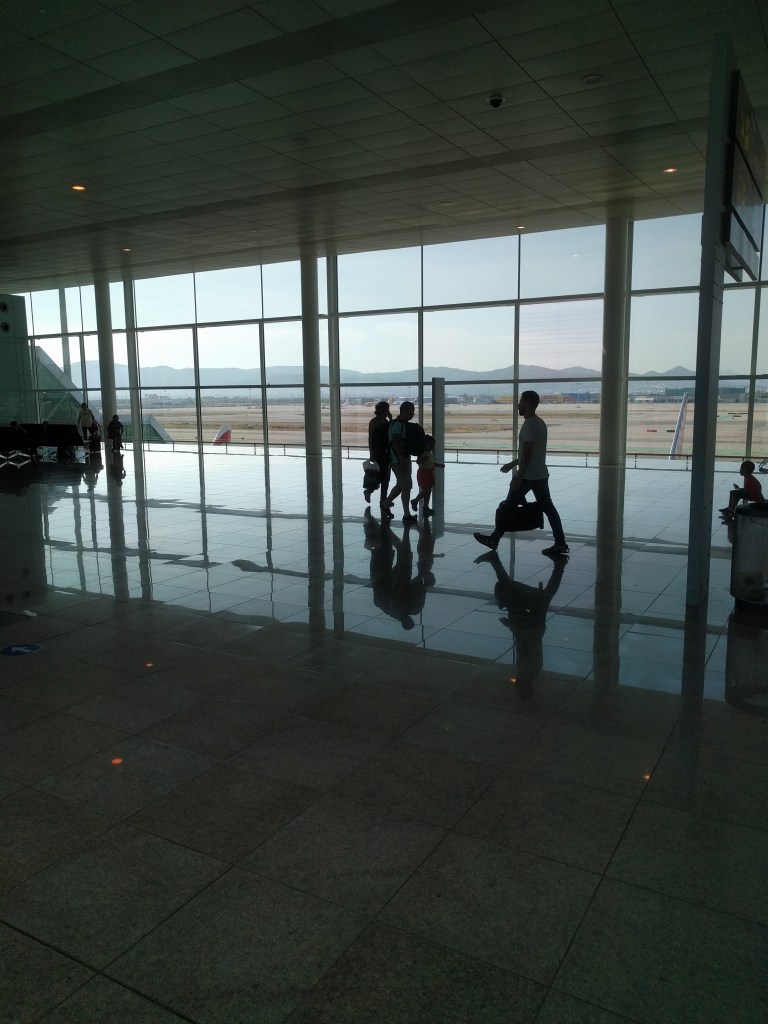
…interesting to reflect, sat in LGW (North) at least following my recent reading of Theodore Dalrymple on Marxist regimes, that there are no policemen airside, at least none in uniform and none that I could discern in plain clothes. Although as John le Carre (I think) writes, in a civilised country you will never know who the watchers are…

The flight to Barcelona was harmless. Passport control in Barcelona took a while, which ired me somewhat, but we were through soon enough.  It WAS a Sunday. An unusually pleasant and flirty rental car lady took us through the details of the car rental documents, and soon enough we were on our way to Barcelona in an Audi A4 – a quite dreadful machine….

Dalrymple writes very well, kind of like a superior English version of Bill Bryson, humorous but not as flippant or as coarse as Bryson can be.  He puts into eloquent thought, what I have long felt to be true of myself: writing of a visit to some long-forgotten tomb in Vietnam, he notes something that applies to every experience of my life, great or small, banal or timeless and glorious. “It is the fate of intellectuals to leave no experience, however ravishing, to remain in the memory untainted by theorising”. Me, I must think. To think, is to be. To be unable to think, is to be nothing. And going on holiday, allows time to think, amongst other things.

Leaving the airport, we drove right into the centre of Barcelona, and parked up in a tiny inner city car park within a few hundred yards of the Sagrada Familia.  It was a very cramped car park and used only with some difficulty, particularly with a shiny new rented saloon car.  Next door we found a café and stopped for a very welcome brunch.  For me, a croque-monsieur and latte.
The Sagrada Familia was wonderful, everything I expected and much, much more in terms of light, colour, space, columns, stained glass, carvings and architecture.  Later we had afternoon “tea” of coffee and cakes.  Then we navigated our way of the city, and thundered along the coastal freeway north towards the Costa Blanca.  We arrived in the village and were taken to a little village square, where we were very fortunate to witness one of the those “people towers” in the midst of a little party or carnival.
We lazed by the pool over a few beers, and then, in the gloaming, had a light supper, bought in the supermarket back in Barcelona.  The supper finished by candlelight and was enlivened by some great conversation. A good start to a holiday anywhere in the world.

Next day, we had a pleasant morning; we bought some groceries in the nearby shop. 40 Euros including some amazingly cheap San Miguel, six huge litre bottles for 7 Euros. Then, another ham/cheese/tomato/bread lunch about 1p.m – a slow and languid day on holiday. In the evening we went out for supper, to a restaurant down the street.  Plenty to eat; meat croquettes, frittata, rabbit, chicken, and fish, all washed down with Sangria.  There was a downpour whilst we were there, and there was much lightning visible in the distance – but it was never a serious thunderstorm. During the night the wind got up and was banging doors, waking us all up.

Theodore Dalrymple has written a number of very readable works, including Our Culture, What’s Left of It: The Mandarins and the Masses and Not With a Bang But a Whimper: The Politics and Culture of Decline, and my favourite, Spoilt Rotten: The Toxic Cult of Sentimentality. He used to contribute a rather dry and amusing, if somewhat distressing column to the Daily Telegraph, covering some aspects of his work as a prison doctor. His writing leans to the view that in the west, liberal views can have a tendency to minimise the responsibility of individuals for their own actions, and to lead to the creation of an underclass. I don’t think you’ll see him at the same parties as Robert Fisk or George Monbiot.

But he has written here a very humane and gentle account of journeyings in forgotten Marxist lands. Cuba. North Korea. Ethiopia. Cambodia. Albania. Some of them are Marxist no longer; others remain under the jackboot. His travel writing can be a little superficial, but it’s not less informative for all that. Reading it only serves to reconfirm my opposition to all forms of Communism – Marxism, Leninism, Maoism, Trotskyism, call it what you like. Heinlein called it “malevolent silliness.

Next day dawned very fresh and clear after the rain. After breakfast we hiked up to the local hermitage, and thence round the mountainside in bright sunshine to a monastery.  The views were wonderful.  We had an excellent lunch at the monastery; there was a set three course menu for 16.5 Euros, and some San Miguel. Very good service. And so back through the late afternoon to the flat at Palau, whence we three lazed by the pool and had laughter.  An excellent, first rate day of holiday.
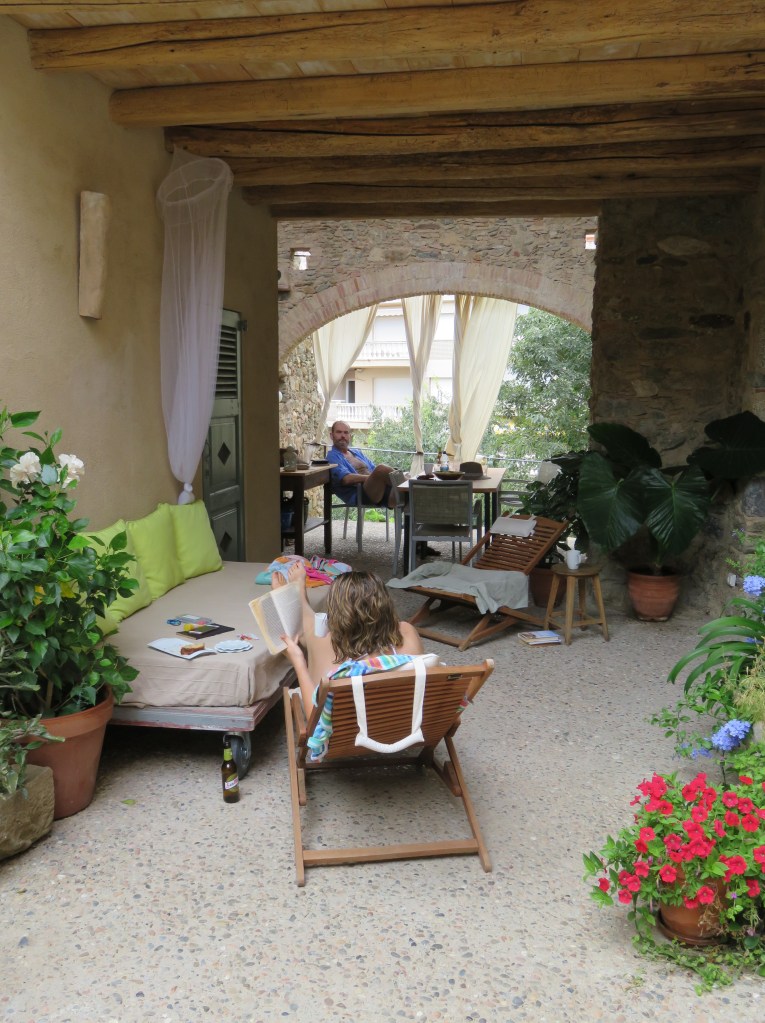
Another relaxing morning with a “holiday breakfast” feeling.  I come down dressed to find my wife and daughter relaxed, taking coffee. I buy croissants and we have us a pleasant breakfast in this little courtyard, tastefully converted from some light industrial premises of the past. In this case, it was once a blacksmith’s yard. It is cool, it is clean and it is quiet, and it is private.  A little fountain provides a constant background tinkling. Outside an archway at the rear are some rather ordinary flats, and a terraced garden with a tiny swimming pool.  To the right, the hills.  To the left, the coastal plain. The property, says mine host, has been in their family since the 17th century.  Whilst it ostensibly sleeps eight, there is only one big double room.  Upstairs, two rooms, a double and a twin, a good bathroom and a large mezzanine lounge which could be used to sleep more people at the expense of privacy.  Downstairs, a good kitchen, an indoor dining area and lounge (although at this latitude dining indoors is probably only necessary from late November to late February) and a second lounge room with a huge futon.  There’s a delightful second bathroom, open to the sky (through a window of course).  The skylight opens on one of the three rooftop terraces boasted by the house, which would make some people edgy about using the shower. You would want to be careful if the house was full.

But all good things come to an end. We had to go home eventually:
Hiking in Cornwall – 2017

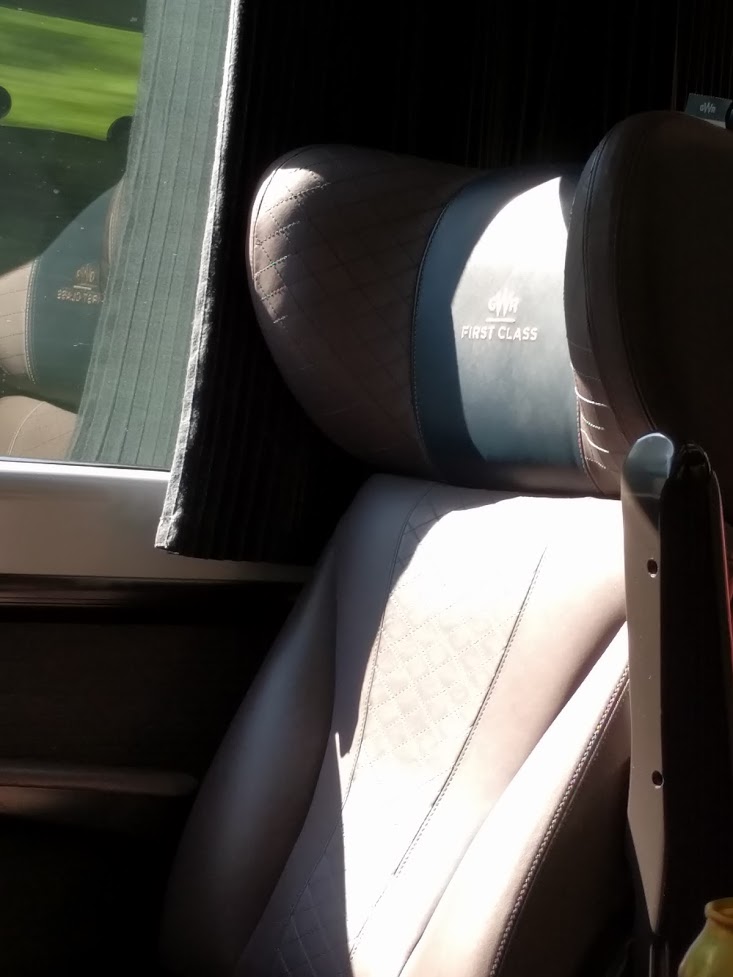
This image has an empty alt attribute; its file name is gwr-seat.jpg

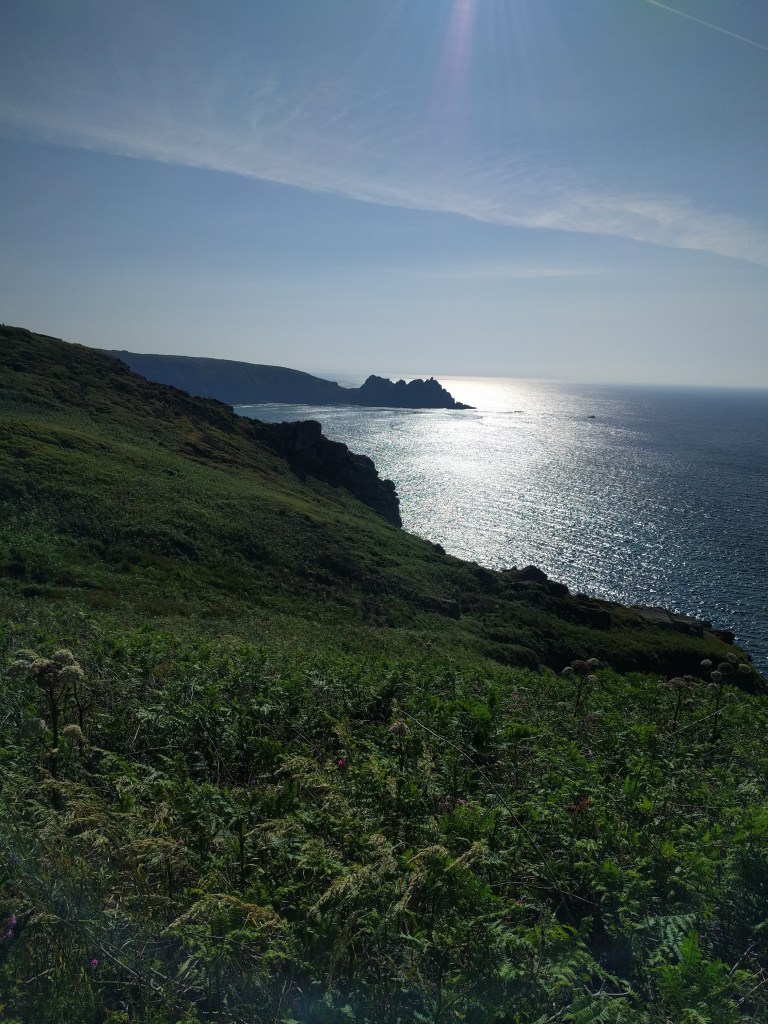
Here’s a look back in the diary, to a baking hot June day, the start of a walking trip round the very toe of Britain. We walked from Penzance to St Ives over five days.

On that hot June day we took train from Paddington to Penzance. A journey that started with selfies taken in front of a statue of Paddington Bear; a journey through the very heart of England. We arrived in Penzance, and we found our Air BnB, settled in, and then strolled around the town, visited a chinese chippy, and bought a bottle of cider on the eve of our walk along the Coast Path.

The following day we shouldered our packs, and set off through the optimism and sunshine of a June morning. We walked through suburban Penzance, through lanes and past white houses. Through greenery and parks, and out onto the coastal path. Plenty of money evident here; these are houses built for wealthy merchants. There’s plenty of money here still. Onwards, along the beach, through Newlyn in the breathless hot morning, to that place we spell Mousehole. Rather like the name of a certain well-known port wine, the name of the delightful little village has to be pronounced responsibly.  

At Mousehole we stopped for morning tea at a café owned by an Englishman from the north country. No Cornishman he. We stopped for lunch at Lamorna. I’d never even heard of Lamorna until I planned this coastal walk. Sat on the seawall, we had bread, tomatoes, and cheese. Water was sufficient to wash down such a simple repast in such a beautiful setting.

This was our first day carrying big rucsacs. At Penberth Cove, labouring through the unrefreshing heat of the afternoon, we found an unlooked-for and most welcome supply of cold fresh water. We filled up our water bottles and walked on out up the valley. Tired and worn, we walked through potato fields to Porthcorno, another place I’d never heard of. At the village, the telegraph station was prominent – this was where early telegraph lines from across the ocean, emerged from the heaving waves. The “Cable Station Inn” was the former works social club; it looked and felt like a works social club still.

A young woman of about 22 in a skirt so short I hardly dared even look at her, showed us to our room. Refreshed after a shower and a nice hot cup of tea, but oh so tired after this our first day’s walk (and in such hot, sunny weather) we made our way to the bar for supper. The staff prepared long lunch baguettes for us, to fortify us on our walk on the morrow. This was a shame, as we shall find out: we paid for ‘em, but we only ate about a quarter of them.

Next morning, the weatherbeaten and worn-looking proprietor Mick made breakfast for us whilst humming and singing in the kitchen.  Bless him, he never so much as asked us what we wanted – it was literally – not metaphorically – “take it or leave it”. But a Full English was more than welcome: we took it.

After lingering to chat with the friendly and engaging Mick, we made our goodbyes and set off. Your actual “Lands End” was about halfway along our route today. We found it as dire and as commercial a place as ever we’d visited. That said, having hiked there through the blue salt sea air carrying a heavy rucsac, I found myself thinking, I could just murder a Cornish Pastie: So I bought one.  My wife tasted it and liked it so much I had to go and buy another one for her. And that, my friends, was the end of the lovingly prepared baguette lunch from the Cable Station Inn in Porthcorno.

We hiked on into the afternoon and came to Sennen Cove, a magical place, and again, a place I’d never heard of. Turquoise sea, yellow sand, a little town comparable to Croyde in North Devon, but with a better beach, perhaps.  We had ice cream, and we noticed a glorious cross adorning the wall of one of the surf companies. The first beach we passed by, though it displeased my wife to pass it without stopping. At the second beach – called Gwynmer – it was made clear to me that we would be stopping for a swim. Right you are! And so we did, stopping for a refreshing swim in the sea.

In coming off Gwynmer, we left the SW Coast Path and found ourselves navigating across country to St. Just.  This worked, though full reliance on mobile phone mapping software was necessary.  We got to St. Just and we were worn out. Our Air BnB host here, at a tiny terraced house on the main street, was a pleasant and outgoing lady. She recommended the Kings Arms and so we ate there. The following day we bought lunch baps from the pub landlady’s other business, a sandwich shop in the main square.

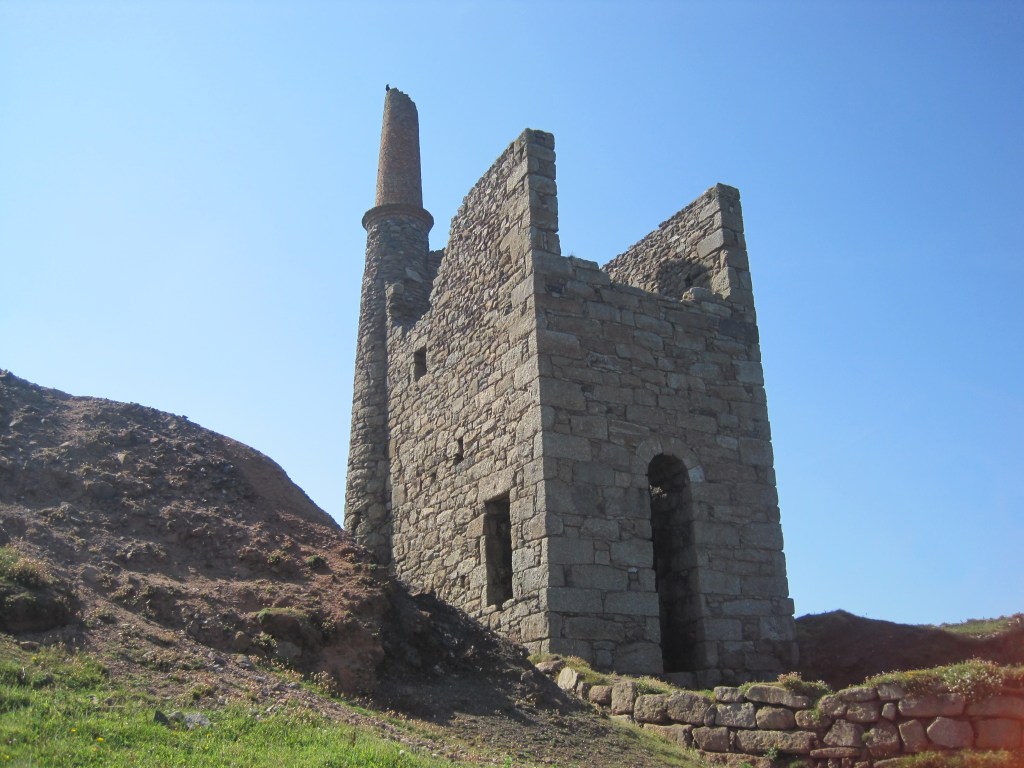
During our walk, which was again in very hot weather, we met a very heavily pregnant lady. She was trebly conspicuous, as being perhaps a little older than pregnant ladies usually are, and also she had a dog which had been paralysed from the waist down but had recovered: the dog had a very unusual gait. Our walk took us through an area of industrial heritage – in amongst the lovely green valleys, various ruins and workings. We lunched by a babbling brook nearby another glorious lost beach. As we did so, yet another heavily pregnant lady passed us, her bump out in the hot sunshine.

As the afternoon wore on, we found ourselves at the Tinners Arms in Zennor, where we thought we’d stop for a quick pint in the heat of the day. It was that kind of moment…just a swifty before pushing on suitably refreshed, across the fields to our accomodation for the evening. But in conversation with the bar staff it became clear that there was high demand for tables at the Tinners Arms at Zennor – even mid-week. It was in fact the only licensed premises for miles and miles. We booked a table on the instant! Later, when we did sit down for dinner, our meal was punctuated by the apologetic tones of the bar staff turning away casual enquirers.  Glad we were to have booked in advance.

Onwards to Tremedda Farm, Zennor: We found ourselves sat outside on an Italian portico, not yet 7a.m and already quite warm enough to sit here in the shade. There’s a refreshing breeze and the wind is rustling in the nearby trees. This house, of Italianate design, is delightful. From where we are sat, it feels Roman, foreign almost, but we gaze out onto an English – or perhaps Cornish – garden.

Last night we had a conversation with the couple in the room next door, an American couple a little older than we. It turned out that she had been brought up in the same small town on Long Island as my wife. There followed a great “small world” conversation whilst they reminisced.

The weather has been very kind to us. Yesterday we met a lone young woman hiking the Cornish part of the SW Coast Path. She said that she had “not expected a heat wave” – and she was an Englishwoman. The peace and the silence has been enough too; the opportunity to slow down, to de-clutter one’s mind and consider what is, and what is not, important. The underlying issues may not be resolved, but being on holiday enables one to get before God, seek His kingdom first, and put things into perspective. Richard Foster writes, in “Celebration of discipline”, that we “must pursue holy leisure [Otium Sanctum] with a determination that is ruthless to our diaries”

From Tremedda farm, onward through the fields, eschewing the strongly up and downstairs coastal path. Thus, we arrived in St. Ives late morning and refreshed, rather than late afternoon and jaded. We dropped our bags off at our accommodations, and went swimming in the sea, then we had a lovely fish lunch in a pub on the quayside. In the evening we took bus acoss the ithsmus back to Mynack, which we’d passed on foot some days before. We watched the Illyria Theatre Company perform “Pride and Prejudice”. There were only perhaps five of them, each taking multiple roles. Elizabeth Bennett wore a dress and Dr Martens boots. The whole thing was hilarious. The Mynack threatre is to be recommended, though the seats – stone benches cut into the hillside – are hard. One can rent cushions for a small fee. The atmosphere is magical, particularly for performances at dusk. It did mean a late finish; we were not back in St Ives til after midnight.

The next day, in cooler weather, we set off on our pilgrim walk north-south across Cornwall, from St Ives to St Michael’s Mount. The “St Michael’s Way”. We hiked on towards Penzance, across the width of Cornwall, in improving weather and improving mood, and then on the following day on foot to St Michael’s Mount – which I confess I found oddly uninspiring and somewhat disappointing.

Our return to Surrey was via a visit to relatives on the Devon/Cornwall border. Train from Penzance to Plymouth, and then later a rather excellent dinner at the Cornish Arms in Tavistock. G&T’s in what to my eyes were vases. I had the Ox Cheek. We raised a glass to my wife’s late aunt, recently passed away – for one might say that this fine evening out was to her memory.

And then we two took train from Exeter – but this time, a Southwest Trains service to Waterloo. We took this service, though slower, because it was less costly to travel first class, and because we could change at Clapham Junction. Everything was OK until we got to Woking when trespassers on the line caused massive delays. Never mind: overall, a fun time and relaxing. We were lucky with the weather though.

More Scottish travels

After a work-related evening in The Dutch Mill in Aberdeen, the following morning I set off up Deeside towards Braemar. My first stop was Gordon’s Tea Rooms in Braemar, an excellent little gaff where I had a latte and some rather tasty fruit shortbread. I did like the lamps each hung on a miniature sheave.

From there, over the blasted wilderness of Glen Shee. A typical Scottish ski-station at the top of a pass – deserted other than under winter conditions. On the Aberdeenshire side, deep, thick mist. Oddly enough, a change in the weather meant that the Perthshire side of the pass was much clearer – an odd effect of the mountains. Thence, through to Pitlochry. Amidst rain and tourists, I sought lunch. Pitlochry has not changed for the better; the retail trade is in deep recession, and the main road through the mountains has long since bypassed this town – and it shows. I went to see the Fall colours at Garry Bridge, but it was no weather to be outdoors in town clothes. I pushed on towards the central Highlands, toward the dreary 55mph treadmill of the Pass of Drumochter.

Long before I got there, I happened upon the Atholl Arms Hotel on the north side of Blair Atholl. I like an historic coaching inn every now and then, and I turned into the car park with no further ado. Grey stone, an imposing frontage and large display windows that seemed almost Mackintosh-esque to me. Coats of arms prominent, yet not covering itself in tartan, nor in the cross of St. Andrew. So far so good. In a cosy little reception area to the right of the front door, a blonde lady in blue suggested a single room for £50, or a double for £75. I opted for the single. It was off to one side, clearly an erstwhile room for students or staff. The room looked dreadful: it was ill-lit; there was woodchip on the ceiling; 80’s pine furniture, and a single bed jammed against the wall. I liked it. It also had a perfectly excellent shower, a fluffy white bath towel, and the makings for tea included a little teapot. I was set up! I went out for a run up Glen Tilt.

It’s the touches of old that endeared it to me…the wooden sash windows, the 1970’s light fittings, the domestic patterned glass in the windows was probably older than I am. For £50, it was atmospheric and excellent. But I could not hope for a great breakfast. I went down with low expectations, and I was disappointed. I had as good a full breakfast as anywhere in the UK, served by friendly and engaged staff in an enormous baronial hall fully two floors high – the recipient of light from the aforementioned large display windows. The ceiling was Robin Hood green, the walls, a deep maroon. Crossed swords and pikes were hung on the walls, interspersed with stags heads.

The following day at noon, after trundling through rainswept countryside along single-track roads, I stopped in Kingussie and took coffee in the “Sugar Bowl” cafe. I was luckier with the second-hand bookshops and picked up Geoffrey Household’s “The Sending”, Iain Banks “Raw Spirit” and Christopher Sommerville’s “The January Man: a year of walking in Britain”. I happened to glance at my phone, looking for information about a heritage railway I knew was somewhere near here, and I saw that there was a Diesel Gala Day – today. I put on my coat and hat and left for Aviemore on the instant.

From the Gulag to the Killing Fields – notes on Totalitarianism

A few musings on totalitarianism, brought on by a work-related visit to Vietnam. I have juxtaposed this with a recent re-reading of Orwell’s “1984”. I read a lot of books at once, mind, and I am also ploughing my way through a collection called “From the Gulag to the Killing Fields: Personal Accounts of Political Violence and Repression in Communist States”. It has been put together by an academic called Paul Hollander, himself a victim of the political violence of the Hungarian uprising of 1956. It’s certainly not bedtime reading. It makes uncomfortable reading for me, much less for anyone with remotely left-wing sensibilities. We tend to look at Russia and China as the worst offenders in terms of the sheer volume and quantity of communist political oppression and violence, and this book tends to support that view. But reading books these upsetting personal stories, other places take the record for sheer horror and human tragedy (Cambodia and Vietnam). For the ill-treatment of political prisoners, I’d look at Cuba, where there was a peculiar and toxic mixture of Latin machismo and the malevolent foolishness of Marxism.

It never fails to be a pleasant surprise to me that books like this collection are in print in the UK at all. It is not beyond the bounds of darkest fantasy that a time will come for the UK when having a copy of such a book could put someone at risk of being sent to prison.

It’s always good to pick up a few points from Orwell. His character “Bernstein” who ostensibly writes the “book within the book” plot device allowing Orwell to lecture us on totalitarianism, says that the rise of machines has, “by producing wealth which is sometimes impossible not to distribute”, led to an increase in average living standards. Our standard of living has indeed improved from the early 20th century (earlier really) until now, and should continue to improve all this century. This is not politics, nor economics, but technology – the rise of machines. Orwell notes that “an all-round increase in wealth threatens a hierarchical society” and “A hierarchical society is only possible on the basis of poverty and ignorance”. Amen. This truth lies at the very heart of “1984”, and at the heart of opposition to technology for it’s own sake. Opposition to “machines taking over men’s jobs” is at heart a desire for order and hierarchy, a vote for the established order, an endorsement of the status quo. And I believe the status quo is almost invariably worth upsetting. Technology and machines, of themselves, create wealth and hence threaten the status quo in hierarchical societies.

A review of “Walk East Til I die”, by Mike Pinnock

A review of “Walk East Til I die“, by Mike Pinnock

I like a good outdoorsman’s travelogue, and this falls into the same category as Nicholas Crane’s “Clear Waters Rising” or “Two degrees West”.  An Englishman of a certain age sets himself to do an all-but impossible adventure – what’s not to like? I’m an Englishman of a certain age myself – but Mike is older.  I should admit early on in the interests of transparency that Mike is a relative of mine.   

All that said, I liked the historical accounts in this work better.  There’s only so many pints of lager you vicariously enjoy.  Mike paints an interesting story of Eire today and in the past.  My wife and I visited Kerry on our honeymoon in 1990, and we were told that almost no-one lives within twenty miles of the west coast of Ireland, except for those whose living depends on tourism.  Mike’s account bears that out – there seems to be no-one there.  A far cry from queuing up to walk along Crib Goch in Snowdonia, as you’ll have to do on any fine weekend in summer.  

I learned much of Irlsh history.  You’ll not be learning this kind of thing in English schools, not this last 40-50 years. I’d heard of Michael Collins, of the Easter Rising, and of the Irish Free State, and few would not have heard of Eamon De Valera.  What Mike has done has coloured in the gaps a little, brought to life some of that fascinating past, some of the terrible suffering.  From the medieval saints, through the Norman overlordship, and onto Cromwell’s atrocities, then the Potato Famine and the emergence of Eire, Mike has provided some insights into Irish history without ever being partisan or taking an obvious side.  

By train to Euston

The train hisses through anonymous railway stations and anonymous towns. The stations fly past to quickly for me to catch their names. The towns? Houses and streets, industrial units, perhaps the odd ancient church standing out through the early morning mist.

Across the heartland the train goes, through the very essence of middle England. You don’t need to know what the names of the towns are, to know what they are like. The rails shine with use; the electrical wires and their supporting posts flash by. In the distance, green fields and hills under an early morning sky of pale blue. The molten sunshine of not long after dawn washes everything clean. It all looks idyllic. Frost-covered green fields, patches of ground mist.

Waverley station

One of my favourite places to be “outdoors” is the concourse of a big city railway station.  To have coffee, or better yet, to be at beer, is an added bonus.

After an excellent breakfast at a little deli in Callander, I drove on southwards.  It was interesting to see clouds form over the central valley.  Coming into Edinburgh, there was heavy fog and drizzle, though it remained warm.

On the way down, I happened across an #Engineering #Marvel, and went out of way to go and see it.  Many years ago, touring with a friend of mine, on two occasions, we’d found ourselves at a loose end on a Sunday afternoon, and visited – quite by chance, as it were – engineering marvels.  One was a certain “nuclear installation” on the coast of Cumbria; the other, a radio telescope in Cheshire.  To pass within a few miles of the Falkirk Wheel, and not pay a visit, would be crass.  And I speak as someone who can allow the Flying Scotsman to steam unseen past the end of my garden at 5a.m on a working day, whilst I lie in bed.

I allowed myself the luxury of complete dependence on the Google sat nav to get me to my final destination, with only one or two cursory glances at it to ensure that it knew what it was doing.  There’s no call when using sat nav to switch off your common sense or your sense of direction.  At one point I drove past Fettes College.

But back to the great railway stations: I love big stations.  Victoria, St Pancras. Glasgow Central.  The destinations boards, the bustle and hustle, the romance.  Better still – possibly – in the days of steam, with whistles, steam heating, clatter and bang.  I remember steam heated trains from my youth.

And what of the journey, the pilgrimage, the embracing of change, the understanding that things must change? Steam has gone, but most everything changes.  Tomorrow will be different.  The journey never ends. We must take nourishment from all aspects of it: the good, the bad.  From the  rest and the rush.  From the pleasure and the pain.

On a journey, we may do things differently at the end, than at the beginning.  On a journey we must adapt and learn, most especially from our mistakes.

Mhor 84, at Lochearnhead

I arrived at Mallaig off McBrayne’s ferry Loch Nevis, about 5.30pm on a hot sunny evening. I bought such things as I might need were I to have to camp, and set off south at ten past six.  Lovely motoring through delicate evening light – or perhaps late afternoon sunshine.  It would have been nice to stop, but I couldn’t really spare the time. 

I was hampered in places by motorists “pootling”, particularly on the Mallaig to Fort William section, in Glen Coe, and on Rannoch Moor.  The practice of pootling is deplorable.  It is the practice of not driving as fast as the road will safely allow,  and not a mile an hour slower.  That this may be faster than the national speed limit is neither here nor there.  As an aside to the once delightful road across Rannoch Moor, I can see the authorities have found a very cost-effective way of restricting the speed of motorists on that stretch:  Failing to maintain the road.  A road that as recently as ten years ago was quite safe to take at 90 or even 100 mph is now so rutted and pot-holed as to be literally – not metaphorically – a white-knuckle ride at 75mph.

I got to Crianlarich at 8.15pm and I had every intent of staying in the Crianlarich Hotel, which I know had rooms available.  The restaurant was heaving with the Grey Pound, but the reception desk was abandoned.  I rang the bell. I waited. I left. Distinctly unimpressed, I pushed on down the Stirling road towards Lochearnhead.  I’d never driven this road, and it is over thirty years since I was taken along it in a minibus.  Lochearnhead itself has no licensed premises or hostelries of any form whatsoever. Slightly further on, and growing a little edgy as evening wore on, I saw and drove past “Mhor 84”. I stopped, three-pointed and came back.  It was 8.45p.m – the edge of the reasonable time for supper.  I could have ended up in some Travel Lodge in Stirling, or camping rough in the lowlands in some farmer’s field – this is not the wilderness of the Great Glen.

Mine host – a pleasant mannered and rounded Antipodean lady – said she had a room, for which the booked clients had not yet turned up.  On the basis that a bird in the hand is worth two in the bush, she promised the room to me, even as I stood before her.  Somewhat relieved, I went into dinner, and started a much-needed pint.  This meant that I wasn’t driving any further even if the Australian lady wasn’t good for her word.  But she was.

The room was small and white, with Venetian blinds which at this time of year at this latitude are not a lot of use. There were some great vintage signs on the walls – an RAC sign on one wall, and a training display of the Norwegian alphabet on another.  Some antlers had been salvaged from elsewhere.  I loved the fact that they had been wrenched by main force from a wall panel of that now lost building.  A little scrap of panel remained on the white wall.  A nice touch, was a flask of fresh milk to make tea in the morning.

In the morning I sat down for breakfast and it became clear to me that I had not paid £90 for B&B, only for the bed.  They wanted another £12 or so for my breakfast. I left on the instant, perhaps not with the greatest grace, and checked out.  Nice place, arguably over-priced.

Ten miles down the road in Callander I stopped in a little cafe – the Deli Ecosse – for a first rate Full Scottish with coffee, for a little over £6. Lovely atmosphere, great service.  That’s why I love the free market.

A visit to Rum

I made a short stop at Bellabeg, to the west of Aberdeen, and with eager anticipation, bought a “locally sourced” Scotch Egg. I thought, that’ll do me. I chatted with the affable English shopkeeper, who waxed lyrical about his local Scotch Eggs. But then he ruined the moment by telling me that his Alford-based local butcher had sent him a Scotch Egg with a Cadbury’s Creme Egg inside. “FFS” is the politest response to that!

I crossed Lecht, did not stop in Tomintoul, and went on through Nethy Bridge, and onto the long, long pull through the central Highlands to Spean Bridge. Lovely motoring; the weather was kind, not a cloud in the sky. I refueled opposite the Ben Nevis Distillery, with the snow-spattered majesty of Nevis behind, against the blue sky of late afternoon. I say late afternoon: it was 8.30pm. At this latitude, in late May, it doesn’t get dark until almost midnight.

I camped wild not far from the shore of Loch Eilt. Apart from midges, which were, to be honest, a bit out of order, it was all I could have wished for. Dry, quiet, beautiful scenery. A lovely gloaming. At one point, a train clattered along the Mallaig Extension, which ran along the other side of the Loch. As soon as my tent was up, I lit a fire, and also got my trusty 35 year old Trangia stove going. Camping, whether wild or no, should not mean roughing it. I had Fillet steak, mushrooms, courgettes and fried potatoes, with tomato and avacado. A bottle of Badger beer to wash away the dust of the road, and a bottle of Malbec with dinner. I sat outside until 11.30pm and even then it wasn’t fully dark. It was a moonlit night. As I prepared for bed, I was casting a shadow in the silent, silvery moonlight.

In the morning, the midges were biting. I flung the tent into the back of the car, and made a swift, itchy escape. I arrived in Mallaig before 8am, and had a full cooked breakfast in the Seaman’s Mission, served by a cheery Polish lady. The Mission here in Mallaig has a remarkable second-hand bookshop. I picked up a little book of photographs of Derbyshire railways (I was brought up in Derby) and Jeremy Bowen’s account of the Six-Day War of 1967.

Later, I sat with coffee as the terrace of the Tea Garden Café. A very expensive latte at £3.40, but worth it to be able to sit outside in this glorious sunshine. Sitting watching the people go by, it was interesting to be able to spot the tourists. Generally older, thinner, English, German. And the songbirds here are tame.

MacBrayne’s ferry “Loch Nevis” sailed at 12.30p.m. Crossing to Rum and Canna, my fellow passengers were young families on holiday, older and younger sea-canoeists, mountaineers, and quite a few hard-drinking holidaymakers.

On the first evening, we took a stroll and walked into a First Response drama. A lady hillwalker had fallen ill, and advice was sought from the mainland. Modern mobile telephony can make these outlying islands much less remote and difficult to access than they formerly were.

The Air Ambulance was dispatched from Inverness. From far-off Inverness, realistically almost a day’s journey from here by ferry and road, in 45 minutes. The chopper swooped in and took the poorly lady off to hospital. It later transpired that she had a brain aneurysm. Whilst this drama was unfolding, we got talking with a gentleman I’d seen on the ferry – one of the hard-drinking holidaymakers. Turned out my sister knew him; a local electrician who had helped build the Rum Bunkhouse. A very friendly and helpful fellow with a strong Skye accent.

Next day, by Jeep over mountain roads to a beautiful and deserted beach, for a picnic. Pale sand, blue sky, hot sunshine. In the distance, the Black Cuillin of Skye could be seen. The sea listlessly gathered itself into miniscule ripples. Even in a full wetsuit, the water temperature could best be described as “Baltic”.

Someone noted of “island life” here, that there was not a glimpse of reality in any direction. Just this morning for a run out through the woods on the south side of the bay. There, for all to see, is a hidden village. Here is a complete village, concealed from view by trees planted some time during the 1950’s. The village is deserted, I’m thinking, since the Highland Clearances. People once lived here: hidden in the woods, are derelict houses, even a complete street facing the shore. Long overgrown, they are a testimony to an almost unwritten history of sadness and pain.

Rum was never a wilderness, even if it is a “national nature reserve”. As someone with strong ideological views myself, the hidden village acts as a reminder how far from reality, how far from the needs of real people, you can drift when you have the means to put your ideas before reality.

On the way back from visiting the woods, I passed the new wooden bunkhouse. A man was sat outside at the morning sunshine. He was nursing a beer. It was not yet 7.30a.m. We finish where we started: not a glimpse of reality in any direction.

A ride on a mountain bike, over a mountain pass, through rocky countryside oddly reminiscent of the macabre fiction of H.P Lovecraft.

Everything seems to be arid and brown, yet this is no desert – there’s plenty of water around. I went to a place called Harris, to see the “mausoleum” built by the previous owners of the island.

Deer appear everywhere, even in the garden, and particularly at night and in the early morning. These are huge creatures, not at all like the tiny Muntjac and Roe deer seen in Surrey. In recent years, the deer fence surrounding the village of Kinloch has fallen into disrepair. It is a big deal, and would be expensive to repair. It is pointless to keep any kind of garden here. Any growing fruit or veg they will consume. Once resplendent bluebell woods have been eaten up. On the plus side, there are no foxes on Rum: the chickens roam free. They can safely go where they please. It makes for tasty egg yolks – if you can find where they were laid.

I visited my sister Fliss Fraser, who runs Ivy Cottage guesthouse on the Isle of Rum.

China by train

From Guangxhou to Guilin by bullet train

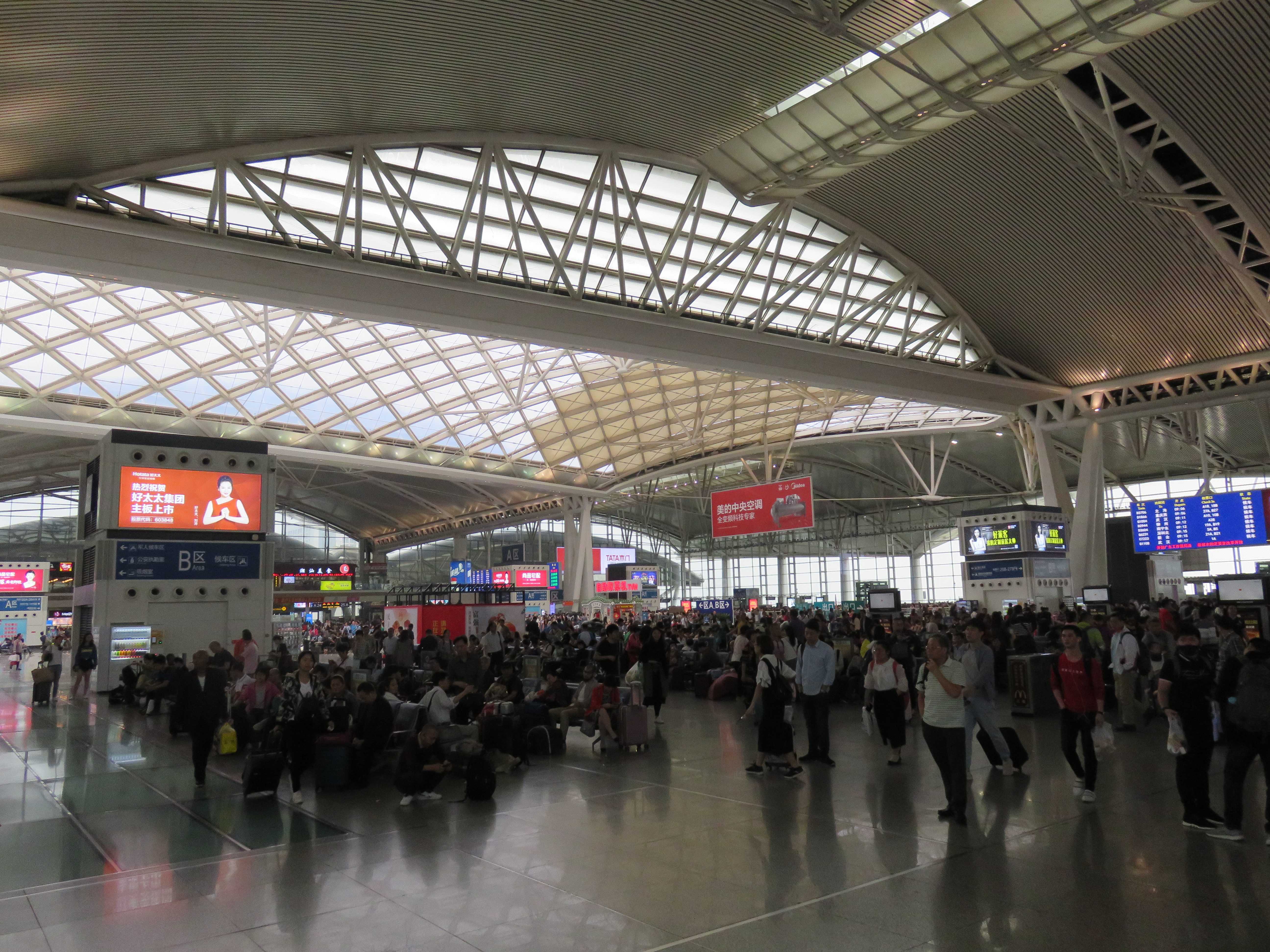
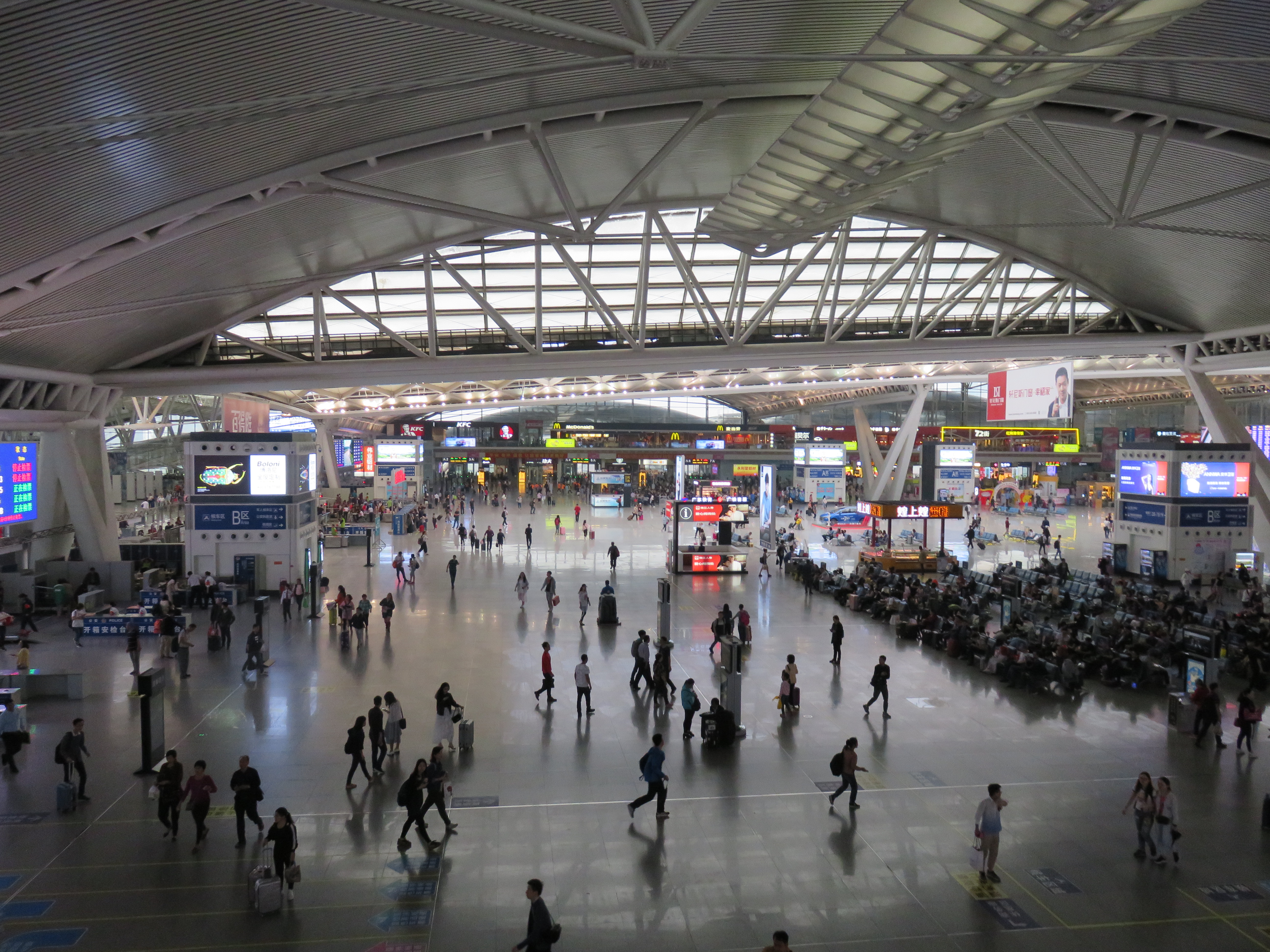
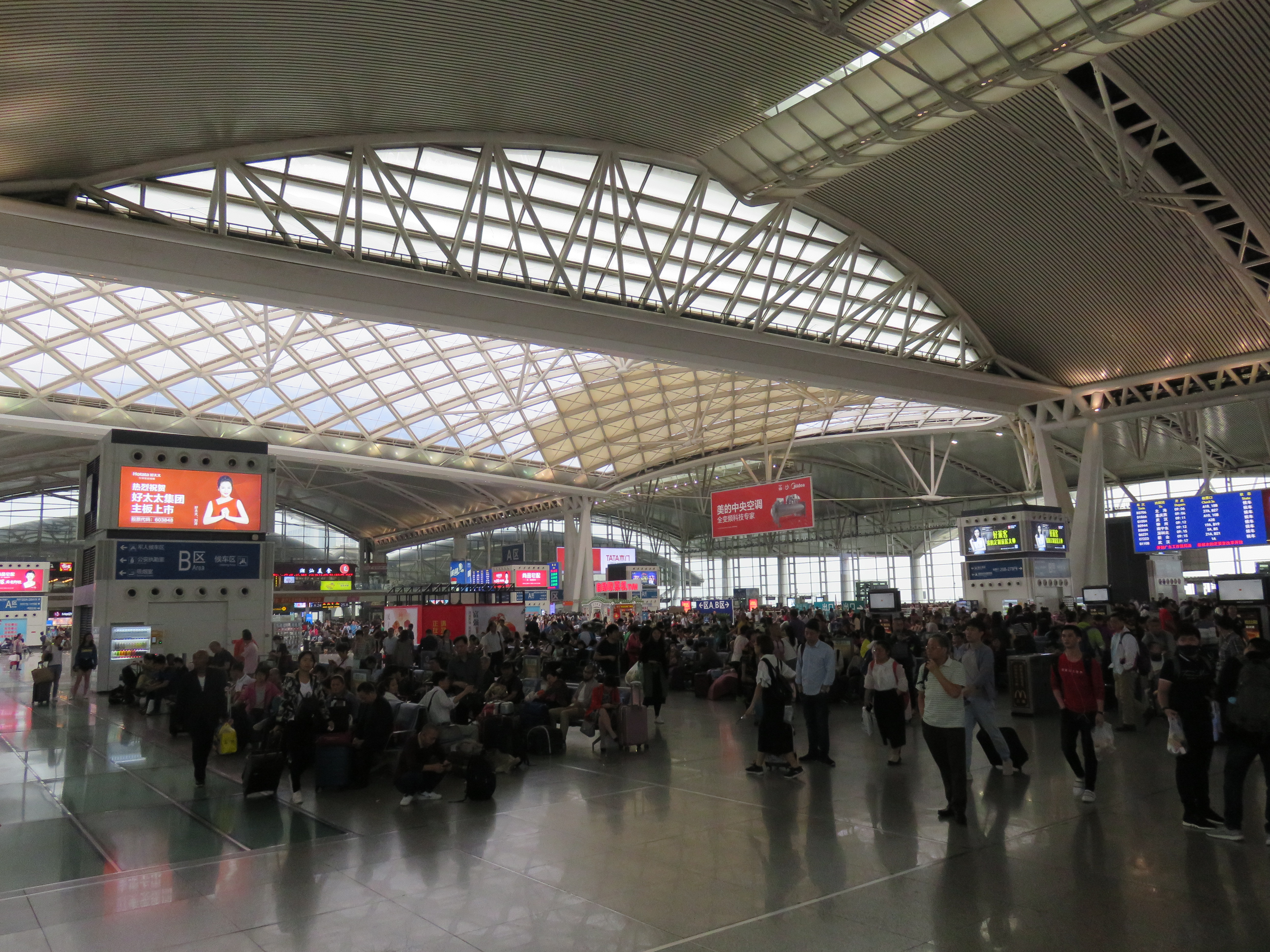
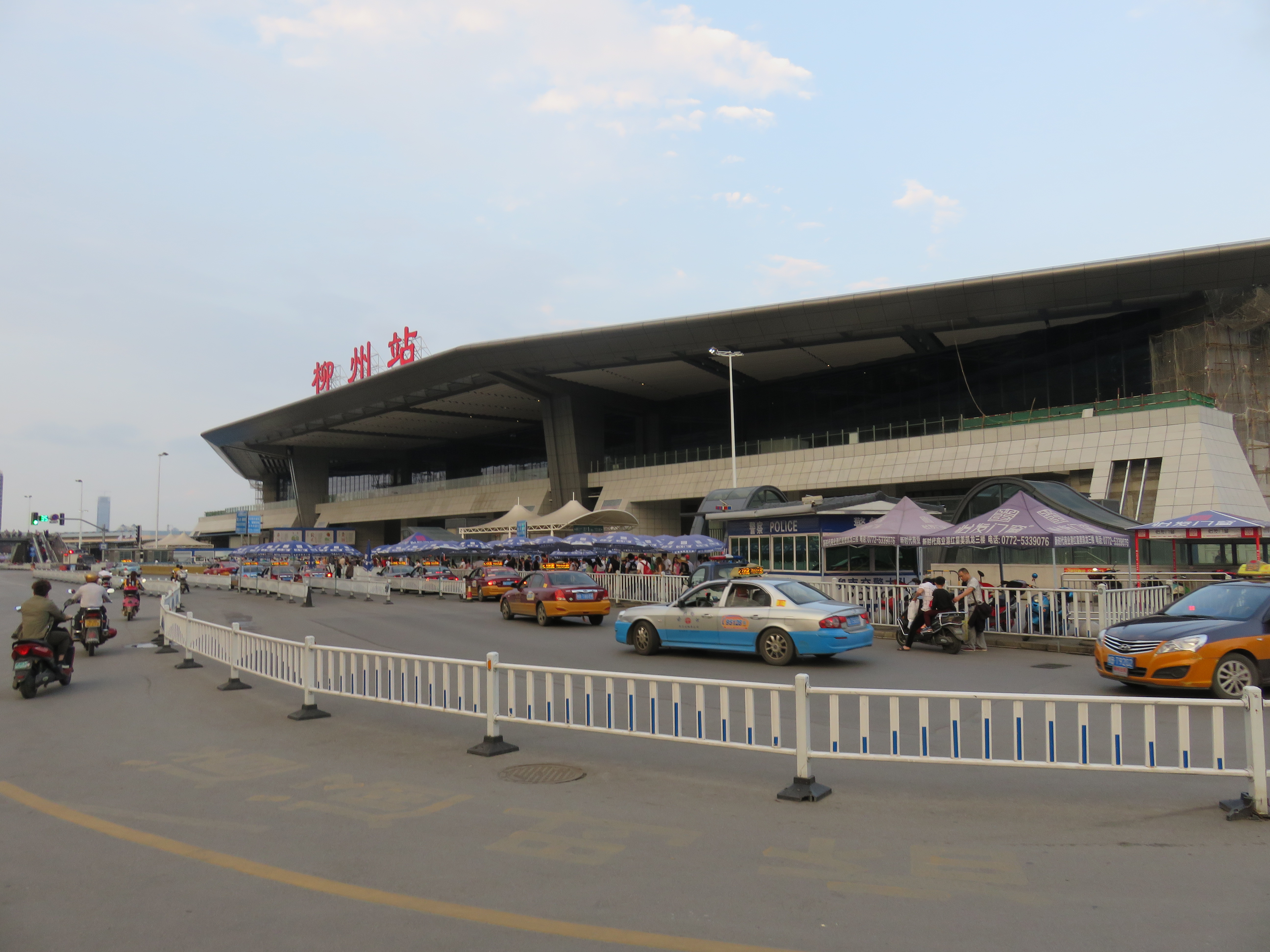
Arriving at Guangxhou South Railway Station, I am quite literally stupified by the size of the place.  It is a Terminal 5 amongst railway stations.  It is hardly distinguishable inside from a large international airport.  It is over three floors – like an airport, departures and arrivals are on separate floors.

IMG_1302
IMG_1304

This is a through station, not a terminal. Coming in by taxi, I counted at least 12 separate tracks coming out from under the canopy, all grey concrete on stilts.  The  floor is granodiorite tiles; the passengers are everywhere.  There are shops, booths, queues, scanners. It does not smell of decay and weak air-conditioning, as do so many large municipal buildings in hot climates.

IMG_1302

It is to my eye, no St Pancras: it is not built to last, and I suspect that, rather like Terminal 5, it may look distinctly jaded by 2050.

All must go through luggage scanners merely to get into the building. This is common enough at municipal buildings in China and increasingly so in the West. That said, the people doing the scanning and body pat-down work showed little interest – the scanning process is not strict.  Once inside, you then find what train you are on, and go through the ticket check to go “trainside” as it were.  Chinese high speed train tickets are not usable by any bearer, as train tickets are in the UK and elsewhere in the world – they are specific to you, as well as to a given seat in a given carriage.  Indeed. ours had our passport numbers on them in addition to our names.  But once through the ticket check, no-one was interested in our ID.  Once “trainside” and upstairs, it just felt like the airside of an big international airport. And the other similarity is, access to the platform is tightly controlled – no trainspotters welcome here.  We weren’t allowed onto the platform until only a few minutes before departure,  The train had already swept in.

The station is only a few years old. It speaks of tremendous economic growth, this outpouring of concrete: Bill Bryson once wrote something to the effect that half of all buildings in the United States had been built since 1980, and fully 90% of all American buildings, since 1945.  A similar thing is happening in China.  Natalie Merchant sings, in her song “Motherland”

Where in hell can you go
Far from the things that you know
Far from the sprawl of concrete
That keeps crawling its way
About 1,000 miles a day?

It is applicable here in China, at this time of expansion, as viaducts arc across whole cities, as 150mph bullet trains flash through tunnels so expensive as to defy understanding.  How do they do it? The growth of high speed rail in China today is rather like the development of the Interstate network in the USA of Eisenhower’s time.  And just as the Interstate highways changed America beyond recognition, high speed rail is changing China.  The old China is still visible, but it is disappearing. Go there and see it while it still exists. The old ladies brushing the street with straw brooms.  The scooter riders with no helmet but an umbrella. The little stalls selling foodstuffs. The little motorcycles converted into vans, burdened under seemingly impossible loads.

Off we go and there are almost continuous announcements in Mandarin.  Once through the suburbs, the train perceptibly speeds up and shoots along at 150 mph.  The acceleration is noticeable, and audible, an indistinct and distant hum rather like the sound of the original Starship Enterprise at Warp Factor 10.

We plunge through misty green forests and mountains, brown rivers, farms and rice paddies. There are endless tunnels. Some long, some short. Billions of dollars have gone into building this railway – and it is only one of many.

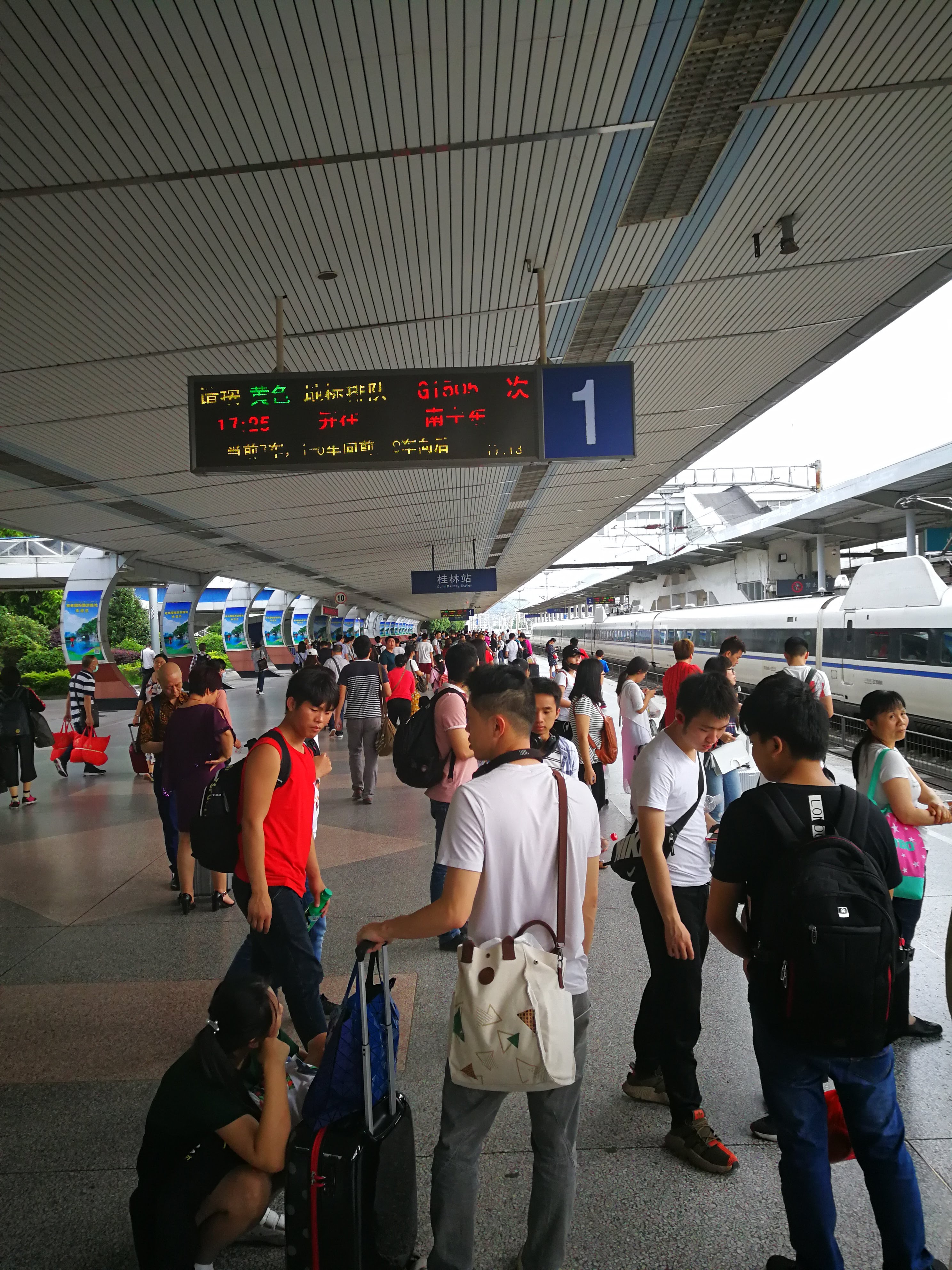
We arrived at Guilin Bey (North) Railway Station at 12,30pm on a hot and humid afternoon.  We  got off the bullet train, along with myriad Chinese, and followed them down the stairs into the underpass. Chattering, walking, kids laughing, suitcases on wheels rumbling along. The Chinese experience is to be surrounded by people.

IMG_1578

To Liuzhou and on to Zhiangziajie

Onwards: another city, another railway station.  This one is different; older, more prosaic.  The first two, at Guangxhou and at Guilin North, were grandiose to the point of being ridiculous.  This one is more intimate, more obviously a railway station rather than a palace, and very much older, dating from the 1970’s or even older.

In the huge waiting room (a departure lounge really) we’re enjoying massage chairs at Y4 (about 40p) for 10 minutes.  I say “enjoying”.  My wife and daughter think they are great, and had two goes each.  I found the massage a bit heavy handed.

cof

By bullet train from Guilin to a city called Liuzhou, from whence we will take sleeper train to another city called Zhiangziajie. So many cities I have never heard of.  Here is a train with a front like an aircraft, like a TGV, based in fact on a Japanese Shinkansen train, and the “dwell time” at this station (the time spent stationary in the platform) has been over five minutes.  That said, the train did arrive early.  As a commuter in the Home Counties, I’m accustomed to “dwell times” of less than a minute – in and out, quick quick quick…

Liuzhou is a city of over three million people. I’d never heard of it, and it is just one of hundreds of cities of this size in China.  Here is the railway station:

IMG_1640

We walked a little away from the station, having to run some light interference from taxi drivers, in order to be far enough away from the station to find somewhere to hail a “Didi” (the Chinese equivalent of Uber) where it might safely and legally stop.  We took the taxi to a second railway station, called Liujiang, located in in an area of the city called Labao – a good 40 minutes by taxi.  The driver was an affable fellow; himself a Chinese teacher, and he took our photo when he dropped us off.  The second station, whence we arrived at dusk, was something of a disappointment.  More in the “Inter-Railing” style of railway station – just a single track, a single waiting room.  Outside, some shops and little cafes where we found something to eat.  Though not without some stress and difficulty in establishing what we might eat: no pictures, and of course no English menu.

The waiting room was stressful, to a degree: by now we were tired and the train was late.  “Do not lie down” the signs said. People laid down.  Our  tiresome wait was enlivened by the sign above the door for the “Security” people, where the proof-reading had failed.  The “r” and the “i” had blurred into an “n”. This slightly rude sign cheered us up as eventually the train roared in, and everyone got on.

The Glenavon Hotel, Tomintoul

My third burger in a row is long gone.  This one was average, though the chips were splendid.  I’m halfway down a bottle of “Trade Winds”, that fine ale from Cairngorm Brewery which has brought me such pleasure the last two nights.  I didn’t know they had it – I had a false start of a pint of some form of horse-piss from Tennants, thinking it was all they had.

It is Halloween Rock Night. Eighties rock music at about 7 or 8 out of 10 on the volume scale – Guns n Roses, later Whitesnake, that kind of thing.  Even a little Bon Jovi.  The locals are in Halloween costume.  The bar is brown; all pine woodwork the colour of a sauna.  It may have been cleaned since smoking indoors was banned, but I couldn’t swear to it.

Here is a corner, like someone’s living room, with a flat-screen TV, a fireplace with a lit and nicely crackling fire, and the skull of a deer on the wall. Sofas are drawn up around the fire.  The rest of the bar is a tad linoleum rough – my kind of place – and the music only adds to the atmosphere.

Some ladies dressed as nuns have just walked in.  The eighties MTV rock has been replaced by Queen’s “Fat bottomed girls” at high volume as a band starts to set up.  As Paul Hogan said in the Fosters’ advert, “looks like it’s going to be a good night”.

Later, out into the night air to once again appreciate the holy silence. Nearly full moon and it is very cold tonight at this highest village in Scotland.  Me and Tomintoul go back a long way.  I first came here in 1996, stopping for tea after crossing Lecht for the first time, on the way to visit my sister on the West coast.  Now, as then, I was in Aberdeen at my employer’s expense and took time off for a short break.

I am drawn to Tomintoul, though as a work colleague from Aberdeen notes, somewhat unkindly, “there’s nothing there”.  It does not matter.  This place is woven into the fabric of times of leisure in my life this last twenty years, that have meant much to me.

More Scottish travels

At the Duke of Gordon Hotel in Kingussie, a brassy and friendly Scots lady presides over the buffet breakfast. She is the queen of ’em all, having a nice word for all comers and a likeable banter. She is everybody’s friend.

Later, I drive past the ruins of Ruthen Barracks, built on a commanding ancient mound much used for castles over the centuries. John Comyn was here in the time of the Wars of Independence. But these barracks remind us of a much more recent conflict. Here in the Highlands, a blunt and brutal reminder of the Jacobite rebellion of 1745 does not sit well to this day.

Past the Insh Marshes, which to my eye as someone who studied geology, is the bed of a huge dried up ribbon lake. Only Loch Insh remains, and the Spey meandering through, rather like the ruined barracks, a misfit in this landscape.

To the top of Cairn Gorm, Britain’s second highest mountain. The little funicular train discounted to £5 return during November. Cheap at three times the price. It is a spectacular mountain railway, but I found it oddly saddening to go be able to go so easily to the summit of a 1200m mountain. All I have written only yesterday about the wild, pure heart of the Cairngorms is arguably undone, at least to a degree, by this development. Yet, it is not crass, not evil, not insensitive. Or at least not too insensitive.

At the top, a sprinkling of early Autumn snow can be seen in the distance. Grey squalls are chasing across the mountains, splashing rain and hail. Far below, Loch Morlich changes in an instant from welcoming cobalt blue to a menacing slate grey, as the rain clouds sweep in. A violently coloured rainbow stops everyone, and everyone peers out, phones ready for that picture. We ought not under-estimate the capricious nature of the weather in these mountains.

Reflections on old coaching inns – II

Southward over the brown hills, under grey skies, to Pitlochry, where there was light drizzle, and picturesque clouds drifting across the mountainsides.  After lunch in a little cafe, onwards again along Loch Tummel and Loch Rannoch.  Why? Because I can.

Brown and gold, red and orange, the leaves of Autumn.  Mountain and lake vista, and the peace of the empty road through the woods.  The changing scenery: woods of birch and glorious splash of autumn colour, then avenues of oak trees on either side of the road, then English-looking farm land with cows and farmhouses.  Still more lakeside and rolling hills and then still later on, the land rises.  There’s that beautiful, sooth, deep and rich brown of late Autumn, lovely under blue skies or grey.  The winding road climbs up onto the Moor of Rannoch.  I arrived at Rannoch Station in drizzle. Worth the journey just to see this most remote of British railway stations. Here, Fort William is barely 35 miles away by rail – but by road,  more than a hundred.

On the run back I stopped by a B&B whose website said “www.middleofnowhere.com”. I wanted to stay but there were no vacancies. Seems everyone wants to be in the middle of nowhere. I popped into the Kinloch Rannoch Hotel, a grandiose spa hotel, but they wanted £213 for a room.  I left, giggling.  If you need to know how much it costs, you can’t afford it – never a truer word.

Tiring now, I motored back to the A9 and joined the treadmill at 57mph over the Pass of Drumochter.  Pedestrian motoring; no fun at all.  A twenty mile passage more tiring than all the country lane driving of the day so far. And on to Kingussie, another one of those compact Scottish small towns with a neat grey high street.  And I stopped in the first place I went into – the Duke of Gordon Hotel.  A lady called Fran sold me a single room for £40.

So I’ve journeyed along the silver ribbon of highways through the fading glory of Autumn gold.  But it’s not the road that has been important this time:  this November, it is the silence, the holy silence.

Reflections from old coaching inns – I

Last night I stayed at the Invercauld Arms Hotel in Braemar.  Driving there, in the gathering darkness of afternoon in late autumn, I found the “passing place” signs to be like bright oases against the encroaching night.

The Invercauld is one of those ancient, fading coaching inns, a giant hotel speaking of a bygone age of glory.  This one has reinvented itself as a holiday destination for English pensioners – the “grey pound”, so to speak.  The bar fills with grey-headed English folk, some walking very slowly; none under 60.  A range of Northern English accents can be heard, with perhaps the harsh vowels of the East Riding of Yorkshire, predominant.  Strangely enough I am not ired by the presence of this parade of Daily Mail readers, but  somehow oddly endeared to them.

The place is clean and does not smell of decay – always a start in a hotel of this sort.  The woodwork is thick with old paint.  The staff are polite and upright foreigners, as was ever likely in a place as small and remote as Braemar.   From my room there is a view of the road and the mountains you could look at for hours, even on a misty day, and learn much about the nature of God and man.

Breakfast was served in a ballroom with a dance floor, and a bay window larger than most people’s living rooms. The room is deserted, almost.  The dozens of pensioners of last night have all set off somewhere.  Three people come in; hikers.  A youth with the longest hair I’ve seen on a man in years, all down his back.  His hipster buddy with a neatly trimmed but very full beard, and a dark-haired woman with quiet in her face.

The views from the windows are stunning.  Fan heaters rumble to keep the place warm.  In the ceiling, there is modern lighting fitted – a subtle indicator that this hotel is successful in it’s quest to be more than just another old inn.

The Linn of Dee – and the stones of Turin’s pride

At the Linn of Dee, I got out of the car and was struck immediately by the holy silence of the wilderness.  Almost it is like a church; I walk with quiet tread through the woods, mindful that this is God’s front room.

At the falls there is a mighty bridge across the narrowest part of the gorge.  It reminds of me of Ulmo Lord of Waters’ words to Turin in Tolkien: “throw down the stones of your pride”.  For Turin would have things as he would have them, and had caused to be built across the full flood of the Narog river, a mighty bridge, the better to access the entrance of the underground fortress of Nargothrond.  And Ulmo, herald-angel of the Most High, counselled Turin to cast those stones into the water.  For cometh evil that would use that bridge to destroy Turin, lay waste to all that he had created, and bring hideous sack and slaughter to Nargothrond.  And so it happened.

But what means this for us? The bridge at Linn of Dee allows vehicular access more easily so that walkers can get into the remote heart of the Cairngorms – one of Britain’s wildest, purest remaining places.  And rightly so – this bridge should not be thrown down.  But what we might throw down is dependence on stuff – idols.  Technology as our master.  Social media, handsets, tablets, the Cloud – all good things if they are our slaves.  But if we are to hear more clearly what God has to say in the holy silence of the wilderness, then we need to put aside the clamour of our toys, and focus on what is of true value.

Istanbul

Between the Black Sea and the smaller Sea of Marmara, there lies the narrow passage of the Bospurus, a shallow gorge only a few hundred metres wide. It is bridged several times by new and glittering suspension bridges, and on either side, lies the ancient and noble city of Istanbul.  It is not hard to imagine that this city is not modern Istanbul, but the Stamboul of Graham Greene’s novel, or the Constantinople of the Middle Ages, or even the Byzantium of antiquity. Even the Istanbul visited by James Bond in “From Russia with love” is full of romance. 

To me Istanbul is one of the most evocative and exciting places in the world. At a cross-roads of cultures, neither Islamic nor Christian, not Mediterranean, but influenced thereby. The might of Russia lies to the north like a sleeping giant, the deserts of Arabia are near enough to the East.

And we came there, by ship. Our ship came from Constantza, in Romania, and arrived in the roads on a rainy morning one February. We were taking the ship from Constantza right round Europe to Bergen in Norway, a journey of many weeks, and the majority of the crew were gathered ready to get off and go home – from right here in Istanbul. What a place to go home from…one minute, the exotic banks of the Bosporus, a few hours later – Birmingham New Street. What a contrast!

There were all manner of ships in the roads. Rusting, nondescript freighters from Cyprus. Small fishing boats, huge bulk carriers. The wind whipped the sea, and the rain spattered down. Mist obscured the top minarets of the Blue Mosque and the towers of St. Sophia’s cathedral. It was not a pleasant morning – but this was Istanbul. What possibilities!

Our boss was a man called Marco, a big man in his late thirties, half Italian and half Brazilian, a man who spoke excellent English despite not having heard a word of it until the age of sixteen. Marco took one look at the city and said, “lets go ashore”. Even as our colleagues were climbing onto a small boat to take them ashore to a fleet of taxis and the airport, we were going to be left behind. A word with the Captain assured us we had time to go ashore for an hour or two. A moment to collect our passports and such cash as we could muster, and we were on the boat ourselves – in our work clothes, in sea boots, with no coats. But Marco was taking us to Istanbul.

The rain was against us, but we cared naught for it. Romance was in our veins. Once ashore, the rest of the crew said their goodbyes and melted away. For a brief few hours we were alone with this great city. She would surely give of herself to those who dared for a day to visit her, to those who seized the moment. Could she be romanced for a brief fling? We started with a few beers and a light lunch in a dockside workman’s café – it was that time of day and the place recommended itself to us by being a dry place to sit out of the rain, no more than yards from where we came shore. Thus fortified, we first spent a little time obtaining some local currency, and then we sallied forth in a taxi to see what we could find – we were bound for the Bazaar.

Marco was an interesting character. As a youth he had run carpets out of Iran in the days before the Iranian revolution of 1978. He had spent time in the East and was confident he could find a fine carpet here in the bazaar. He was the kind of person that got things done, quite frequently by breaking or bending the rules. I had a stormy professional relationship with him, but one of the rules of our business, strict and unbreakable, was that work was work, and it was never brought into the bar or the social setting. Here we were amiable companions, work completely forgotten about. Such people as Marco are rarer nowadays, in our modern world of Safety standards, regulations and operating procedures, work instructions, meetings and Powerpoint presentations. And our world is poorer thereby.

The bazaar was a riot of colour and fragrance, all manner of things hung up for sale, every possible variety of cloth, leather and material. Carpets and kitchen utensils, trinkets and tools, presents and gifts. Here of course one had to bargain. Marco, who knew about such matters, warned us solemnly. You MUST bargain. They will not take you seriously otherwise. They will start the bargaining at four or five times the lowest price they could sell it at and still turn a profit. Keep that in mind…

Wandering around the bazaar my eye was caught by a merchant selling waistcoats. These were in gorgeous fabrics, a sweep of colours and styles. I thought they were great, but not so great as to part with serious money for them. The trader saw me and came across to pluck at my sleeve. He named an outrageously high price; insulted, I suggested to him that he might keep his waistcoat at that price. Those were not my exact words. After some bargaining and good natured insults, this peddler of cheap cloth, this charlatan who had tried to get me to part with over sixty dollars, sold me a rather fine waistcoat for a little over a tenner. I was delighted with my purchase. My wife wore on it occasion – it was in very bright colours – for a year or so, and I think it is still in the children’s dressing up box.

I found Marco in a carpet shop, arguing with the owner. He had strung the owner along and had a dozen of so of his finest carpets laid out over the floor, examining them minutely. He clearly knew good from bad in the Turkish Carpet scene, but I don’t think he had the slightest intention of buying a carpet then and there. But Marco was a Poker player and you could not read his face, this not being helped by a big black beard. He nearly caused a scene, mind. One of the pointers to a true Turkish carpet of quality, he had opined earlier, was that it could be washed and would not stain. No substance would stain it. The truth of this assertion I did doubt somewhat, but the evidence at the time – our subsequent escape from the carpet shop –  did point to him being quite correct. The carpet merchant served strong Turkish coffee to Marco, as was the custom in such shops. And Marco, sipping this coffee, quite deliberately spilled some on one of the merchant’s carpets. It all looked quite accidental, of course, and he was all apologies, but we onlookers knew he had done it on purpose. A cheap carpet would be ruined by strong coffee. We do not know if the actual carpet on which Marco spilled his coffee was one such, because we made our exit shortly thereafter, as it became quite clear to the carpet merchant that Marco had no intention of actually buying a Turkish carpet.

Alas, our time was coming to an end. We found a taxi, and made a mad dash through the rainy streets back to the dockside, to meet up with the small boat that would take us back to our home away from home. Istanbul, goodbye! You showed us a little of yourself – just a glimpse, a tantalizing glimpse. Not for us a whole night with you, but just a hint of thigh, a hidden curve of bosom. Istanbul – well we remember you, though we visit you again as older and perhaps not so wise men.

.