Politics as seen though the lens of science-fiction

Politics as seen though the lens of science-fiction

Two classic novels appear to me to define very well the opposing political positions we generally refer to as “left-wing” and “right-wing” – or at least, the left and right-wing libertarian or anarchist positions. I’ll deal first with the left-wing position, as represented by “The Dispossessed” by Ursula K. Le Guin. This is at one level an adventure story about a middle-aged male academic travelling from a place that resembles more than anywhere else, the Soviet Union, to a place that may be rather like the West. A physicist, who has developed a theory for a tremendous technological breakthrough, must travel from his technologically backward home country to a technologically  more advanced land, in order to secure further funding, get his theory validated and to obtain some form of engineering assessment as to the commercial possibilities for his theory. Can it be translated into a device allowing instantaneous – faster-than-light – communication?

He travels from a culture where there are no possessions – a place where the words of John Lennon’s song “Imagine” have for centuries been worked out in practice. So much so that the language used in that country no longer has any possessive pronouns. There are no possessions, no way of expressing even the concept of ownership. Think of the handkerchief scene in “Brief Encounter: A man could not say “use my handkerchief” but would have to say “use the handkerchief in this pocket”. It is a collective land; a communal country, an association of anarchists who believe in the primacy of the community and not the state itself. Her anarchist country, after centuries of this, is not a repressive dictatorship, but neither is it a liberal democracy. It’s not the Soviet Union; it is better than that. You can see similar ideas in her earlier work “The left hand of darkness” which is set centuries later – the principle that collectivism need not automatically lead to tyranny. I am unconvinced; perhaps better and wiser people than I can convince me otherwise. In “The dispossessed” you see the idea that community can work – it is an almost “Bennian” (as in the late Tony Benn) vision, that the community is better than the individual, and that the community and the state are more or less one. Le Guin’s world is one where – at least to my eyes – they have avoided totalitarianism, the “tyranny of the majority” and the so-called “tragedy of the commons” – where the individual does not in general act in the interests of the community.

Personally I think it is a utopian vision. I take F.A Hayek’s view that collectivism does in fact ultimately lead to tyranny – it is literally “The road to serfdom” (the title of Hayek’s book on this subject). To paraphrase Hayek I think that for collectivist politics and economics to survive in the long term, coercion and ultimately naked force would be required.

The other side of this essay on politics as seen through the lens of science-fiction is a novel that outlines the right-wing libertarian or anarchist position. We look now at Robert A. Heinlein’s “The moon is a harsh mistress”.  This short novel, set in 2075 but written in the 1950’s, tells the story of a revolution at a private sector penal colony on the moon. Convicted felons are transported, serve their sentence, and are then left to live or die on the moon – there is no return to Earth. The company running the prison makes no allowance for the former convicts, and in theory at least, does not care whether they live or die. They do in fact live and prosper in a network of caves under the surface, growing grain and other foodstuffs for the colony and for the prison. In fact, they grow so much grain that the company exports it at a huge profit back down to a hungry and wildly overpopulated Earth.

These ex-convicts survive in a society where there is no state, no welfare, and no rule of law, except what the company requires or provides. Yet it is an orderly and civilised place. Could that even be possible? Is Heinlein utopian in suggesting that such an anarchic arrangement could survive and prosper?

It all works well enough until the company levies a tax too much, a rule too far, and provokes a revolution. That is merely adventure and need not concern us here. The part that interests me is the story of the private sector judge.

A visitor from Earth is caught doing something considered worthy of death (in fact his crime is trying to hit on a girl, in a place where women’s rights are held absolutely sacrosanct); he is caught in the act by local people and is about to be lynched. Our heroes see this, intervene, and cause this man to be taken to “Judge X’s courtroom”. The mob agrees to put up the money to have the man tried in this entirely unofficial private sector courtroom, and agree to abide by the decision of the judge. The man is tried and acquitted. Why does the mob abide by the judge’s decision? We in the west struggle even with the concept of a private sector judge – why would you trust such a judge? But then again why not? Why would you trust a public sector judge? From the Bible down to the present day we have any number of examples of untrustworthy judges. For much of human history and even today in many places, the fact that a judge was or is a public sector employee has been and would be no guarantee of honesty nor even of impartiality.

American “anarcho-capitalist” theoretical economist Murray Rothbard asked this question: Who provides any given good or service? If it is the state, why? Is it the job of the state to provide goods and services?  This is a fundamentally American question, a question perhaps rooted in the American experience on the “frontier” in the 17th to 19th centuries, where for long periods in many places, there was no state – but some people prospered. Heinlein – a contemporary of Rothbard – puts this question in story form. To the modern 21st century mind, particularly in the UK and Western Europe, to even ask this question is offensive. I remember getting into very hot water socially after publicly quoting Barry Goldwater’s infamous phrase “It is not the job of the state to make men moral”.

The view of the French philosopher Rosseau was that the people are children that should not be allowed out on their own and need their hand holding – by the state. It is such a commonplace view as to be effectively the norm. It is not a view I share. I take John Locke’s view that the state is only a necessary evil.  

Reading in 2023

This year we’ve been a little busier, perhaps. “The judges’s scores are in”, as they say on Strictly; I have read fewer books in 2023 than I did in 2022. At the start of this year I was reading two books. One was Nick Hayes’ excellent and inspiring “The Book of Trespass”, an ostensibly scurrilous and subversive work about the countryside and how much if it is not accessible because of the draconian property laws in England. The fact that it is in print at all, and was widely and positively reviewed by various national newspapers representing the Establishment (whatever you conceive that to be) indicates that it is perhaps not quite as subversive as some readers might like to think. The other was “Life in the Far West” by G. F Ruxton. I am a student of the westward expansion of Europeans into the north American continent, and this book is a 19th century travelogue of an Englishman who travelled extensively in the lands that became the western United States.

My wife bought me a copy of W. Heaton Cooper’s “Lakeland Portraits”, completing my set of W. Heaton Cooper’s books. I love his paintings. His writing is delightful, spare and concise, as it must be from someone brought up in more spacious times than ours. There was a time when learning to write good English still mattered in schools. I’m no conservative when I say that that time is long past. To be fair this is not the best of his books – for that I’d look at “The Tarns of Lakeland”.

As noted elsewhere on this blog – reviewed here – I found Alexander Maitland’s “The Life of Wilfred Thesiger” very readable in February. At this point my wife and I moved to the edge of the Peak District. Visiting the local library saw me reading Mark Patterson’s “Roman Derbyshire”, Catherine James “Derbyshire – where writers walked” and Stephen Bailey’s excellent “The old roads of Derbyshire”. Local knowledge – every time. I followed these with Lewis Dartnell’s “Origins” about the origin of humankind, and Ryzard Kapucinsky’s work about travels in Africa, “The Shadow of the sun”. Very entertaining. Of Addis Ababa, he writes, “Bullets were the most valuable commodity in that market place, even more valuable than dollars.” He writes about the fundamental differences in the understanding of time, between Africans and westerners. Years ago working in Nigeria, someone once told me “there is no word in any Nigerian language that conveys the urgency of the Spanish word “Manana“... I also read Kapucinsky’s “The Emperor”, a very informative and warts-and-all account of the reign and fall of the otherwise pretty much untouchable Haile Selassie. Everyone has feet of clay, particularly despots and military dictators.

I had a bumper year indulging my interest in the history of the westward expansion of the United States. I started with two works on the Lewis and Clark Expedition. Bernard de Voto’s eponymous history of that trip, and “These tremendous mountains” by David Freeman Hawke. I went on to read “Wondrous times on the frontier” by Dee Brown, which covered aspects of social history overlooked elsewhere – saloons and bars, what people wore, what they had for supper etc. Later on in the year I read the second book of Bernard de Voto’s three-part series on the westward expansion, “Across the wide Missouri”. This deals solely with the fur trade, with beaver trappers – the “mountain men” of legend. Also I found time for biographies of Kit Carson – “Kit Carson: A Pattern for Heroes” by Thelma Guild and Harvey Lewis Carter, and “Daniel Boone: The Long Hunter” by Lawrence Elliot. Finally, Alan Taylor’s “American Colonies”, another book that is part of a well-received trilogy of historical textbooks.

Janusz Bardach’s “Man is wolf to man”, recommended by Jacek Hugo-Bader, was quite a difficult read. Well written – just rather hard on the mental health to read of such terrible goings on. Another book difficult for similar reasons was my first Neal Asher sci-fi novel, “The voyage of the Sable Keech”. Asher is a prolific science-fiction writer and this work has immortals, viruses, some very dangerous animals, and is full of violence. Nearly as violent as Richard Morgan’s “Altered Carbon” trilogy about Takeshi Kovacs, and that’s saying something! I found Neal Asher’s crab-like aliens, the Prador, with their taste for eating living humans, particularly unpleasant. 

I read an obscure work called “Earthbound Astronauts” by Beirne Lay Jr. This was a singing of the praises of all the engineers, scientists and so forth that helped to build the Saturn V rocket that put man on the moon in 1969. Max Hastings’ account of Operation “Overlord – the story of the Normandy landings” came in August. I review elsewhere Peter C. Newman’s book “The company of Adventurers”, being the early history of the Hudson’s Bay Company (still extant in Canada today as a minor department store chain) from even before its inception, through, if not to the present, then certainly well into the late 19th century.

Then there was a clump of railway reading – the every delightful prose of O.S Nock (see above on the writers of old having such delicacy and skill in written English) firstly “British Locomotives of the 20th C, volume 3” and secondly, a really good historical read, “Steam Locomotive”. This book highlights the fact that we’ve had trains in the UK for nearly two hundred years. Christian Woolmar, a worthy successor to O.S Nock in my view, wrote “Broken rails” about how and why the privatisation of British Rail under the Major government was such a disaster. His work on the London underground, “The subterranean railway”, was also instructive. In all that reading one became aware that the heyday of the railway in Britain was not “before Beeching”, but before the Great War – the railways were at the best in Edwardian England and have been in decline ever since. Other rail-related reading included several of Brian Radford’s works including “Midland through the Peak”.

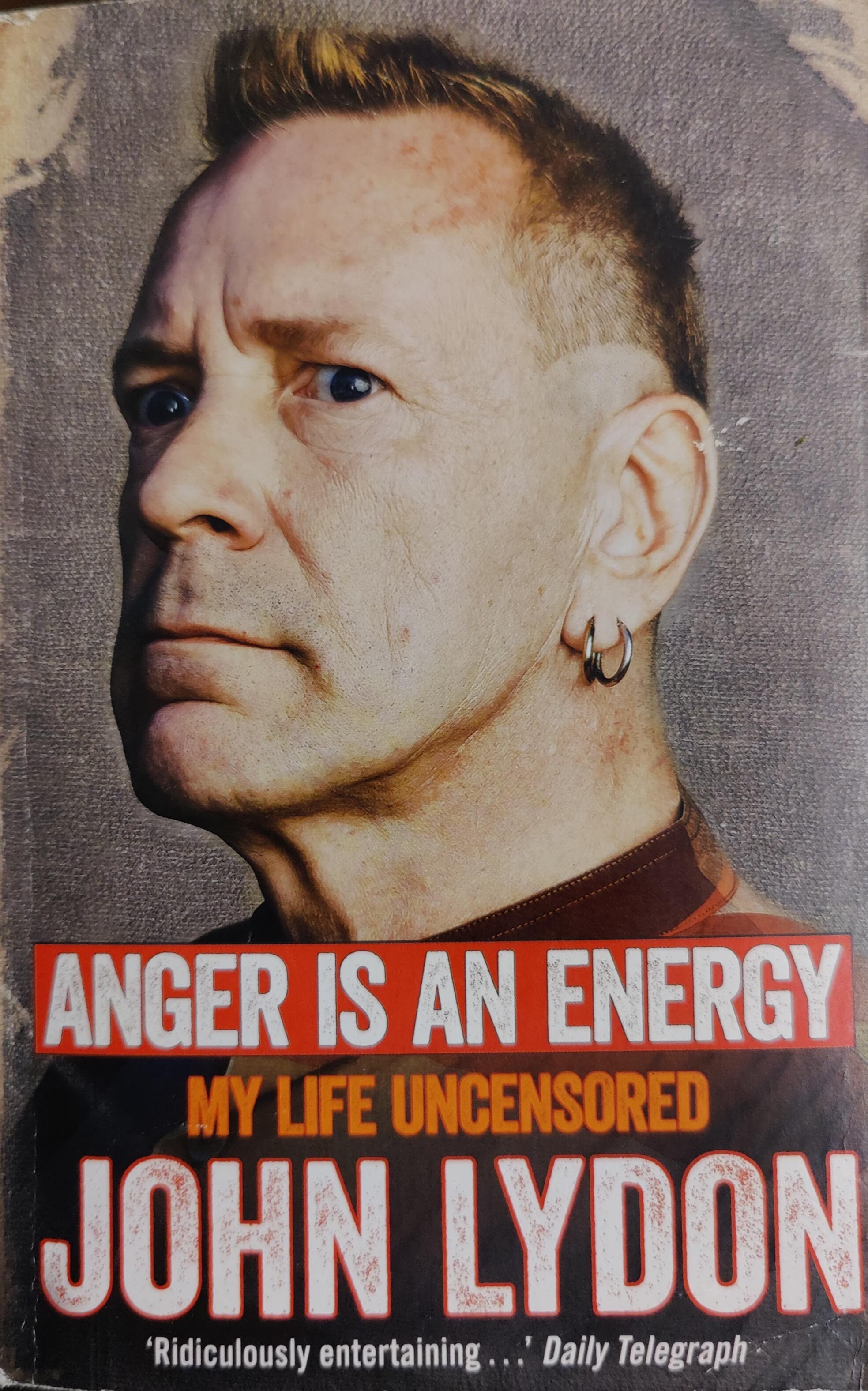
Stephen Alford’s “The Watchers” about spying in Elizabethan England, went down well, as did Monty Don’s autobiography “Down to earth”. John Lydon’s “Anger is an energy” is reviewed here.

Fiction? I also found time for some re-reads; Heinlein’s “Glory Road” – always a pleasure, Richard Morgan’s violent “Broken Angels”, my very favourite book, Tolkien’s “The Silmarillion”, and Iain M. Banks’ “Surface Detail”. New reading included Le Carre’s “Silverview”, Erin Morgenstern’s “The Starless Sea” and Adrian Tchaikovsky’s “Children of ruin” – all mentioned here. I read my friend Mrs Ruth D’Alessandro’s second very engaging historical police procedural “Calling Detective Crockford”, being a fictionalised account of her mother’s work as the the first female detective in Berkshire. Amor Towles’ top work on the aristocrat in the hotel in Moscow – “A gentleman in Moscow” – is reviewed here.

Also amongst that lot, a short and informative popular science book on graphene, “The graphene revolution” by Brian Clegg. A textbook “Do safety differently” on human and organisational performance (a new way forward in safety) by gurus Sidney Dekker and Todd Conklin. I finished the year with Peter Fleming’s rather weak and largely cribbed account of the never-was Operation Sealion, the German invasion of England in 1940. His other writing is excellent: this is is poor and though interesting and informative in places, it is not his best work.

A review of “Anger is an energy” by John Lydon

Foo Fighters front-man Dave Grohl has written a book called “The Storyteller”. I received it for Christmas a year or so back. It was liberally dotted with swearing from the very first page. Now I’m not against swearing in writing or in speech if it is used very sparingly, but this was too much. I gave the book away. John Lydon starts his book with rock’n’roll star swearing from the very first page, but there’s a difference. I guess he has something that Dave Grohl lacks: charm (unlikely enough, given the photo below). John Lydon captured my attention immediately.

I’ve always liked the idea of John Lydon, though I confess I never listened to the Sex Pistols at the time, and not a lot since. His second band Public Image Limited (apart from “Rise”) passed me by completely. But he always always struck me as someone who would say and do anything. Someone who had something to say.

This was entertaining and readable from the get-go. You turn each page and expect something dreadful to happen on the next page…and it does. Lydon’s use of vernacular grammar in writing – the “back in them days it were different ” kind of thing, I found made him more accessible. I did not find such affectation at all pretentious. Others possibly may not agree.

All that said, it only took me about 150 pages before I realised that the author is full of s**t from start to finish, and as big a bullsh*t merchant as the next rock star, or the next person. He’s as hypocritical and as self-important as any pompous High Court judge, bien-pensant BBC news presenter, MP or any other Establishment figure. The story remains engaging – to that extent it is a nuanced story. It is a story I enjoyed reading, for I am a hypocrite myself.

Lydon is an un-English, southern Irish kind of hypocrite; for all his bombast about speaking the truth and calling things out as they were, he knew when to speak up, and he knew when to keep quiet – when under arrest, that is.

I like his politics; he is scathing of the middle-class public-school educated Marxism of Joe Strummer of The Clash. I’ll listen to the politics of almost anyone who is scathing about the malevolent silliness of Marxism. Almost anyone.

For all that I found this account more interesting and better as it unwound through Lydon’s life, I found him to be just another rock star saying “we wanna be different”. Some might argue that he was the first such; others might say there were many before him right back to Mick Jagger and even before that.

My response to this work was nuanced; I didn’t need to read much of it to discern that (paraphrasing Francis Rossi of Status Quo talking about the entire music industry): “95% of this is bullshit….and you know what, the other 5% is bullshit as well”. This book was about the life and work of someone who I found personally inspiring, and if not actually likeable, then admirable.

Working at home – top tips

We’ve been working from home for twenty months now and it will be two years or more before it ends, if not more. For fifteen years before the lockdown, I was a Home Counties commuter up to offices in central London. Over those years, the biggest change I have seen would be that we take for granted today the availability of robust IT technology that enables us to efficiently deliver office-based services remotely from almost anywhere in the world.  

Some years ago I happened to fly to Aberdeen on business. I arrived at LHR and got to the security check: “please put your laptop in a separate tray“…laptop…laptop? LAPTOP? Arghh! My laptop was not present. But we had at that point, cloud-based IT systems that enabled me, without a laptop, to flawlessly deliver what my employer was flying me to Aberdeen to deliver. I was able to do this with no more hassle than logging into some other internet-connected computer. It was literally trivial. Today, changes have been forced over the last two years by the Coronavirus pandemic, that render the physical office itself barely relevant at all.

But we still have to work for a living. Working from home is not straightforward; it’s not obvious how to do it properly, and there are very good reasons why it is not always appropriate. This is something I believe: anything that blurs the distinction between work and rest, plays into the hands of the employer, not the employee. When Dilbert’s “pointy-haired boss” talks about “work-life integration” rather than “work-life balance”, that really is too true to be funny. Two things that blur the distinction between work and rest, both highly thought of by employees, both a potential minefield or poison chalice. Working from home is one of them. The other is the practice of “dress down Friday”, which we won’t go into here.

My top tips for working at home:

  1. GET UP
  • Maintain disciplined hours: get up more or less at the same time as you would have done if you were commuting to the office.
  • Dress properly – whilst slippers or bare feet is fine, for me, my clothes should be smart weekend casual at least – make an effort. I think a good rule of thumb is, if you needed to change to leave the house to go out for lunch, you’re probably not appropriately dressed.

2. START WORK, DO WORK, FINISH WORK

  • As far as possible have set hours for work, and follow them. Put the hours in. Keeping a record of hours to make sure you do, might be worthwhile, but don’t be a slave to the timesheet.
  • Try to avoid blurring work and rest.  Start work at a certain time, take breaks, take a lunch break away from your desk. 
  • As far as possible – and realistically it’s perfectly possible – finish work at a set time.
  • Don’t return to your desk “after hours” in the evening or at weekends – office hours is office hours.  At the end of the day you are the one granting permission to work evenings or weekends. Not your boss, your spouse, not your kids….YOURSELF. 
  • Do work
    • Have a written list of tasks for each day, do those tasks. Put a line through a task when it is done: make your work day about achieving small, discrete objectives, each one of them contributing to the greater objective of doing your job properly.
    • Don’t be afraid to close your door if you’re lucky enough have a door or a separate room to work in, and to make it clear that you’re busy and not to be disturbed.
    • Have breaks: make coffee, hang out the washing, talk to other people in your house, walk the dog, be flexible.
    • Acknowledge that you’ll have good and bad days: Not all days are good storming days; some days are bad days. It happens; roll with it. A storming productive day can often be followed by a slower, less productive day: it all averages out.
  • Finish work
    • Close down your work computer
    • Put your work equipment (laptop, papers etc.) away at the end of the working day – if you have the space, conceal it. Put it in a cupboard or somewhere it can’t be seen.
    • Mark the end of the working week with some small ritual or ceremony. For me this is a walk into town to buy a bottle of beer and a bag of crisps. It could be a take-away, or a movie night, or a longer walk, or whatever.
    • Try to avoid drinking alcohol on week nights – keeping off the alcohol in the week means the weekend becomes something a little more special.

3. LOOK AFTER YOURSELF

  • Create!! Do something different Engage your left brain. Do something that is not analytical, something that is not your work. It might be drawing, gardening, painting, sewing, cooking, learning a language, studying a subject, playing a musical instrument, doing a jigsaw. It might even be ironing! Anything is allowed so long as it’s different.
  • Be outdoors for some of every day. Ideally in daylight though this may be difficult in winter. Ideally alone though this may be tricky for parents! Get yourself some headspace.
  • Get plenty of exercise as clearly distinct from just a walk around the block. This is vigorous aerobic exercise 2-3 times a week.
  • Keep on eye on the calories: Don’t eat and drink more than you body can deal with.  A modern western diet is so high in calories that in a home-based “office” lifestyle if you’re not careful your weight will slowly and inexorably increase.

In all of these rules, don’t be a slave to rules, and do whatever works for you.

Some notes on the late Tom Bingham’s “The Rule of Law”

I bought this book some years ago in a bookshop near Westminster station, after an oddly encouraging and uplifting visit to Parliament, to have a tour round and tea with an MP (who will have to remain nameless). We won the tour and tea at a raffle at a village fete in the midlands.

“All persons and authorities within the state, whether public or private, should be bound by, and entitled to the benefit of, laws publicly made, taking effect (in general) in the future and publicly administered in the courts”

This, he argues, is the core principle of the rule of law – that is, that everyone is bound by and subject to, the same law, and everyone is entitled to the benefit of that same law. 

The law should be publicly known – that is, it can’t be secret or hidden.  You might need to be a lawyer to know it at all well – but the basic principles and the full text of the law should be freely available to all people at all times. The state and it’s agents can’t just make up crimes, offences or law as they go along. Nor can the law be kept secret: it should be known what is, and what is not, against the law.

The law should be dispensed or administered in courts of law that are public rather than in private. Trials should be held in public and reporters and interested parties should be allowed to witness what is happening. There should be no secret trials – though this principle can be challenged in certain circumstances such as national security, or when dealing with copyright matters, or in divorce courts.

The law applies in general to the future – what this means is, you can’t be prosecuted for something that was not against the law at the time of the alleged offence. The state can’t make something in the past retroactively against the law: you can’t – or oughtn’t –  criminalize the past. To me this is important, because doing just that – criminalizing or demonizing past behaviour –  has become a common practice in our society today.

Tom Bingham quotes someone called Dicey:

  • No person is punishable or can be lawfully made to suffer in body or goods unless there is a breach of the law established in the ordinary courts.

That is, everyone should be free from arbitrary or random treatment of any kind whatsoever, unless they have broken a law which was already known about at the time of the offence. You can’t just be imprisoned, or your property confiscated, because you offended someone powerful. That of course may well happen to you even here in the UK – but because there is generally respect for the rule of law, you would be able to bring the case to court. There are plenty of big important countries where doing that would be a waste of time or worse.

A side-effect of this principle is that you can’t be treated in an arbitrary way by anyone – much less the state or it’s representatives. If someone assaults you in the street, or someone refuses to trade with you because of your ethnicity, or someone breaks your windows or harasses your family – you can take them to court, because all these things are forbidden in law that is known and respected now.  

  • No-one is above the law – the law is above all persons and all authorities.

The same law applies to the Queen, the Prime Minister, captains of industry, the richest and most powerful in the land, as applies to those who sleep rough in the streets. This is another vital principle – that no-one is above the law. It can be quite hard to understand. King Charles I asked his Lord Chancellor to do something, and that man declined to do what the King asked, as it was against the law. The King replied that HE, as King, was above the law. The Lord Chancellor replied, “But I, Sire, am not”.  But if no-one is above the law, who then can make law?

  • The constitution springs from precedent and case law, not vice-versa.

This is subtle; it means to me that the law springs UPWARDS from the people, not DOWNWARD from the state. (This may be a peculiarity of English Common Law not applicable in Europe.) Who then, makes the law? An agreed body of elected people, representing the wider population, have the authority to make the law – a parliament. The authority to make law ultimately springs from the people who voted them in. This body is called the legislature. The law is administered, interpreted and applied by judges and magistrates – the judiciary. They do not enforce or execute the law – this is done by the executive. In the UK though the Monarch in theory has executive power, in practice the Executive is the Prime Minister and the Cabinet – informally known in the media as “the government”.

Habeus Corpus: This Latin expression means “have a body” and a “writ of habeus corpus” means a legal requirement to demonstrate in court whether you are or not holding any given person or persons, as a prisoner. The principle effectively prevents imprisonment without trial, and renders it very difficult for the state to cause people to just “disappear” overnight with no explanation (as in Nazi Germany, Stalin’s Russia and diverse other locations.)

Bingham argues that a writ of habeus corpus can be issued for someone arguably illegally committed to a mental hospital – “sectioned” as we say today. I argue that this is important, for having someone confined as insane or a danger to themselves and others under the Mental Health Act is an obvious way to imprison someone without trial.

Reasonableness

A side-effect of the rule of law is that where the law is concerned, there can be no black and white, nor absolute right and wrong. Two people can be take opposite views and yet both be right.  There can be no sacred cows. Bingham writes:

  • Two reasonable persons can perfectly reasonably come to opposite conclusions on the same set of facts without forfeiting their title to be regarded as reasonable
  • Not every reasonable exercise of judgement is right
  • Not every mistaken exercise of judgement is unreasonable

An “inescapable consequence”, he  goes on, “of living in a state governed by the rule of law” is that judges can and will challenge the (legality of) decisions made by the government and (sometimes) they will be successful in those challenges. He notes “there are countries where all judicial decisions find favour with the powers that be” but none of us would wish to live in such places.

Terrorism

He quotes Cicero: SALUS POPULI SUPREMA EST LEX which is translated into English as, “the security of the people is the supreme law”.  He notes John Selden (1584-1654) who said “there is no thing in the world more abused than this [Cicero’s] sentence.” As Bingham himself notes, it was Benjamin Franklin who said “he who would put security before liberty deserves neither”.

I take Selden’s view and Franklin’s view: Cicero was quite wrong. If you’ve done nothing wrong, you have MUCH to fear. Be afraid: be very afraid.

Bingham writes “we cannot commend our society to others by departing from the fundamental standards which make it worthy of recommendation”.

As with much of these Bingham quotes, it is well to say it out loud several times, keep it on your tongue and savour the taste and sound. He says that by relaxing or removing those hard-won civil liberties, we become no better than the terrorists themselves. We cannot and ought not “fight fire with fire”.

All of this seems particularly apposite at present when in the last nine months, in defence of the NHS, we have tossed aside civil liberties that date back centuries. I could wish that in the next 10-15 years we will see the Coronavirus Act 2020 repealed, but I don’t see it as likely. Far from it: I foresee a time when negative public criticism of the restrictions on our civil liberties – designed as they are with the best of intentions – may be treated as public order offences.

The frailty of human life

Three recent deaths, all juxtaposed, all very different, form a backdrop to the last few days and move me to put pen to paper. A murder, a suicide, a death from disease.

Knife murder: The murder of Jodie Chesney comes to mind first. A young person is snatched from us as a result of a deliberate act of deadly violence. It is doubly brought to my attention because she was an Explorer Scout: I am a District Commissioner for Scouts. We all wring our hands – what can we do? Some say, with strident tone, “This has to stop!” and of course, they are right. But these are empty words; those who say this have little if any power to prevent the rampant knife crime that racks our nation. I suspect that our government, realistically, lacks the political will to do anything really effective about knife crime. I was in Singapore recently and saw how it is quite safe to leave your wallet lying around. Singaporeans explained to me graphically what the state does to thieves in Singapore. I don’t expect there’s much knife crime in Singapore either. But just and appropriate treatment of knife criminals and indeed knife murderers will be too much for most of us in UK to stomach. Some rightly argue for a solution that is not penal in nature – addressing the root of the problem. But that is a long term solution delivering a safe Britain in the 2030s, and does not solve the problem we face now. Meantime, we look behind ourselves more often and stay more alert in public spaces – good if cynical advice at any time.

The suicide of Keith Flint of The Prodigy is the second death I would reflect upon. The Prodigy, if not actual rock’n’roll, follows the important rock’n’roll principle of scaring your mum and dad. I myself am drawn to The Prodigy precisely for that reason – their music is not nice. To some, it is offensive. I sometimes tire of “nice”. Say what you like about The Prodigy, you could not call them hypocritical. There are other musicians out there playing very listenable traditional blues rock’n’roll. Reputably and by commonly acknowledged anecdote, some of these players are rude and unpleasant men, however harmonious their music may be. Keith Flint and the music of The Prodigy may not have been harmonious to some of us. But for all that, he did have a reputation for being a friendly and helpful guy. And he took his own life, which points up the growing concern we have today for mental health: a vital issue that ought not be neglected.

The third death I would reflect upon, I only found out about by browsing a Christian magazine. The passing away on 6th February of the theologian Canon Michael Green, was a shame and a sad loss. You wouldn’t have heard about that on the BBC, I thought. He was and remains very influential as a thinker: I’ve read a number of his books; they are on my shelf still. I once heard him preach at St Alkmunds Derby, in the late 1990’s. He recounted in that sermon how he had met a guy in a car park at Euston station, and this guy asked him if he could break a fiver for change for parking. Michael Green had given the driver the few quid in change he needed – to which the driver’s response was a horrified refusal. Canon Michael replied – “Take it – that’s the way my Boss works…” which opened the way for a conversation about Christianity. As he himself noted, he was an academic who was also passionate about the Lord Jesus Christ.

I make no apology for mentioning all these three sad deaths in the same post. All were tragic: a murder, a suicide, a death from a dreaded illness. We do well to remember how frail we are, and as my wife’s late Aunt noted, we should live while we are alive.

Extraordinary complexity

We live in times of extraordinary complexity. Perhaps it was ever thus: were there ever truly simple and straightforward times? Yet, our willingness and our ability to discern complexity is under attack as never before. It is under attack from social media; it is under attack from the rise in sentimentality we’ve seen over this last twenty years or so, and it is under attack because of the fashion for hyperbole and over-statement.

The deplorable rise of “spin” – the use of language to conceal, obscure or divert people from the facts – has much to answer for.  The use of carefully chosen, politically charged, and nuanced phrasing, has, paradoxically, eroded our capability to discern nuance.

We look back at events like the Great War, and perhaps see simple causes, straightforward effects, obvious and clear protagonists and antagonists.  We view such events through the simple lens of modern thinking.  Cliches such as “senseless slaughter” come to our lips; we take off our hats, and rightly, spend a moment in silence to remember the fallen. 

But it was never that simple: that war was no simple struggle between good and evil, nor even a titanic battle between two great empires, the British and the Austro-Hungarian.  Britain, even the British Empire, was part of an alliance, and not even the senior partner at that.   

And then, consider what else was happening at the same time as the Great War.  The struggle for female emancipation and women’s suffrage.  The Easter Rising and the struggle for independence in Ireland.  The Russian revolution.  The technical innovation happening as a result of the war; the changing relationship between the New World and the Old.  

All of it points to a time of complexity to which we don’t do justice by over-simplifying what happened. It is not less true today.  I’m minded to reflect on our shortening attention span.  My boss wants 3-5 bullet points, size 21 font, one slide in Microsoft PowerPoint – just the salient facts to present to the Board.  In the second war,  Churchill reputedly turned to his underlings and asked them to provide for him a “report on the current state of the Royal Navy – on one side of a sheet of paper”.  As writers we do have a duty to keep things simple, to use short words, sentences and paragraphs, and to cut out unnecessary waffle. There is a case for simplicity – but we have made the case for simplicity our idol. 

How are we going to comment meaningfully and profitably on the hideous complexity through which we are now living? Three bullet points won’t cover Brexit nor explain the reasons for and against it.  One side of a sheet of paper may not cover the reasons for our changing culture.  A few photographs will not explain the balance of power between the West, China and Russia.  The job of the commentator is made doubly difficult by the fact that everyday folk have lost interest in complexity.  Today we have Twitter and Instagram – but think of the walls of text in a Victorian newspaper.  Today we want to see things reduced to three bullet points, the sound bite, the black and white. We want to see the spectacle of wrong and right, of bread and circuses.  Who needs a judge and jury when you’ve got Facebook?