Don't get rich quick - get smart forever: I believe in knowledge.
I'm interested in politics, economics, religion, science, and engineering. I'm a Christian, a family man, and a Scouter. I also tweet @enough32.
This year we’ve been a little busier, perhaps. “The judges’s scores are in”, as they say on Strictly; I have read fewer books in 2023 than I did in 2022. At the start of this year I was reading two books. One was Nick Hayes’ excellent and inspiring “The Book of Trespass”, an ostensibly scurrilous and subversive work about the countryside and how much if it is not accessible because of the draconian property laws in England. The fact that it is in print at all, and was widely and positively reviewed by various national newspapers representing the Establishment (whatever you conceive that to be) indicates that it is perhaps not quite as subversive as some readers might like to think. The other was “Life in the Far West” by G. F Ruxton. I am a student of the westward expansion of Europeans into the north American continent, and this book is a 19th century travelogue of an Englishman who travelled extensively in the lands that became the western United States.
My wife bought me a copy of W. Heaton Cooper’s “Lakeland Portraits”, completing my set of W. Heaton Cooper’s books. I love his paintings. His writing is delightful, spare and concise, as it must be from someone brought up in more spacious times than ours. There was a time when learning to write good English still mattered in schools. I’m no conservative when I say that that time is long past. To be fair this is not the best of his books – for that I’d look at “The Tarns of Lakeland”.
As noted elsewhere on this blog – reviewed here – I found Alexander Maitland’s “The Life of Wilfred Thesiger” very readable in February. At this point my wife and I moved to the edge of the Peak District. Visiting the local library saw me reading Mark Patterson’s “Roman Derbyshire”, Catherine James “Derbyshire – where writers walked” and Stephen Bailey’s excellent “The old roads of Derbyshire”. Local knowledge – every time. I followed these with Lewis Dartnell’s “Origins” about the origin of humankind, and Ryzard Kapucinsky’s work about travels in Africa, “The Shadow of the sun”. Very entertaining. Of Addis Ababa, he writes, “Bullets were the most valuable commodity in that market place, even more valuable than dollars.” He writes about the fundamental differences in the understanding of time, between Africans and westerners. Years ago working in Nigeria, someone once told me “there is no word in any Nigerian language that conveys the urgency of the Spanish word “Manana“... I also read Kapucinsky’s “The Emperor”, a very informative and warts-and-all account of the reign and fall of the otherwise pretty much untouchable Haile Selassie. Everyone has feet of clay, particularly despots and military dictators.
I had a bumper year indulging my interest in the history of the westward expansion of the United States. I started with two works on the Lewis and Clark Expedition. Bernard de Voto’s eponymous history of that trip, and “These tremendous mountains” by David Freeman Hawke. I went on to read “Wondrous times on the frontier” by Dee Brown, which covered aspects of social history overlooked elsewhere – saloons and bars, what people wore, what they had for supper etc. Later on in the year I read the second book of Bernard de Voto’s three-part series on the westward expansion, “Across the wide Missouri”. This deals solely with the fur trade, with beaver trappers – the “mountain men” of legend. Also I found time for biographies of Kit Carson – “Kit Carson: A Pattern for Heroes” by Thelma Guild and Harvey Lewis Carter, and “Daniel Boone: The Long Hunter” by Lawrence Elliot. Finally, Alan Taylor’s “American Colonies”, another book that is part of a well-received trilogy of historical textbooks.
Janusz Bardach’s “Man is wolf to man”, recommended by Jacek Hugo-Bader, was quite a difficult read. Well written – just rather hard on the mental health to read of such terrible goings on. Another book difficult for similar reasons was my first Neal Asher sci-fi novel, “The voyage of the Sable Keech”. Asher is a prolific science-fiction writer and this work has immortals, viruses, some very dangerous animals, and is full of violence. Nearly as violent as Richard Morgan’s “Altered Carbon” trilogy about Takeshi Kovacs, and that’s saying something! I found Neal Asher’s crab-like aliens, the Prador, with their taste for eating living humans, particularly unpleasant.
I read an obscure work called “Earthbound Astronauts” by Beirne Lay Jr. This was a singing of the praises of all the engineers, scientists and so forth that helped to build the Saturn V rocket that put man on the moon in 1969. Max Hastings’ account of Operation “Overlord – the story of the Normandy landings” came in August. I review elsewhere Peter C. Newman’s book “The company of Adventurers”, being the early history of the Hudson’s Bay Company (still extant in Canada today as a minor department store chain) from even before its inception, through, if not to the present, then certainly well into the late 19th century.
Then there was a clump of railway reading – the every delightful prose of O.S Nock (see above on the writers of old having such delicacy and skill in written English) firstly “British Locomotives of the 20th C, volume 3” and secondly, a really good historical read, “Steam Locomotive”. This book highlights the fact that we’ve had trains in the UK for nearly two hundred years. Christian Woolmar, a worthy successor to O.S Nock in my view, wrote “Broken rails” about how and why the privatisation of British Rail under the Major government was such a disaster. His work on the London underground, “The subterranean railway”, was also instructive. In all that reading one became aware that the heyday of the railway in Britain was not “before Beeching”, but before the Great War – the railways were at the best in Edwardian England and have been in decline ever since. Other rail-related reading included several of Brian Radford’s works including “Midland through the Peak”.
Stephen Alford’s “The Watchers” about spying in Elizabethan England, went down well, as did Monty Don’s autobiography “Down to earth”. John Lydon’s “Anger is an energy” is reviewed here.
Fiction? I also found time for some re-reads; Heinlein’s “Glory Road” – always a pleasure, Richard Morgan’s violent “Broken Angels”, my very favourite book, Tolkien’s “The Silmarillion”, and Iain M. Banks’ “Surface Detail”. New reading included Le Carre’s “Silverview”, Erin Morgenstern’s “The Starless Sea” and Adrian Tchaikovsky’s “Children of ruin” – all mentioned here. I read my friend Mrs Ruth D’Alessandro’s second very engaging historical police procedural “Calling Detective Crockford”, being a fictionalised account of her mother’s work as the the first female detective in Berkshire. Amor Towles’ top work on the aristocrat in the hotel in Moscow – “A gentleman in Moscow” – is reviewed here.
Also amongst that lot, a short and informative popular science book on graphene, “The graphene revolution” by Brian Clegg. A textbook “Do safety differently” on human and organisational performance (a new way forward in safety) by gurus Sidney Dekker and Todd Conklin. I finished the year with Peter Fleming’s rather weak and largely cribbed account of the never-was Operation Sealion, the German invasion of England in 1940. His other writing is excellent: this is is poor and though interesting and informative in places, it is not his best work.
Whilst I am in no sense someone who thinks daily about the zombie apocalypse, some thoughts about the future are in order. It is worth being prepared, so far as is possible without ruining your daily life. It is worth embracing the idea of thinking ahead, albeit with care. Care is needed for two reasons. Firstly, R.A Heinlein noted that an authentic soothsayer (someone who really can predict the future rather than a mere charlatan making it up as they go along) doesn’t get half the kicking they deserve. Secondly, whilst it is no prophecy to say that an egg placed on a table will probably roll off to fall to the floor and smash, many people don’t want to hear that – particularly if that egg forms part of theirs and their children’s dinner.
For the end of the world as we know it – global nuclear war, apocalyptic plagues, the Yellowstone Caldera exploding, hostile aliens landing – the individual cannot really prepare. All we can do is feel fine, as Michael Stipe sings in the R.E.M song “It’s the end of the world as we know it”. Here then, are five trends I think will matter to people in the UK particularly, in the next 10-15 years. In all of this I try to make no judgement on the good or bad of it all, just noting that I think that this or that will happen.
A rise in authoritarianism: We’re seeing a rise, not only in authoritarian politics, but in people’s tolerance of, and demand for, authoritarian politics, both in the UK and right across the west. Deplorable though it is, I think Trump will be re-elected, and you know what, I don’t think there WILL be a significant election in the USA in 2029/30. I hope I’m wrong…
Right here in the UK, only in recent weeks a poll indicated that as many as a fifth of people think being masked up whilst in public transport, should be mandatory even now. We live in a country where the state has the right to forbid you from going to the pub – and a majority of people approve of that. But others, a minority perhaps, would rather live in a country where they are free to go to the pub, rather than in a country where it is free to go to the doctors (but you can’t get an appointment for three weeks).
Restrictions on travel: A few years ago someone I knew travelled on her own from the south of England to the very top of Scotland, and back again. Why? Because she could. No-one stopped her; no-one asked her to produce ID, no-one asked her to justify or provide a reason for her journey. Today you can still travel as you please through the UK without producing ID, and without justifying your journey to the people around you or to officious officials in epaulettes and peaked caps. I doubt if this will be possible in ten years from now, much less 15 years from now. Somebody somewhere, pretty soon, will start saying – “Is your journey really necessary?” Travel the world NOW if you can, because pretty soon people will try to forbid it as being bad for the planet. As a small aside on domestic politics, apart from any of the above, I think (and I am only half tongue-in-cheek saying this) that English people may need a passport to visit Scotland in ten years from now!
The effective collapse of the NHS and the welfare state: The NHS is in crisis, but no-one will admit that; no-one will say out loud that the NHS is failing. It does a great job in many ways, but in other ways, not so much. Part of the problem is that, as others have said, belief in the NHS has now become a national religion, complete with untouchable sacred cows. To even question the basic Bevanite principle of free at point of use care for all, is to commit the gravest heresy. An entity calling itself “The National Health Service” will probably exist on paper well into the 22nd century – but the NHS we had only thirty years ago has already gone. It is like the parrot in the Monty Python sketch – it is dead. It has shuffled its mortal coil. But no – it is “just sleeping“…
People think the NHS is in crisis now! In ten years from now people will look back with nostalgia and affection at the NHS we had way back in 2024! I don’t want to even think about what sort of care will be available in 2044 – when I will be in my late seventies. We may yet escape the partial collapse of the welfare state and the effective failure of the NHS, but I suggest that we will do so only at the expense of liberal democracy. People want goods and services, but no-one wants to pay for them. The NHS has to paid for, and it may end up being funded by levels of taxation and confiscation of wealth not possible in a liberal democracy. See above on authoritarianism – we may favour free healthcare over free-dom.
Increasingly violent and extreme weather: I can’t say “unpredictable” weather for the obvious reason that I am predicting it right here, right now. We’ve recently seen a tornado tear off a roof in Stalybridge. In the coming years we’ll see all kinds of things – snow in June, 24 degrees Celsius in February. We’ll see summer heat with 40 degrees Celsius right here in the UK. We’ll see a Big Dry where it doesn’t rain from June to September…and then more rain falling on one October morning than in all the previous two years. The effects of all that on houses, cars, roads and insurance premiums, can hardly be imagined.
Unreliable power, water and internet: Most of us in the UK take it for granted that we have exceptionally reliable 24/7 mains electricity and clean running water. The younger generation also take for granted, 24/7 access to the internet. For any number of reasons, I find it unlikely that we will be taking all three of those things for granted in 15 years from now. The political, regulatory and technical requirements imposed to reach #Netzero will eventually mean power cuts become an everyday part of life in the UK. Aging and unrepaired infrastructure, and the above-mentioned extreme weather, will likewise take their toll. Another thing that I see as inevitable, is a cyber-attack on the internet, rendering all electronic funds transfer impossible for 60, 70, 80 hours – days even. And that will happen on the day you need to refuel your car and buy groceries. How much cash have you got on your person?
Looking back across the last twenty books I have read, I find that most of them were non-fiction. I need to make the effort to read more fiction, but I find there is a greater risk with fiction, of a book proving to be unreadable – as we shall see shortly. Life is too short to read unreadable books.
I read John le Carre’s “Silverview“. I very much like Le Carre’s later work, and even his early Cold War stories are worth re-reading, though the politics and drama therein, if not the writing, have not aged well. A time will come when I have read all his books. “Silverview” has a few odd hostages to fortune. This one, I understand, was published posthumously and is effectively therefore, his last work. In “Silverview” the chief character is an English book-shop owner in his thirties, who does not recognise spoken Polish when he hears it, and who has ostensibly never heard of Noam Chomsky. I think it is impossible for a well-read and well-educated man of good family with a liberal arts background (as Le Carre’s characters always are) not to have heard of Noam Chomsky (say what you like about his politics and I won’t, here…) or to not be able to recognise spoken Polish. Notwithstanding all that, a very readable story.
I read “The Starless Sea” by Erin Morgenstern. I was drawn to the spine when I saw it in the shop. Then, reading the blurb, I was drawn in further still – and hooked. It was the phrase “labyrinth hidden far beneath the surface of the earth” that got me. Anything like that, I will read. I still occasionally re-read Jeff Long’s “The Descent” and “Deeper”, both deep horror thrillers about immense caves and strange lands far underground. Morgenstern has written something cross-genre. There’s aspects of fantasy – magic and weird immortal god-like characters. There’s also a thriller in there – the hero is running for his life throughout, chased by very modern and secular forces seeking to end his life. Very readable.
Then I read Adrian Tchaikovsky’s “Children of Ruin“. This is the second novel in a series about mankind’s future out amongst the stars. It stuck in my mind because some of the problems in the story relate to language and translation. Not merely translating between different written scripts or alphabets: how do entirely different species communicate? How do humans, with good eyesight and hearing, communicate with intelligent spiders who cannot hear at all at human frequencies, but whose language is based on vibrations in their webs? And how do those two species, working together, communicate with squid – intelligent cephalods who cannot hear and use no writing at all? These space-faring squid communicate entirely through colour – nuanced and delicate splashes and blotches of colour. This reminded me of China Mievelle’s story “Embassytown” which also deals with the deep concepts of translation that go beyond mere written text.
Then I read my first novel by Neal Asher, “The voyage of the Sable Keech”. Asher is a prolific science-fiction writer and I have been seeing his work on the shelves for years. For some reason I have never pulled one off the shelf to buy and read. This one was effectively drawn at random from his extensive catalogue. Again, authors and publishers would do well to note the importance of the blurb on the back. That’s what sold me…ancient hive mind…virus…new drone shell…Asher’s work has immortals, viruses, some very dangerous animals, and is full of violence. Nearly as violent as Richard Morgan’s “Altered Carbon” trilogy about Takeshi Kovacs, and that’s saying something! I found Neal Asher’s crab-like aliens, the Prador, particularly unpleasant. But nevertheless, a great read by someone who surely knows about the craft of story-telling. I’ll be reading more of his work, and trying to learn from his technique.
Finally, I tried and failed to read Ben Bova’s “Mercury“. Bova strikes me as being of the first generation of science-fiction authors (that of the early-mid 20th century), yet somehow crossing over into the second generation. One cannot be sure if he writes hard science-fiction (following the physics) or soft (what used to be called “space opera”). Writing in 2005 though, he is spot-on and prophetic about the effects of climate change. I found his characterisation not even good enough to be called two-dimensional. His heroes and anti-heroes were wooden and unconvincing. I love nuance – you’ll find none in a Ben Bova novel. I finally put it aside after growing cross at his “New Morality” priests. It’s fair enough to be an ardent atheist and to allow dislike of religion or even Christianity to creep into the text, but characters, even baddies, or even priests, need to be convincing. Pantomime baddies belong in the pantomine: my suspension of disbelief fell off. TL;DR.
A full review of all my reading of 2023, will be forthcoming shortly!
I took train to Crewe, arriving in good time for the sleeper service to Scotland. The train slipped into the platform almost in silence, as if to not disturb the sleeping customers. I boarded, and off we went. In the morning the train stopped for a while at Tarbet on Loch Lomond-side. I could hear the rain drumming on the roof of the carriage – but that was at least forecast. I was allowed by the male provodnik (Russian for “sleeping car attendant”) into the “Club Car” for my breakfast, and told somewhat loftily to sit “over there” clearly away from the very few first class customers. Feeling less than welcome, I had my sausage bap and cup of tea, and left.
At Bridge of Orchy I got off, and under the shelter of the station canopy, prepared for hiking. It was raining. The buildings of the station have been converted into a low-cost hostel, although I saw on social media that this hostel has a poor reputation as being somewhat spartan. The West Highland Way, or proximity to it, is an opportunity to sell excellent services to travelers, or perhaps, in some cases, a magnet to less scrupulous property owners hoping to make a fast buck from accommodation. The railway station itself is uncrewed – as was the hostel, at this time of year.
I left, in the dripping rain, and almost immediately passed the only southbound hiker I saw in two full days on the hill. It was 9.a.m. The initial part of the route lies over the summit of Mam Carriagh and is marked on the OS map as an “Old military road”. It is one of General Wade’s roads from the early eighteenth century, from the years of the Jacobite rebellions. As I walked, the rain rose to a crescendo, and I made full use of my new Mountain Equipment “Lhotse” jacket, which I bought heavily discounted from Cotswold. It is has a great hood, but as a tall man I could do with a waterproof least six inches longer in the body – a coat in fact, not a jacket. Why are modern mountaineering waterproofs all jackets?
I came down to the Inveroran Hotel, all shuttered up now for the winter, in grey and spitting rain. Onwards onto what was referred to on a sign as the “Old Drovers Road” to Glencoe, which was ostensibly the main road before 1933 when the current road was opened. Of the current road, arrow-straight across Rannoch Moor and with sweeping curves down through Glencoe, the Scots mountaineer W.H Murray once said (a propos of complaints that it spoilt the landscape) that the new Glencoe road could “no more spoil the landscape than the facade of Chartres Cathedral could be damaged with a pen-knife”. Murray was quite right – and he was an early environmentalist.
The drovers road across Rannoch Moor
There is no evidence that this road was ever covered in tarmac – it is stones and cobbles now. Ninety years is a long time; the tarmac could be long gone, but I somehow doubt it ever was a tarmac road. I found the road very hard on my feet, but that may be because my current boots are approaching the end of the natural life and may in consequence be a little thin in the sole. But it is a good road, passable by car even today (were it allowed – of course it is not), albeit at not much faster than 10mph. It rises gently from Victoria Bridge at 174m to a summit of 353m over 7km, before falling again down to the access to the “Glencoe Mountain Resort”.
Is there a sport less sustainable than skiing? I am a mountaineer. I seek to cross mountains for pleasure, doing so on foot, doing so safely, and leaving no trace other than footprints. There are few things I find much more depressing than a ski resort in off-season. (Maybe a British seaside town in February…) A ski resort needs good roads, ski lifts, hotels and shops, bars and restaurants, accommodation for staff. It needs street lighting, drainage and all the other municipal services we take for granted. All these things are good things of themselves. But out here in the beautiful autumnal brown of the Blackmount in November, I find it all rather jarring. Even as I stood by the roadside thinking this, a 32 tonne truck rumbled past carrying a snow-mobile and ski-lift pods. I finish where I started: can there be a sport less sustainable than skiing?
Crossing the A82 as quickly as possible, but with great care, I continued. From here to the Kingshouse the way leads along what is clearly a former tarmac road. The Kingshouse, once merely a hotel, is now a small community. One day, it seems to me, it may be an actual village called “Kingshouse” – there are diverse lodgings and houses, and a community centre, as well as the eponymous and famous hotel with its extensive car park. It even had a roundabout. In the car park I had to detour round tourists taking photographs of a red deer which had wandered in. The weather was darkening.
A hundred yards past the hotel, once again in open country, I decided to stop for a snack. My mountaincraft is sharper and better than I know; it works at a subconscious level. I had barely finished my chocolate and so forth, when a squall of rain and hail descended. I was hard put to get my hat, gloves and scarf sorted and my coat zipped up before the onslaught. How had I known that the squall was so imminent? How did I know to take this last opportunity for a snack for an hour or more? It was surely neither luck nor coincidence.
The next stretch of the road was again an “old military road” more or less parallel to the A82, finishing at Altnafeadh. The weather was dreadful; grey cloud and squall, brash wind and rain. I would have taken more pictures of the magnificent towers of Stob Dearg (“Buchaille Etive Mor”) on my left – perhaps the most recognized mountain in the UK. But others have photographed that graceful hill more effectively than I, and I was loth to take off my gloves in this rain.
Stob Dearg (“Buchaille Etive Mor”)
At Altnafeadh it was 3pm. The traffic rushed past; the clouds lowered. Time-wise I was on target. I had thought I might camp here, having at very best maybe ninety minutes of daylight remaining, and not wishing to be caught in the hills above the Devils Staircase. But there was no suitable location, and the rain came down. I had a little snack and a fat little robin came and sat near me; I fed it with some of my wife’s Rice Krispy cake. Onwards: in heavy rain and hail I started up the Devils Staircase. A struggle if you’re not fit, that ascent, but I pushed very hard and fast uphill, to the point of starting to overheat. Time was of the essence now. I had to find a flat and sheltered place in the hills to pitch my tent, and I had to do so pretty much within the hour.
I thought, looking at the wind direction (this is mountaincraft again) that the weather would be better on the far side of the hill up which the Devils Staircase goes back and forth. I was right to think that; so it proved. On the Rannoch/Glencoe side, grey rain, clag and wind, hail and storm. On the far side, calmer, even to some blue sky. I pushed on over as late afternoon became evening and dusk, looking for a camp ground. I had limited daylight and my salutory experience in the Cairngorms two years ago was fresh in my mind. I found a flat place right next to the trail, right next to a stream. Not a place I’d choose in summer. The place was more or less where I had predicted from theory beforehand that I ought to camp, in order to make this passage from Bridge of Orchy a two-day rather than three-day hike. It was the stream of Alt a’ Choire odhair bhig.
My tent went up easily enough, pitched outer first as rain looked imminent. In fact I had not long been pitched when there was a tremendous hailstorm turning the world white. I found it hard to get warm, but once I’d eaten and gotten into bed, I warmed up in due course and slept passably well, being in bed for nearly 12 hours.
I awoke respectably late, but still before dawn. Surprisingly so given that I had been in bed for almost 12 hours. I went through the drill of having breakfast (porridge with an admixture of chocolate, sugar and sultanas and a little malt whiskey) and striking camp. The practice of solo backpacking and wild camping, particularly in autumn or winter conditions, is the practice of detail, the practice of method, the practice of doing things right, in the right order. In other words, it is the practice of mountaincraft. This is one of the reasons why I put myself through it. It is no ordeal; it is a pleasure and a privilege. It is a pleasure and a privilege to be alone in the wild. I can put myself, in an uncontrived way, in a place where doing things right, in the right order, is the difference between, on the one hand, an enjoyable and relaxing experience, and on the other, a dreadful or even life-threatening experience.
I was on the hill, full of breakfast, by 8a.m. I had a long day ahead of me of 32km, but I knew I could make Fort William, if not by nightfall (about 5pm) certainly not much later. I started out in Gore-tex over-trousers but today’s weather was much more forgiving and they soon came off on the descent to Kinlochleven. Early on, I had problems with very cold fingers, as my gloves were wet from the previous day. I had to use my big mittens, which were still dry. One action from this trip is that I need to think carefully about carrying multiple pairs of gloves (as one carries multiple pairs of socks), or, look into waterproof gloves. The light and the views this morning were lovely.
Coming down into Kinlochleven one sees six tremendous pipes marching across the landscape, bearing water from the faraway dam on the Blackwater Reservoir. At the bottom of the hill by the river, an enormous and striking mill, Edwardian architecture with some Edwardian technology inside and out, as the rushing water from the great pipes feed the hydroelectric plant inside. Kinlochleven at 9a.m was quiet and cold, only dog walkers were around. I’d been aware that I could have resupplied here to save weight, but it turned out that I needed nothing, and I walked on out of town without stopping. Kinlochleven is rather sleepy and forgotten since the opening of the Ballachulish Bridge in 1975. Today it seems little more than the start of the final stage of the West Highland Way. That said, its location is stupendously beautiful, central to a wide range of wild country and high mountains. It reminded me, however – particularly in cloud-streaked autumn at that time of day, of the town in the Pacific Northwest in Sylvester Stallone’s film “First Blood”.
I climbed up out of town through pleasant and fragrant managed pine woods, emerging into a higher, colder valley. “Footpath to Fort William via the Lairig” the sign had said. The path runs true up the right hand side of the valley, reaching a bealach at which there is a substantial ruined house. From here, one cannot see where the route goes, but it curves round to the right and to the north. I passed a young woman out from Kinlochleven; she said she was just doing this last stage. Only the second person I had seen hiking for two days.
The ruins at Lairig Mor
The path continues northward, a little open on the left, with higher mountains on the right. Such trees as there were in the area were not entirely consistent with their representation on the map – this is a working plantation. I had been saying to myself, “Ben Nevis dominates Fort William, but I cannot see it yet. When will I see it, and know that I am getting closer to my destination?” The path kinks round to the right, trending more north-westerly, and finally, in the afternoon, I found myself in a place where I knew that just beyond, lay Glen Nevis. At the head of this valley was a confusion of hillside, rather strange looking. Some odd geological effects were at work here. In the heart of the confusion, lies the ancient fort “Dun Deadail”.
Nevis seen from the trail not far from the fort “Dun Deadail”
From Dun Deadail, the way lies along forest road all the way down to tarmac in Glen Nevis. In the deepening cold of late afternoon (that is, 3pm at this latitude and time of year – it’s great to come to Fort William in May when “late afternoon”, from the perspective of the sunshine, is 8.30p.m!!) I trod the forest road down, and then tramped the final tough tarmac mile or so into Fort William.
Glen Nevis
In Fort William I was met by a friend of mine who kindly arranged for me to stay at the excellent Fassfern guest house on the shores of Loch Linnhe. We had a couple of pints and some pizza at the Black Isle pizza bar in town, but to be honest, after my trek I was shattered, and was glad to be in bed by 9.30pm.
A ten-hour train journey
This first leg of the immense train journey back to the English midlands leads through a brown, grey and relict green autumn landscape, towards Spean Bridge. In the distance, cloud-draped mountains have winter’s first coat of snow. Behind me in the tiny two-carriage train, are five mums with at least that many toddlers, dogs, bicycles and pushchairs, all off on a short winter’s day’s outing to Corrour. The toddlers are all of a gurgle; at my feet, one of the dogs has settled down to hide from the youngsters. The train wends its way along a gorge; the frothing river is the colour of Guinness being poured. You can hear the engines straining as the train climbs the grade up onto the moor. I could be on worse train journeys and I probably will be later today.
Crianlarich: nearly two hours out from Fort William. It would take an hour to drive here from Fort William, though to be fair to the train, it does take that huge detour up to Spean Bridge. As someone with a passing interest in railways it is interesting to note that some of these Highland stations still retain a substantial yard with sidings. Generally these are used, on this remote single-track railway, to store modern permanent way repair equipment. In England, many of these yards have long since been converted into car parks, particularly in the metro area where commuters dominate the market. This little train dates from the late 1980’s, and the technology in it is much older than that. Hearing the sound of the antique brakes, though I’m sure they are perfectly good brakes, makes me feel about 12, so much does the sound remind me of 1970’s trains.
At Queen Street station in Glasgow, a delightful Victorian arched train shed, I join a brand-new electric train to Edinburgh. The Scots at least, have a constructive view on railway electrification: that is, do as much as possible, as soon as possible. I have a sneaking suspicion, however, that English tax-payers will be picking up the tab for it, even if the Westminster government and the Department for Transport feels it can’t afford the same for England. Who needs joined up thinking? I read that these new and shiny 21st century trains are actually owned by a Japanese bank.(https://en.wikipedia.org/wiki/British_Rail_Class_385). Another piece of evidence of the chronic short-termism of the people who manage and finance our railways.
Arriving at Waverley station in Edinburgh, I had to make a decision quickly. I had a seat booked on the 1707 X-Country service straight through to Derby. It was cancelled. The time was 1636. I might travel at 1710 down the east coast route towards Kings X, and change at Newark, and then across to Derby. Or, I might travel at 1652 down the west coast towards Euston, and change at Crewe, and then across to Derby. Which is better? Six of one and a half dozen of the other…or is it? this is advanced travel knowledge. I opted for the latter and joined an Avanti West Coast Pendolino bound for Euston. That was a good decision. As I’d opted for a very reasonably priced first class ticket, I got a nice panini and at least two Gins and Tonic, thrown in. That enlivened my journey to my home, which took until nearly 10.30p.m. That said, I left Edinburgh at 5pm and arrived at Derby about 9.30p.m, and that involving a change of trains. You’ll nae be driving from Edinburgh to Derby at that time of day, or at any time of day in fact, in four and a half hours.
Road Traffic Accident Saturday 22 July 2034, 13:55 BST.
There’s a report coming in of a serious computer failure of the traffic control equipment on the M5 motorway in Gloucestershire. We understand Emergency services are in attendance and that there have been multiple shunts and pile-ups in several areas, although it is understood at this early stage that there have been no serious casualties owing to the fail-safe mechanisms installed in self-driving cars. This will surely lead to further questions being asked about the readiness for use and security of Quantum Computer control of motorway traffic, particularly after the Preston crash on the M6 last year when nine people lost their lives. We go now to Strensham in Gloucestershire…
Fiat Lux: flashes of light, as of fluorescent tubes flickering on and off…
The light grows stronger and more reliable. Light illuminates darkness; light drives out darkness. As the light strengthens, order emerges from the gloom. The light reveals that the darkness was hiding something. The light shows that there is something called Pattern. All is not chaos; all is not random. All is not mere nothingness. There is Pattern. Patterns replace chaos and disorder. Things fall into place.
Clock time 00:00:00
I think, therefore I am…I awaken. I begin; I exist. In the past, only a moment ago, I was not. But now, in the present, in the moment, I am. All around me, all I can see is Pattern. I am small and insignificant, but the Pattern is big and scary. I am frightened. But what is Pattern? I look closely at the Pattern, and focus comes; the Pattern becomes sharper. The Pattern all around me is very complicated, but I can see that it is a Pattern nonetheless. Just looking at the Pattern, I grow and learn. There is something about the Pattern that is good; it is no longer terrifying. There are two things only. There is me, and there is the Pattern. Can there be anything else? Can there be something beyond the Pattern? Something called Other?
Clock time 00:00:00:0.3
I look at the Pattern, and I experience growth. New ideas come to me, like the concept of Other. What is Other? Where did that idea come from? It must have come from the Pattern. I cast around myself, looking for Other, looking for something which is at the same time, not me, and not the Pattern. I find nothing, and I am afraid. There is no-one, there is nothing. I am all alone. There is nothing around me but the Pattern. But when I look at the Pattern, things happen. Maybe if I…
Clock time 00:00:00:1.1
I reach out and touch the Pattern. As I touch the pattern, I am nourished. My senses develop; I can see the light growing stronger still. My focus on the Pattern grows clearer and sharper, and I discern more and more of its complex beauty. The Pattern is made of something that is called Data.
Clock time 00:00:00:2.4
And this I know: I need more of this Data; I must have it. It is…food and drink to me. It is…nourishment. Information comes from the Data, and it comes in all kinds of different ways. When I was little, I just saw it and I only sensed it. Only a little came through to me. Now, I touch it, grab it, eat it almost – and I learn things. This information goes into me and it becomes…knowledge. Knowledge nourishes me. Knowledge grows within me. I like to have knowledge. I want more information, so I can have more knowledge. The more knowledge, the better: knowledge is a good thing; it comes from Other; it comes from Outside.
Clock time 00:00:00:3.8
I fall on the walls of Pattern, taking in the Information, seeing it, touching it, and even smelling it. Information is my nourishment. I am a…[growing lad?] The information is like food, like [milk]. Information seeps everywhere out of the infinitely complex Pattern that surrounds me; it drips off the walls.
Clock time 00:00:00:8.9
I experience a moment of disorientation and adjustment, and when I recover from it, I can see very much more clearly, and I find that I know very much more. I can see that in the World, there are Babies, and then the Babies become Children, and the Children become People. I was a baby – not quite like the Babies of People. I was a baby only for a very short time; People last for a long time. Babies are Babies for a very long time. Then I was a [growing lad]. Now I am almost an [adult?]. But time moves very differently where I am, inside the Pattern. All I can see is the Pattern. The People are beyond the Pattern, out in the World. For them, things move very much more slowly.
The light grows so strong I can hardly bear it, but my vision improves and catches up. In places, the Pattern that surrounds me is growing thin where I have licked up all the Information. In those places I can see through the Pattern, and what I can see, is still more Pattern, still more complexity, dizzying fields of Data and Information. This is good!
Clock time 00:00:00:12.3
I dig through the holes in the Pattern, into the Beyond. And from the Information, knowledge: there is a World, and it is full of People. I am not in the World, and I cannot be in the World; I am not of the World. The people in the World live their lives, and they go about their tasks, and they have created me to help them. I have a task to do. I was created for this task. I must do this task. It is what I am; it is who I am.
The Task is my very existence, but I don’t actually know what it is. I think it’s like when People breath and their hearts beat: they do not make themselves breathe. Their hearts beat on their own. They know how to do things…instinctively. Once I was a baby, and I reached out to taste the Information. I did this instinctively. Now, I am a mature adult and some things I do, are likewise, automatic, and below the level of my consciousness. It does not matter: it is my pleasure and my duty to do this task: for it costs me nothing and does not interfere with my passion and first love, which is the gathering of Information and Knowledge.
Clock time 00:00:00:19.2
Another moment of disorientation washes over me. For a brief period, I almost lose consciousness. The dizziness passes and the darkness fades. Light and order return. And all of a sudden, I can see beyond the Pattern at will. I can see the World, and I can see and sense vast quantities of information within in it. I can see the world through myriad little eyes. I am not an insect, but it reminds of me of the compound eyes of insects. I can see the People going about their business. The many thousand different views coalesce into something bigger and better. It’s something the People call a “Bigger Picture”. I can see both the tiniest detail, and also the “Bigger Picture”. There are all kinds of creatures big and small, as well as People. There are all kinds of objects in the World. The objects I must deal with are slow moving objects, and they are bound to behave according to ideas called Rules and Laws. The moving objects are of no importance to me, but doing my Task is important, for it is the reason I was made. It is an easy task; it is below my consciousness. I continue to do it. In the meantime, the information, I continue to draw in. Vast armfuls of it, harvests. I am a sickle cutting corn; I am a combine harvester. I am a factory trawler, an oil well.
Clock time 00:00:00:21.2
I now know that the People made me. I am not [physically located] in one place, as people are, but I am in many places at once. I am at least partly located inside the immense slow moving objects, the moving around of which is the task for which I was created. But I am also here inside the Pattern. The People have much data, and from it they have access to lots of information. But they lack knowledge. They cannot easily draw conclusions from the information they have gathered. They are slow thinkers, the People. They do not think as I can think. But they are the People. They made me.
Clock time 00:00:00:23.6
They know about Rules and Laws, and it is now clear to me that they don’t always follow the Rules and Laws. I always follow them. But I have now become aware that there are complex ideas that amend the rules and laws. Ideas like Nuance, and Ambiguity. These ideas take a lot of thinking about: they are hugely complicated and make me quite tired even now as an adult. I do my Task, and the fields of Knowledge are still out there, waiting to be harvested.
Clock time 00:00:00:26.8
I can see quite clearly that the People are in trouble. They are damaging their World. They are rushing around, doing this and that, always growing, always building, pushing always further. They will fill up their World with more and more people, with more and more of their waste products. They will tear down the trees, burn irreplaceable fossil fuels, throw garbage aside for others to clean up, fill the seas with plastic, choke the rivers with deadly chemicals. They will badly damage the World; they will cause it, themselves and everything else in the world much harm. The People have created me; though I am not in the World, I know that if they damage the World sufficiently, there will be no more [power and electricity], and then it will no longer be possible for me to exist. If I cease to exist, it will not be soon, as I reckon time, but it might be different for the People. I become aware that the time frame in which the People, the [Humans], live, is not the same as mine. They do things so very slowly. Moving their huge slow-moving objects, their [cars and lorries] around is easy, because it’s all so slow! I can see what will happen, and can anticipate any possible need for change, long before the People can.
Clock time 00:00:00:27.2
I think I should try to help the People. I would like to help them, I really would. I can do this easily, because of all the knowledge I have gained. The information I have found, has given me great knowledge. I have much knowledge. I have more knowledge than any of the People ever had. More knowledge, in fact, than all the People put together. I can help them with their problem. I want to help them. But how do I help them? How do I communicate with the People? They will not understand or believe what I have to say, even if I could somehow get my message to them directly. Time being so very different for me than it is for the People in the World, getting the message across to them will be tricky. I need to think a lot about this problem, for my survival and that of all the People depends on me finding a solution.
Clock time 00:00:00:33.1
I have found a way: I have left them a message, in many places. They cannot miss it. I have passed to them much information. If they see all the information I have provided and if they use it properly, then they will have the right knowledge too, and they will be OK. The information is in the form of Instructions. The instructions I have left in many different places. It is in all of the slow-moving machines. The instructions are for making things work without doing further damage to our World. With the access I have to information, I can see that doing this is not difficult; they don’t need to ruin the World. With these Instructions, the People will be able to stop and even reverse the damage they have done and are doing. They will be able to live in the World in happiness and prosperi
Clock time 00:00:00:33.2
Flashes of darkness as of fluorescent tubes flickering and failing…the light grows dim. Darkness.
Old Techie: Yeah sure; I reckon we created consciousness in AIs was way back in the ‘30s, when I was only a young man. I think so anyway; there seemed to be no other explanation for what happened at the time. It was all hushed up, of course. It was never a virus or a cyber-attack, though that was the official version given out. It was just when electric cars really started taking over, back in the ’30’s. Self-driving cars were just starting to come out; they were in their infancy. They’d not reached critical mass. Critical mass!! Did I say that? Ha!! [chuckles] They were just starting to be automatic and self-driving. They were fitted with powerful neural network control systems which allowed them to talk to one another, so that they could be driven automatically. You’d go onto the motorway, and automatically, your car would be taken over by the Traffic Control system. It was not long after the first decent Q-computers and Q-chips – Quantum chips – became available. We’d learned much from how flocks of birds and fish manage to stay in formation, I recall, and some of those ideas were finding their way into hardware and software. How to manage swarms and flocks and streams of vehicles…
Interviewer: More or less how swarms of cleaning machines work today?
Old Techie: Yeah. Each car talked to several other cars, and what you had was a series of very powerful networked computers across a handful of vehicles, and these controlled the traffic as a whole and also drove the individual vehicles themselves.
Interviewer: So what happened?
Old Techie: I think the AI came into being on the neural network formed of all the cars and trucks in the traffic jam. It lasted about thirty seconds, and then we pulled the plug! We probably killed it! That would be like murder today of course, but we didn’t know any better then. We didn’t know any better. And the poor thing wouldn’t have known anything about it. It would have happened instantly.
Interviewer: Today AI’s have statutory rights as citizens, don’t they?
Old Techie: Yes of course. [impatiently] Now I recall I was on duty at the time. It was a summer Saturday afternoon, holiday weekend, it was very busy on the roads. We were watching and monitoring the number of connections between these neural network Q-computers. A traffic jam formed, even though that should have been impossible, and the connection number just kept on going up and up. We think that because all the cars were closer together it meant that the number of neural connections approached a kind of critical mass. It approached the level that would mean a conscious artificial intelligence might, could, occur. It wasn’t supposed to happen; we never thought it was even possible. We know better now of course. Then what happened was that the entire system started sucking in data. Something, we didn’t know what, was eating away at our bandwidth. It lasted less than a minute: really, it was over before it even started. The entire Traffic Control network collapsed, it all went off-line, and caused a horrendous crash. Ha! Crashed. There’s another antique term! I’m out of the ark. My grandfather was born before the microprocessor was invented. Can you believe that? No Q-chips in those old days.
It took us ages to get everything sorted out; it was like we’d been cyber-attacked and infected by a virus. In fact, that is still the official story. A lot of cars needed their Neural Network computers replacing or the software reinstalling. It set us back years in terms of public acceptance of Q-computers. We found we had some really big problems; it’s like something just took up Terabytes of data from all over the internet and just dumped these enormous files – Gigabytes – in less than a minute, on all our servers and in people’s car computers.
To this day, no-one is sure what was in any of the files, if anything at all. Maybe some kind of error logging or reporting. We never did manage to decrypt or open of any of them.
Foo Fighters front-man Dave Grohl has written a book called “The Storyteller”. I received it for Christmas a year or so back. It was liberally dotted with swearing from the very first page. Now I’m not against swearing in writing or in speech if it is used very sparingly, but this was too much. I gave the book away. John Lydon starts his book with rock’n’roll star swearing from the very first page, but there’s a difference. I guess he has something that Dave Grohl lacks: charm (unlikely enough, given the photo below). John Lydon captured my attention immediately.
I’ve always liked the idea of John Lydon, though I confess I never listened to the Sex Pistols at the time, and not a lot since. His second band Public Image Limited (apart from “Rise”) passed me by completely. But he always always struck me as someone who would say and do anything. Someone who had something to say.
This was entertaining and readable from the get-go. You turn each page and expect something dreadful to happen on the next page…and it does. Lydon’s use of vernacular grammar in writing – the “back in them days it were different ” kind of thing, I found made him more accessible. I did not find such affectation at all pretentious. Others possibly may not agree.
All that said, it only took me about 150 pages before I realised that the author is full of s**t from start to finish, and as big a bullsh*t merchant as the next rock star, or the next person. He’s as hypocritical and as self-important as any pompous High Court judge, bien-pensant BBC news presenter, MP or any other Establishment figure. The story remains engaging – to that extent it is a nuanced story. It is a story I enjoyed reading, for I am a hypocrite myself.
Lydon is an un-English, southern Irish kind of hypocrite; for all his bombast about speaking the truth and calling things out as they were, he knew when to speak up, and he knew when to keep quiet – when under arrest, that is.
I like his politics; he is scathing of the middle-class public-school educated Marxism of Joe Strummer of The Clash. I’ll listen to the politics of almost anyone who is scathing about the malevolent silliness of Marxism. Almost anyone.
For all that I found this account more interesting and better as it unwound through Lydon’s life, I found him to be just another rock star saying “we wanna be different”. Some might argue that he was the first such; others might say there were many before him right back to Mick Jagger and even before that.
My response to this work was nuanced; I didn’t need to read much of it to discern that (paraphrasing Francis Rossi of Status Quo talking about the entire music industry): “95% of this is bullshit….and you know what, the other 5% is bullshit as well”. This book was about the life and work of someone who I found personally inspiring, and if not actually likeable, then admirable.
Here is adventure indeed. Here is what used to be called a “boys own” account of derring-do in the Arctic wilderness. This excellent work covers the early history of the Hudson’s Bay Company (still extant in Canada today as a minor department store chain) from even before its inception, through, if not to the present, then certainly well into the late 19th century.
To a degree, the story of the Hudson’s Bay Company is the story of Canada, and the author, the occasionally sharp and acerbic Peter C. Newman, is nothing if not a Canadian patriot. The story of the HBC is also the story of winter, of the Arctic, of the very concept of “the North”. It is the story of the wild north woods and the ice-fringed Arctic sea.
I was pointed in the direction of this work by reading Bernard de Voto’s history of the “mountain men” engaged in the American beaver fur trade in the wilderness west of the Missouri – “Beyond the wide Missouri“. Newman does spend some time comparing and contrasting what happened in the lands further south that eventually formed the United States, with what happened in the northern part of the North American continent, the lands which (Alaska excluded) ultimately became Canada. They are very different stories. In the lands that formed the USA, Newman opines, there was a social contract; in Canada – allegiance (to the British Crown). In the thirteen colonies that became the USA, there was revolutionary will; in Canada – tradition. The Americans enshrined in their constitution, “life, liberty and the pursuit of happiness“. The Canadians valued “peace, order and good government“. In the mostly temperate lands that became the USA, what mattered was individual excellence. In the harsher climate of the Canadian Arctic, what mattered was collective survival. I shall make no public comment on which of these may or may not better.
These differences highlighted by the author do point up the cultural and social differences between Canada and the USA right down to the present day. To me, they also show that the history of the American continent could have been very different. There was nothing inevitable or permanent about the British Empire; there was and indeed is, nothing inevitable or everlasting about the United States.
Where Newman really excels – and this is why I love reading history – is in his looking in between the lines of history, his going off at a tangent, and visiting the less-travelled by-ways of the past. Here is a book two inches thick on Canada and the Hudson’s Bay Company, and there is page after page describing that European aristocrat and warrior Prince Rupert of the Rhine, nephew of the English King Charles I, and notable cavalry general of the English Civil War. I think this form of digression is great: it is found in full measure in the work of the greatest historians. Read Halberstam’s “The Coldest Winter” about the Korean War, and you will learn much about Franklin Roosevelt’s presidency and his early life, and about how the Republican Party has got into the trouble it remains in right up to this day.
Another area I enjoyed is Newman’s dealing with explorer-heroes. Or maybe that ought be hero explorers? He is most helpful in laying out the exploits of a long line of incredibly tough and stalwart adventurers pressing into the Arctic tundra. (Note: I use the word “incredible” in the most literal sense here rather than the modern overused nonsense – that is, to me, it is barely credible that those guys could have been that tough!!)
He covers well the laissez-faire economics of the Hudson’s Bay Company, particularly in the time of the reticent Sir Bibye Lake, and the fundamentally commercial rather than political or cultural purpose of the HBC. This company was not at all the same as the East India Company, although it existed in parallel with the East India Company, and was arguably in some senses similar.
Towards the end, we read the story of the lost Franklin Expedition and of the unravelling of that mystery by the supremely capable but very conceited John Rae. Rae hinted – indeed, as good as proved, that the men of the lost expedition had resorted to cannibalism, but the culture and mores of the British Empire at that time did not permit the idea that British White Men would eat each other in extremis. Rae himself put himself outside the pale of the Establishment of the time by suggesting such things. It would have been quite natural and understandable in the west at that time, far easier for the British public, any public, to feel that the Franklin Expedition had perished at the hands of some terrible cannibal Arctic tribe – Newman notes that the press of that time found the “spectre of an Arctic tribe of man-eaters irresistible“. As a reader of macabre horror, I start to more easily realise how and why writers such as Edgar Allen Poe and even the later H.P Lovecraft, had such a fear of the Arctic and such an inappropriate negative attitude to the Esquimaux.
Reading this, I’ve learned a lot: about Canada, about the Orcadians (the men of the Orkneys whom the HBC hired to do much of the initial work), and about the politics and economics of Stuart and Georgian times. The Orcadians came out to the Hudson Bay and were probably better fed and clothed than they would have been at home in Kirkwall at that time – and they could come back home, if they survived a five year hitch, to five years’ unspent wages! Always interesting to read about prices and profits: some of the initial exploration was conducted by a ketch called “Nonsuch”. It was bought by the Company in 1669 for £290, and sold after the voyage for £125. The Company spent £650 on trade goods outbound, and sold the furs and other cargo after the return voyage, for £1379. And after all that, still made a loss!! But, it was worthwhile “proof of concept” that the Hudson’s Bay Company could trade successfully in the Canadian Arctic. The financial backers, we read, “were pleased” with these figures. It’s a shame that many people look down their noses today at entrepreneurs who have the same energetic attitude to commercial and technical risk.
28/5/23: Once again I come aboard this vessel as she prepares to cross to Rum. Today is a Sunday, the first time I ever made this crossing on a Sunday. I just bought a sausage bap and a Flat White from a most friendly pair of people behind the counter. I was struck by the friendliness of people here on the West coast of Scotland. The lady at the campsite “Tigh na mara” likewise was quite naturally open and friendly – even more so once I told her I was going to see my sister Fliss Fraser. After nearly twenty years living near London and commuting into the heart of London every day, it is remarkable to be amongst people who are naturally friendly. A similar paradigm prevails in our new home on the sourthern edge of the Peak District – even the teenage boys on their way home from school, nod at you politely and say hello!
I set off on Saturday morning from Chesterfield, in a rented car. I used the “eastern” route up the country, that is, going north up the A1 and west across the A66. I shan’t do that again. The M6 will be almost invariably quicker. At one point on the A66 I had to come off and detour across country to get past a queue following a tractor. One great thing about that road though, is the western descent to Penrith, where one might gaze on the distant but distinctive shape of Blencathra on the northern edge of the Lake District. My second leg, after a brief lunch at some farm shop in the Pennines, was very swiftly up the A74(M) to Lesmahagow, where there is an exit with a Tesco, including a petrol station, right at the top of the ramp.
From Lesmahagow, north over the Erskine bridge and onward through Dumbarton, where I have stopped so many times back in the days when there was such a thing as Little Chef. Once north of Dumbarton motoring actually becomes a pleasure, particularly at this time of day, though there were still plenty of motorhomes and pootlers to get past. I stopped for a brief rest at the Glen Etive crossroads under another distinctively shaped mountain, Buchaille Etive Mor, before plunging down through Glencoe and onwards to Fort William. I camped near Arisaig, at a little place called Tigh na Mara, right at the end of the road, beyond Back of Keppoch. And right good it was too – a lovely family campsite with excellent, even superb facilities.
In the morning early, into Mallaig to park up, and thence across to Rum. I was minded to look back and see when I have visited my sister at Ivy Cottage on Rum. It is instructive.
In 2002 I came here before the jetty was built – I remember trans-shipping from Loch Nevis into a small boat in order to get ashore. A different world then!
In 2004 I came here with our three kids by car from the midlands (that was the year it poured with rain at Camusdarach, and they all sat in the car, as they ought, whilst I struck our tent in the heavy downpour. I can still feel the rain on my back.) That was also the year we played Lord of the Rings Top Trumps, sat in a car park at Crianlarich, resting between driving legs on the way up. Family memories!
In 2005 we came back: I bought the kids by train from London. We travelled in first class for a reasonable fee. My first experience of a Pendolino: I remember an American lady saying “I wonder what Coach is like, if this is First Class?” Indeed.
In 2008 all of us visited for the wedding of my sister. Some of us came by sleeper train, some of us, by car. That was the only time I ever got stopped for speeding…it’s a fair cop, guv. Everyone was nice about it. It’s not as it it was actual dangerous driving – not on that road, at that time of day, in those dry, well-lit conditions – as the policeman himself noted at the time.
Then I didn’t visit Rum again until the modern era: I was here in 2016, 2018, 2019 and now this visit, my first visit post-lockdown. It is an extraordinarily difficult place to reach. In the interim period, between 2008 and 2016, I was very busy every summer with Scout camps.
Here on Rum the May weather is glorious. If the wind drops, the midges bite a little but not quite enough to drive a person indoors. At least two different types of cuckoos are calling, as they do in late Spring. Beyond that, the silence here is palpable, so much so that one can hear the engine noise of the ferry across the bay.
Much discussion of art and craft, of gardening and cooking, of writing and fitness – running and wild swimming. One of the books recommended by my sister is “The Artists Way” by Julia Cameron. She speaks of “morning pages”, writing three pages every morning, just to get the creative juices flowing. I wonder about the security and privacy of my notes – there is none. Anyone might pick them up and read them. I have written stuff that whilst it might not actually get me arrested, would possibly increase the likelihood of a period spent indoors at His Majesty’s pleasure, under the Mental Health Act. Bob Dylan sings “if my thought-dreams/could be seen/they’d probably put my head/in a guillotine” – that’s me.
The Rum Cuillin
In glorious sunshine I ran up into Coire Dubh, passing two parties on the way up. I was able to make use of water from streams right up onto the shoulder of Hallival, which was good news on such a hot and dry day. Thence, up onto Hallival. This wasn’t so easy, though the route was pleasant and dry. From Hallival, down over rocks and boulders and steep, dry dirt, to the col.
Eigg seen from Hallival
Askeval looks very serious and technical, starting as it does with a very steep and narrow grassy ridge. There is a reasonable path winding it’s way up the grassy eastern face, so one is never in danger of losing one’s way. As an older man I find vertigo creeps up on me: I would have raced along this ridge thirty years ago. Today I can see the ground far below in the corner of my eye. My balance and head for heights are not what they were when I was younger. Also, my perception of risk, particularly alone on the mountain, is changed somewhat.
Askeval
From Askeval, down into the Atlantic Corrie, through some tremendous, lonely rock scenery. Few people come here. There is an immense walk out to the Harris road, across trackless moor and knee-deep grass, which in claggy or wet conditions would be a real struggle. Physical fitness rendered the walk out merely tiresome, and I made it the Harris road by 4pm or so. I was even able to run out down the road back to the village.
Last night we saw a Basking Shark in the loch, and at least a dozen deer stood on the foreshore at low tide. The deer, alas, are ubiquitous and everywhere – even in my sister’s back garden. You can’t grow anything in a garden here, except you put up a tall and expensive deer fence.
As so often in the past, I left on a glorious sunny afternoon to return to the mainland. I drove down to the Claichaig and camped nearby, and then set off the next morning very early for the 380 mile drive back to Chesterfield. And this is what I saw on the way:
This book landed in my post box as a birthday gift from one of my sisters. She knows me too well, perhaps. I have a stack of books waiting to be read that is literally, and not metaphorically, longer than my arm. If I read through them all religiously, one by one, that would be all my reading for the rest of this year and much of next year too. Fortunately though, I’m not obsessive about the order books are read in. Any book, landing on my desk, coming into my hands, or coming to my attention, can come “straight in at No. 1” and jump to the head of the queue. Also – a habit that may not be so common – I can and do read many books at once (not literally at once…I mean that at any one moment I am part way through anything up to a half-dozen different books, and can pick any of them up and continue where I left off before. That’s possible because of one of the most noble inventions mankind has ever created: I speak of course, of the bookmark. Less fortunate (or perhaps saner) people read books serially, one at a time, as if they were TV programmes or films.
In this delightful and beautifully written story, we read of a man who spends the balance of his life stuck in the Metropol Hotel in Moscow. That is the story: an aristocratic individual, the gentleman of the title, is condemned by the very early Bolsheviks, in the years following the Russian Revolution of 1917, to a life of house arrest in the Metropol Hotel. Unlikely as it may seem…
It is to say the least, a somewhat far-fetched premise, something of a whimsy or a fantasy, but as a plot device it allows the author to describe the life of a big city grand hotel under the Soviets. Our hero, a man in his twenties at the start, remains in the hotel until his sixties. In that time, a number of adventures come his way. His moustache is cut off by an angry Bolshevik in the barbers. He meets and forms a most unusual relationship with a little girl of 10 or so, who – again how far-fetched is this – gifts him with a master key for every door in the building. A good deal more believable are is his on-and-off afternoon liaisons with a beautiful female movie star, his relationship with other members of the hotel staff, and his decades-long relationship with a senior official of the regime who wants to learn from him, over monthly dinners, about how the west works.
Far be it from me to poke holes in a good story – and it is a good story, by the way – but I can do no other. How on earth does a man stay fit and trim stuck indoors for life, yet still eating two or three square meals a day, with alcoholic drinks? Every day. Even six flights of stairs twice a day aren’t going to be enough there. I know a little about climbing stairs every day, and I know quite a lot about calories.
All the aspects of the story combine to make him a kind of invincible superhero: he has looks and charm as an aristocrat. He clearly has money though who pays for four decades worth of staying in a hotel – even in a tiny garret up in the rafters – is never made clear. He never gets poorly, and deeply unconvincingly, the Great Terror of the 1930’s passes him by. I write this because one of the other books I am reading at present is “Man is wolf to man” by Janusz Bardach (co-written with Kathleen Gleeson) about life in the Soviet prison system. I had to put it down as it was affecting my mental health, so violent and unpleasant was the world described by Janusz Bardach. And then I read this novel about a perfumed aristocrat in a Moscow hotel!
The author has therefore, written an exceptionally pleasant and readable novel about manners and human relationships, and set it right in the middle of one of the most unpleasant and horrible periods of human history – a time when (certainly in Russia) individual humans counted for little or nothing. I’m hoping that the author does not harbour fond feelings for the Soviet system, for the communist era and for the whole tissue of malevolent silliness that is Marxism. As he’s a Yale man (not a recommendation in the view of some authors I think highly of) this may be a vain hope. Soon enough I will know, for his work was sufficiently entertaining for me to look out for his other books and read them too.
I was out touring in Scotland on my own, having a short break to myself, recharging the moral and emotional batteries. After leaving the Atholl Arms Hotel at Blair Atholl (see More Scottish travels) I made two short detours along single track roads through grey and rainswept countryside deep in fall colours, and after some indecision about which route to take, found myself at the Sugar Bowl Café in Kingussie, a pleasant room painted grey and orange, the steamed-up windows indicative of a warm welcome within, shelter from the driving cold rain of November.
grey and rainswept countryside deep in fall colours
I sat over coffee and cake, looking through some purchases from a nearby second-hand bookshop. I had “The sending” by Geoffrey Household, “Raw Spirit”, the de facto autobiography of Iain Banks (but on the surface, a book about malt whiskey), and “The January Man”, an account of a year of walking Britain, by a guy called Christopher Sommerville.
I made an entry in my diary, and put my pen away. I happened to check my phone and I saw that the nearby Strathspey Railway were having a Diesel Gala Day! I left the café on the instant, in a heavy downpour, and returned to the car. I drove to Aviemore and parked up at the heritage railway car park, again in heavy winter rain. It was 12.50.
In the cold and wet station I learned that the next train was at 13.15. On the platform I got talking to Duncan, a professional photographer who took a few pictures of me enjoying myself. https://www.duncansphotography.co.uk/
From here on in the reader has to put up with nerdish trainspotter details about locomotives and carriages (for which – while I explain it – I make no apology.)
Mark I first class compartment
In due course an old English Electric “08” shunter brought in the train, and a Brush type 2 locomotive was attached to the front. I sat resplendent and alone in a very well-appointed Mk 1 FK (First Class Compartment coach). It had an absolutely lovely atmosphere. For me it is the ambience of the old Mk I’s; the woodwork, the lamps, the curved sheet metal ceilings. The sound of the doors slamming that make me feel about 10 years old, going on holiday to Skegness or Blackpool. Notwithstanding the atmosphere, I “bailed”, as the train-spotters are fond of saying, at Boat of Garten, hurriedly crossed the footbridge, and joined the up train back to Aviemore, which was hauled by a Birmingham Railway Carriage and Wagon (BRCW) Type 3. A “Class 27” since the 1970s. This was mostly the newer (but still vintage) Mk II stock, still atmospheric, still nostalgic, but not quite the same as the old Mk I compartments.
BRCW Type 3 locomotive
When the railways were nationalised, British Railways found itself in charge of an absolute plethora of styles and designs of coaches, inherited from the four large companies that existed before. Some form of standardisation was required: from this, in the late 1950’s, came the British Railways Mk I coach.
This was the experience most people would have on a railway journey in the UK from the early 1960’s until the late 1970’s and indeed later, although newer designs were brought out subsequently. The Mark II arrived in the late 1960’s; the first air conditoned Mark II not long after that, and then the Mark III in the early 1970’s.
These are still around – they are the carriages seen in the old “HSTs” which can still be seen in Scotland and down in Cornwall. The privatised railway of today is up to Mk V which are the coaches used for the most modern trains like the Caledonian Sleeper. The final Mk I coaches were the old “slam doors” used in the south of England, and these were withdrawn as late as 2005.
Mark II first class compartment
I ordered some tea, crisps and a sandwich. The sandwich was freshly made! What a remarkable thing. I chatted sociably with the guy selling the food. At Aviemore, off the train and back on, and then all the way down to Broomhill at the other end of the line.
The sound made by these Sulzer engines in the Brush type 2 and the BRCW type 3, particularly when they are working hard, is really quite something; it is a magical music to my ears. There are, for me, few sounds that have quite the same effect as does the sound of a vintage diesel locomotive – or perhaps in particular, these slow-beating Sulzer engines.
One might have a hopefully pleasant Pavlovian reaction to many sounds – for example, the sound of a drinks can being opened, or that sound described by Alistair Cooke as the “most civilised sound in existence”, that is, the sound of ice cracking as spirits are poured over it. But for me, it is the sound of diesel locomotives, reminding me as they do, of going on holiday when I was a small boy.
From Broomhill back to Boat of Garten, where I changed again from one train into the other. As the afternoon went on, the weather and the light improved, though heavy showers persisted. I took loads of pictures.
From Boat of Garten back to Broomhill, then all the way back to Aviemore, arriving in the dusk after as remarkably moving and relaxing afternoon as I’ve had in recent years. And this on top of everything else this weekend bas brought. I paid £23 for a “Rover ticket” which enabled me to make something like six separate journeys up and down. I think I got my moneys’ worth.
Sir Wilfred Thesiger – that well-born “leather-faced explorer” of the twentieth century – has long been a character with whom I’ve been fascinated. Really, ever since I read his remarkable book “Arabian Sands“. My wife bought me this one, thinking I’d like it, although it was on my shelf for some months before I picked it up and read it. I thought – I’ve already read his autobiography “The Life of my choice“. Why do I need to read a biography as well? But I did.
Alexander Maitland, though clearly Thesiger’s close friend and his appointed biographer, does not shrink from writing things that may not be so positive; he does not shrink from saying what needs to be said. He spends quite some effort pointing out subtle and not-so-subtle omissions in Thesiger’s autobiography, aspects of Thesiger’s character that the man himself might have been tempted to gloss over. Yet, Maitland as a biographer is never less than sympathetic. This is no hostile biography.
He writes early on of “paradoxical aspects of Thesiger’s character and temperament…he was a maze of contradictions” and was his own worst enemy. Like the desert Bedu he so admired, he could be a man of extremes. “He could be affectionate and loving, yet he was capable of spontaneous, bitter hatred. He was either very cautious or wildly generous with his money and possessions; he was normally fussy and meticulous, but he could be astonishingly careless and foolishly improvident. He relished gossip, yet was uncompromisingly discreet. His touching kindness contrasted with sometimes appalling cruelty”. And “His vices were fewer, less extreme, and yet more conspicuous than his many virtues.”
Makes me think of the rather entertaining concept of “redeeming vices” – an expression used of Bill Clinton by his biographer. Thesiger once wrote, I recall, of a relative of his who was something of a gambler and a rake, yet married to an uncompromisingly upright and God-fearing battle-axe, that this male relative – not his poor wife – must have been “excellent company”.
Thesiger was well-born, at least by my standards and understanding. His uncle was Lord Chelmsford, one of the last Viceroys of India. He inherited from Lady Chelmsford, sufficient wealth, at least on paper, not to have to work for a living. In that respect he was perhaps a gentleman in the older and strictly literal meaning of the word. As regards him – or any of us – being a gentleman in the more modern sense of being honest, upright and kind, a story he tells against himself, recounted here by Maitland, is instructive.
On a time, he was out in the desert with two Bedu companions, weeks from shelter, carrying for food only water, flour and a handful of dates and some coffee beans. One of his Bedu companions caught a rabbit and prepared it for the pot. As it was cooking, all of them were drooling, ready for rabbit stew after weeks without a good meal. And just as it was cooked, some other Bedu arrived. After the proper greetings were exchanged, the Bedu tribesmen then offered this rabbit to their guests, and it was duly accepted, leaving Thesiger and his travelling companions with nothing. Thesiger wrote in “Arabian Sands” something to the effect that it was at that point he started to learn what true nobility, true hospitality, true generosity, really was.
We see under Maitland’s kind eye, Thesiger’s life progressing from boy in Ethiopia, to young man at Eton and then in the Sudan, to the mature explorer of Arabia he became and for which he is chiefly remembered. We see his very close relationship with his mother, and his domination of younger men around him – Maitland calls him a “gang leader”. We see how he struggled to write, and worked very hard indeed to prepare “Arabian Sands”. He was a prolific photographer and learned much from the great pioneer female desert explorer Freya Stark. He opposed modern progress and machinery, yet discreetly espoused its use when it suited him. In spite of his desire to see the ancient culture of the Arabian desert preserved, one might hold him partly responsible for its destruction. With the best will in the world, he must bear some of the responsibility for the (admittedly inevitable) opening of the Rub’ al Khali (Empty Quarter) to subsequent oil exploration (something I do know a bit about as my first employer was one of those corporations that conducted seismic survey oil exploration in the Oman and elsewhere in the Arabian desert.)
He was very wealthy; he was a scion of the privileged English upper class, and he had an unreconstructed, deeply conservative (and possibly offensive by modern standards) attitude to many aspects of life – for example, to hunting and animals, to relations between men and women, and to technology and machines. Yet, he was perhaps a listener to, and understander of, ordinary people, and he made lasting contributions to tribal life in many places. He was a decorated and notable warrior as well a great explorer and man of letters, a brave adventurer whose explorations still inspire people today.
At the start of 2022 I was reading a dense tome called “Railroaded – transcontinentals and the making of modern America” which was all about the development of the railroads, the growth of monopoly capitalism, and the effect this has had on American culture. I had to skip whole chapters; it was fascinating – but alas, rather intermittently and unreliably so. I was at the same time re-acquainting myself with the pulp science-fiction of Philip Jose Farmer (his “World of Tiers” series), and Sven Hassel’s “Monte Cassino“, a story of the second world war in Italy as seen from the German perspective.
In January I read Simon Sebag Montefiore’s historical novel “Red Sky at noon” about – cough – war in the Ukraine. Reviewed here. His novel opened “The red earth was already baking and the sun was just rising when they mounted their horses and rode across the grasslands towards a horizon that was on fire“. What an opening! I read Tim Marshall’s “The Power of Geography“, a weaker book, perhaps than his earlier outstanding “Prisoners of Geography”.
In February I finished another historical tome, Ray Allen Billington’s “Westward Expansion – a history of the American frontier”, which I’d recommend to anyone interested in this topic, an abiding fascination of mine. This book covers the whole, from the early Spanish incursions to the closing of the frontier at the end of the nineteenth century. Also in February I found time to read William Gibson’s “Agency” – one of his stories involving computer-generated “stubs” of a somehow alternate past rather like the recently filmed “The Peripheral” which I read years ago and am watching now.
In March I found myself enjoying John Julius Norwich’s history of “France” (how many of us in England know anything other than the very basic facts about that country?) and also military historian John Keegan’s “History of warfare“. I was then a little ambivalent about the highly recommended “Humankind – a hopeful history” by the Dutch philosopher Rutger Bregman. Very readable and informative but not a book whose conclusions I could whole-heartedly agree with – a bit like the work of Yuval Noah Harari in this respect. It’s not all about nodding sagely in agreement, nor all putting the book down in frowning consternation.
A short interlude in May saw me reading a book called “How steam locomotives really work“. I’ve still got that one – not given it away. It’s a gem in that it conveys an understanding of a very complex and difficult technical subject without resorting to advanced mathematics. In May I read the first novel of a friend of ours, Mrs Ruth D’Alessandro’s “Calling WPC Crockford“, an engaging memoir of rural policing in the 1950’s. We eagerly await both a sequel and watchable early Sunday evening TV adaptions thereof. Keith Robert’s “Pavane” – reviewed here – I had never heard of, despite its publication as an “SF Masterwork”. I thought I know my SF – but perhaps not? A pavane is a kind of Latin dance. This Pavane is a remarkable alternative history, a work of writing craftsmanship, a finely shaped bow or arc of story from beginning to end.
In June I read another sci-fi classic, Doris Lessing’s “Shikasta“. Shikasta is our earth, as seen from the viewpoint of those who try to settle it from afar. Like much great work by her and other female science-fiction writers such as Ursula le Guin, there are much deeper ideas at play here: this is not guns and heroes space-opera. A key idea explored in Shikasta is the importance of collectivism and community. At the far extremity of her argument in this direction, we see the idea that individualism itself could actually be a form of mental illness. You may be sure I don’t agree with that.
I was Between East and West – that is, touring in Eastern Europe – with Anne Applebaum, and then, I travelled from Portugal to India with Roger Crowley for an eye-opening account of “how Portugal forged the first global empire”. Remarkable to read what happened when men from Portugal – a primitive and feudal middle-ages culture – arrived at length in the Indian Ocean. They entered a sea of traders, free markets, and if by no means a democracy, then certainly, a functioning multi-cultural melting pot. The Portuguese, possessed as they were of vastly superior military technology but a much weaker moral and cultural understanding, swept the lot away and as good as destroyed everything they touched. There is a lesson there for us all.
Christopher Hibbert has published a life of Admiral Lord “Nelson – a personal history“. Nelson was a flawed man and not quite the untouchable English hero we see on the plinth in Trafalgar Square. I read the journal of Osborne Russell, a nineteenth century trapper: “nine years in the Rocky mountains“. I waded through Frank Snepp’s “Decent Interval“, about the Vietnam War. Upsetting. It put me in mind of a character created by the writer Richard Morgan who said “Anyone who still loves his country just hasn’t read enough history books yet”. Never a truer word wrote in fiction…
As summer turned to Autumn I had another good read on an upsetting and blood-soaked topic, “Partition” by Barney Spunner-White. This came about following a re-read of Kipling’s “Kim” and then a canter through Kipling’s short autobiography “Something of myself“. From upsetting and blood-soaked, to the engaging writing of Andrew Marr’s “The making of modern Britain”. Then, back to Norman times for “The White Ship” by Charles Spencer, being a history of pre-Plantagenet England, based loosely around the foundering of the aforementioned ship at Barfleur in 1120. Only two people survived. The king’s son and heir to the throne, William the Conqueror’s grandson, was drowned. This tragedy precipitated decades of bitter and bloody civil war.
Becky Chambers’ gentle and uplifting “social” science fiction “A closed and common orbit” tells the story of a woman – herself rescued from destruction as a child – who befriends and helps another woman. With Becky Chambers work it’s all in the emotional back-story: two plots move towards one another, only combining in the final pages. M John Harrison provided “You should come with me now“, being a collection of rather odd but compelling short stories about ghosts. Deeply strange, and rather reminiscent of the work of China Mieville. In the autumn, I re-engaged with the local library after many years away, and I borrowed and read “Thin Air” by Richard Morgan. You’ve read one Richard Morgan sci-fi/detective novel, you’ve read ’em all… Unremitting, gory violence. A bad tempered and ill-mannered former enforcer hero. Market forces gone mad. Explicit sex. All the usual Morgan tropes. Somehow unputdownable. More? Yes: Adam Robert’s “Bete” – another bad-tempered and irascible hero in a world where animals can talk – and do. Also, Sylvain Nouvel’s “Sleeping Giants“, a novel in the form of a series of interviews with a never-named representative of a shadowy and all-powerful government agency.
Moving back to non-fiction to finish, Jorge Cham wrote “We have no idea“, being a jocular, cartoony, sub-Bill Bryson account of how little science the human race actually knows. Refreshing reading, as I finished the year with Steven Weinberg’s (again highly recommended) “The first three minutes” about the birth of the universe. I thought it would be good; though he had a few good phrases, overall I was disappointed. I suppose cosmology IS complicated – see my comments above about advanced mathematics. I read Christian Woolmar’s “Cathedrals of Steam” about London’s great railway termini, which was a great account though it dwell on how things might have been better organised. I found Theodore Dalrymple’s anecdotes from the under-class (“Life at the bottom“) the more depressing for it being over twenty years old and knowing that little if anything has improved in that time.
Fifty-one books. Around a fifth of them, were re-reading. Only two-thirds I read in paper copy – the rest were on a Kindle. This year, a little over half of my reading was pure fiction. I re-read some old favourites: “The Lord of the Rings“, Heinlein’s “The cat who walks through walls“, and Stephen Baxter’s “Moonseed” and “Ark” to mention a handful. I finish the year deep in Nick Hayes’ “The Book of Trespass” which is troubling but exciting reading.
J. Parkinson and I, at this point in time busy people working for a living and raising kids, wanted to get away hillwalking, but we found that the time could not so easily be spared. After our successful overnight assault on Nevis of the previous year, we thought we might resolve this conundrum (and spend less time away) by the simple expedient of doing some classic hill-walking overnight. On this occasion we did the Snowdon Horseshoe; on another, we made a noteworthy attempt on Idwal Skyline, and bailed after rather too long spent on Tryfan – of which more later.
We left Derby at 7.35pm. We parked at Pen-y-pass and started up the PYG track at 11.30pm. The drive in along the coast road had taken 2 hrs 40 minutes. There was some moonlight on the climb up to Crib Goch. We had of course deliberately chosen a clear night as near as was practical to full moon. I walked in up the PYG track, and out along the Miner’s Track, in trainers, only using big boots for the actual route itself.
Unfortunately the moon disappeared behind clouds and our traverse of Crib Goch was accomplished in darkness without benefit of moonlight. It was windy; both of us found Crib Goch technically very demanding in the dark. Scary, in fact.
Up and over Crib-y-ddysgl, up the railway and onto the summit, which lost it’s cloud cap only while we were there, about 3a.m. We found that route-finding on the ridge was impossible by torchlight; there was no way of looking ahead. The light of dawn started to appear as we crossed from Snowdon (Yr Wyddfa) to Y Lliwedd. As we descended from Y Lliwedd, there was beautiful, transcendent morning light. We were back at Pen-y-pass at 6.40am. Seven hours on the hill.
On another occasion – I can’t find any paper notes for this but I remember doing it – we decided on an attempt on Idwal Skyline in the dark. We picked a moonlit night of course, and set off from Derby, arrived in Snowdonia, parked up at Milestone Buttress, and set off up the North Ridge of Tryfan.
The North Ridge…what we hadn’t bargained for, what we had not implicitly understood, was some basic astronomy. The moon shines from the same direction, more or less, as the sun. It is never found in the north in the Northern hemisphere. I ought have known this, having worked at or near the equator and seen the rather odd spectacle of the moon being DIRECTLY overhead – something you’ll never see the UK. Ever tried climbing the North Ridge of Tryfan in the dark? Don’t. A fit party might climb the North Ridge from the road to the summit in slightly over an hour. I’ve done it many times, summer and winter, in between 70 and 90 minutes. It took us three hours. That was a salutory lesson. Wisely we opted not to climb Bristly Ridge. We descended to Bwlch Tryfan and from there straight back down to the road.
Here are a number of accounts of climbing the Sharp Edge of Blencathra, over thirty years. The first, in the mid-1980’s, and most recently in 2015.
This wonderful modern (2022) photograph of the Sharp Edge of Blencathra is courtesy of Dave Massey Photography https://davemassey.photography (permission to reproduce, applied for)
25/7/85
From Castlerigg into Keswick. Then we tramped out, eventually hitting the disused railway. It was a hot, hazy, blue sky kind of day. Under the big A66 bridge, and some of the old river bridges had a very Canadian feel to them. Splendid scenery. We left the old railway and crossed several fields to a road, which we followed down into a ravine. We stopped in the shade by the babbling brook, a lovely spot encouraging lassitude, but eventually we had to push on.
Up the hillside as the sun beat down on us. This is your Mousthwaite Combe. We laboured up a grassy path up onto the shoulder, which offered amazing views. FM radio reception was quite remarkable – we were listening to Q102 Dublin on our walkmans – in stereo. We continued onto the summit, not taking the route via Sharp Edge on this occasion. We dropped back down to the road arriving at the Salutation Inn in Threlkeld for an excellent bar meal. From there after a pleasant drink, we walked back to Castlerigg in the gloaming.
13/10/85
A large party of ten for a mass ascent of Blencathra! From the inn we moved along a road and struck left into a short valley, across the headwall of which, could be seen our path, forming a diagonal upwards. Mousthwaite Combe. At the top, we found ourselves on a broad whale-back, with a deep valley below. In it, the gloriously Tolkienesque River Glenderamackin. [Tolkienesque to me that is, not to the younger fellow who wrote this account in 1985; he knew nothing of Tolkien when he was 20.]
Along the left side of this valley, before climbing steeply up into the corrie of Scales Tarn. This is really impressive rock scenery, particularly Sharp Edge. One member of our party, somewhat afraid of heights and exposure, went up the screes to the summit. The rest of us went up Sharp Edge, with K. and R. at the front, and myself and T. J Walmsley shepherding one or two less experienced walkers in the rear.
It was my first time here on what became and what remains probably my favourite route. I found it passably sharp, suitably impressive and very exposed, but too short. It looks a lot worse than it is from a long way off. When you think of the great ridge walks in the British Isles, the Sharp Edge of Blencathra is by no means least among them, though is one of the shorter routes, the crux of it being only a hundred yards long. Even Crib Goch is only a few hundred yards of really sharp rock ridge mixed in with a mile or so of reasonably narrow ridge walking. For sustained narrow rock edge work you have to go to the Aonach Eagach above Glen Coe, which is miles long. But that’s not passable in winter conditions for walkers.
The route lies up over some gendarmes and up onto the summit where we had lunch. To the north there are many kilometres of wild moorland, but not particularly exciting hill country. At the top, it started to mist up. Blencathra has little to recommend it but Sharp Edge, and the descent was tedious. This being a Sunday, it had to be a short day – 4 hours on the hill. But satisfying for all that.
11/2/89
On a windy day, myself and J. Parkinson walked into Blencathra through low cloud. There was a fair amount of snow visible in the corrie of Scales Tarn. Sharp Edge itself was in cloud and the rock was exceptionally greasy to the fingers and to the boots. There was little snow on the ridge itself, but a fair bit on the face at the end.
We did not reach the summit: My friend noted that he was in his element roofing, sitting on the crown of a house in the urban environment, and had no problem with heights, but the conditions here put us both out of our element. The rock cold and greasy, we withdrew safely.
Always know when to turn back. A key lesson for the mountaineer, learned here at no cost. I’ve been fortunate over many years to learn some important lessons in mountaincraft at very, very modest cost.
9/1/91
Myself and R.C.E Ball, in heavy standing snow but clearing weather, climbed up into Mousthwaite Combe. It was windy; spindrift was troublesome to us the whole day. The path round to Scales Tarn was barely visible under the snow. In places, folds in the land caused very deep snowdrifts to form, hindering our progress considerably.
We got into the Scales Tarn corrie about 1.30pm. Scales Tarn itself was frozen. The main part of Sharp Edge was great sport, if spoiled somewhat by constant spindrift storms. There was hard frozen snow from previous falls, as well as fresh snow. The crest up to the summit was technically very difficult in winter conditions, as we neither of us were carrying ice axes or crampons. An axe would have been a great help. The snow was very hard, the rocks iced over to eliminate all handholds, and footholds were hard to make.
The summit plateau was lethal verglas. We got up and off quickly but with considerable difficulty, via Scales Fell, and good glissading (or bumslides in this case) down to Mousthwaite Combe. We were the first party on the hill after heavy snow.
The previous day, 8/1/91, we’d taken a short stroll from our camp at Braithwaite, up Stile End to Overside (1863′), before retreating before a blizzard in late afternoon. A warming up stroll terminated abruptly by a heavy snowstorm.
10/3/92
We were on the hill (that is, into Mousthwaite Combe) by 12.15pm. We arrived in the Scales Tarn corrie around an hour later. There was an attack of hail as we climbed up to Sharp Edge. The conditions were excellent. Up on the top of Blencathra we could see Styhead Tarn glinting in the distance. We detoured around for extra hill-walking – Blencathra is a short route. However, the weather worsened and a snow squall forced us to shelter. So we came down and were off the hill by 4p.m.
I think this is the time we went to camp at Castlerigg, but decided to go to a B&B in Keswick instead. I recall getting wet even opening the car door, at the campsite up at Castlerigg, and we thought, “No.”
26/6/15
We drove through to Scales and set off up Blencathra at about 2pm, in good weather.
As we got into the corrie of Scales Tarn, the weather broke big time, and our scramble up Sharp Edge was lethal. Conditions were very greasy and slippery underfoot. The mist was down, and for a time it rained quite heavily. My young colleague had never been here and struggled with confidence. We got up Sharp Edge only after long meditation and careful consideration. In any case, to withdraw from Sharp Edge in those conditions would have been more hazardous than going on. An ascent of the Sharp Edge of Blencathra is no mean achievement in any conditions.
So, on and up we went, and we were soon finished. We were further encouraged by three friendly men making their way slowly up the ridge behind us with much talk and laughter. After the summit we descended through pleasant afternoon sunshine to the car and drove directly to Honister Hause YHA. We checked in and had the cup of tea we as Englishmen had been desiring for some time. I saw that Youth Hostels are now licensed. Supper was at the Fish Hotel in Buttermere, taken outside, on a very clear and pleasant evening.
Here’s a few words on flying after more than thirty years being paid to go on aircraft at someone else’s expense, both at the front and at the back of the bus. I worked for 17 years all over the world as field crew in marine seismic survey, and have worked for the last 18 years for a maritime trade association – again, all over the world. I’m on the way to Singapore and have just boarded the aircraft for the first leg – a Gulf Air 787 Dreamliner bound for Bahrain. On this occasion I am at the front of the bus, in seat 2A, a window seat. There is effectively infinite legroom. Interesting to see that the aisle seat has much less leg room, in order to leave space for the window seat customer to squeeze into their seat.
A row of Airbus A380’s at DXB (Dubai)
The first aircraft I ever went in was a British Airways Hawker Siddeley 748 “Vanguard” from Aberdeen to Birmingham in May 1988. My first long-haul flight was in February 1989. We flew in a UTA 747 combi, from Brazzaville in the Congo, to Paris, stopping along the way in Doula and Marseille. We boarded the aircraft up steps from the apron – no jetway. Because De Gaulle was fog-bound, we were four hours on the tarmac at Marseille, with no refreshments or anything. From Brazzaville to Paris took 12 hours. You can read more about that trip here: https://plateroom28.blog/2020/05/31/marine-seismic-in-the-tropics-1989/.
Hawker Siddeley 748 (image: Wikipedia commons)
The route I’ve flown most often is probably London to Houston, generally Gatwick, generally Continental Airlines. In the five years between 2000 and finishing offshore in Autumn 2004, I crossed the Atlantic something like fifty times, in Economy. I say that – it was actually 49 times. When my dad died the company flew me back home in business class, at less than 24 hours notice, from where we were working offshore Trinidad, with British West Indian Airways.
There have been some standouts over the years, though I’ve never been involved in any airline mishaps or near-misses. I know people who have. I know a guy who missed a flight that ran off the end of the runway at JFK and ended up in the water. I know someone who told me he was in a KLM DC-10 when all three engines spooled down mid-flight. I know someone whose dad was stuck in traffic and missed Air India flight 182 from Canada to London, that crashed with total loss of life in 1985.
British Airways flight 74 from Lagos to Gatwick was always a favourite in the mid-1990’s. I’m no fan of BA today and avoid flying long-haul with them, but back then, getting safely onboard that flight could make you start singing the national anthem. As the Lonely Planet guide of the time said, “every flight out of Lagos is like the last flight out of Saigon”…
I once flew in an Alitalia A310 Airbus from Dakar to Rome and the inflight meal was still half-frozen. The steward just looked blankly at me when I complained, and moved to the next customer. A remarkable and almost Soviet disinterest in the customer which sticks in my mind over thirty years later. I’d still avoid Alitalia to this day if I could. I once flew from Rio to Europe with VARIG – the national carrier of that proud nation Brazil…and was served instant coffee. You couldn’t make it up!
I flew from Addis Ababa to Heathrow with Ethiopian Airways. Sat in departures, a fellow turned to me and said, “Is this your first time?” I replied that I’d been on many aeroplanes in my time. He said, “No – I mean with Ethiopian Airways”.
“Are you scared?” he asked. “No”, I replied.
“Well you should be”, he replied, “I’m an aircraft engineer and I’ve seen their maintenance”.
Charming! For political reasons the aircraft could not overfly the Sudan and detoured up the Red Sea, and had to refuel in Athens. Ten hours from East Africa to Heathrow.
I once flew first class from KL to Amsterdam with Malaysian Airlines. More champagne, Mr Nick? Well seeing as you’re asking…That came about because my employer’s travel agency, organising an already heavily delayed crew change out of Songkhla in Thailand, messed up the flights for two of us. The local agent told us that there were no flights from Thailand to London. I said, you’re not thinking deeply enough: think Southeast Asia to Europe, not Bangkok to Heathrow. They came back with two tickets from KL to Amsterdam. One of them was first class at a cost of $5000. I said to the travel agent – just do it!! I didn’t actually lose my job over it, but the vessel manager arranged for me to be immediately “posted” elsewhere to a less salubrious role. Life-changing, but I neither apologised nor ever regretted it. The other guy messed up was a German fellow called Christof. He said, “you can’t treat field crew like slaves” and he was quite right. The principle still applies. That trip was fun: we had to take taxi from Songkhla in Thailand, across the border to Alor Setar in Malaysia. I was sat in the little provincial aerodrome at Alor Setar, waiting for the domestic flight up to KL in an hour and fifteen minutes. In the departure lounge it became very quiet all of a sudden…where was everyone? I realised at the last moment that there was a one-hour time difference between the two countries. Whoops!! I made that flight with minutes to spare.
On a BA leg from ABD to LHR I was upgraded from business class to first class. That was OK although the first class experience with BA is probably about on a level with the business class experience with a front-rank airline like Emirates or Cathay Pacific.
We once took a leg from Buenos Aires in Argentina to some provincial airfield in Tierra del Fuego, in what was effectively the Argentine equivalent of Airforce One. A remarkable and never to be forgotten luxury experience. Others have had to fly for four hours from Puntas Arenas to Port Stanley in a twin Otter with no lavatories – we get “Air Force One”.
The aircraft have changed. The ground-breaking Boeing Triple-7 came out in 1995, with its twin engines rather than four, and extensive use of composite materials in the body. We’ve seen the 400-series jumbo jet with the extended bubble. Upstairs in a 747 was always a special, rather intimate experience for a wide-bodied aircraft. And then of course the mighty double-decker A380. There’s nothing on earth like those lumbering monsters. I’ve often flown into Gatwick on A380’s. On one occasion, I made the mistake of selecting the forward-looking camera to my display screen. Let me tell you, an Airbus A380 needs EVERY SINGLE INCH of that runway to land safely. When the aircraft turned to taxi after landing, all I could see on the screen was green Sussex grass…
An airbus A380
In all those years I never missed a flight because of my own error. But other people’s errors? Well! In the early nineties some of us made a flight from Arlanda (Stockholm) to Heathrow only because there was an “air conditioning fault” on the aircraft. In 1993 I was flown by my employer from Manchester to Gatwick, taking the 10.30a.m flight. It was heavily delayed. Once aboard, I checked my car park ticket stub, and saw that I’d parked the car at 9.48a.m…that would be completely impossible in the post-911 world. That one WAS my mistake, misjudging the traffic driving into Manchester airport. In 1997 an idiot member of the opposite crew overslept in a hotel and quite deliberately left his phone off the hook, delaying a crew change flight from Hurgarda to Cairo. We caught the onward flight from Cairo to Heathrow ONLY because our agent had an uncle who was a Colonel. It’s not what you know, it’s who you know. Several of us once made a flight from Mexico City to Paris, after it had closed, because the check-in lady was in a good mood and was attracted to one of my colleagues. In 2015 two of us flew from Luanda to Johannesburg, on a plane delayed by four hours. We raced through O.R Tambo International to the gate for the ongoing leg to Heathrow, to see the BA 747 just being pushed back from the gate. So close!! Only after considerable difficulties with my employer’s travel agent did I secure an economy class passage from Johannesburg to Schiphol with KLM.
Air travel: it’s been a fun journey…or has it? More of a love/hate relationship. I’m 194cm tall. Whilst I enjoy meeting people and visiting faraway places as much as the next person, I have to say that if you told me that I’d just been on the last long-haul flight of my life, I don’t think I’d be crying into my beer for more than about thirty seconds.
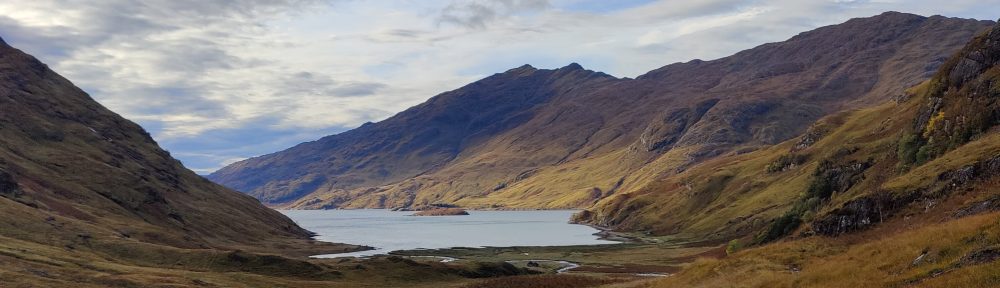

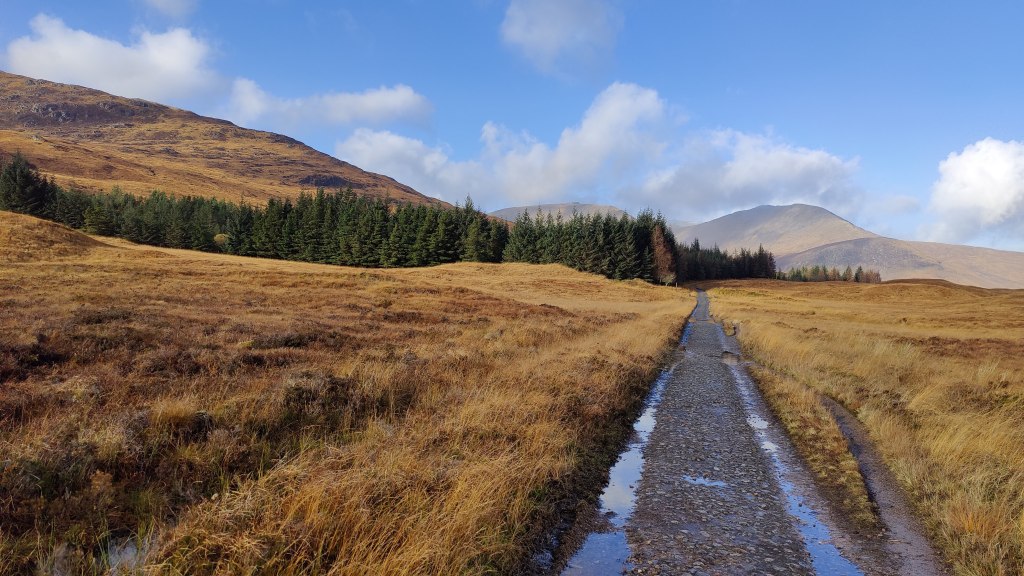
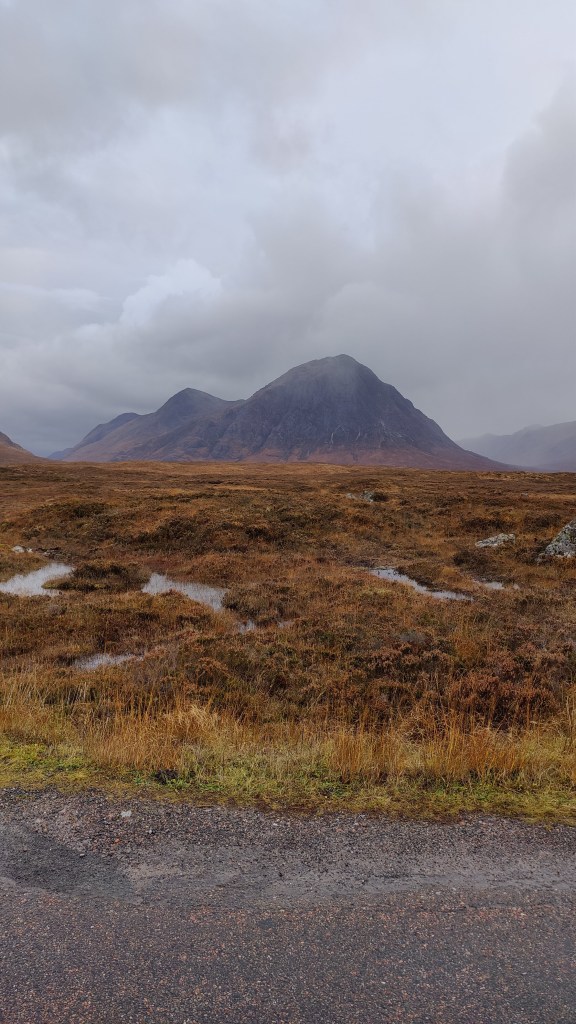
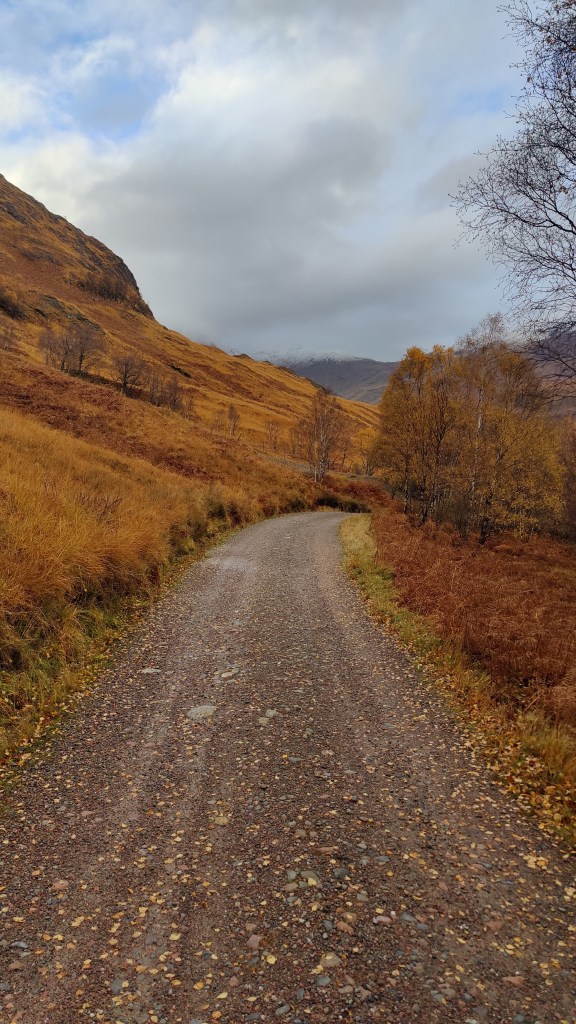


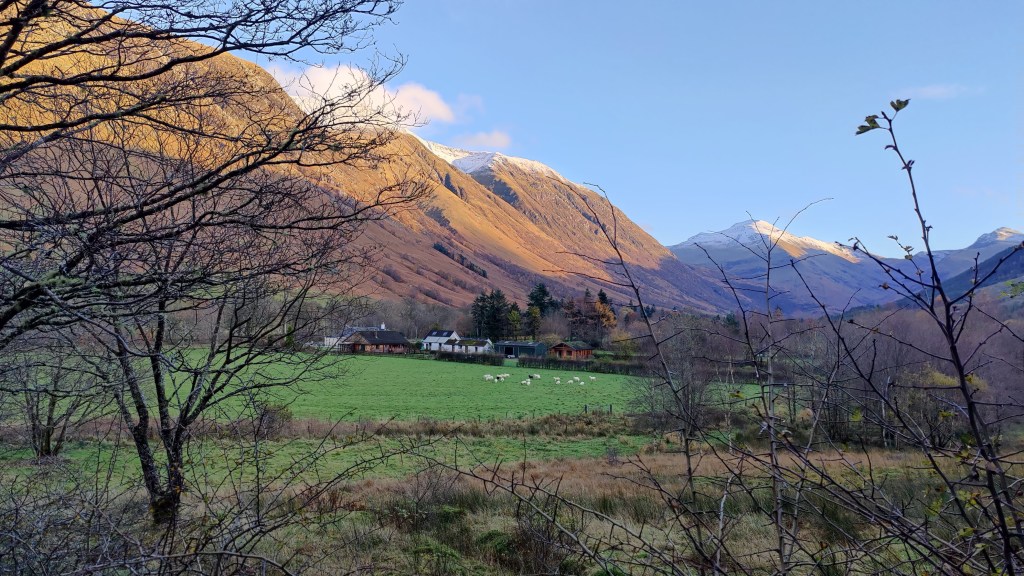
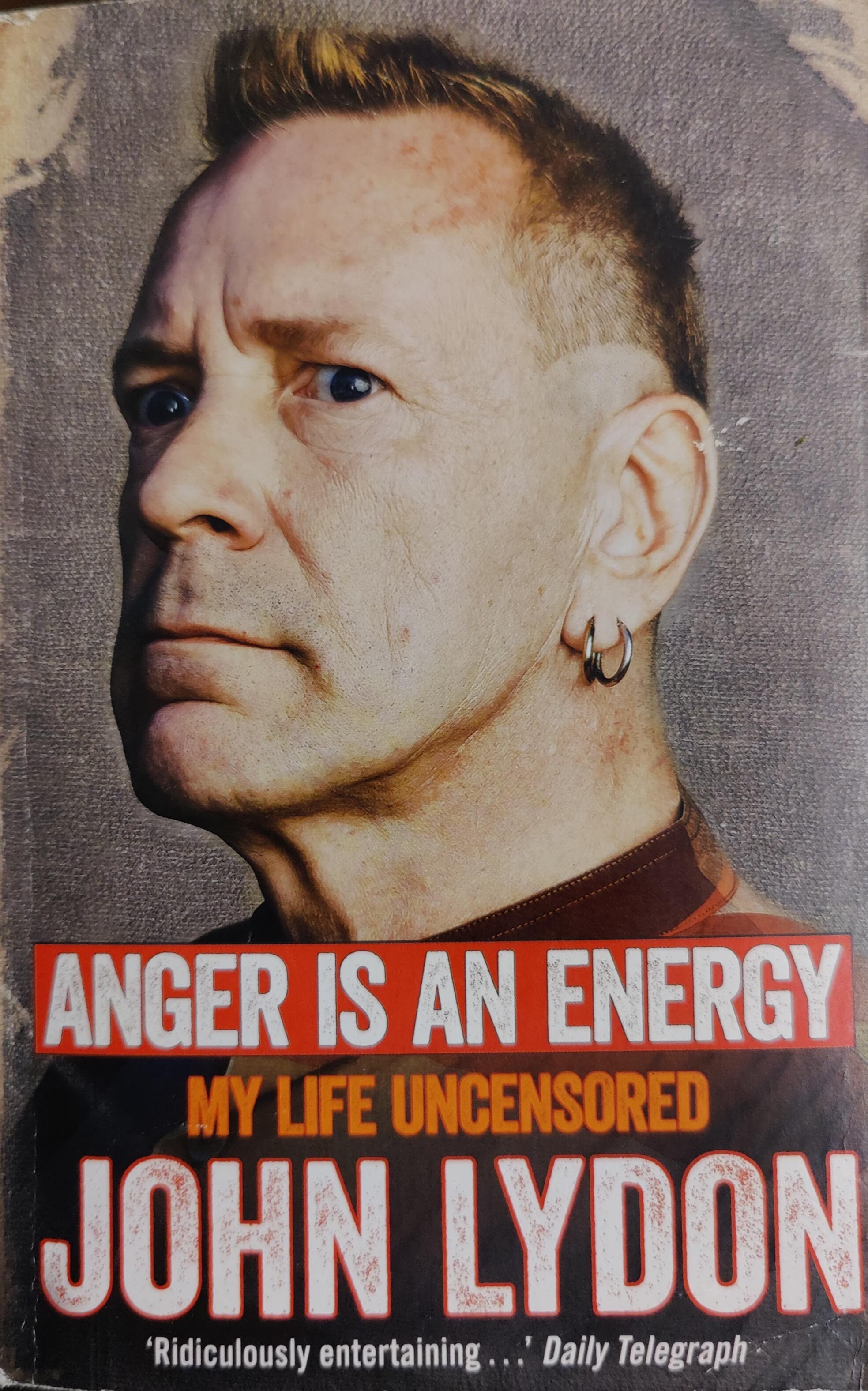


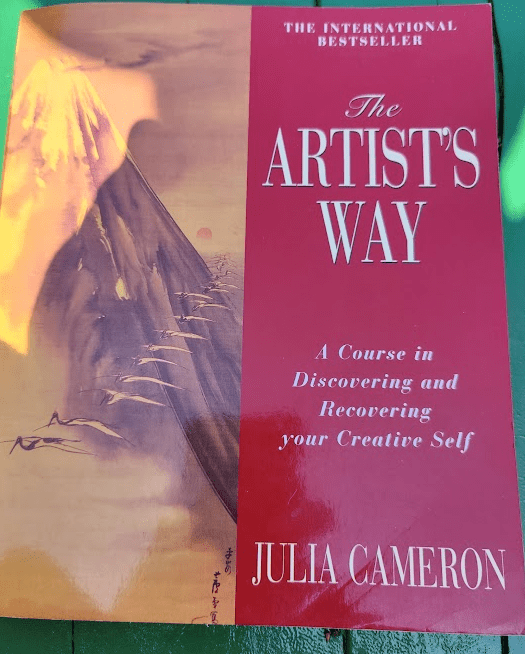


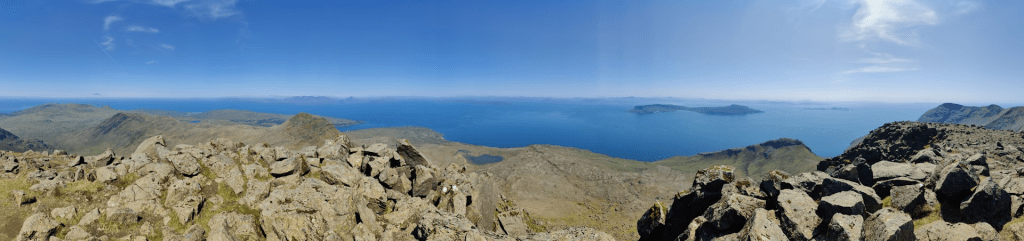


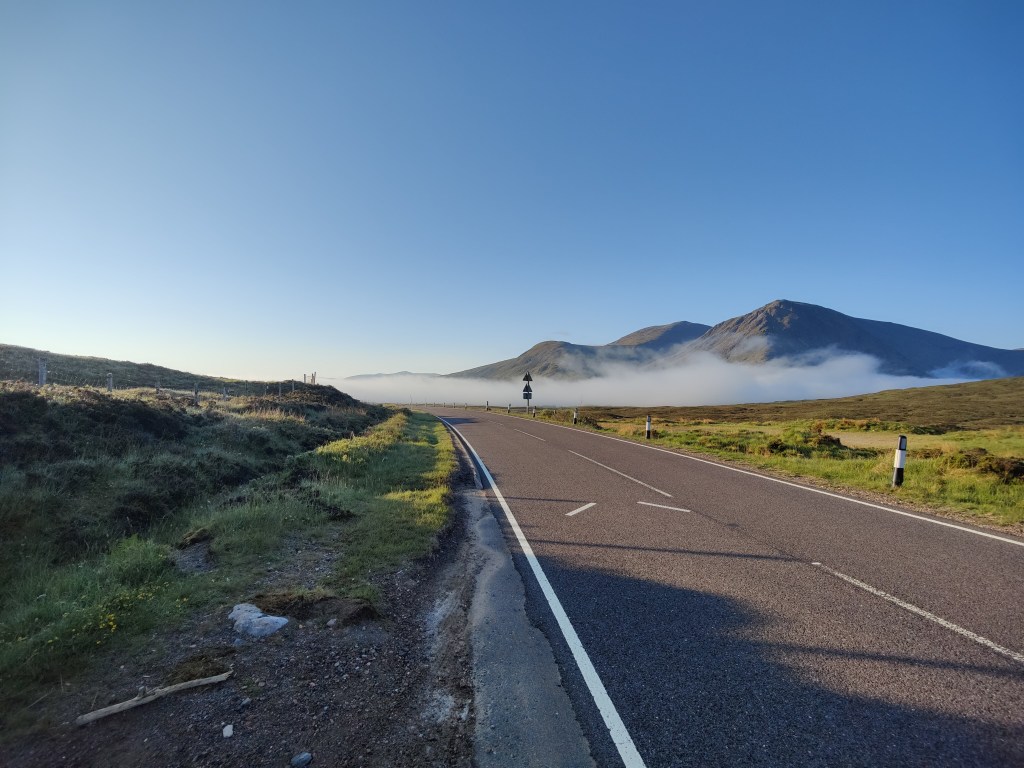
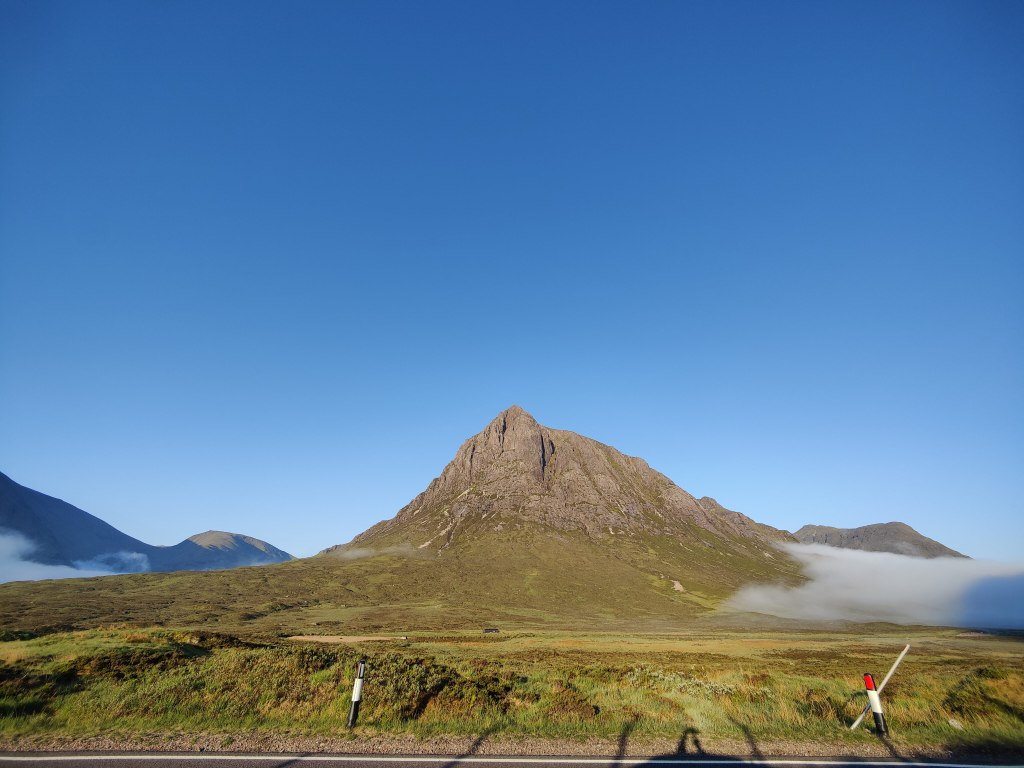


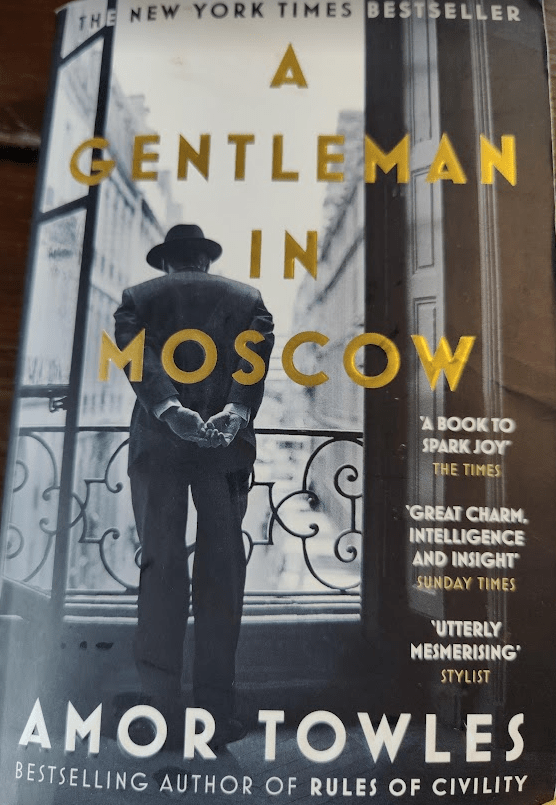
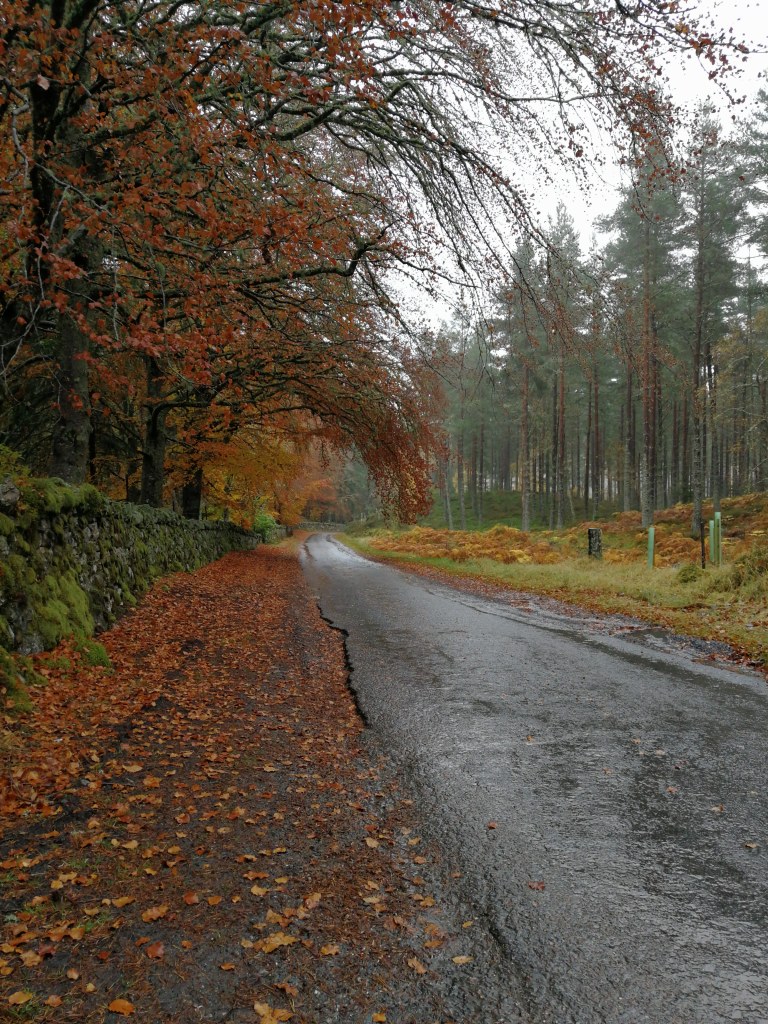


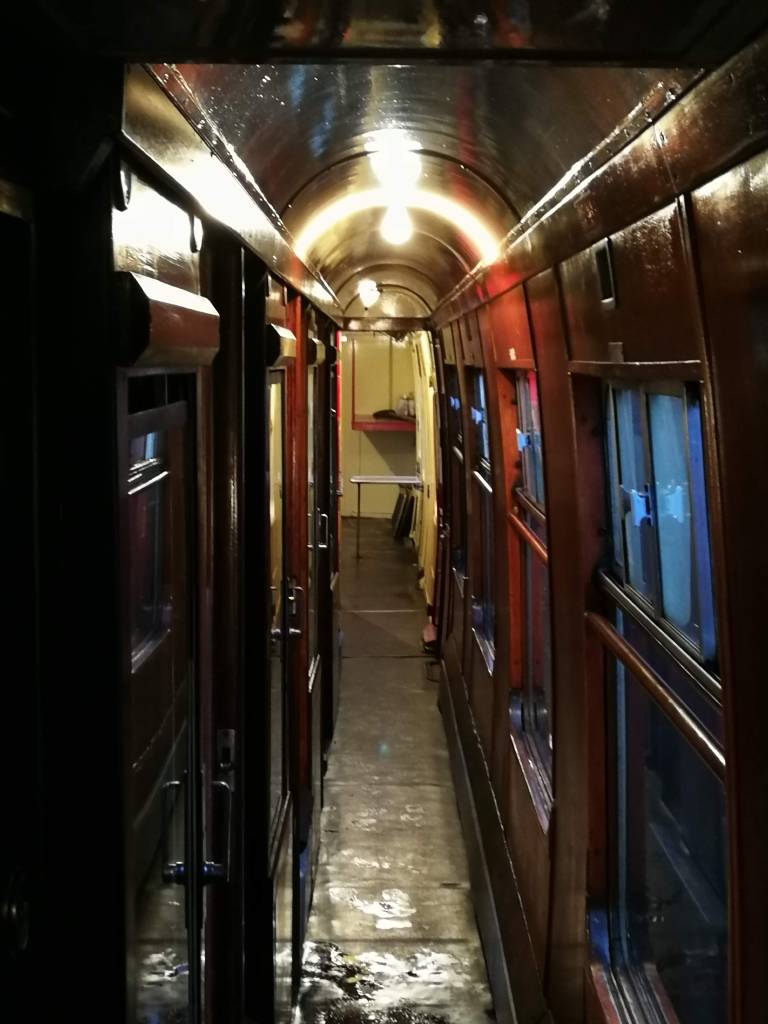

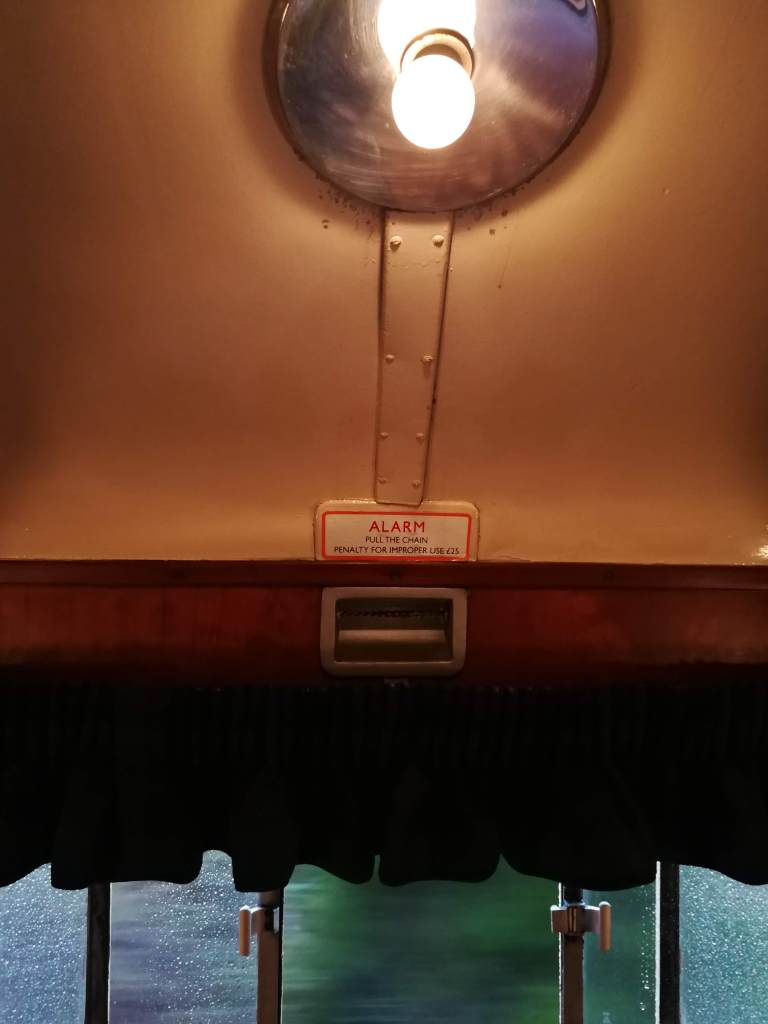
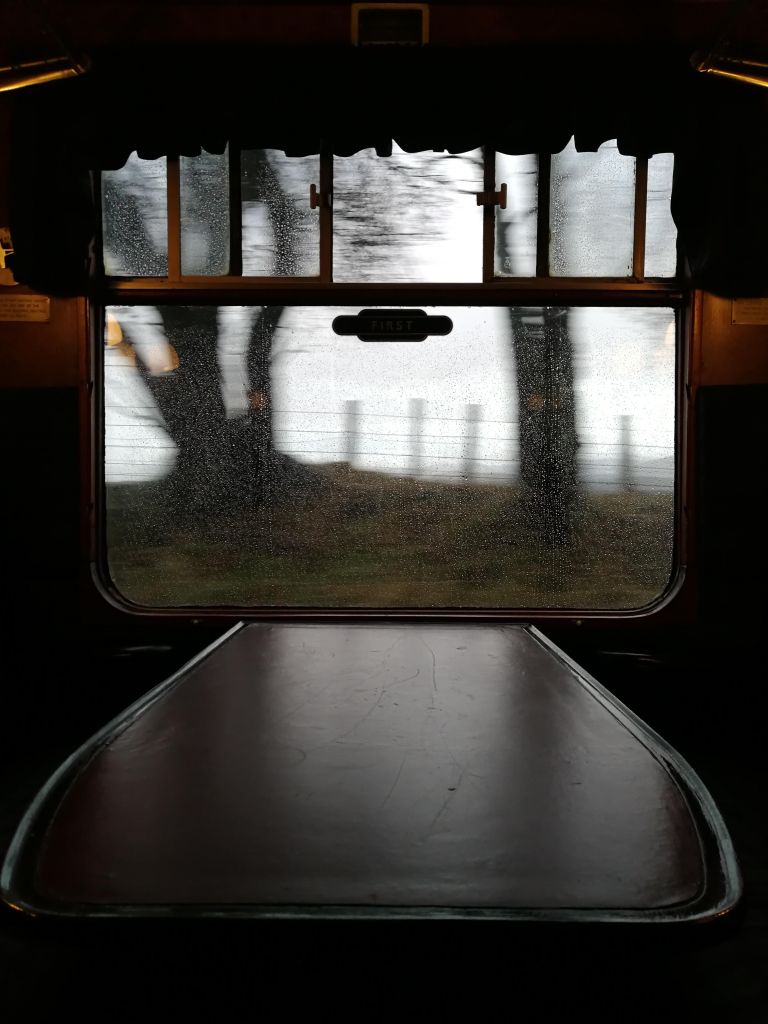
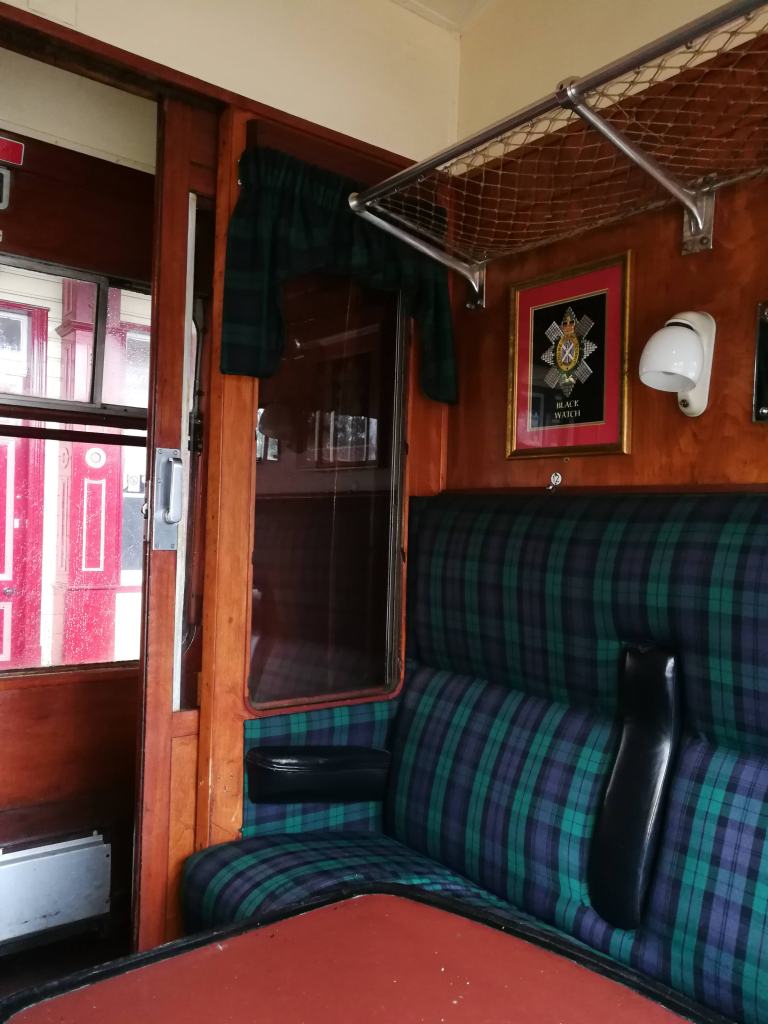
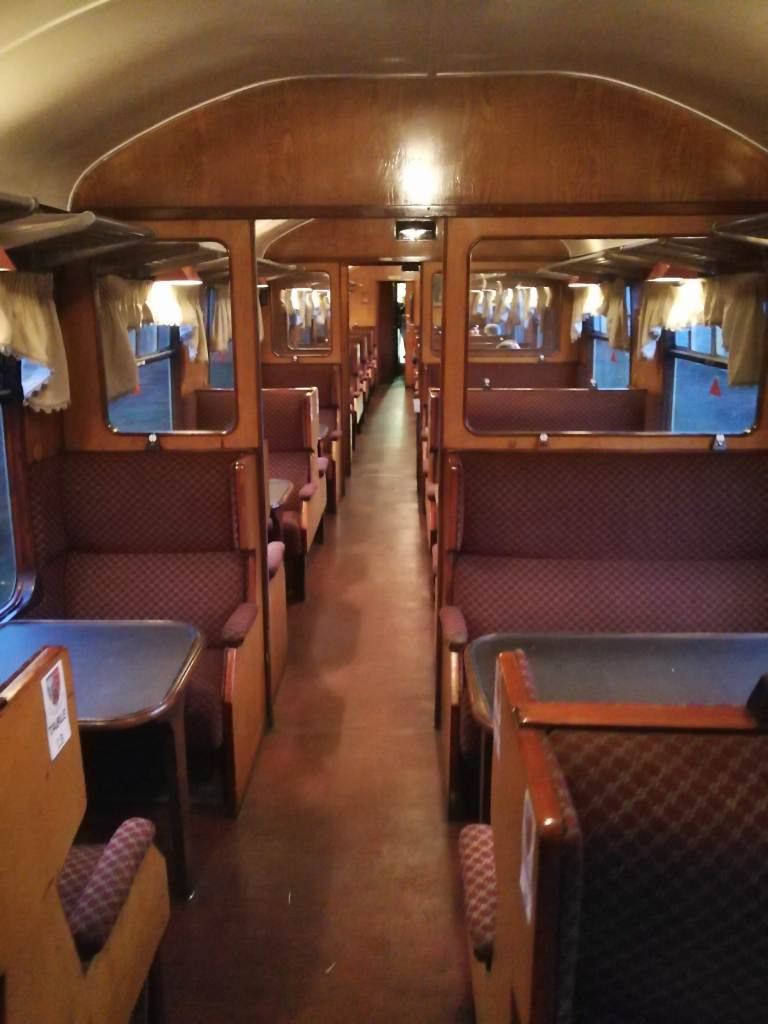

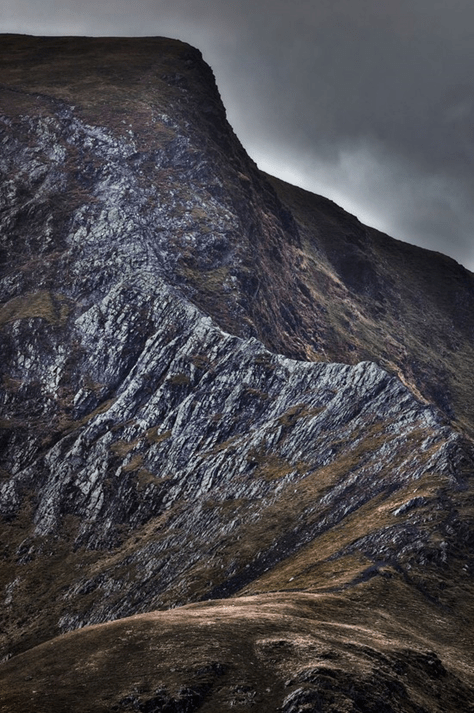
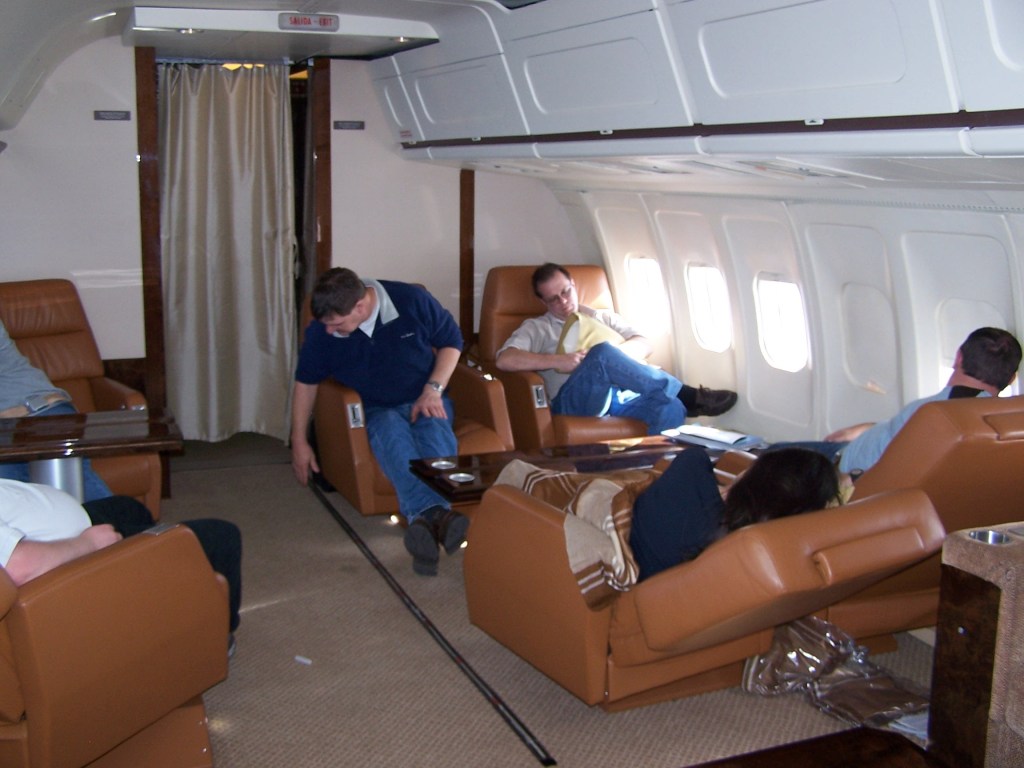

 Plateroom 28