“Civil War” – should stories make sense?

I’ll admit I was attracted to this film because Nick Offerman plays the President. As someone else said to me, if Nick Offerman is in it, it’s gotta be worth a watch! I write as an admirer, with tongue only partly in cheek, of Nick Offerman’s deadpan public servant Ron Swanson, in the old TV sitcom “Parks and Rec.

Nick Offerman’s POTUS appears on screen only in the very first and very last scenes of this film. SPOILER ALERT!! The film is set at the climax of a second American Civil War, a 14-month long insurgency by the so-called “Western Forces of California and Texas”. The film opens in New York City with a number of journalists seeking the ultimate interview, the ultimate photo. They decide to drive to Washington DC in search of this prize. This quest by a journalist for that last great photo, leading to a catastrophic road journey, reminded me of an old James Woods film, “Salvador”. In “Salvador” James Woods’ photographer travels to El Salvador and witnesses the murder of Archbishop Oscar Remero in 1980. A better film, if I may say so, then this one.

The first half of “Civil War” takes the form of a typical road movie – disparate and initially hostile characters bond together in fellowship during a long and arduous car journey. We see the war itself mainly in the dystopian landscape crossed by the journalists. A military chopper, crashed and burnt in the car park of a suburban mall, a “JC Penney” store prominent in the background. Freeways full of abandoned cars. Silent and eerie landscapes. The story-telling principle “Show not Tell” is taken to breaking point here with not even a glimmer of an explanation of what has happened. We see the flicker of munitions from the distant frontline. Madmen with guns – some in uniform, some not – commit atrocities. Although to be fair, that last sentence could quite easily describe the United States of America at any time.

Something I found jarring was the willingness of the photographers to document and witness, but not to intervene. It’s one thing to photograph a predator and its prey for a wildlife show, and not intervene, watching dispassionately as some poor furry creature is consumed. It is quite another to photograph the killing and death (or worse, in a nightmare sequence near the beginning clearly drawing on the photographers’ memory) of fellow human beings, and not intervene. What right do we have – though it may cost us our life – to not intervene? Of all the excuses there are in the world to walk by on the other side, I find the photo-journalists’ excuse – document but don’t intervene – one of the weakest.

The turning point of the film is a scene where one of the journalists saves the lives of the rest of them by mowing down armed men with a big SUV. My suspension of disbelief left the theatre at that point. For this scene to be even remotely convincing, the hero of the piece (who dies as a result of wounds sustained in the rescue) would have had to start and then drive the SUV a few hundred metres at high speed, without two armed soldiers hearing it – and this on a quiet summer’s day in an eerie, silent, war-torn landscape. Lazy writing is what it is. No matter: the scene is there only to facilitate a paradigm shift to the second phase of the film, where we do see actual war.

The journalists accompany the “Western Forces” into Washington DC; we find that the United States Army has without any explanation at all, mysteriously, suddenly and very conveniently given up. Unlikely as it may seem. The entire film (even if in principle a second American Civil War is possible) can be described with the words “unlikely as it may seem”. We see the taking of the White House, and the shooting dead of the President by common private soldiers of the “Western Forces”. These soldiers seem unconvincingly open, friendly and willing to engage with journalists, rather than just ignore them or shoot them on sight – as would be more likely in reality after 14 months of brutal civil war.

There are so many unanswered questions in this film. Why is Nick Offerman’s sitting President seen as the villain by the journalists? That makes no sense, even though he is transparently played as some form of Trump-like character. It’s almost as if the journalists – who would be liberal and almost certainly tribal Democrats, are sympathetic to the invasion of the USA by Texas, a secessionist state that would surely be Republican. The invasion makes no sense either. The entire war makes no sense. States (Texas and California) have seceded. If that actually happened, the reality is that (as with the original Civil War) the USA would have little choice but to invade those states to restore the status quo, not vice-versa.

Fortunately the film is not really about the geopolitical or military details of a second American Civil War, but about its effects on people, which of course, is much more important. If I am honest with myself, story has always inhabited a “post-truth world” and ignored inconvenient things like facts. It just annoys the inner geek within me. Overall, I found the first half watchable but jarring in places, I found the second half typical Hollywood flash-bang tosh – the battle, the chase, the adrenaline, taking priority over all. And I thought the music was great, particularly in the ending credits.
Peak travel?

Travelling to London for work, I find that my train ticket with East Midlands Railway is “cancelled”. The female guard was quite polite about it; she caused me to fill in and sign some kind of penalty notice, and then encouraged me to appeal against it. It was only when I started to look into filling in this appeal form whilst sat in the train, that I started to encounter grave difficulties. And I got to thinking about infrastructure. Here I was, in the third decade of the 21st century, working on a modern laptop, with a modern smartphone, whilst sat on a twentieth century train trundling along at barely 100mph on twentieth century tracks.

South of Kettering, the catenary poles flash by, reminding us of the half-forgotten electrification of the Midland Mainline from London to Sheffield. That particular project has been cancelled. It has been started, and cancelled, and started again, and then cancelled again, according to some arcane and unknowable Department for Transport agenda. I’ve written about the D(a)fT elsewhere on here and noted that the Scots have a much more sensible attitude to railway electrification – that is, do as much as possible, as fast as possible. But that calculus doesn’t seem to apply to England.

The list of half-cocked railway infrastructure projects is not short. There’s the Borders Railway (part of the closed Waverley route from Edinburgh to Carlisle) which was rebuilt on the cheap with a single track; there’s the half-finished electrification of the Midland Mainline, and there is the absolute shambles of HS2, which has become a national embarrassment. Infrastructure does not seem to be a strength of the English. We seem to have forgotten how. And yet, it can be done, it has been done, it could be done. It certainly needs to be done. It is my understanding that Heathrow’s Terminal 5 was built by the contractors of the former British Airports Authority, on time, and on budget. (That it wasn’t actually opened on time is rather a different story, I think, and maybe more to do with British Airways.) So, it is possible.

But it’s not just railway infrastructure that is creaking. I’m trying to work on-line using EE’s mobile phone network. One might expect a usable (more than 5 MB/second) data signal pretty much everywhere in central England. You’ll not be getting that with EE on a Midland Main line train to London. Other providers may do better; this railway may pass through remote “black spots”. After about five or six attempts to do some basic work, I had to give up for lack of internet access. It was quite literally a waste of time. I understand very well the need for competition and a free market, but the way cellular mobile phone infrastructure is organised in the UK, does not provide best value to the customer. In some places and at some times there are overlapping competing services; at other times and in other places, there is no service at all. One buys a new mobile phone, and the sales team will tell you what colour it is, how shiny it is, how good the camera is – when all I want to know is, does it work in my front room? Does it work on the train in the heart of England?

In a few weeks I will take train with LNER, from Kings Cross to Newcastle. I will sit in a Japanese electric train which will take about 2 hrs and 45 minutes for the journey up the East Coast Mainline. Sounds great! What’s not to like? I’ll tell you what: the journey took three hours forty years ago in 1984, using the Intercity 125 – 1960’s technology diesel trains. There’s not much laudable in a modern western country about a train that takes 165 minutes to travel 245 miles, not when the French can journey from Paris to Lyon – a train trip of equivalent length – in 120-130 minutes. Although I suppose we should be thankful for small mercies: to drive from London to Newcastle will be five hours if you’re lucky. And on that note…

I used to know a fellow in East Surrey who as a boy in the 1960’s went on holiday with his family to Devon. Each year they would set out, driving along the A25, and so on through the A-roads to the A303 and on down into the West Country, taking a very long and full day in doing so. This was before the M4 was built, and long before the M25 was built.

There was a time, forty, perhaps fifty years gone by, when you might have driven from London to Derby along the M1, in not much over an hour and a half. You’d be speeding of course, but that’s neither here nor there. I have heard of someone driving from Edgware Road to Derby marketplace in 97 minutes. I myself (albeit very late at night and back in 1995) once drove from Heathrow to Derby in 105 minutes. Journey times like that would be impossible today even late at night, what with roadworks, heavy traffic, and the practical certainty of an automated speeding fine.

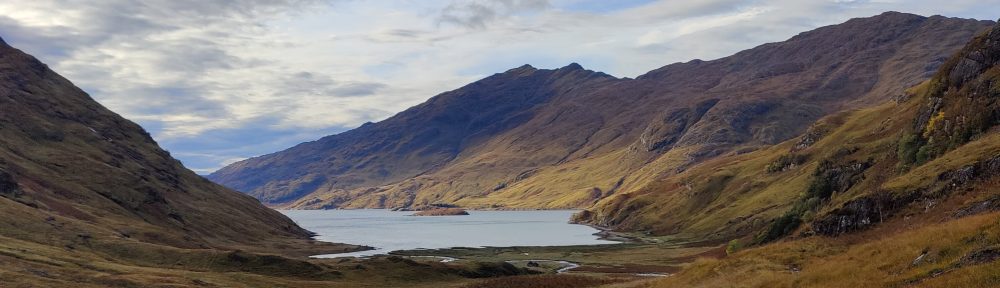
The road across Rannoch Moor, a road that thirty years ago you might safely drive at 90-100mph, is today literally – not metaphorically – a white-knuckle ride at 70mph. The reason is, the road is barely maintained any more and is deteriorating rapidly. In a few months time I will be driving from the Midlands to the Scottish Highlands: I expect the journey to take longer than a similar journey would have taken thirty years ago, primarily because of much heavier traffic and more roadworks. I will say nothing of “average speed cameras”.

I wonder that we in the UK have reached not “peak oil” or anything of that sort, but “peak infrastructure”. For all of my life, we have more or less assumed that there has been, and there will continue to be, improvement in transportation infrastructure. We took it for granted that roads are better, faster, and wider than they once were; that railways are more modern, with shiner, speedier trains than in the past. That has pretty much been the case for the whole of the twentieth century. Overland journeys in the UK, whether by road or by rail, became quicker, easier and more comfortable. But now, I think that has changed. In my view we can now look back at “peak travel”. I suggest that there was a moment sometime about 20-25 years ago, when transport in the UK stopped getting better, faster, and more efficient. Now it only gets worse.

Five trends for the coming years

Whilst I am in no sense someone who thinks daily about the zombie apocalypse, some thoughts about the future are in order. It is worth being prepared, so far as is possible without ruining your daily life. It is worth embracing the idea of thinking ahead, albeit with care. Care is needed for two reasons. Firstly, R.A Heinlein noted that an authentic soothsayer (someone who really can predict the future rather than a mere charlatan making it up as they go along) doesn’t get half the kicking they deserve. Secondly, whilst it is no prophecy to say that an egg placed on a table will probably roll off to fall to the floor and smash, many people don’t want to hear that – particularly if that egg forms part of theirs and their children’s dinner.

For the end of the world as we know it – global nuclear war, apocalyptic plagues, the Yellowstone Caldera exploding, hostile aliens landing – the individual cannot really prepare. All we can do is feel fine, as Michael Stipe sings in the R.E.M song “It’s the end of the world as we know it”. Here then, are five trends I think will matter to people in the UK particularly, in the next 10-15 years. In all of this I try to make no judgement on the good or bad of it all, just noting that I think that this or that will happen.

A rise in authoritarianism: We’re seeing a rise, not only in authoritarian politics, but in people’s tolerance of, and demand for, authoritarian politics, both in the UK and right across the west. Deplorable though it is, I think Trump will be re-elected, and you know what, I don’t think there WILL be a significant election in the USA in 2029/30. I hope I’m wrong…

Right here in the UK, only in recent weeks a poll indicated that as many as a fifth of people think being masked up whilst in public transport, should be mandatory even now. We live in a country where the state has the right to forbid you from going to the pub – and a majority of people approve of that. But others, a minority perhaps, would rather live in a country where they are free to go to the pub, rather than in a country where it is free to go to the doctors (but you can’t get an appointment for three weeks). 

Restrictions on travel: A few years ago someone I knew travelled on her own from the south of England to the very top of Scotland, and back again. Why? Because she could. No-one stopped her; no-one asked her to produce ID, no-one asked her to justify or provide a reason for her journey. Today you can still travel as you please through the UK without producing ID, and without justifying your journey to the people around you or to officious officials in epaulettes and peaked caps. I doubt if this will be possible in ten years from now, much less 15 years from now. Somebody somewhere, pretty soon, will start saying – “Is your journey really necessary?” Travel the world NOW if you can, because pretty soon people will try to forbid it as being bad for the planet. As a small aside on domestic politics, apart from any of the above, I think (and I am only half tongue-in-cheek saying this) that English people may need a passport to visit Scotland in ten years from now!

The effective collapse of the NHS and the welfare state: The NHS is in crisis, but no-one will admit that; no-one will say out loud that the NHS is failing. It does a great job in many ways, but in other ways, not so much. Part of the problem is that, as others have said, belief in the NHS has now become a national religion, complete with untouchable sacred cows. To even question the basic Bevanite principle of free at point of use care for all, is to commit the gravest heresy. An entity calling itself “The National Health Service” will probably exist on paper well into the 22nd century – but the NHS we had only thirty years ago has already gone. It is like the parrot in the Monty Python sketch – it is dead. It has shuffled its mortal coil. But no – it is “just sleeping“…

People think the NHS is in crisis now! In ten years from now people will look back with nostalgia and affection at the NHS we had way back in 2024! I don’t want to even think about what sort of care will be available in 2044 – when I will be in my late seventies. We may yet escape the partial collapse of the welfare state and the effective failure of the NHS, but I suggest that we will do so only at the expense of liberal democracy. People want goods and services, but no-one wants to pay for them. The NHS has to paid for, and it may end up being funded by levels of taxation and confiscation of wealth not possible in a liberal democracy. See above on authoritarianism – we may favour free healthcare over free-dom.

Increasingly violent and extreme weather: I can’t say “unpredictable” weather for the obvious reason that I am predicting it right here, right now. We’ve recently seen a tornado tear off a roof in Stalybridge. In the coming years we’ll see all kinds of things – snow in June, 24 degrees Celsius in February. We’ll see summer heat with 40 degrees Celsius right here in the UK. We’ll see a Big Dry where it doesn’t rain from June to September…and then more rain falling on one October morning than in all the previous two years. The effects of all that on houses, cars, roads and insurance premiums, can hardly be imagined.

Unreliable power, water and internet: Most of us in the UK take it for granted that we have exceptionally reliable 24/7 mains electricity and clean running water. The younger generation also take for granted, 24/7 access to the internet. For any number of reasons, I find it unlikely that we will be taking all three of those things for granted in 15 years from now. The political, regulatory and technical requirements imposed to reach #Netzero will eventually mean power cuts become an everyday part of life in the UK. Aging and unrepaired infrastructure, and the above-mentioned extreme weather, will likewise take their toll. Another thing that I see as inevitable, is a cyber-attack on the internet, rendering all electronic funds transfer impossible for 60, 70, 80 hours – days even. And that will happen on the day you need to refuel your car and buy groceries. How much cash have you got on your person?

“No adjective for terror” – I am Legend

I found and read a copy of Richard Mattheson’s “I am Legend”. This is the 1950’s pulp fiction novel that was made into the 2007 Will Smith film of the same name. Towards the end of the book the hero notes that “he has no adjective for terror”. This struck me deeply, and I looked into it. What the man meant was that terror was so much part of his everyday life that it excited no comment, no adjective, and certainly no superlative. His life was so terrible, so full of terror, that the terribleness of it was quite literally unremarkable.

There is a lesson for us all here in the West, where to a degree, thus far in recent times at least, the reverse has been true. Our lives in general are not terrible. Today, in the West, terror is not everyday and unremarkable; it is exceptionally rare and very remarkable indeed.

But I got to thinking in particular about water, and also about life in general in a country like the UK where there is respect for the rule of law. We do not generally use adjectives to describe drinking water – or at least, not too often. Water is water. It is mere; it is taken for granted. There is, in the West, no “good” water nor “bad” water; there is merely water. In general, water is just water. It has no adjective. We have an implicit understanding in the West that water is always good, it is something that we have always completely took for granted.

I’m reminded of one of Freya Stark’s stories; on a yacht off Arabia sometime in the 1930’s, she welcomes an Arab on board, and the Arab drinks some water in her cabin. “What sweet water” he says – of the tanked water on a yacht! So accustomed, is this Arab, to water of widely different and perhaps much poorer quality, that he considers the water served to him by Ms Stark, to be “sweet”.

As with water, so with the rule of law. We  take it for granted that we can (at least in broad daylight in the leafy suburbs, not of the hours of darkness in some of our big cities) leave our houses and walk abroad without being armed. This quality of life, brought to us by the rule of law, is quite literally unremarkable. It has no adjective. We ought be thankful that this is so, and long may it continue.

Fifty-two shades of…something better than grey

Well I’ve done it! I’ve read fifty-two books this year! I think I can be proud of that. Some of them I have even reviewed properly. We’ll not go through them all in excruciating detail here, but we will discuss broadly, my year’s reading. I never set out to read a book a week, but I did set out for sure, to read many dozens of books in the year.

Of the 52, 15 of them were in my Kindle – I can do both paper books and e-reading. Eight of the books were re-reads. A few of those only, will I highlight. Nicholas Monsarrat’s “The Cruel Sea” which I re-read after seeing the film one Sunday afternoon. C.S Lewis’ “The Great Divorce” remains one of my favourite reads, being an account of a man who dreamt of going on a day trip to Heaven – from a certain another place. Another re-read was R.A Heinlein’s “The moon is a harsh mistress”, at one level, a story about a rebellion in a prison colony in 2075: at another, the greatest manifesto for libertarian political views, you will ever read. Eighteen of the 52 books were fiction – an oddly low number, although it just means that my interests have been well satisfied by non-fiction.

I started the year reading Dr J.H. B Bell’s “A progress in mountaineering”. Bell, as a 16-year old in 1910, cycled 47 miles from Newtonmore to the foot of Ben Nevis, and climbed Nevis alone. And then he cycled back 47 miles again: the account does not make it clear if he cycled 90+ miles in hobnail boots, or if he climbed Nevis in plimsolls. What seems clear, is that when compared with our elders, we have become a nation of wuss.

I enjoyed Jonathan Nicholls’ “Kittyhawk down”, a well-researched story about RAF pilots in the Western desert during WWII. In February I also read Murray Rothbard’s short pamphlet “The Anatomy of the State” (Murray Rothbard also wrote “The fatal conceit” about the errors of socialism), and a book called “The road to Mecca” by Muhammed Asad, a Jewish convert to Islam, who later became a senior diplomat for the government of Pakistan. In March I read Robert Winder’s “The hidden springs of Englishness”, and started Neil Sheehan’s “A bright shining lie” reviewed here – if you read one book about Vietnam, make it this one.

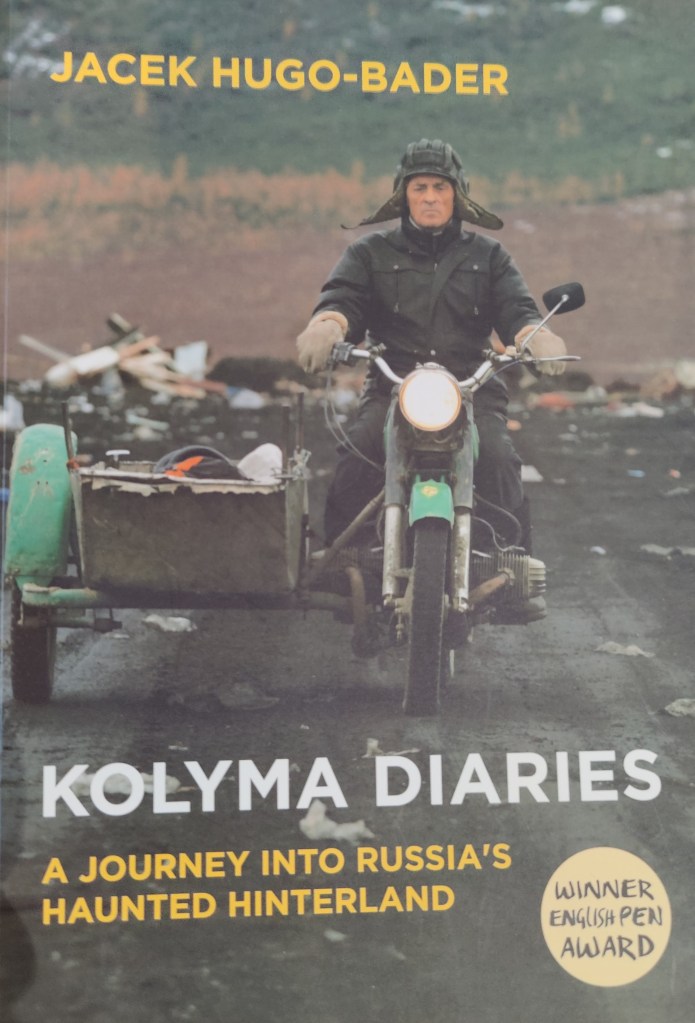
My sister sent me an old copy of Rich Roll’s “Finding Ultra” about an overweight man who turned his life around and became one of the fittest ultra-marathon runners in the world. As much for the appendices on plant-based diet, did I find that book interesting. William Wordsworth’s original travel guide to the Lake District proved oddly relevant centuries after it was written. Having tried and failed to source a copy of Varlam Shalamov’s rare Kolyma Tales, instead I read Hugo Jacek-Bader’s excellent “Kolyma diaries” and “White fever”, about travels in Eastern Russia – startling stuff about a very different world.

I read some science-fiction: Amongst others, Paul McAuley (“The war of maps”), Iain M Banks (“The Algrebraist” – again), an old Keith Laumer novel and two works of the modern writer Adrian Tchaikovsky. Also Heinlein – “Glory Road” (is that even sci-fi??) and “Harsh mistress” as already mentioned. Becky Chambers’ “The Long Way to a Small, Angry Planet” I review here.

I read three books about India: Shashi Tharoor’s (perhaps understandably) bitter and twisted “Inglorious Empire”, William Dalrymple’s account of the East India Company entitled “The Anarchy”, and finally Katie Hickman’s “She-merchants, buccaneers and gentlewomen: British women in India”. All very informative and enabling one to gain a more accurate perspective of world history. The lesson from Shashi Tharoor’s “Inglorious Empire” is that bitterness and negativity, however arguably justifiable, is deeply unattractive.

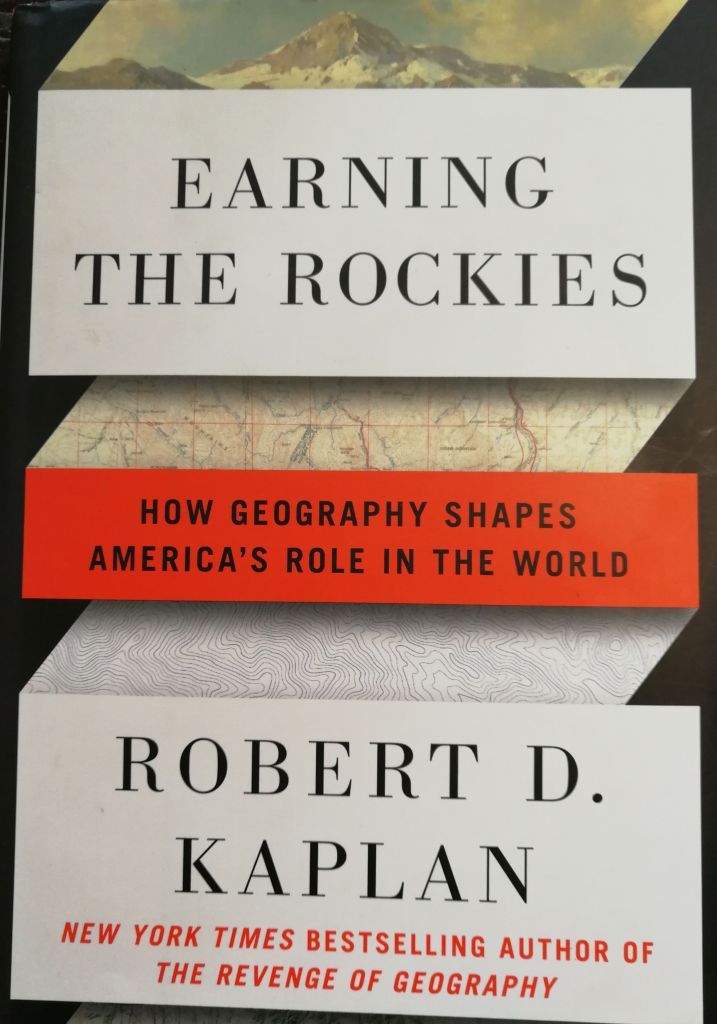
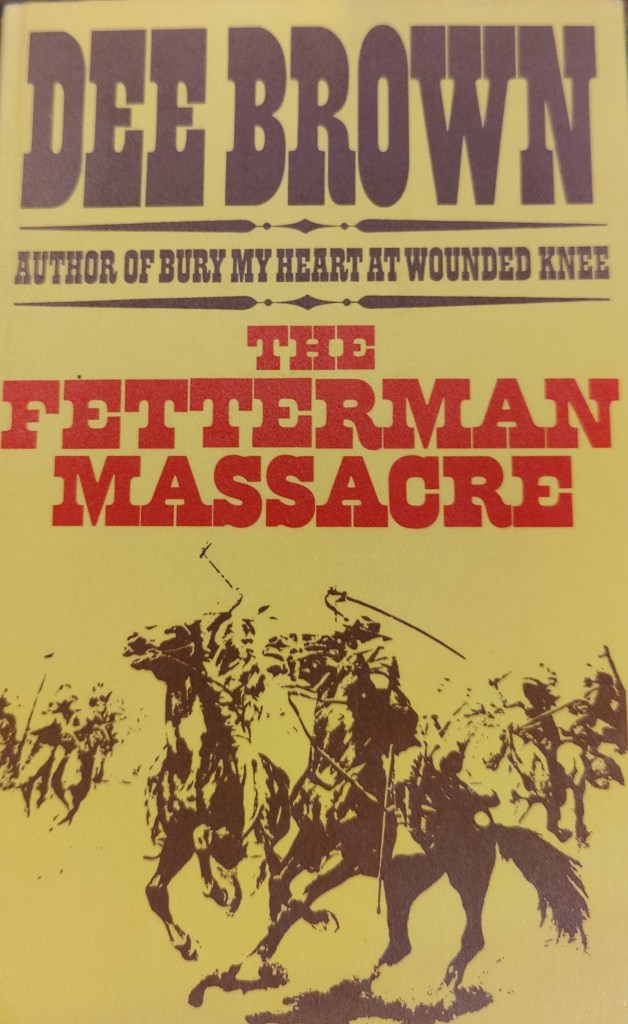
I have read much about America: I am a fan of America. I believe in what America stands for, though it seem to be in trouble in these times and full of vice and failings. Robert Kaplan’s “Earning the Rockies: How Geography Shapes America’s Role in the World”, reviewed here, proved very interesting at the start but perhaps a little disingenous towards the end. A great interest of mine is American history, particularly the westward expansion. I read Bernard Devoto’s; “1846: the year of decision” and John Anthony Caruso’s “The Appalachian Frontier” , was well as several of Dee Brown’s books – one on the Fetterman Massacre, the other on women in the wild west. Dee Brown’s greatest and most famous book, all should read: that is “Bury my heart at Wounded Knee”, an account of the destruction of the native American tribes.

Later in the year I read Tim O’Brien’s “The things they carried” – the Vietnam war as seen through the lens of what soldiers carried with them. One soldier carried a pair of his girlfriend’s tights as a neckscarf, and wore them even after she dumped him. Also, I read Stephen Hough’s “The Great War at sea” – most informative – and Alice Roberts’ “Tamed – ten species that changed our world”. Self-explanatory title there, and rather a lot of detailed biology which I had to skip.

I read Ed Husain’s troubling account of journeys in certain cities in the UK – “Among the mosques”. In order to get published, Ed Husain has to be upbeat and positive about what is happening with Islam in the United Kingdom today, but I find that he can’t possibly be as naive as he comes across in his writing. A deeply worrying travelogue.

Tim Butcher wrote “Blood River”. The age of great explorers, opines one of the reviewers, is not dead. Butcher attempts with only partial success to navigate overland by motorcycle and boat, from the eastern Congo through to the Atlantic coast. The Congo is a messed-up place, and it is deeply messed up for a number of very complicated reasons. It will get worse – much worse. Certain important minerals essential for modern Lithium-ion batteries, required for what some people call “the energy transition”, are most easily sourced in the Congo. In the coming decades the extraction of those minerals, to salve the western conscience and enable electric cars, will do as much damage to Africans in the Congo as King Leopold ever did in his extraction of rubber in the early 20th century.

I read a useful and informative biography of Sir William Stanier by the ever-readable and prolific railway author O.S Nock. This one I found in an excellent second-hand bookshop in Bridport. I read Ryzard Kapuchinsky’s “Imperium” about Soviet Russia – including an unforgettable two-page interlude on how to make peach brandy. What drives my reading, is this – not what is in plain view, but what is not. Sometimes something tangential – a fact or anecdote of paramount importance or of deep interest, is almost literally found “in between the lines”.

I ended the year with David Halberstam’s “The Coldest Winter”. This is a brilliant account of the Korean War. Another great Pulitzer prize winning author covering vast sweeps of American culture and history. Though some of the descriptions of battles are a little too detailed for me, what made the book is the wide arc of history, the bigger picture. In a book about Korea, I learned much about the “New Deal” and the life and times of Franklin Roosevelt. I learned about changes to domestic politics in the USA that are still very much of importance today. I learned about McCarthyism, and also about Douglas MacArthur – a horribly fascinating, perhaps deservedly reviled, but nonetheless important 20th century figure. What’s it like to have no self-doubt at all? Lack of self-doubt is not one of my qualities.

Earlier in the year, I chanced across Francis Rossi & Rick Parfitt’s “Just for the record”, being an autobiography of Status Quo. This rock autobiography was a disappointment for me; it was potentially great story written in the most perfunctory manner. You would think that lyricists could write! No, obviously not. One thing I recall though is Rick Parfitt writing of himself as a teenager (when his guitar teacher patronised him) “No-one calls me laddie“. See my point above about lack of self-doubt.

Over Christmas I was given “Rainbow in the dark”, the autobiography of Ronnie James Dio. We learn that as a boy he swore to himself that one day he would headline at Madison Square Garden, in his own name – and he did! A readable enough tale of ambition fulfilled, of the virtues of hard work and persistence, and of some of the other less agreeable habits of rock ‘n roll stars. Reading it, I’d like also to read a biography of the guitarist Ritchie Blackmore, if and when such a book becomes available.

This is for balance, for unfortunately, Dio’s account of those years is somewhat self-serving. It is a shame, for I regard him as a great lyricist, and the distinctive sound of his voice, be it in the heavy metal music of Rainbow, or Black Sabbath, formed a background to my youth.

The full list here:

Chris Anderson The official TED guide to public speaking
Paul McAuley The war of maps
J. H B Bell A Progress in mountaineering
Iain M Banks The Algebraist
Jonathan Nicholls Kittyhawk Down
Murray Rothbard Anatomy of the state
Muhammed Asad The road to Mecca
Robert Winder The Last Wolf: the Hidden Springs of Englishness
Adrian Tchaikovsky Cage of souls
Nicholas Monsarrat The Cruel Sea
C.S Lewis The Great Divorce
Neil Sheehan A bright shining lie
Jacek Hugo-Bader Kolyma Diaries
Rich Roll Finding Ultra
William Wordsworth The Lakes
Keith Laumer Doorstep
Jacek Hugo-Bader White Fever
Shashi Tharoor Inglorious Empire
Robert D. Kaplan Earning the Rockies: How Geography Shapes America’s Role in the World
Ryzard Kapuchinsky Imperium
Dee Brown The Fetterman Massacre
Bernard Werber Empire of the ants
William Smethurst Writing for television
William Dalrymple The Anarchy
Sven Hassel Court Martial
Becky Chambers The Long Way to a Small, Angry Planet
Bernard DeVoto 1846:The year of decision
Len Deighton Blitzkrieg
Dee Brown The Gentle Tamers: Women of the Old Wild West
John Anthony Caruso The Appalachian Frontier
Larry McMurtry Lonesome dove
Larry McMurtry Dead man’s walk
Larry McMurtry Comanche Moon
Francis Rossi & Rick Parfitt Just for the record – autobiography of Status Quo
Michael Bonavia The birth of British Rail
R.A Heinlein Glory Road
R.A Heinlein The moon is a harsh mistress
O.S Nock William Stanier
Katie Hickman She-merchants, buccaneers and gentlewomen: British women in India
Stephen Longstreet War cries on horseback
George Orwell Animal Farm
Ed Husain Among the mosques
Richard Hough The Great War at sea
Tim O’ Brien The things they carried
Tim Butcher Blood River
C.S Lewis That Hideous Strength
O.S Nock The Settle and Carlisle railway
Adrian Tchaikovsky Children of time
Alice Roberts Tamed – ten species that changed our world
Jeff Long Deeper
David Halberstam The coldest winter: America and the Korean war
Ronnie James Dio Rainbow in the dark

Working at home – top tips

We’ve been working from home for twenty months now and it will be two years or more before it ends, if not more. For fifteen years before the lockdown, I was a Home Counties commuter up to offices in central London. Over those years, the biggest change I have seen would be that we take for granted today the availability of robust IT technology that enables us to efficiently deliver office-based services remotely from almost anywhere in the world.  

Some years ago I happened to fly to Aberdeen on business. I arrived at LHR and got to the security check: “please put your laptop in a separate tray“…laptop…laptop? LAPTOP? Arghh! My laptop was not present. But we had at that point, cloud-based IT systems that enabled me, without a laptop, to flawlessly deliver what my employer was flying me to Aberdeen to deliver. I was able to do this with no more hassle than logging into some other internet-connected computer. It was literally trivial. Today, changes have been forced over the last two years by the Coronavirus pandemic, that render the physical office itself barely relevant at all.

But we still have to work for a living. Working from home is not straightforward; it’s not obvious how to do it properly, and there are very good reasons why it is not always appropriate. This is something I believe: anything that blurs the distinction between work and rest, plays into the hands of the employer, not the employee. When Dilbert’s “pointy-haired boss” talks about “work-life integration” rather than “work-life balance”, that really is too true to be funny. Two things that blur the distinction between work and rest, both highly thought of by employees, both a potential minefield or poison chalice. Working from home is one of them. The other is the practice of “dress down Friday”, which we won’t go into here.

My top tips for working at home:

  1. GET UP
  • Maintain disciplined hours: get up more or less at the same time as you would have done if you were commuting to the office.
  • Dress properly – whilst slippers or bare feet is fine, for me, my clothes should be smart weekend casual at least – make an effort. I think a good rule of thumb is, if you needed to change to leave the house to go out for lunch, you’re probably not appropriately dressed.

2. START WORK, DO WORK, FINISH WORK

  • As far as possible have set hours for work, and follow them. Put the hours in. Keeping a record of hours to make sure you do, might be worthwhile, but don’t be a slave to the timesheet.
  • Try to avoid blurring work and rest.  Start work at a certain time, take breaks, take a lunch break away from your desk. 
  • As far as possible – and realistically it’s perfectly possible – finish work at a set time.
  • Don’t return to your desk “after hours” in the evening or at weekends – office hours is office hours.  At the end of the day you are the one granting permission to work evenings or weekends. Not your boss, your spouse, not your kids….YOURSELF. 
  • Do work
    • Have a written list of tasks for each day, do those tasks. Put a line through a task when it is done: make your work day about achieving small, discrete objectives, each one of them contributing to the greater objective of doing your job properly.
    • Don’t be afraid to close your door if you’re lucky enough have a door or a separate room to work in, and to make it clear that you’re busy and not to be disturbed.
    • Have breaks: make coffee, hang out the washing, talk to other people in your house, walk the dog, be flexible.
    • Acknowledge that you’ll have good and bad days: Not all days are good storming days; some days are bad days. It happens; roll with it. A storming productive day can often be followed by a slower, less productive day: it all averages out.
  • Finish work
    • Close down your work computer
    • Put your work equipment (laptop, papers etc.) away at the end of the working day – if you have the space, conceal it. Put it in a cupboard or somewhere it can’t be seen.
    • Mark the end of the working week with some small ritual or ceremony. For me this is a walk into town to buy a bottle of beer and a bag of crisps. It could be a take-away, or a movie night, or a longer walk, or whatever.
    • Try to avoid drinking alcohol on week nights – keeping off the alcohol in the week means the weekend becomes something a little more special.

3. LOOK AFTER YOURSELF

  • Create!! Do something different Engage your left brain. Do something that is not analytical, something that is not your work. It might be drawing, gardening, painting, sewing, cooking, learning a language, studying a subject, playing a musical instrument, doing a jigsaw. It might even be ironing! Anything is allowed so long as it’s different.
  • Be outdoors for some of every day. Ideally in daylight though this may be difficult in winter. Ideally alone though this may be tricky for parents! Get yourself some headspace.
  • Get plenty of exercise as clearly distinct from just a walk around the block. This is vigorous aerobic exercise 2-3 times a week.
  • Keep on eye on the calories: Don’t eat and drink more than you body can deal with.  A modern western diet is so high in calories that in a home-based “office” lifestyle if you’re not careful your weight will slowly and inexorably increase.

In all of these rules, don’t be a slave to rules, and do whatever works for you.

A review of “Earning the Rockies”, by Robert D. Kaplan

A review of “Earning the Rockies“, by Robert D. Kaplan

The first Kaplan I read was “To the ends of the earth”, an account of travels through dusty, broken lands. I became a fan of his writing on the instant. This book is about the United States: dusty in places certainly, broken in places perhaps, but vital, he argues, to the future of our world.

It is a book full of quotable truism. “Comparison”, he opines, “is painful and not always polite, but it is at the root of all serious analysis”. This is something we learned in geography in school. Our teacher laboured to teach us the importance of the word “whereas”. Kaplan’s father, a truck driver, gifted Kaplan with what he calls a “cruel objectivity”. This work is neither cruel nor objective. Not a hymn of praise to America, more a reasoned defence of the American imperial project, which he argues, has grown out of the physical geography of the American continent. He seeks to “rediscover what is vital, yet forgotten, what is commonplace, yet overlooked.”

He roots the book in the influential work of an almost forgotten man of American letters, Bernard DeVoto. DeVoto’s understanding of the American West was like Devils Tower, Wyoming, towering over the surrounding plain of knowledge. Kaplan’s book is one whose moral and philosophical heart is west of St Louis, at the one hundredth meridian. It is a book that acknowledges the continuing power and importance of the frontier in American thought. Kaplan has to deal robustly with that depressingly popular school of thought that the settlement and conquest of the American West was just a terrible crime. Those grave injustices can’t be swept aside, of course. They are dealt with very well in such seminal works as Dee Brown’s “Bury my heart at Wounded Knee”, which should be required reading for all students of the American West.

I rather like his travelogue style of writing. His observations of places like Wheeler, West Virginia, and Portsmouth, Ohio, are fascinating commentary about the human condition as well as a discussion of the American psyche. Rather like Neil Sheehan in “A bright shining lie” (reviewed here), he draws attention to the Scots-Irish or “redneck” heritage, noting that “America as a democracy has a highly developed warrior ethos”. Americans are a fighting people, he suggests. Civil society in the USA has a far closer and more respectful relationship with the military than you’ll find elsewhere in the world.

Of the politeness found throughout the United States, particularly perhaps in the South and in the Mid-west, he suggests that it is just politeness – it goes no further than that. He writes that we must not confuse politeness with hospitality, such as that found in the Middle East or in Africa. Hospitality helps social stability, he writes, but politeness helps efficiency and production.

His road journey is completed at San Diego when he reaches the Pacific and sees the gathered grey hulls of the U.S Navy. At that point he does get a little misty-eyed, like Natalie Merchant’s youthful soldier in her song “Gun shy”:

So now does your heart pitter pat with a patriotic song
When you see the stripes of Old Glory waving?

The final third of the book seems quite distinct from the rest, and was not quite as readable – although still interesting. The mordant pen of an observant and humane travel journalist is gone. It is replaced by that of the geopolitical analyst with a distinct, refreshing, and quite understandable bias for, and love of, the United States of America. Modern left-wing liberal culture, particularly in western Europe and in the UK, does tend to be dismissive of the USA.

He does mis-step on occasion and say some odd things. To describe Israel, the Baltic states and Taiwan as “robust, venerable and iconic democracies” (as he does on page 136 of my copy) is pushing it a bit, to say the least! But mostly he is right on the money, as when he writes that the European Union, and globalisation itself, would be impossible to contemplate without the “overarching fact of American power“. That’s the plain truth, if an unpalatable truth to some. The bill for defence of western Europe, from Pearl Harbor down to the present day, has been paid for by American taxpayers and in American lives. Because the Americans have 300 warships, the Royal Navy can get away with a few dozen. European nations are able to spend as little as 1-2% of their GDP on defence, primarily because the Americans spend twice that much.

A note on sustainability: he notes in one place that California and the great cities of the American southwest, use the water of the Colorado River in a wasteful, unsustainable way. In another place, he notes that most European countries maintain an unsustainable level of social welfare, broadly made possible because of American power. It’s the juxtaposition here that interests me. These two unsustainable practices may be connected or linked in some way. There’s no maybe about the fact that both will change.

What would America and the world look like today had the continent been settled eastwards from what is now California, rather than westward from the water-rich Thirteen Colonies in the east? Or if the USA had never existed at all? Or if the United States ceased to exist? Not many writers have dared to even think about that last. The continuance and survival of the USA is not inevitable.

The travelogue in the first part of the book is deftly observed and humane. The second part, his analysis of world order as seen from San Diego, is more partisan and more complex to read and understand. In places I don’t agree with his analysis and in places it is arguably disingenuous.

Kaplan’s central premise is that the world needs the USA, and that the USA is an exceptional country with exceptional, even imperial, responsibilities on the world stage. He argues that the reasons for that derive from the physical geography of the American continent – there is no other like it. Similar conclusions are drawn, on a more general basis, by Tim Marshall in his excellent book “Prisoners of Geography”.

This is a book about America, for Americans, and America-phobes need not pick it up. Their view, in the end, is not sought. “Finding the Rockies” was very interesting, very readable, clear sighted and instructive – one of the best books I’ve read this year.

A year has gone by – an ongoing story

A close friend of mine was speaking to me the other day, and he mentioned going from town to town in his work, and finding place after place closed and boarded up, businesses shut, opportunities lost. After a while, he said, it starts to get to grind you down.

On 2/3/20 I wrote this: “God only knows what will happen with COVID-19. One thing I know for sure though, is that the second-order effects of the disease, will be worse than the disease itself. The foundations our world are being shaken, softly, gently, by this COVID-19 plague. It is not close to an apocalyptic vision, but what this respiratory disease brings in it’s train is not the Four Horsemen, but shrunken economies, collapsed markets, lost sales, lost opportunities, missed chances, reduced travel. These second-order effects are worse than the disease.”

This week and recently we have witnessed the spectacle of the Prince Harry and Megan Markle media circus. A media feeding frenzy – over what? Why are these people even in the news? On 13/3/20 I wrote: “It’s quieter now and quieter still it will get. Yet, there is a news frenzy. Information has never been more readily available, yet the news media are like that pack of monkeys in some city in S.E Asia, scrambling and fighting over a single banana. They scramble for the tiniest scrap of news, hyping everything, hyperventilating, creating nothing but hyperbole. It is just extraordinary. And yet, opportunities for writers arguably have never been greater.”

One who looks forward must see this: that things will not remain as they were” – Tolkien’s character Hurin, speaking the wisdom of the ages to us here and now. On 24/3/20 I wrote: “The first morning of the lockdown. There is a late frost; the sun is shining, there is no cloud in the sky. Notwithstanding the human element, the slow-down, nature continues toward Spring, with her slow, inexorable repair of the ravages of winter. Grey turns to infinite varieties of brown and a hint of green.”

On Easter Saturday last year, 11 April, I wrote: “What with all the clapping, and the endless announcements, and the police overstepping their powers, my heart remains heavy for Merrie England. People will survive, communities will go on, but Merrie England may reel and stagger from dizziness and nausea, before recovering and carrying on.”

On St George’s Day last year, 23 April, I wrote: “It IS the end of the world as we know it, and I DON’T feel fine. It is easy to have bad days in the lockdown, even in this lovely spring weather. Don’t get mad – get ready. Is it slow-motion apocalypse happening around us? It is pointless to mourn for old England for she is gone: to 2019 there is no returning. I don’t believe we shall soon see a soft return to the kind of normality we had. The kind of normality where angst-ridden middle-class environmentalists can assuage their guilt with ethical purchases whilst still taking the car to Waitrose three times a week. I’m talking about shortages of everyday necessities – we’re seeing it with flour just now. It may get worse.”

On 31/5/20 I remarked – as the first lockdown eased – that we could sit on our patio and enjoy socially distanced drinks and nibbles with two friends of ours. Real pleasant. A week later on 6/6/20, someone remarks during prayers for church that “we go in directions we have never been in before.” Arguably that were always true – or ought to be of healthy individuals – but it is doubly and certainly true of us at the moment in the time of Coronavirus. How will I manage to get my priorities right and do what is important before God, when in these times I am full of self-righteous anger and annoyance at what is happening around us? How will we cope with the institutionalisation of social distancing when it is all over? How do we restore ourselves to community in the actual rather than the virtual? Will there be a “roaring Twenties” like last time? One may hope!

On 25/7/20 I wrote: “We sense COVID-19 making a resurgence, and I believe we shall see further lockdowns once Autumn gets underway. This is the time when the government has abruptly required quarantine for travellers from Spain. This has thrown the Spanish Mediterranean holiday market into frenzied disarray , and more importantly to us, rendered impossible a visit from our oldest daughter, who lives in Madrid.”

On 12/8/20 I noted that the very hot weather was continuing. 27 degrees C in our north-facing bedroom at 7a.m. The other day I took both my daughters to two different airports; one to go on holiday, the other, to return to her home after visiting with us. Our son visited at the same time, and there was a day when we went from five adults in the house, to just us two, in a single 24-hour period. I personally don’t find this weather oppressive, though others have. I spent enough time in my last job working outdoors in really hot countries (Ghana, Gabon, Burma, Thailand etc), to not have to be seriously bothered by any hot weather that can occur in England. In fact I’m the other way round – these days I struggle with the cold til mid-April!! A few days later the weather broke – and what rain. Every weak place in our rain-water goods became apparent in less than five minutes downpour.

24/9/20 “When I woke up this morning, I heard a disturbing sound…” (James Brown, in The Blues Brothers). Actually what I heard was the sound of rain lashing down. It had stopped by the time I went for my walk. And that led me to realise that for all English people moan about rain and bad summers and all that kind of stuff, when I look back over the last six months, for there to be falling rain at 7a.m, is actually quite rare. At the moment I’m doing some research into a possible hiking trip to the Lakes. See Wild camping in the Lake District – October 2020 | Plateroom 28.

16/10/20 Today I received from a supplier, a Christmas present for my son, which we have still not managed to deliver to him, as another lockdown prevented a meeting and exchange of gifts before Christmas. It will be Lagavulin 17 or even 18 rather than Lagavulin 16, by the time he gets it!! Yesterday to a private medical sorted through my insurance company. It was instructive in that there was no doctor, just a perfectly polite and helpful medical practitioner of considerably less learning that a doctor. I confess I was unimpressed, although he did have a funky machine which enabled all kinds of measurements of my person without me taking my clothes off.

27/10/20 A visit to the Dower House Hotel at Lyme Regis. We have been lucky with travel in 2020. We visited Bergen, and then Lee Abbey in North Devon, before the first lockdown. And now we are visiting this delightful place in the all too brief window during the autumn when actual travel is permitted. A lovely interlude. It is the autumn though: this was the first time I had attacks of Reynauds Syndrome, that condition of frozen fingers. I found myself sitting indoors in a fancy restaurant in the middle of the afternoon, wearing gloves. I have worn gloves outdoors from that day until now. A few days later, there was a remarkable Sunday when we had a pub dinner!! (Now that IS remarkable in 2020) and then went onto church so I could play guitar at the last cafe service before another lockdown.

Some notes on the late Tom Bingham’s “The Rule of Law”

I bought this book some years ago in a bookshop near Westminster station, after an oddly encouraging and uplifting visit to Parliament, to have a tour round and tea with an MP (who will have to remain nameless). We won the tour and tea at a raffle at a village fete in the midlands.

“All persons and authorities within the state, whether public or private, should be bound by, and entitled to the benefit of, laws publicly made, taking effect (in general) in the future and publicly administered in the courts”

This, he argues, is the core principle of the rule of law – that is, that everyone is bound by and subject to, the same law, and everyone is entitled to the benefit of that same law. 

The law should be publicly known – that is, it can’t be secret or hidden.  You might need to be a lawyer to know it at all well – but the basic principles and the full text of the law should be freely available to all people at all times. The state and it’s agents can’t just make up crimes, offences or law as they go along. Nor can the law be kept secret: it should be known what is, and what is not, against the law.

The law should be dispensed or administered in courts of law that are public rather than in private. Trials should be held in public and reporters and interested parties should be allowed to witness what is happening. There should be no secret trials – though this principle can be challenged in certain circumstances such as national security, or when dealing with copyright matters, or in divorce courts.

The law applies in general to the future – what this means is, you can’t be prosecuted for something that was not against the law at the time of the alleged offence. The state can’t make something in the past retroactively against the law: you can’t – or oughtn’t –  criminalize the past. To me this is important, because doing just that – criminalizing or demonizing past behaviour –  has become a common practice in our society today.

Tom Bingham quotes someone called Dicey:

  • No person is punishable or can be lawfully made to suffer in body or goods unless there is a breach of the law established in the ordinary courts.

That is, everyone should be free from arbitrary or random treatment of any kind whatsoever, unless they have broken a law which was already known about at the time of the offence. You can’t just be imprisoned, or your property confiscated, because you offended someone powerful. That of course may well happen to you even here in the UK – but because there is generally respect for the rule of law, you would be able to bring the case to court. There are plenty of big important countries where doing that would be a waste of time or worse.

A side-effect of this principle is that you can’t be treated in an arbitrary way by anyone – much less the state or it’s representatives. If someone assaults you in the street, or someone refuses to trade with you because of your ethnicity, or someone breaks your windows or harasses your family – you can take them to court, because all these things are forbidden in law that is known and respected now.  

  • No-one is above the law – the law is above all persons and all authorities.

The same law applies to the Queen, the Prime Minister, captains of industry, the richest and most powerful in the land, as applies to those who sleep rough in the streets. This is another vital principle – that no-one is above the law. It can be quite hard to understand. King Charles I asked his Lord Chancellor to do something, and that man declined to do what the King asked, as it was against the law. The King replied that HE, as King, was above the law. The Lord Chancellor replied, “But I, Sire, am not”.  But if no-one is above the law, who then can make law?

  • The constitution springs from precedent and case law, not vice-versa.

This is subtle; it means to me that the law springs UPWARDS from the people, not DOWNWARD from the state. (This may be a peculiarity of English Common Law not applicable in Europe.) Who then, makes the law? An agreed body of elected people, representing the wider population, have the authority to make the law – a parliament. The authority to make law ultimately springs from the people who voted them in. This body is called the legislature. The law is administered, interpreted and applied by judges and magistrates – the judiciary. They do not enforce or execute the law – this is done by the executive. In the UK though the Monarch in theory has executive power, in practice the Executive is the Prime Minister and the Cabinet – informally known in the media as “the government”.

Habeus Corpus: This Latin expression means “have a body” and a “writ of habeus corpus” means a legal requirement to demonstrate in court whether you are or not holding any given person or persons, as a prisoner. The principle effectively prevents imprisonment without trial, and renders it very difficult for the state to cause people to just “disappear” overnight with no explanation (as in Nazi Germany, Stalin’s Russia and diverse other locations.)

Bingham argues that a writ of habeus corpus can be issued for someone arguably illegally committed to a mental hospital – “sectioned” as we say today. I argue that this is important, for having someone confined as insane or a danger to themselves and others under the Mental Health Act is an obvious way to imprison someone without trial.

Reasonableness

A side-effect of the rule of law is that where the law is concerned, there can be no black and white, nor absolute right and wrong. Two people can be take opposite views and yet both be right.  There can be no sacred cows. Bingham writes:

  • Two reasonable persons can perfectly reasonably come to opposite conclusions on the same set of facts without forfeiting their title to be regarded as reasonable
  • Not every reasonable exercise of judgement is right
  • Not every mistaken exercise of judgement is unreasonable

An “inescapable consequence”, he  goes on, “of living in a state governed by the rule of law” is that judges can and will challenge the (legality of) decisions made by the government and (sometimes) they will be successful in those challenges. He notes “there are countries where all judicial decisions find favour with the powers that be” but none of us would wish to live in such places.

Terrorism

He quotes Cicero: SALUS POPULI SUPREMA EST LEX which is translated into English as, “the security of the people is the supreme law”.  He notes John Selden (1584-1654) who said “there is no thing in the world more abused than this [Cicero’s] sentence.” As Bingham himself notes, it was Benjamin Franklin who said “he who would put security before liberty deserves neither”.

I take Selden’s view and Franklin’s view: Cicero was quite wrong. If you’ve done nothing wrong, you have MUCH to fear. Be afraid: be very afraid.

Bingham writes “we cannot commend our society to others by departing from the fundamental standards which make it worthy of recommendation”.

As with much of these Bingham quotes, it is well to say it out loud several times, keep it on your tongue and savour the taste and sound. He says that by relaxing or removing those hard-won civil liberties, we become no better than the terrorists themselves. We cannot and ought not “fight fire with fire”.

All of this seems particularly apposite at present when in the last nine months, in defence of the NHS, we have tossed aside civil liberties that date back centuries. I could wish that in the next 10-15 years we will see the Coronavirus Act 2020 repealed, but I don’t see it as likely. Far from it: I foresee a time when negative public criticism of the restrictions on our civil liberties – designed as they are with the best of intentions – may be treated as public order offences.

Near Westminster cathedral

15/7/19 – a little over a year ago.

In about half of my ways, O Lord, do I acknowledge You…coming through to spend time in Westminster Cathedral in my lunch break, I take a back street behind the head offices of John Lewis – Ashley Place, SW1. This lunchtime two things struck me.

The first is, the large piazza outside Westminster Cathedral has no cafes – not one. It is remarkable and unique for that reason. London itself, outside Covent Garden and one or two other areas, does not seem to have the cafe culture it could have or ought to have – ’tis a shame. Cathedral Piazza may be one of the biggest and most prominent squares in the whole of Western Europe that has no cafes. In any other city in Europe, a square like Cathedral Piazza would be absolutely crammed with tables and waiters from Easter til late September. Every square foot of building round the square would be tenanted by cafes and bars. Even in northern cities like Oslo or Stockholm, a square like this would be full of people eating and drinking.

The second is the homeless: I have taken this back street for years to avoid the ubiquitous Big Issue sellers on Victoria Street. There is a limit to the number of times you can buy the Big Issue. Over the last few years, it has become a place for homeless people. It is out of the way, hidden from traffic, largely free of uniformed policemen, and hidden from the bustle of Victoria Street. Today, two derelicts, lying in the street. Where did they come from? They were always there – they are not, in general, very young people. They are generally white Anglo-saxon men of military age. Other ethnicities tend to be much rarer, and few women – though there are one or two. I bought the Big Issue at intervals from a gap-toothed but cheerful street lady round here, often from the front of Pret outside Victoria station. The whole issue of mental health – particularly for men – is highlighted by the unfortunate people found in these streets. To say nothing of social justice. But even though it seems an inappropriate question, it is a question deserving of an answer: why are these homeless derelicts nearly all white men?

A review of “21 lessons for the 21st century”, by Yuval Noah Harari

A review of “21 lessons for the 21st century”, by Yuval Noah Harari

If you can’t afford to waste time, you will never find the truth”. When you think about that, it’s either nonsense, or it’s the deepest profundity. Yuval Noah Harari’s book contains a handful of similar memorable quotes – another is “the problem with evil is that in real life, it is not necessarily ugly. It can look very beautiful”.

Overall I found this work rather negative, much harder to read than his excellent “Sapiens”, reviewed here. Today we rightly go to some length not to notice or to judge the characteristics, background or ethnicity of people. It really ought not matter, and of course it doesn’t. Now, with some writers you have little idea who they are, or what their politics are. The author is invisible; the story, the writing, is all. John le Carre is one such. But Yuval Noah Harari is not. The reality is that when reading him, it is impossible to ignore the fact that he is gay, very secular, and a Jewish left-leaning university professor. He seems to have a very low view of the human race, which may be partly understandable, but it is not a view I share. I have no time for that depressing but popular school of thought that sees humankind as a Bad Thing.

An important point he does make is that this is not a timeless age, these are very changeable times. He notes that a man in 1020 A.D would have been able to predict, with a reasonable degree of confidence, that things in 1060 A.D would be pretty much the same. That would be true through much of human history perhaps, until the 20th century. Then the pace of change really does start to pick up. Exactly why that was, would be the subject of more debate still.

Harari argues that today, in 2020, NO-ONE really knows what 2060 will look like – and this was written before COVID-19. How much less now? I can’t even see what the state of civil society will be in six months from now, much less forty years. In 1920 you might have dared to predict 1960 with some degree of success. But he suggests that to dare to predict 2060 would be pointless. (Actually, there are a number of writers and philosophers who do make just such predictions, though Yuval Noah Harari, as someone working in this area of thought, seems oddly unfamiliar with their work.)

He argues that the central skill that our young people need today, is not (only) the traditional “three R’s” or even STEM (science, technology, engineering and maths), but the ability to deal with change. And that our schools – us in effect, we elders – have failed to deliver this. Resilience – the ability to adapt, to be open to change. To recreate oneself, to re-engineer who and what we are. As someone once said to me, “the jobs of the future are the jobs of the imagination”. How do we recreate ourselves, not once, but again and again and again over the course of a career? How do we earn a crust in a world we can’t even imagine now?

But for all Harari noting that the pace of change may be accelerating, it is worth recalling that developing technology rendered it ever thus. There are not many fletchers, thatchers, archers, or ostlers around today. When trains were invented in the mid-19th century, coachmen, coach drivers, owners of coaching inns and so forth fought long and hard to restrict or prevent the spread of railways. They knew – they knew! Their jobs were going to disappear. But new jobs emerged. New trades became necessary. Harari argues that new jobs will cease to emerge as technology develops and as machine learning and AI improves, but again, I don’t share that view.

Dealing with constant change is just one of a number of important themes and ideas emerging in Yuval Noah Harari’s book covering some of the great philosophical questions of our time. Overall, his analysis of dramatic and unknowable change for the next 40 years, is somewhat despondent and a little overstated. Rather like George Orwell does in “1984“, he underestimates the power of cynicism, inertia and idleness, to say nothing of snobbishness, pride and vested interest. It’s a bit like when classic mid-20th century science-fiction predicted that we’d be on Mars by the end of the century. It never happened – not because we couldn’t, but because we didn’t. We couldn’t be bothered, or because other matters (the Vietnam War for example) were more important.

But one premise does keep me thinking: what if you were ruined tomorrow? What if – as Harari wonders – everything changes and your livelihood completely disappears? What are the steps to reinventing yourself? How do we deal with ultimate change? We’re all going to die eventually, so ultimate change really ought not, at least for Christians, be too hard to deal with. But the post-Christian mind, or the un-Christian mind, has less training to deal with that, perhaps. How do you deal with constant change in life? Not once but again and again and again?

Thirty days of lockdown

Have I traded the muse of the poet, the heart of a prophet, the freedom of a writer, for the mess of pottage we call a regular income? Maybe not: everyday things like a regular income have a higher value than we imagine, at any time, and particularly in these times. Others have been and are being blessed, in many ways, because I keep on keeping on.

Thirty years ago a band called The Lilac Time released a song called “Return to yesterday”. It is a delightful song, but the words have told a story ever since and are apposite for today, more than ever before. As I’ve written elsewhere, there’s no going back to yesterday – though we none of us, not one of us, have quite realized it yet. They sang We’ll face this new England like we always have / In a fury of denial / We’ll go out dancing on the tiles

There follows some personal reflections from the first month of living in this new England.

16/3: “The road ahead gleams in the rain like a silver ribbon. It holds endless possibilities”… I’m sure this date will live for a long time – the day when the closed-in living began. I dislike the expression “lockdown”. Today an old man fell over and I helped him home. I missed the PM’s broadcast when he told us all to stay indoors.

18/3: Each day, writing for ten minutes on one single subject. Today – weariness. The variety of weariness is not thin: it falls from the sky in many forms. I have known it in many ways, some good, some bad. Waves of sleepiness. An alert, diamond-like wakefulness. The unwillingness to talk; the irascibility. The pleasant weariness of a job well done.

20/3: “Revolution, slow time coming” – Buck 65 – Blood of a Young Wolf. Today it feels like defeat being snatched from the jaws of victory. We need to find a way, in this time of sameness, when many of us are living AND working at home, to mark the beginning of the weekend – which otherwise seems to be just the same as the week.

22/3: Listened to a heart-warming Youtube address from our friend Bishop Andrew Rumsey, in which we’re encouraged to “plant seeds and stay grounded”. In the garden, fantastic, delicate patterns of filigree, in the skeletons of last year’s leaves. Friendly robins come close – and when I find a piece of flint, I am drawn to reflect on wealth. What is wealth?

25/3: Today is my wife’s birthday. We had tea together in the morning and she opened her presents. Dinner out will have to wait, perhaps. A good day at the office, although I found it literally, not metaphorically, somewhat tiresome. At 4pm, tired and I’m not going to go for a run. It seems inappropriate. In my object writing I reflect on visiting my grandma by omnibus, in the mid 1970’s.

27/3: Another sunny morn: the light remains beautiful at sunrise, grazing the stalks in a nearby field, highlighting the folds of the land. I am daunted and awed by the compassion and the creativity of others. I feel borne down by endless lecturing on social media – STAY INDOORS they say, and then I block them or hide them. I will be run over yet by the grinding wheels of collectivism. Though I do mostly stay indoors.

28/3: But what do I know of isolation? I fear for those in tower blocks with north-facing windows in a sea of grey tarmac; for those in damp and dingy bedsits. For those crammed in one or two rooms with squalling kids and sullen or angry partners. We have become, perhaps (as a Dutchman I know once said) “a nation of wuss”. We ought not become a people who are perfectly capable of controlling negative thoughts – but don’t…

29/3: Today I built a desk and shelves in the garden shed. It looked just like the image my wife printed – make it like this picture, she suggested. I am no joiner but it looks well enough. Building it did wear me out though – a long physical day in the cold actually made me dizzy. But that was low blood sugar. We dealt with that with some hummus and a very strong Gin and Tonic.

30/3: Today I broke a tooth, upper left molar, Oddly enough I am not the only person who has done so amongst my social media circle. There is no discomfort. Yet. Just as well.

31/3: I do love the early mornings. Never thought I’d be a lark rather than an owl. Heartened to read of pushback against the way the police have interpreted Boris’s Coronavirus Act 2020. I long for the day when it is repealed completely, but I confess I do not find that likely. What really depresses me is that there are people who fully approve of these new restrictions on our civil liberties.

1/4: Though I took a good day “at the office” I am depressed. I read an article in “Wired” about the future, and this has cast me down. I ought not have read it. Lord, fit me to serve You faithfully and set my face like flint to the task ahead.

2/4: I ran 10km in 58 minutes. I read about metaphor – a collision between ideas that don’t belong together. In metaphor, conflict is essential. Later, I read a senior lawyer who reminded us that it is the job of the police to uphold the law, not ministerial preference. The Prime Minister’s word is not law. This seems important to me, though perhaps not to others.

4/4: Weary with my own sense of individualism, my own ostensible lack of interest in what the community thinks. Make a better team player, O Lord! Teach me how to care. And yet, like “Blurry Face” from the American band 21 Pilots? I DO care what you think.

5/4: My birthday and Palm Sunday. Liberty – “it’s my birthday, and I wants it”. Now is not the time to release your inner Gollum, Nick. But what a lovely day; some gifts of railway books and a case for one of my guitars – though this lovely gift will only come into its own later. Technology provides a chance for my wife and I to meet and chat in a virtual space with all three of our kids.

7/4: Milder weather. I feel a tangible sense of guilt that I am less disciplined in the afternoon than in the morning. I’ve done my best work by 10a.m. In the late afternoon, my heart and brain are mush.

8/4: Sat for the first time this year in a little bower we have created at the end of the garden. A neighbours’ daughters are playing. One can hear the inherent bossiness of little girls, and perhaps of the first-born, as the older bosses the younger around. The sound of children playing is one of the greatest sounds. What is your favourite sound?

9/4: I ran 10km in one hour before 0700 and collected a birthday beer from outside the house of a friend. Thanks Paul!

10/4: I come into the kitchen and hear some politician on the radio droning away about how many items of PPE have been made – 325 million items of this or that – and for a weird and unpleasant moment I actually become Winston Smith. This feeling I have to shake off: Dylan writes “if my thought-dreams could be seen, they’d stick my head in a guillotine” and it were true of me on occasion.

12/4: Easter Day: So many others have more positive attitudes than mine. What with the endless bad news, with the police overstepping their powers, with social distancing and the twitching of social media curtains, my heart remains heavy for Merrie England. On the plus side, my daughter recommended Margaret Attwood’s “Oryx and Crake” which I started reading immediately.

13/4: It is now a month since I was at the offices in London SW1! The weather breaks to grey, flat skies and gusting wind. Today I ran 10240m in 56 minutes which is fighting fit.

16/4: We’re all finding ourselves, from time to time, in difficult places. I remember again – or at least try to – those who are less fortunate. I finish work and find I cannot face looking at computer screens anymore. ’twas ever thus perhaps. I want something physical, tangible. I shall practice guitar.

18/4: I’ve finished Anthony Lambert’s “50 great train journeys” and Andrew Martin’s “Night Trains”, and I’m reading Tristram Hunt on the English Civil War. Along with “1984” it is possible that this last may lead me in directions that are not entirely constructive – but I can do no other.

It is fully spring now. Flowers are coming out; seedlings are sprouting. We may hope that such growth is not only horticultural but cultural as well, in the months and years to come.

One who looks forward

“One who looks forward must see this: that things will not remain as they were”

So says J.R.R Tolkien’s character Hurin to his wife Morwen, on the eve of a great battle in the elder days of Middle Earth. On my morning walk today, before starting work-at-home, I could see that things would not remain as they were. The very first thing I saw was that an elderly neighbour, taken to hospital after a fall yesterday, was now back at home. The next thing I noticed was that London’s orbital freeway, the M25 – within six hundred yards of us here – was as noisy and therefore as busy, as on any other day.

But then I heard woodpeckers – their distinctive noise the machine-pistols fired by the advance guard of spring. And I knew that things were going to change. There’s a hint of colour in the air; the depressing grey of winter is slowly fading to green. The birds are singing. Spring is coming.

What will become of us? This is a legitimate question, not defeatist or negative in any way if asked appropriately. Often, dystopian stories portray apocalyptic events as happening suddenly – almost overnight. In a hundred brief minutes in the cinema Hollywood shows us earthquakes, super-storms, wars and plagues, fiery meteor strikes. We see what happens first to the collective, and then, a focus perhaps, on one hero or heroine and their family.

But changes are now afoot that are not so sudden, nor so dramatic – yet, nonetheless profound, deep-rooted and potentially long-lasting. Changes that have the power to affect us all individually as well as collectively. Changes wrought not so much by the disease COVID-19, as by the consequences it brings in it’s train. Our leaders are starting to calculate the human and economic cost of those consequences, and they are, I think, proving to be very difficult sums. There is perhaps a thin, unyielding mathematics to be performed. As yet, most of us have not so much as sat down in front of the maths teacher.

Big events are being postponed – football matches, concerts, gatherings, parties. But there’s an implicit assumption that things will return to normal, that in due course things will be as they were before. I am not so sure. As one who does looks forward, I foresee that things will not remain as they were, nor will they return in the short term to how they were before. To 2019, there is no returning.

Of course we must take care to be positive, upbeat and appropriately encouraging – but at the same time, we must prepare for living differently. Living kinder, living slower, living more locally. A lot of people face financial difficulties in the months ahead as the economy shrinks. There’s potential hardship and ruin for many, except we find a way of sharing what we have, better than we do now. God knows I’m no expert on this…but I think there’s opportunities ahead for us all to demonstrate that we do see that things have changed, and we can do things better and differently.

A journey through a nuanced apocalypse

We’ll remember yesterday’s date for some years, that’s for sure. The day when the time of closed-in living began for middle England. Putting aside all the shameful panic-buying (who ARE those people?) middle England is actually very supportive and helpful when the chips are down. Or when old gaffers fall down. I was walking along the road into town yesterday afternoon when I saw a gathering up ahead. A couple of cars were stopped; two or three ladies were stood in the road. An older gentleman was sat on the grass verge, which at this point, was a steep bank a foot or so above the road.

An old fellow, making his way home along the awkwardly cambered footpath, had slipped and fell into the road. All the ladies had gathered round to help, rather than pass by on the other side; one offered to call an ambulance. But the chap seemed to have suffered little more than bruises and getting mud on his trousers. He seemed a little unsteady, and it was appropriate that I rather than they should to offer to escort him back to his home. Which I did. It reminded me a little later of an incident in John Wesley’s journal. Writing nearly three hundred years ago, he recounts how as an older man he fell over on a street in some town in England. Someone helped him up and brushed him off. Someone from a nearby barber’s shop brought a chair out for him to sit on. Someone else fetched a glasss of water.

By the time I’d seen him safely home, and turned back to the shops to do what I’d set out to do, I missed most of the astonishing announcement from the PM which changed everything. I missed a call from my boss getting behind Boris’s instructions to us all, reiterating that I should work from home henceforth.

This morning for a walk through the fields, before starting work at home. My thoughts might be a little unsteady – a walk out is always good to help with that. We listened uncritically to the PM and his advisers yesterday. They’re doing the best they can; doing a difficult job in difficult, unprecedented times. It would be churlish to find fault with them personally – though I see on social media that there is no shortage of people doing just that. It might be slightly easier, and more legitimate, to question their wisdom once – as the French say – “l’esprit d’escalier” kicks in. We’ll see as events take their place. One thing seems clear – though perhaps not yet to everyone. There’s going to be no swift return to “normal” life as it existed as recently as yesterday afternoon about three o’clock. It’s not quite the end of the world; it’s quite not the apocalypse. Not as we know it.

“You have arrived at a complex junction”

As a youth learning computer studies in the evening at the local technical college, I and others from my school used to have access to a large computer. One of the programmes on it was the text-based adventure game “ADVENT”. This game is the ancestor, really, of all modern graphics-based computer games. When playing this game, the player typed in command – “Take weapon”, “Fight dwarf” “go left” etc., and the computer would in due course respond with a new situation. E.g. “You have arrived at a complex junction”.

This phrase came unbidden to my mind the other day when I was sat during my lunch break in Upper Grosvenor Park, that small triangular slice of grass and plane trees a couple of hundred yards from Victoria Station. I believe in running with my thoughts and hunches. I don’t think there are coincidences, and God above does direct our thoughts as He sees fit.

Both in my personal life and in the life of the world and the nation, this time is one of complexity. We often say that we live in unusual or interesting times. That’s been true throughout my adult life, even allowing for a healthy degree of English understatement. But now, in these times of the Corona Virus, we live in extraordinary times, even – and I don’t like this over-used word – “unprecedented” times. I think this is a badly overused word, misused by journalists chasing a cheap sensation – for there to be “unprecedented” weather or storms is the most common example I’ve seen recently. Really? Was it? Rather like describing something as an “incredible” experience. Yes, I rather think it probably was.

Yet, nothing like this has happened in our lifetime. Last week many of us were literally waiting on the outcome of the Cabinet office “COBRA” meeting. We’ve heard of any number of such meetings for one crisis or another – but since when did ordinary working people wait on the outcome of those meetings? The press briefing on life TV afterwards was sane and sage and measured in it’s tone: but what could happen? What does “delay phase” mean, what does “herd immunity” mean? In the meantime the trains get quieter, and London’s Victoria station at 7 o’clock in the morning looks oddly deserted.

The Chief Commissioner for Scouts in the UK, Tim Kidd, has written to members noting that we must continue to respond to the developing situation in a calm, measured and appropriate way. More typically English sound and sage advice, for I fear that the recent news frenzy about Corona Virus has not been calm, measured or appropriate. The media scramble over tiny scraps of news, like the gangs of monkeys so recently filmed fighting over a banana in some city in S.E Asia. Everything is hyperbole, journalists and reporters hyperventilating, almost, with excitement. And yet, it’s not even really started yet. Where will we go – which exit will we take from the complex junction? Both as individuals, and collectively as a civil society?

The end of the world is nigh”...What, right nigh? We remember this one of the funnier Ronnie Barker sketches with a wry grin perhaps. We use the term metaphorically – but it is literally true of every day – the world we know disappears at sunset and is made new the following morn. As Linkin Park sing, “things aren’t the way they were before“. After this, things won’t be the way they were before. 2019 is more inaccessible than the other side of the universe. We can’t go back there. Companies will go bankrupt. Habits will change. Society will grow and alter under the influence of what is happening around us. People will die – yes, we knew that and it is deplorable, but no-one lives for ever.

It’s already been noted that pollution levels are falling in some places as a consequence of there being fewer aircraft in our skies. We find ourselves wondering what we can do in these times to be more careful of the vulnerable and the aged around us – how can we help when there is enforced self-isolation? Perhaps one way forward from the complex junction at which we find ourselves, is towards a world where we are much more deeply aware, both of the need to look after our planet, and also of the need to look after our nearest neighbours.