I managed to beat last year’s total of 50 books! I read 61 books last year. Of the 61, 17 were re-reads, and most of those, taken on my Kindle. My first book of last year was a re-read of C.S Lewis’s “Out of the silent planet”, that beautifully English account of the adventures of a middle-aged academic kidnapped and transported to Mars. The “silent planet” refers to Earth. A book I carried over from 2024 was Alison Weir’s “Lancaster and York – the wars of the roses”.
I was very impressed with Horatio Clare’s book “Icebreaker”, being a candid and revealing account of travels with the crew of a Finnish ice-breaker. I re-read – as I do every few years – Lord Moran’s “The anatomy of courage”, his thoughts on the nature of bravery and courage. They are based on his experiences as a doctor in the trenches during the Great War. At one level, it seemed to me his thoughts were not my thoughts. At another level, we are all moulded from similar clay. It is thought-provoking, essential reading. I went on to source a copy of his (controversial when it was released) “Churchill – the struggle for survival”, being an interesting account of his work as Churchill’s personal doctor in the 1950’s. It was as interesting as commentary on the politics and social mores of the time, as it was as a memoir about Churchill. That said, I was blessed to read of Churchill deliberately managing incipient depression – the “black dog” – by avoiding both people and situations that would trigger it.
A book that took me four months to read was Volume II of Peter Charles Newman’s A history of the Hudson’s Bay Company, entitled “Caesars of the wilderness”. As I’ve noted before, I am a student of the colonial history of North America, and these books were recommended to me after reading Bernard de Voto’s masterworks on the westward expansion in what became the United States. On this topic I also read David Freeman Hawke’s “Everyday life in early America” and Dave Reynolds’ “America – empire of liberty”.
I read a good deal of fiction during 2025 – much more than usual. Two-thirds of my reading was fiction. I am keen to improve my own writing; my own head is full of ideas for fiction, though God only knows if anyone would ever read it. I opened my mind on this matter to a wiser and more sage man than I – a man of few words – and his reply was “read more fiction”. He it was who recommended Austin Kleon’s remarkable book “Steal like an artist”. I read space opera – Gareth L. Powell and Paul McAuley. I read two of McAuley’s thrillers that were almost sci-fi. “Cowboy Angels” is set in an alternative universe where Alan Turing was not hounded to death by the state for being gay, but emigrates to America and creates strange gates between dimensions to allow access to alternate Americas. All well and good until the “Cowboy Angels” – the equivalent of the CIA – come to the America where Nixon was president. Another of his was “Austral”, a readable tale using Antarctica in the late 21st century as a proxy for another planet. Odd to read of a city on the Antarctic Peninsula called Esperanza, a city of fifty-story skyscrapers and millions of people. Alas, I found the heroine in his book unconvincingly stupid and inflexible – I had trouble with suspension of disbelief. Interestingly it is only the second novel I have ever read set in Antarctica – the other being Payne Harrison’s geopolitical thriller “Thunder of Erebus”.
I had a long Bond season, reading five of Fleming’s 007 novels. No-one worth taking seriously would suggest that Fleming couldn’t write well, though the literary establishment, then as probably now, may look down their noses at him and his work. But I know good from bad – I don’t read literary fiction. I was duly impressed with Ursula K. Le Guin’s influential earlier works – “Rocannon’s World”, “Planet of Exile” and “City of Illusion”. They sound like hard sci-fi but written as they are by a woman of her sensitivity and genius, they are so much more complex than that. I was disturbed by Georgi Gospodinov’s “Time shelter”, ostensibly about “memory cafés” for those suffering from dementia – but again, a good deal more complex a story than that. On the eastern European side I continued by reading Stanislaw Lem’s “Fiasco”, a novel about first contact with aliens – and how it can all go so horribly wrong. Staying in Slavic territory I have “We” by Yevgeni Zamyatin, still on my shelf to be read. Maybe this year…
I treated myself to three new books mid-year. The first was “North Woods” by Daniel Mason (short stories about New England, recommended by the Economist). The second was “Children of the dead end” by Patrick MacGill, which I was recommended to by visiting the town of Kinlochleven in the Highlands. This was an autobiographical novel of an Irish navvy and his journeyings in childhood from Donegal to being a “man of the road” in Edwardian Scotland. The third, was “New Pompeii“, a science-fiction thriller by Daniel Godfrey, again, recommended by the Economist, and my review here: https://plateroom28.blog/2025/05/05/a-review-of-new-pompeii-by-daniel-godfrey/.
I read China Mieville’s account of the October revolution – riveting at first, but rather more tedious later, covering a few short months in Russian history in great technical detail – too much detail. I read – though I finished it in 2026 – Jonathan Healey’s refreshing and excellent “The Blazing world”, a history of Stuart England, pretty much the “long” 17th century. Healey’s position is fundamentally liberal and libertarian, and to me, noticeably protestant. What do we learn from his book and that century? We learn that all law and power ultimately springs from below, from the people, and not from above. The state itself, whether monarchs, presidents, barons, or captains of industry – is, or should be, subject to the law. At the time of the Restoration of Charles II, General Monck said, the Army should be subject to Parliament, not Parliament subject to the Army. A thousand times Amen!
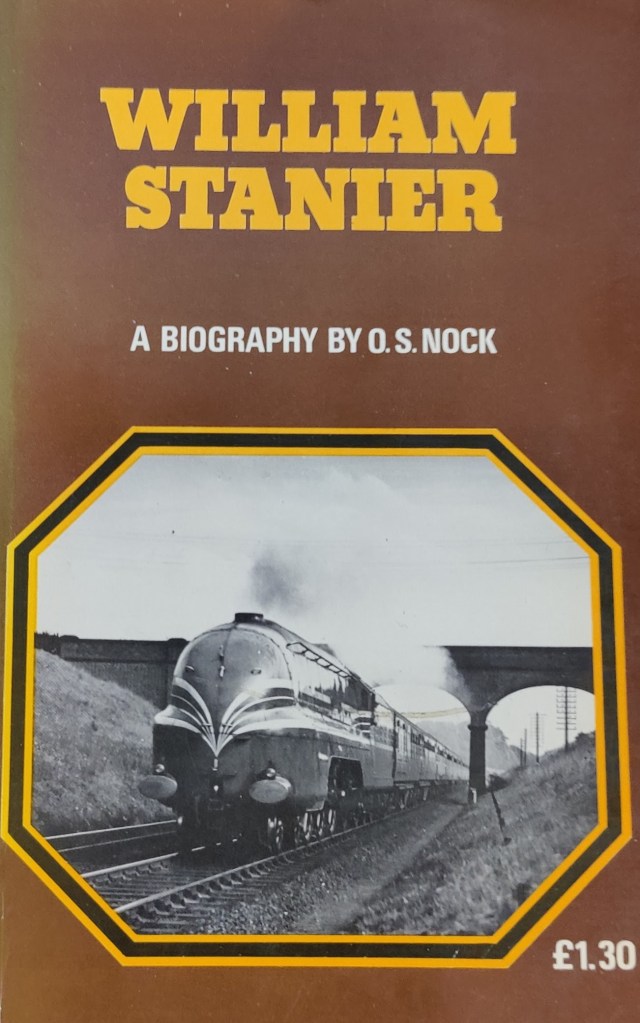
On holiday I read Robert Leckie’s WWII memoir “Helmet for my pillow”, and his account of the battle of Okinawa. I read Seamus Meaney’s translation of Beowulf which was rich, dark and remarkably easy reading. A friend of mine leant me a copy of Ernest K. Gann’s “Fate is the hunter”, a memoir about early aviation. I read several books by O.S Nock including his trackside memoir “Out the line”. There were other railway books of course…I note here only H.C.B Rogers’ “Chapelon – genius of French steam”. All our famous British railway engineers – the likes of Bulleid, Gresley, Stanier etc – all sat at the feet of Andre Chapelon, who was indeed a genius.
Later in the year I managed some stranger fiction – what some call “magical realism” – Robbie Arnott’s “The rain heron” was one such. Set at one level, in a real country enduring economic hardship and military rule, but at another level, a book of magic and fantastic goings on. Tim Lebbon’s “Echo City” was more traditional horror – or was it? Odd happenings in a strange, ancient city completely surrounded by desert. I found a copy of Richard Mattheson’s “The Shrinking man”. Mattheson also wrote the book that became the Will Smith film “I am Legend”. See here: https://plateroom28.blog/2022/04/22/no-adjective-for-terror-i-am-legend/. “The Shrinking Man” was interesting in that it covered without shrinking, the emotional life of his hero – his fear, his despair, his lust. My final book of the year was a gift from my kids, and it was Andy Weir’s “Project Hail Mary”. This is an unlikely but strangely realistic story of a last-ditch attempt to find out why the sun and all the local stars were dying, by sending a spacecraft to the one nearby star that wasn’t affected. I found it absolutely remarkable and very moving. I still think, not of his unconvincing everyman hero Ryland Grace, but of his down-to-earth alien engineer “Rocky”, the sole survivor of a similar mission from the alien home world. Underlying this and other stories about alien life, is the principle that life must exist everywhere in the universe. To suggest that life exists only on Earth would, to me, be as unrealistic as suggesting that the sun revolved around the Earth, or that the Earth was flat. I also think, the story needs telling, of what happened when the news got back to Earth that the threat to the sun could be fixed.
We’ll end on that positive note: things can be fixed; situations can be resolved; people can be healed. Though we live in strange, grim times and need all the good news we can get, the end of the world is not nigh. Not right nigh anyway…there is good news out there and some of it can be found between the pages of books – go read a book!

 Plateroom 28