In cold grey clag we set off up Stickle Beck, intending at the least to visit Stickle Tarn, but both of us, I think – though neither of us said it out loud – intending to try for Jack’s Rake. We arrived at the tarn and had a short snack. Some young people were there; the mist was thick and cold. We walked round the side of Stickle Tarn and addressed ourselves to Jack’s Rake. This would be my fourth ascent of Jack’s Rake. I came up here alone, carrying a big bag, in May 1987. I led a party of four up in September 1989, and I brought my son up here in 2014. That took some coaxing and encouragement. I happened to mention to him the principle in scrambling and rock climbing that “hesitate and you’re lost” and he replied that he’d learned that principle from me, on this route.
I write that deliberately, for today, Jack’s Rake was cold and wet and I found it quite difficult – I was “sketched out” as my son might say; in places it was sketchy. Whilst at least the exposure was limited today because of the mist, my fingers, even in gloves, grew very cold. In several places I was stuck for some minutes, hesitating long before committing to upward moves. In wet and greasy conditions underfoot, one wants good handholds. They are generally there on an easy scramble like Jack’s Rake, but in wet gloves I was starting to loose feeling in my fingertips. Loss of handhold would have been catastrophic, whereas slipping and losing a foothold whilst retaining a good handhold, would merely have made my pulse shoot up. We got to the top in good order without really serious difficulty, me going ahead of Nat for my safe-keeping, he herding me up the route whereas on the previous occasion, our roles were reversed. This was fitting. I am not unhappy to say that I have probably gone up Jack’s Rake for the last time. It would have to be a dry summer before I venture back there.
At the top, a short snack, before continuing by compass bearing through cold wind over cloud-strewn brown moor, overblown with rotten snow, down to the top of the Stake Pass. Down the Stake Pass into Mickleden, that most favoured of places, and along the valley of Mickleden in the slowly fading light of a winter afternoon. Even in winter I can’t walk through Mickleden without hearing sheep, without feeling the heat of summer sun on my shoulders. Then, tea for two in the bar of the Old Dungeon Ghyll, before a companionable wander through the gloom across the fields to the car park at the New Dungeon Ghyll. For a short day, a towering achievement. A good scramble, easy fellowship and safe transit over the mountains in poor weather.
I managed to beat last year’s total of 50 books! I read 61 books last year. Of the 61, 17 were re-reads, and most of those, taken on my Kindle. My first book of last year was a re-read of C.S Lewis’s “Out of the silent planet”, that beautifully English account of the adventures of a middle-aged academic kidnapped and transported to Mars. The “silent planet” refers to Earth. A book I carried over from 2024 was Alison Weir’s “Lancaster and York – the wars of the roses”.
I was very impressed with Horatio Clare’s book “Icebreaker”, being a candid and revealing account of travels with the crew of a Finnish ice-breaker. I re-read – as I do every few years – Lord Moran’s “The anatomy of courage”, his thoughts on the nature of bravery and courage. They are based on his experiences as a doctor in the trenches during the Great War. At one level, it seemed to me his thoughts were not my thoughts. At another level, we are all moulded from similar clay. It is thought-provoking, essential reading. I went on to source a copy of his (controversial when it was released) “Churchill – the struggle for survival”, being an interesting account of his work as Churchill’s personal doctor in the 1950’s. It was as interesting as commentary on the politics and social mores of the time, as it was as a memoir about Churchill. That said, I was blessed to read of Churchill deliberately managing incipient depression – the “black dog” – by avoiding both people and situations that would trigger it.
A book that took me four months to read was Volume II of Peter Charles Newman’s A history of the Hudson’s Bay Company, entitled “Caesars of the wilderness”. As I’ve noted before, I am a student of the colonial history of North America, and these books were recommended to me after reading Bernard de Voto’s masterworks on the westward expansion in what became the United States. On this topic I also read David Freeman Hawke’s “Everyday life in early America” and Dave Reynolds’ “America – empire of liberty”.
I read a good deal of fiction during 2025 – much more than usual. Two-thirds of my reading was fiction. I am keen to improve my own writing; my own head is full of ideas for fiction, though God only knows if anyone would ever read it. I opened my mind on this matter to a wiser and more sage man than I – a man of few words – and his reply was “read more fiction”. He it was who recommended Austin Kleon’s remarkable book “Steal like an artist”. I read space opera – Gareth L. Powell and Paul McAuley. I read two of McAuley’s thrillers that were almost sci-fi. “Cowboy Angels” is set in an alternative universe where Alan Turing was not hounded to death by the state for being gay, but emigrates to America and creates strange gates between dimensions to allow access to alternate Americas. All well and good until the “Cowboy Angels” – the equivalent of the CIA – come to the America where Nixon was president. Another of his was “Austral”, a readable tale using Antarctica in the late 21st century as a proxy for another planet. Odd to read of a city on the Antarctic Peninsula called Esperanza, a city of fifty-story skyscrapers and millions of people. Alas, I found the heroine in his book unconvincingly stupid and inflexible – I had trouble with suspension of disbelief. Interestingly it is only the second novel I have ever read set in Antarctica – the other being Payne Harrison’s geopolitical thriller “Thunder of Erebus”.
I had a long Bond season, reading five of Fleming’s 007 novels. No-one worth taking seriously would suggest that Fleming couldn’t write well, though the literary establishment, then as probably now, may look down their noses at him and his work. But I know good from bad – I don’t read literary fiction. I was duly impressed with Ursula K. Le Guin’s influential earlier works – “Rocannon’s World”, “Planet of Exile” and “City of Illusion”. They sound like hard sci-fi but written as they are by a woman of her sensitivity and genius, they are so much more complex than that. I was disturbed by Georgi Gospodinov’s “Time shelter”, ostensibly about “memory cafés” for those suffering from dementia – but again, a good deal more complex a story than that. On the eastern European side I continued by reading Stanislaw Lem’s “Fiasco”, a novel about first contact with aliens – and how it can all go so horribly wrong. Staying in Slavic territory I have “We” by Yevgeni Zamyatin, still on my shelf to be read. Maybe this year…
I treated myself to three new books mid-year. The first was “North Woods” by Daniel Mason (short stories about New England, recommended by the Economist). The second was “Children of the dead end” by Patrick MacGill, which I was recommended to by visiting the town of Kinlochleven in the Highlands. This was an autobiographical novel of an Irish navvy and his journeyings in childhood from Donegal to being a “man of the road” in Edwardian Scotland. The third, was “New Pompeii“, a science-fiction thriller by Daniel Godfrey, again, recommended by the Economist, and my review here: https://plateroom28.blog/2025/05/05/a-review-of-new-pompeii-by-daniel-godfrey/.
I read China Mieville’s account of the October revolution – riveting at first, but rather more tedious later, covering a few short months in Russian history in great technical detail – too much detail. I read – though I finished it in 2026 – Jonathan Healey’s refreshing and excellent “The Blazing world”, a history of Stuart England, pretty much the “long” 17th century. Healey’s position is fundamentally liberal and libertarian, and to me, noticeably protestant. What do we learn from his book and that century? We learn that all law and power ultimately springs from below, from the people, and not from above. The state itself, whether monarchs, presidents, barons, or captains of industry – is, or should be, subject to the law. At the time of the Restoration of Charles II, General Monck said, the Army should be subject to Parliament, not Parliament subject to the Army. A thousand times Amen!
On holiday I read Robert Leckie’s WWII memoir “Helmet for my pillow”, and his account of the battle of Okinawa. I read Seamus Meaney’s translation of Beowulf which was rich, dark and remarkably easy reading. A friend of mine leant me a copy of Ernest K. Gann’s “Fate is the hunter”, a memoir about early aviation. I read several books by O.S Nock including his trackside memoir “Out the line”. There were other railway books of course…I note here only H.C.B Rogers’ “Chapelon – genius of French steam”. All our famous British railway engineers – the likes of Bulleid, Gresley, Stanier etc – all sat at the feet of Andre Chapelon, who was indeed a genius.
Later in the year I managed some stranger fiction – what some call “magical realism” – Robbie Arnott’s “The rain heron” was one such. Set at one level, in a real country enduring economic hardship and military rule, but at another level, a book of magic and fantastic goings on. Tim Lebbon’s “Echo City” was more traditional horror – or was it? Odd happenings in a strange, ancient city completely surrounded by desert. I found a copy of Richard Mattheson’s “The Shrinking man”. Mattheson also wrote the book that became the Will Smith film “I am Legend”. See here: https://plateroom28.blog/2022/04/22/no-adjective-for-terror-i-am-legend/. “The Shrinking Man” was interesting in that it covered without shrinking, the emotional life of his hero – his fear, his despair, his lust. My final book of the year was a gift from my kids, and it was Andy Weir’s “Project Hail Mary”. This is an unlikely but strangely realistic story of a last-ditch attempt to find out why the sun and all the local stars were dying, by sending a spacecraft to the one nearby star that wasn’t affected. I found it absolutely remarkable and very moving. I still think, not of his unconvincing everyman hero Ryland Grace, but of his down-to-earth alien engineer “Rocky”, the sole survivor of a similar mission from the alien home world. Underlying this and other stories about alien life, is the principle that life must exist everywhere in the universe. To suggest that life exists only on Earth would, to me, be as unrealistic as suggesting that the sun revolved around the Earth, or that the Earth was flat. I also think, the story needs telling, of what happened when the news got back to Earth that the threat to the sun could be fixed.
We’ll end on that positive note: things can be fixed; situations can be resolved; people can be healed. Though we live in strange, grim times and need all the good news we can get, the end of the world is not nigh. Not right nigh anyway…there is good news out there and some of it can be found between the pages of books – go read a book!
After work, in the afternoon, to the shop to buy various bits, and then pack a bag. The rucksack, which had been 13.9kg with equipment less about two kilos of batteries, Kindle, notebook and pens and trail poles, was 22kg on the eve of departure – all up: all clothing, all food, and some water. Heavier than I anticipated, but manageable. Where had that weight crept in from? This was to be my ninth solo backpacking and wild camping adventure. To Cromford then, and by train to London.
Arriving in London I had a bit of time – trains in the UK are just not reliable enough to cut things fine and not leave plenty of time. I was at St Pancras at 19:38 for a 21:15 train out of Euston, up to Scotland. Why was I travelling from the Midlands down to London to go back up to Scotland? Because the alternative was taking the train to Crewe and picking up the sleeper there at midnight. If you’re going to wait for a couple of hours on a draughty railway station platform at night, I don’t recommend Crewe. I did that once; it won’t be happening again. I had a pint and a sausage roll in the Betjeman Arms at St Pancras, then strolled along the Euston Road to join the sleeper to Inverness, the longest train in Britain, and my carriage right at the front of the train.
I slept well enough on the train and had to hurry through my full Scottish breakfast in a paper bag. I found myself on the platform at Newtonmore at 07:15 on a drear and misty morning, barely starting to get light. I dragged on everything I had, to keep warm, and in Goretex over-trousers, gaiters, waterproof jacket, gloves and woolly hat, set off into the pre-dawn gloom. I had in reserve only a thin Rab mid-layer and at that point in the morning wondered if I had come onto the hill ill-clad. I walked out of town up onto the heath; had there been no mist this would have been glorious and scenic. You could tell it was a temperature inversion – there’s a look about the sky when you can sense that radiant blue sky and sunshine are only inches, as it were, above the steel-grey ceiling of mist.
I ascended the Calder River up Glen Banchor, meeting no-one, listening to the fearful noise of stags rutting. This noise reminds me, with my taste in films, of the zombie apocalypse. At one point I needed to take care fording a stream. Late morning, I was approaching a tin hut somewhere round 648984, where the map marks “township” at Dail na Seilg. A stalker strode out to speak with me. We had a polite conversation about my plans, and his plans, and I saw that I needed to change my plans. It suited me to do so, to be fair – it wasn’t simply a matter of me rolling over. That said, this is pure stalker’s country, not at all walker’s country. I followed a tired old land-rover trail and became aware I was going in the wrong direction. I was soon lost and disoriented in the brown upland, stumbling over the heather looking at my compass. It took some close map and compass work to get me onto the right trail, a good and substantial unmade road, which I followed south-west down Strath-an-Eilich.
Early afternoon I came out at Castle Cluny, a nice-looking Scottish Baronial pile in the usual grey granite. Through the delightful autumn colours I trod through the grounds out onto the road. Without a detour, there followed a tiresome 2.5km tramp along the A86, a single track road at this point, but still with a fair amount of traffic. This brought me to Laggan, around about 3pm. From here, another tarmac road tramp of 4.5km brought me to the “Spey Dam”. I had not been aware I was walking up the Spey valley. I met no mountaineers or walkers. At this point, around 4pm, I’d been 7-8km on metalled roads and much of the rest of the distance on good unmade roads. I admit that had I known so much of this route lay along actual roads, I might have chosen differently.
Resting by the dam, I saw a couple of cyclists whizz past. I set off along the road under the dam and arrived at a kind of industrial yard, with piles of rubble and hardcore, and big spotlights ready to be connected to a generator – there’s no mains electricity here, even though this countryside isn’t the ostensible wilderness of the Cairngorms. All around there are very robust and well-maintained deer fences, with proper access for vehicles and pedestrians at the appropriate places. At this point, early though it was, I was looking for a place to camp. I could continue along the unadopted and private metalled road along the north side of the reservoir created by the dam, or I could hike uphill into more wild country further up Glen Markie. I opted for the former. I went through a metal gate, pulling back the bolt. The bolt made a displeasing sound that in the pristine silence of that place, sounded like a lamb being slaughtered. I walked a hundred yards before repenting of my decision and turning back. Such sudden changes of mind have served me well in the past. Being willing and able to change your mind is a virtue, not a vice – don’t let anyone tell you that stubbornness is a virtue.
I detoured uphill into Glen Markie for about an hour, past a wasteland of industrial plantations, until I came across a place where I might camp. I would have to hike back downhill to the reservoir tomorrow morning, but this was more or less where I thought I would end up when planning this trip as a desktop exercise back in June. I camped near the ford of the Allt Tarsuinn Mor, just before it joined the Markie Burn, a substantial river. I had a very cramped and limited pitch, but it had the advantage of being bone-dry heather. I was just below the tributary stream as it flowed down a ravine into the main river. I could hear running water in three different registers: the roaring or rushing of the river, the chuckling of the brook over stones, and the sound of small waterfalls. In spite of the limited pitch, it was supremely comfortable and I took one of the best nights’ sleep for some years, from around 7.30p.m right around until well after 6.30a.m next morning. I had a completely dry strike and was away from camp around 9 o’clock. There was no hurry. In any case, at this time of year in this place, daylight comes late and lingers late. There was little usable daylight much before 7.30a.m.
I hiked back down to the bottom of the glen, and turned right, resuming my route of the afternoon before. There followed 12km along metalled road – a single track road through glorious, empty country – but a metalled road all the same. The adopted part of the road (that is, the part coloured in yellow on an OS map) ended at Garva Bridge. Here there was an ancient bridge of 18th century military origin. Two cyclists whizzed past. I stopped for lunch and sat between the road, the woods and the Spey, under the cathedral of a clear blue sky. Today’s weather was better than yesterday’s. The tarmac gave out at a place called Melgarve – an empty house. At this point, in the heart of the Monadliath, you’re about 16km from the main road at Laggan, and perhaps a little further from Fort Augustus.
Beyond Melgarve, first a very conspicuous “Road Closed” sign, secondly, an actual half barrier blocking the way ahead to vehicles. The road itself continues up into Corrie Yairack, though without benefit of tarmac. This is one of “General Wade’s Military Roads”; to walk this route is why I was here. The afternoon’s walking ahead of me was the crux and heart of my trip.
Corrieyairack Pass
To the chagrin of some, a mighty high-tension power line marches up the valley, into the corrie and up and over the pass. All should have access to electricity. I remember in the 1980’s hitch-hiking in the Lake District and getting a lift from an estate agent. He told me that the Friends of the Lake District – every one of them living in a home with electricity – had opposed the building of power lines over a wild valley, which would have brought electricity to houses that did not at that time have access to power. Ever since then I’ve had little patience with the sort of environmentalist who sits in comfort opposing construction that would being the same comforts to others.
One of General Wade’s original bridges
Near the foot of the pass proper, I met a cyclist, the first outdoorsperson I had spoken to in days. I had seen no walkers, nor even so much as a footprint, along this route. The crux of the pass was six zig-zags, six legs of which were at this time of day (mid-afternoon) walking directly into bright sunshine. I was bareheaded. I had not thought to bring a sun hat, though I did have sunglasses. I blazed up the zig-zags barely out of breath. I’ve had eye trouble this year, and for that reason I chose this route because it was not so physically challenging. I also reflected that I have become successively more physically fit, particularly upper body muscle tone, on each one of these nine solo camping expeditions I have undertaken since 2021. I came off the hill on that first trip and had some unpleasant muscle problems in my shoulder, and had to visit a sports physiotherapist at the cost of several hundred pounds. Since then, on the advice of the physio, I try to do regular upper body strength exercises. Coming down to the Dungeon Ghyll last October, after two hard days on the hill, I was absolutely shattered – and part of me, misses that feeling. Being immensely tired sharpens one’s appetite for the simpler comforts in life –a hot shower, clean clothes, a Nice Hot Cup of Tea, a pint of beer and a pie, a warm bed.
At the top, a squalid guard-house stood, with an open door and bunks visible inside. In the long and golden afternoon I followed the path down towards Fort Augustus. I passed a 4WD vehicle with three fellows in it clearly observing deer. Another thing I noticed which I found unusual, was overflight by a small fixed-wing aircraft – repeated overflight, three or four times. Helicopters would be unremarkable, but a light aircraft, I found unusual: this is wild country. It was certainly not a sight-seeing flight. Far more interesting and dramatic mountains are available within a few minutes flight time for even a light aircraft. My best guess, looking at the heading and direction it was taking, was that some form of commercial survey was taking place, probably of the power lines in the valley.
It was my intent to camp at a place called Lagan-a-bhainne, a wooded area of small valleys about 12km out from Fort Augustus. Still in the wilds, but off the high moors. When planning the trip I had spotted the area and thought it looked like a likely spot for a wild camp. My eye as someone with some experience in map-reading, was drawn to it. As on the map, so the reality on the ground: it was indeed a quite magical area where a narrow wooded valley cuts through the high moors. I found a spot to camp, taking quite some care that my tent could not be seen from the dirt road: it seemed to me that the three men I’d seen earlier would be employees of the landowner, and they might be driving through later on. Unlike in England, it is still perfectly legal to camp wild in Scotland, but why draw attention to yourself?
This was my second night by a babbling brook. I find the sound thereof, very restful. For supper I had my usual Indian: a spicy red lentil dhal, chick pea flour pancakes, and fresh spinach, all washed down with about 200ml of rather nice Shiraz. I always say, wild camping does not mean roughing it. Wild camping – any camping for that matter – is not, for me, a means to an end (as in merely low cost accommodation close to the mountain), but an end in itself. It is time spent alone outdoors, time spent in the wild countryside, time to collect your thoughts and prayers, time to be still. I came away carrying probably 22kg, of which 3kg was food and drink. I was not troubled thereby.
Interestingly, though I had picked a reasonably flat place to pitch, I could not settle comfortably at all – there was incipient backache, tossing and turning whichever way I lay. I moved through 180 degrees and slept like a baby. I woke up around 0600, which is too early at this time of year and latitude – there being another ninety minutes of darkness. But I was awake. I got up and prepared for my day. I had a breakfast of champions – cubes of bread, cubes of cheese, and chorizo sausage, all fried in a little olive oil and butter. Porridge of course. Black coffee. I did not have a dry strike, but it was a lovely morning and there was no rain – it was all condensation. I am using three separate dry bags for the different components of my tent – outer, inner and “footprint” (ground sheet), and this technique is a useful convenience, making the tent easier to pack in my rucksack, and ensuring that the wettest bit (generally the outer) doesn’t get the drier bits wet during the day.
Around 0800 then, onwards through the grey morning, trending ever downhill on a good road across the moor. After an hour or so, Loch Ness and Fort Augustus came into sight, and my heart fell – was it so close? I didn’t want to arrive there mid-morning. Actually the route has not so much a sting in the tail, as the walk-out is longer than it looks on the ground. On the map it was 12km; it just didn’t look that far. On my way down I passed an estate 4WD rumbling uphill, and a cyclist labouring along. It is a long and seemingly everlasting hill from the Fort Augustus side – rather like climbing Helvellyn from the Thirlmere side.
The road came down to another area of confused drumlins and narrow valleys full of trees, all very picturesque and rather reminiscent of the western Peak District. The road splits round a height of 228m at around 371055. General Wade went left; on a whim, I went to the right, along a 4WD road clearly very overgrown and ill-used. Well, not quite on a whim – a study of the map seemed to indicate that there was a way through some rather promising wild woods. I made the right decision! On the mountain, as 1930’s Scots climber W.H Murray noted, it sometimes pays to turn aside commonsense routine.
My path led down a long-abandoned un-made road by the side of the stream, down into the most magical valley, a beautiful and silent dell, peopled only by the sound of the rushing waters of the stream. This was the highlight of the trip! I had to carefully ford the stream. I continued, in a little trepidation that should have to turn back at the last. And indeed, the track to Culachy House was gated and very clearly marked “PRIVATE”. But there was another way – a hairpin to the right, down into another deep valley where I found, by chance as it were, the most beautiful waterfall: Culachy Falls.
From the falls a pleasant walk along a path through the woods, across the road and into a graveyard by the river. A little further on, the main road, and my walk was done.
Day 1: From Newtonmore to Glen Markie, 25km in 8 hrs 33 mins
Day 2: From Glen Markie to Lagan-a-bhainne, 27km in 8 hrs 7 mins
Day 3: From Lagan-a-bhainne to Fort Augustus, 12.3km in 3 hrs 28 mins.
I stayed at Morag’s Lodge in Fort Augustus, a former hotel now trading as a hostel. For a modest fee you can share an ensuite room with bunks. For slightly more money but still well below B&B prices, you can buy an entire room to yourself. Morag’s Lodge serve supper and packed lunches and a continental breakfast, and they have a drinks license. There’s a members’ kitchen as well as a proper bar, so it has the best of both worlds. The staff were super friendly and helpful.
The first time I came to Fort Augustus was in May 2012. I’d camped wild the night before further north in the Monadliath. My diary of the time records the following:
Yesterday I drove west from Aberdeen, in wonderful hot mid-20’s weather, enjoying the quiet roads and rolling wooded hills of Deeside. I pressed on over Lecht to Tomintoul through the summer afternoon to Nethy Bridge. Then over Slochd and left down minor roads towards Fort Augustus, at this point looking for somewhere to camp. I turned left again, up a minor side road, going right up over the top into the heart of a dark and wild corner of the Monadliath. The sun was behind me as I drove, and it was glorious. I found a place to camp amidst sufficient dry fallen timber for a jamboree of Scouts to make open fires. I camped in a little copse of pine above the road. It was 9.20pm and full daylight. Sunset at this latitude in late May is 9.45pm. There was sufficient wood from where I sat to make a lovely little fire, on which I prepared sirloin steak (medium) and courgettes and (alas) instant mashed potatoes. A nice S.E Australian Shiraz made it the pleasanter still. I had brought with me 2 litres of water, for there was no running water here – I could not have camped had I not brought water in myself. A couple of times, an estate factor’s landrover drove past and stopped. My fire was making a fair bit of smoke; there was no wind and the smell was unmistakable. They could not see me, and perhaps they cared less, for they did not come looking for me. I went to bed at 11p.m and woke at 5a.m, thence dreaming my way through to 7a.m. Morning was misty, yet dry. No single drop of dew fell, which was remarkable. My breakfast was bacon, mushrooms, tomato, roll and butter, served with fresh black coffee. A breakfast of champions, particularly when served outside.
What struck me most about this camp was the silence. The only noises were the calls of birds, particularly the call of cuckoos, and the sound of sheep. I set off at 8.30a.m in deep mist, back to the Great Glen, and on down to Fort Augustus, where the sun burnt the mist off, leaving a cloudless sky, a glorious summer day. I took coffee and cake at “The Scots Kitchen” in Fort Augustus, and read the paper. Could I ask for more?
An important part of this journey today was the adventure of doing it solely using public transport. I took bus Scottish CityLink bus 919 down Loch Lochy through Spean Bridge and onto Fort William. Once in Fort William I then had to wait a couple of hours for the sleeper train to London, which left on time and arrived more or less on time at Euston at 0800 the next morning. Thence along the Euston Road again and back into St Pancras station, where it was so early, there were no decent coffee shops open yet, and I had to get a coffee from Costa. Onwards home to Derby, and my trip was complete.
Let us start from Queen Anne’s Gate in the heart of Westminster. Go through one of two entrances onto Birdcage Walk, cross the road into St Jame’s Park, and then take a route diagonally through the park. Keep the lake on your left, and skirt round the tourists of every tribe and nation – it is nearly always very busy here. As you come round the head of the lake, cross over the road and take a diagonal path across the miniature gravel plain that is Horse Guards Parade. Whenever I cross here, I am reminded of an old picture of Winston Churchill as a young politician crossing Horse Guards in company with Sir Edward Grey, on the eve of the Great War. The building on the left as you cross, the one with the aerials and wires on top, is the Old Admiralty Building. It resembles – as well it might – Britannia Royal Naval College at Dartmouth.
Go through the arches onto Whitehall, turning left towards Trafalgar Square. This the place where the two mounted sentries are often photographed by tourists. As you come onto Whitehall, you can see Nelson’s Column in the distance. Going up Whitehall away from Westminster, on the right there is a pub called “The Clarence” which I highly recommend. My wife and a friend of hers went in here some years back, on a trip to see the Queen, and they had no food left except for some Scotch Eggs, but this they served most graciously and cheerfully. She was impressed with the service. I’ve quite literally gone out of my way to eat there ever since – eaten there with my wife at least twice, with colleagues from work, and on my own. They have some great upstairs rooms which aren’t always as busy as the main room downstairs.
Cross Trafalgar Square – generally best done by going to the right, from Whitehall, crossing the entrance to the Strand. Science-fiction author Stephen Baxter wrote a novel about the flooding of London, and his tip, if central London is flooding, is get above the Strand. The clue, as he notes in his book “Flood”, is in the name…
Keeping St Martins-in-the-Fields on your right, the National Gallery will be on your left. At this point, Charing Cross Road dog-legs to the left; if you wish you can follow it to Cambridge Circus, and then turn right along Shaftesbury Street. But the more direct route is to turn slightly to the right and then straight on, along St Martins Lane though Covent Garden. It’s a very relaxing walk along a reasonably quiet road traffic-wise, passing different pubs and restaurants. What you will see, is two unusual and complex road junctions. Inner city five-road junctions are fairly common in the UK. But six-way junctions in the inner city – three crossing roads – not so much. And seven roads, as at “Seven Dials” – very much rarer still. One comes out on Shaftesbury Avenue just near the Forbidden Planet store. Along here is a little café called “Franx” which I like to stop at sometimes.
Continue along a pedestrianised section of Shaftesbury Avenue a hundred yards or so and you find yourself on New Oxford Street – the A40 in fact. Take a right along here, and then a slight left onto Bloomsbury Way, with the main flow of traffic, leaving New Oxford Street behind. At this point the streets are broadly NW/SE and NE/SW. The British Museum is about two blocks away on the left. Continuing along Bloomsbury Way, you will see on the right the Swedenborg Institute”, a modest building devoted to the writings of the philosopher Emmanuel Swedenborg. Further along, on the left, a park – Bloomsbury Gardens. On the right, at the junction with Southampton Row, you’ll see Sicilian Avenue, a delightful pedestrianised interlude of Italianate cafes and shops, under repair in these times, but well worth a visit if you’re in the area.
One thing you will notice on a long walk across London, is the changing architectural styles and the changing atmosphere. Once in Southampton Row, you’re no longer in West London. Really, even though we’ve still to cross the Euston Road, we’re in North London. Here there are shops and restaurants, little dentists and minor medical institutes, and as we approach the station district, a number of slab-sided hotels of differing age and architectural merit. Passing Russell Square on your left (and the tube station on a minor side-street on the right), Southampton Row becomes Woburn Place and then, Tavistock Square. In this quarter, we start to see various hospitals and big, important institutes. You will pass, for example, the headquarters of the British Medical Association. The road continues, and intersects with Euston Road adjacent to the St Pancras New Church, a Regency-style church which I still have not visited. At this point, the depressing 1960’s heap that is Euston station, is on your left across the very busy Euston Road. It’s not widely understood that Euston, St Pancras and Kings Cross are all within half a mile of each other.
But we will take a step backward here. If you turn right off Southampton Row near Russell Square, you can find Coram Fields, a rather lovely inner-city park. This is a university quarter too – the streets are full of students from all over the world. Some of them go for lunch, at a branch of King of Falafel on Tavistock Place, where it crosses Hunter Street and Judd Street. I found this quite by chance one day when wandering through this great city. Here is another great place to just sit at a café at a road junction and watch the world go by, some on foot, some, on their bikes. I was sat here once when the bin men arrived, and I watched the proprietor put together a bag of samosas for the bin men, and give it to them with a smile. Heart-warming: another place I will literally go out of my way to visit.
Let’s go back to Euston Road. Euston Road is part of a great E-W arteries across the centre of London, stretching from Shoreditch in the east, curving north-west to the Angel, Islington (which we will cover later in another London Walk), west to Kings Cross, then south-west to Regents Park, Marylebone and Paddington before it becomes the Westway. It is always a busy road, an artery pulsing with the blood of the city, the hustle and bustle of people hurrying from one place to another. Crossing the road with care, you can then see the British Library – that building that King Charles once called a “monstrous carbuncle”. Personally I don’t agree. The Barbican, or perhaps Euston station – now they are “monstrous carbuncles”.
Next door is the still-magnificent St Pancras Hotel, now beautifully restored and consequently too expensive for most of us to stay at. Outside, on the station forecourt, you will see a purple sports car easily worth hundreds of thousands of pounds. I wonder that the hotel keep it here purely as a tourist attraction. I’ve no idea what sort it is. People take photographs of it, but I take Shania Twain’s view – “OK – so you’ve got a car.”
Carry on up the slope to the far entrance to the station. Going in this entrance rather than coming into the undercroft where all the shops are, you can catch the full glory of St Pancras, to my mind one of the most dramatic and startling railway stations in Europe. When it was built, it was the biggest single arch iron-spanned roof in the world. It is still eye-catching, painted today in a pleasant sky blue. As someone who remembers St Pancras in the dark days of the 1990’s, the Eurostar terminal it is a vast improvement on what it was. In front of you, there will be three or four Eurostar trains. On the right, the Betjeman Arms: maybe time for a refreshing pint after our walk.
I consider myself ahead of the game on reading this year, having finished my 29th book of the year just the other day. It was Peter C. Newman’s “Caesars of the Wilderness”, the second volume of his three volume history of the Hudson’s Bay Company of Canada. As I’ve commented before, to read about the Hudson’s Bay Company is to read about Canada – although this volume ends with the effective end of the HBC’s tenure of the wilderness of North America, in the 1870’s. A third volume covers the modern history of Canada. One reads about brave men and women, one reads about heroes and drunkards, about martinets and missionaries, about visionary leaders and intransigent fools. Sometimes one finds that some of these different people are the same men. And I say “men” deliberately – only the womenfolk are consistent, not double-minded nor hypocritical. I can’t call the womenfolk and the native Americans “unsung” heroes, for Peter Newman deals with them as the important characters they are, but there are certainly still songs to sing, stories to tell, about their lives. The real hero of the book is the North American wilderness itself. One discovers interesting things along the way – part of the current border between the United States and Canada follows the original path trappers made through the wilderness between Lake Superior and the “Lake of the Woods”. There’s a part of the United States bordering Lake of the Woods, which is completely surrounded by Canada. The history and geopolitics of the Pacific coast of North America, the lands west of the Rockies – both north and south of the current border, might easily have been very different. There was and is nothing inevitable about the United States. It took me 124 days to read this book.
Another book that took me a long time to read this year was Stanislaw Lem’s “Fiasco”, which was recommended to me by the Economist. Stanislaw Lem was a Polish science-fiction writer. At one level his work is somewhat niche; but at another level, it is highly regarded and sought after. The George Clooney film “Solaris” is based on one of his stories. “Fiasco” is the story of what happens when humankind first encounters evidence of an intelligent alien species on a planet orbiting another star. It is a human story, with believable characters – the captain of a ship caught in a hard place and having to make terrible decisions; a Jesuit priest trying to mould ancient certainties to new realities; a man caught up and rescued at the moment of his death, finding himself unexpectedly playing a vital part. The story itself is perhaps an allegory of the old Cold War doctrine of “mutually assured destruction”. Only on the last page does the author reveal the utter alienness, the total strangeness, of the alien species – but by then of course, it is too late. It is a fiasco.
My third long read was also Eastern European fiction: Bulgarian writer Georgi Gospodinov has written a book called “Time Shelter”. It starts off all about “memory clinics” and safe places for persons suffering from senile dementia, but soon, the wider populace start to seek shelter in the past from the uncertainties and terrors of the modern era. Whole towns and countries embrace the past – particular decades or eras of lost greatness. Political parties form and reform, countries dissolve. Beautifully written, it began as a book that had much to say about managing memory loss and dementia, but ended as something much more disturbing. The stand-out phrase from the book is where a man arrived at a railway station in a central European town, “dressed as if he were a refugee from another time”.
The fourth would be Lord Moran’s biography of Churchill, “The Struggle for survival 1945-1960”. A very entertaining and informative insight into the post-1945 life of Churchill, from his summary ejection by the electorate in 1945, to his decline and fall into illness at the start of the 1960’s. Much may be learned about the 1950’s, about post-war England, about the politicians of the time. Oddly, not so much about Suez, the most important event of all those years. As that was the end of the Empire in effect, it is perhaps no surprise that neither Lord Moran nor Churchill would have been pleased to dwell on the matter. In the end, not so uplifting, but Churchill, as one of – perhaps the – central figure of 20th century history, is always worth studying.
Works I managed to get through rather more quickly, included Alison Weir’s “Lancaster and York”, readable historical account of the earlier part of the Wars of the Roses. On the fiction front I read Ursula Le Guin’s “Rocannon’s World” which was one of those books you finish, put down and gaze into the middle distance to think for a while –like a startling short story. Ursula Le Guin manages to create so much, as a story-teller, from so little. Two journeys, treks, or voyages of discovery at different times – one by a well-born young lady, the other, later, by the man Rocannon. A bildungsroman (building up story), as the Germans say, with a simple twist in the plot caused by the unforeseen effects of time dilation. I also read David Peace’s “The Damned United”. I’m not normally a football or a sport man. I’m certainly no fan of over-promoted cocky and arrogant men like Brian Clough, however able they might seem. You’d think a novel about such as he would not interest me. But I am from Derby: Brian Clough put Derby on the map when I was a boy, and I know people that were in the same class at school as his sons – he only lived a few miles from where I did. So, odd though it was, it was a worthwhile and exciting read.
Also I read Paul McAuley’s “Austral”, Gareth Powell’s “Embers of War” and John Christopher’s ancient “The world in winter”. I re-read a lot of Ian Fleming’s Bond stories. I read Nicholas Gould’s excellent little book on placenames, and Horatio Clare’s second work on seafarers “Icebreaker”. And that’s not all. But that’s all for now!
At 5pm, to the station at Cromford. I took train through to Derby through the sunny late afternoon. At Derby I adjusted the straps of my new rucksack to what I hoped would be a satisfactory arrangement. I bought a bottle of London Pride from a shop across the road from the station. Through to London in first class, a most pleasant experience for which I paid about £30. I could have picked up the sleeper at Crewe: I have done this before. But then it would have been necessary to wait on Crewe station for nearly two hours til almost midnight. Even on a warm summer evening, that’s not a sensible way to spend time. I walked the few hundred yards through to Euston station, walking behind the British Library, before joining the Caledonian sleeper a little after 8.30p.m. I ordered a full breakfast for £10- life is too short!
I slept fitfully, as I generally do on the sleeper train, but I know I did sleep, for I dreamed. I recommend the use of the Caledonian sleeper. If you can stand the narrow bed and cramped conditions, it is in my view, a cost-effective way to travel to Scotland. I got off at Dalwhinnie, after my full breakfast, into thick, grey morning mist. The train rumbled off towards Inverness, its red taillight disappearing into the mist. All was quiet. The time was 0655. One man got off ahead of me and walked away ahead of me.
I started off on the long walk-in, which begins with a detour along the main road as a key level crossing is closed. It is a long and tedious walk-in along a good and reasonably flat unmade road on the west bank of the reservoir, the enormous Loch Ericht, a loch so long that I could see the horizon at the other end of it. From Dalwhinnie station to Ben Alder Lodge, where the route leaves the road, about 12km. I was consciously and deliberately trying to keep my pace down, albeit with only limited success. I’ve seen and experienced in the past, the effects of walking too fast, too soon. But the slowest I could manage along the flat was about 13 minutes per kilometre. After Ben Alder Lodge the path trends to the right and uphill, through woods onto the open moor. At this point I found myself ahead of the gentleman I’d followed along the lake shore. The path arrows up into the brown hills; it was so very, very dry. Every small stream I crossed was dry; every drain and ditch, just full of dust. I wondered if there was any water at all in these hills. I was glad to arrive at a big stream, which ran clear and fresh, though somewhat depleted. The stream led up to Culra.
I arrived there at around 11a.m, as I’d predicted when planning this trip as a desktop exercise during the winter months. 17km in four hours. At Culra there is Culra Lodge (a wooden hunting lodge, locked down, with a wind turbine), a bothy (closed due to asbestos), and about half a dozen tents pitched. I added my own tent and sat outside for a leisurely lunch. The older man I’d seen earlier, who I’d burned off on the climb up to Culra, arrived and we had a brief chat. His destination, as was mine, was Corrour.
Looking up towards Culra, with The Lancet in the background
After lunch I pulled together what kit I needed for hillwalking and stuffed it into my now almost empty rucksack. What did I carry? Sunglasses, sunhat, warm jacket, spare long trousers (I was in shorts), first aid kit, food and water, map and compass, walking poles. What did I leave behind? Tent, stove, fuel, sleeping bag and mat, more food, my Kindle and notebook and power banks. After judicious use of suntan lotion, I set off over the brown moor, under a cloudless sky. Up and over the moor, as dry as any I have ever seen, rising into a small glen containing not a high mountain tarn, but a substantial ribbon lake, Loch a Blealaich Bailthe. The atmosphere was magical as the path led round the lake, with the massif of Ben Alder on the far side. I met a young man and woman, mountain cyclists who had cycled over Ben Alder. This hill is so remote that to climb it in a single day trip without the use of a mountain bike is quite tricky, even in summer. Not long after that I stopped for a while for a second lunch and bathe my feet in the loch. To wash your feet in such water as this, on such a day as this, is to wash away tiredness and pain, to sooth away discomfort and ache.
I continued up to the col – Bealach Breabag – and then on upwards to the right under hot sunshine. It was sleep but perfectly manageable. As I climbed, I encountered a party of five older men coming down, so I knew I was on the right track. Straightforward enough, in this weather, to continue upwards and onwards to the summit of Ben Alder, a most remote mountain.
Looking down to Loch a Blealaich Bailthe from Ben Alder. In the far distance, Loch Ericht.
Not long after point 1081, I made a grave mistake. Treading north in the afternoon sunshine, I could see the sharp ridge of the Short Leachas ahead of me. There was no descent possible this side of it; the Harvey’s maps (1:40k and 1:25k) I had on me did not reveal a usable descent on the other side of it. Yet, descent there must be – to this day I do not know where. Possibly it goes directly down the Long Leachas ridge. I opted instead to swing to the left and downhill, aiming for the valley of a stream unnamed on the Harvey’s map, along which no cliffs were marked. There being no signal, my phone would not resolve to the 1:25k OS map, so all I had was the 1:50k which showed this. After the fact, a close reading of even this low scale map does reveal that this is a hanging valley and that therefore there are likely to be cliffs. I should have known better. The sun was bright, the phone screen was hard to see, and I didn’t see what I ought to have seen. To say nothing of the word ”waterfall” which was warning enough!
This screenshot from the 1:25k map illustrates what a hanging valley looks like on a map
This photo is looking more or less SSE from the path, at the very top of this map image
I descended on the right, keeping in the sunshine, until I could go no further as cliffs impeded further downhill progress. I put away my trail poles as doing more harm than good in a very steep and rocky place. Then I crossed over to the left-hand side, taking the opportunity to drink from the stream, and continued downhill again before my path was blocked by gently sloping slabs as the hanging valley opened onto the main valley. I was almost down and safe – but not quite. With great care and considerable difficulty, I made my way back to the stream, descending all the while, and crossed over again. Most of the time I was descending sat down, but twice on that return to the stream I had to resort to descending face-in, and down-climb. I do not think I could have gone back up: whatever I was doing, at this late stage I was committed to going all the way down. I should have turned back earlier, but I didn’t. As I scrambled out of the gorge on the right bank again, I saw a huge deer run down to the water and disappear behind a fold of the land. It emerged seconds later barely yards from me, belting down the hillside in a panic of fear. I shudder to think of my fate had it collided with me.
In all of this descent I was never actually frightened; I was well aware that I could ill-afford to allow vertigo, or fear of getting stuck, to get the upper hand. That said, my pulse was up to 156 and I don’t think that was down to exertion, as I was going downhill. I was lucky with the weather, and I was lucky with the time of year – whatever I did, I had plenty of time. I had food, water and probably 4 hours of useful daylight to play with. From where I’m stood now I got out of that situation not only by luck, fitness and mountaincraft, but by the sheer grace of God.
In due course, therefore, through great care in route selection and discerning choice of foot placement, I made that perilous descent successfully and safely and found myself on the valley floor. There followed a 3-4km tramp through the mid-afternoon sunshine, down the valley to my tent at Culra.
My supper was taken outside my tent, sat by the stream in the warm sunny evening. I started with that Englishman’s staple, a Nice Hot Cup of Tea. After a break I followed that with fresh tortellini with an admixture of fried chorizo sausage, washed down by some red wine, and followed by hot chocolate. It was a warm night, and very tired, I slept like a top, turning in not long after 2130.
I was away by 0700 the next morning. I have divided my tent up into three separate dry bags. This makes it easier to pack and easier to keep important parts of it dry. The inner tent, the flysheet, and the groundsheet and pegs are all in separate bags. That was unnecessary this morning after a completely dry strike – there was not a hint of dew. My path led back up the same route I had came down the previous afternoon, but as the Bible and the well-known hymn remind us, “morning by morning new mercies I see” – this morning, with the sun from a different direction, this was a different place, an absolute paradise. A stream wandered down the brown valley, babbling past rowan trees and chuckling to itself as it ran over boulders. Glad I was indeed, to be permitted to be in such a place as this, on such a bright morn. I passed the scene of my adventure the previous afternoon, appearing this morning as grievous shadowed slash on the hillside, and continued upwards to the Bealach Dubh – black pass. I was entirely alone, at this early hour.
Looking up towards The Lancet
Carrying only a litre of water, augmented in my pack-up by several small oranges and a bag of small tomatoes, I set off up the hillside from the Bealach, conscious that I might not see running water again til late afternoon. There was no cloud in the sky; it was barely 0900. Not far up the hillside I did in fact find the very tiniest little streamlet, a mere dribble running clear and cold. Not something one would normally touch, and certainly never in the Lake District with its ubiquitous livestock. I filled my spare water bottle – another litre – added a purifying tab and marked the bottle so I knew which of the two bottles was which. In the end, I never needed it. It was just there in case. My path led up a shoulder of green grass and grey stones, never steep enough to climb with feet and hands, but rocky enough to make trail poles a liability at times. Geal Charn (1132m) was a dun hill, a huge, rounded plateau, a rolling summit of brown grass. As with some of the landscapes on Ben Macdui, it is reminiscent of parts of the Dark Peak – but this is 1100m above sea level. It’s NOT the Dark Peak. From Geal Charn, easy and gentle hillwalking continues, up and down, over Aonach Beag (1116m) and Beinn Eibheinn (1102m). I rather suspect that the ups and downs I found easy, even carrying nearly 20kg, because I’m very fit. There were no clouds, little wind, and no shelter from the sun. In these conditions, a sun hat and sunglasses are PPE, not an optional extra. I met around ten people at various points on this hike, all going in the opposite direction to me.
View from Aonach Beag towards Beinn EibheinnBeinn EibheinnLoch Ossian
From Beinn Eibheinn, down to Meall Glas Choire, crossing a rather strange dry gap at 730436. As someone trained in geology I wondered at its formation. It resembled the Chalamain Gap in the Cairngorms, though on a much less grand scale. It is a strange thing to see, at such a high altitude, boulders rounded by some primordial torrent, in what was clearly a dry riverbed. I suspect that at some point at the end of the ice age, the retreat of a glacier has caused some temporary glacial lake to burst its banks, and a torrent like unto Niagara, has carved through this hillside. This kind of thing happens in the Himalaya even today.
Onwards down the brown grass to a rocky knoll, Creagan na Craibhe, and thence down through troublesome and difficult heather to the stream. This trackless ground was bone-dry and in a normal May would have been difficult, squelchy terrain. The stream was actually a substantial river and was called Uisge Labhair – “the waters spoke” or such. See that Gaelic word “Uisge”? After you try pronouncing it, it will become more familiar.
And there I stayed, dear reader. I washed my feet in the waters of that noble river, and made my camp nearby, near the place on the map called Lub Mholach. This was the finest camp I have made in many a long year. It was a magical garden spot. I bathed in the river, dried off and had my supper. Red Lentil Dhal, Farinata, Red wine. Though there was no mountain to the west like last night, to provide shelter from the evening sunshine, I was tired enough and retreated to my sleeping bag around 2100, before the sun had even set. I was very cold that night. I had wondered before the trip if I should invest in a lighter weight summer sleeping bag, but my experiences this night, tell me to stick with the three-season down bag and silk liner even in a warm Scottish May
Next morning I was awake bright and early and out of bed and breakfasting before 0600. A breakfast of champions: porridge (with Grouse and chocolate in it), black coffee with sugar, and fried bread and fried chorizo with melted cheese. My feet, which had been sore in the late afternoon, felt a little better after a night’s rest and some Paracetamol. I packed up and was away before 0700, to hike something like 10km through to Corrour station, arriving there just after 0900.
Loch OssianLoch Ossian, looking back up from near Corrour
A delightful hike through the woods along the shores of Loch Ossian. Arriving at Corrour station, in the brown emptiness, under the endless blue sky, I was dismayed to find the cafe shut, but that couldn’t be helped. I had enough food left to make a cup of hot chocolate, and a cheese and egg sandwich, whilst I waited, in company with others, for the train.
Corrour station house
By train two hours down the line to Arrochar and Tarbet. I had a “credit” for an unused night in the Tarbet Hotel on Loch Lomondside, and I made use of it to stay here tonight. Once checked in, I enjoyed several cups of tea and a long shower, before descending to the bar without boots on, to sit and enjoy a pint and a pub supper after another successful hiking adventure.
The next day, I took train from Arrochar and Tarbet to Glasgow Queen Street. I walked the few hundred yards to Central Station and took a Pendelino to Preston, then another one to Crewe. I had a “Standard Premium” ticket which was effectively first class without the catering. I thought it was good value at £130 for a four-hour train ride. At Crewe, a seamless change into a smaller and less salubrious train bound for Newark, which encountered technical problems – the first problems on this complex return train journey – which meant that I missed my connection at Derby. Hey-ho – I got home an hour later. Sat in the train at Blythe Bridge, waiting for the fault to be found, I remember a similar experience as a boy in the early 1970’s on our way back from Blackpool, when a Crewe-Newark train we were in broke down somewhere along there. On that occasion we had to wait a lot longer than an hour. The trains? Cromford to Derby (£8), Derby to London in first class (£32), London to Dalwhinnie in the sleeper (£255), Corrour-Glasgow (£35), Glasgow to Crewe in standard premium, (£133), and Crewe to Cromford (£20). The journey I made could not have been easily accomplished at all without public transport, and I deemed it good value for money.
Geek stuff – gram counting and costs
My rucksack, an Osprey Aether Pro 75, weighed around 14.5kg without food and water. The Aether Pro 75 is probably the lightest serious expedition rucksack on the market in the UK, weighing a truly astonishing 2.1kg empty. Here’s a table of the weight of some of my kit:
Kit item
Rucsac weight
MSR Elixir 2 tent and pegs stored in dry bags, poles
2805
Aether Pro 75 rucksack
2100
Skyehigh 700 sleeping bag with compression drybag, cotton bag and silk liner in its bag
1300
Trangia 27 with matches, striker etc
840
Lhotse raincoat
580
Spare clothes (socks, underwear, T-shirt)
550
First aid kit
460
Trangia fuel (ethanol) with bottle
412
Thermarest mat
380
Mountaineering trousers
365
Notebook with pens
260
Goretex overtrousers
238
Goretex gaiters
231
Merino wool leggings (winter only)
200
Kindle
187
2 x Powerbanks
362
Merino wool hat
175
plate, cup and spork
170
sun hat
133
Black Diamond headtorch w/batteries
120
Mittens winter only
120
Garmin Inreach Mini 2 with karabiner
114
Thick gloves
107
Aftermarket rain hood for rucsac
104
Ledlenser lantern with cable and battery (winter only)
Politics as seen though the lens of science-fiction
Two classic novels appear to me to define very well the opposing political positions we generally refer to as “left-wing” and “right-wing” – or at least, the left and right-wing libertarian or anarchist positions. I’ll deal first with the left-wing position, as represented by “The Dispossessed” by Ursula K. Le Guin. This is at one level an adventure story about a middle-aged male academic travelling from a place that resembles more than anywhere else, the Soviet Union, to a place that may be rather like the West. A physicist, who has developed a theory for a tremendous technological breakthrough, must travel from his technologically backward home country to a technologically more advanced land, in order to secure further funding, get his theory validated and to obtain some form of engineering assessment as to the commercial possibilities for his theory. Can it be translated into a device allowing instantaneous – faster-than-light – communication?
He travels from a culture where there are no possessions – a place where the words of John Lennon’s song “Imagine” have for centuries been worked out in practice. So much so that the language used in that country no longer has any possessive pronouns. There are no possessions, no way of expressing even the concept of ownership. Think of the handkerchief scene in “Brief Encounter: A man could not say “use my handkerchief” but would have to say “use the handkerchief in this pocket”. It is a collective land; a communal country, an association of anarchists who believe in the primacy of the community and not the state itself. Her anarchist country, after centuries of this, is not a repressive dictatorship, but neither is it a liberal democracy. It’s not the Soviet Union; it is better than that. You can see similar ideas in her earlier work “The left hand of darkness” which is set centuries later – the principle that collectivism need not automatically lead to tyranny. I am unconvinced; perhaps better and wiser people than I can convince me otherwise. In “The dispossessed” you see the idea that community can work – it is an almost “Bennian” (as in the late Tony Benn) vision, that the community is better than the individual, and that the community and the state are more or less one. Le Guin’s world is one where – at least to my eyes – they have avoided totalitarianism, the “tyranny of the majority” and the so-called “tragedy of the commons” – where the individual does not in general act in the interests of the community.
Personally I think it is a utopian vision. I take F.A Hayek’s view that collectivism does in fact ultimately lead to tyranny – it is literally “The road to serfdom” (the title of Hayek’s book on this subject). To paraphrase Hayek I think that for collectivist politics and economics to survive in the long term, coercion and ultimately naked force would be required.
The other side of this essay on politics as seen through the lens of science-fiction is a novel that outlines the right-wing libertarian or anarchist position. We look now at Robert A. Heinlein’s “The moon is a harsh mistress”. This short novel, set in 2075 but written in the 1950’s, tells the story of a revolution at a private sector penal colony on the moon. Convicted felons are transported, serve their sentence, and are then left to live or die on the moon – there is no return to Earth. The company running the prison makes no allowance for the former convicts, and in theory at least, does not care whether they live or die. They do in fact live and prosper in a network of caves under the surface, growing grain and other foodstuffs for the colony and for the prison. In fact, they grow so much grain that the company exports it at a huge profit back down to a hungry and wildly overpopulated Earth.
These ex-convicts survive in a society where there is no state, no welfare, and no rule of law, except what the company requires or provides. Yet it is an orderly and civilised place. Could that even be possible? Is Heinlein utopian in suggesting that such an anarchic arrangement could survive and prosper?
It all works well enough until the company levies a tax too much, a rule too far, and provokes a revolution. That is merely adventure and need not concern us here. The part that interests me is the story of the private sector judge.
A visitor from Earth is caught doing something considered worthy of death (in fact his crime is trying to hit on a girl, in a place where women’s rights are held absolutely sacrosanct); he is caught in the act by local people and is about to be lynched. Our heroes see this, intervene, and cause this man to be taken to “Judge X’s courtroom”. The mob agrees to put up the money to have the man tried in this entirely unofficial private sector courtroom, and agree to abide by the decision of the judge. The man is tried and acquitted. Why does the mob abide by the judge’s decision? We in the west struggle even with the concept of a private sector judge – why would you trust such a judge? But then again why not? Why would you trust a public sector judge? From the Bible down to the present day we have any number of examples of untrustworthy judges. For much of human history and even today in many places, the fact that a judge was or is a public sector employee has been and would be no guarantee of honesty nor even of impartiality.
American “anarcho-capitalist” theoretical economist Murray Rothbard asked this question: Who provides any given good or service? If it is the state, why? Is it the job of the state to provide goods and services? This is a fundamentally American question, a question perhaps rooted in the American experience on the “frontier” in the 17th to 19th centuries, where for long periods in many places, there was no state – but some people prospered. Heinlein – a contemporary of Rothbard – puts this question in story form. To the modern 21st century mind, particularly in the UK and Western Europe, to even ask this question is offensive. I remember getting into very hot water socially after publicly quoting Barry Goldwater’s infamous phrase “It is not the job of the state to make men moral”.
The view of the French philosopher Rosseau was that the people are children that should not be allowed out on their own and need their hand holding – by the state. It is such a commonplace view as to be effectively the norm. It is not a view I share. I take John Locke’s view that the state is only a necessary evil.
Recently I was discussing my writing and reading with a friend of mine, someone I consider wiser and more Godly than I. A man of few words, his sage remark summing up our conversation was, “read more fiction”. That night I ordered three books. The first was “North Woods” by Daniel Mason (short stories about New England, recommended by the Economist). The second was “Children of the dead end” by Patrick MacGill, which I was recommended to by visiting the town of Kinlochleven in the Highlands. This was an autobiographical novel of an Irish navvy and his journeyings in childhood from Donegal to being a “man of the road” in Edwardian Scotland. The third, was “New Pompeii“, a science-fiction thriller by Daniel Godfrey, again, recommended by the Economist. For those with a snobbish bent towards literary fiction, this is perhaps the least considerable of the three. But I read it first and I will review it first.
New Pompeii started slowly, but it built up in pace very well, and it ended very strongly. I have found in recent years that a lot of fiction, particularly science-fiction, tends to end weakly, as if the author ran out of steam towards the end. I was anticipating yet another weak ending here, and I was disappointed! The protagonist is called Nick Houghton. This, for obvious reasons, pleased me. This is the closest I’ve ever got to being in a book myself – although in Steven King’s “The Stand” there is a minor baddie called Carl HOUGH, and a major goodie called NICK Andros…
That said, this Nick Houghton I found unsympathetic; a little too prissy and sensitive for my tastes. He’s an academic with little consequent grounding in reality, a sufferer from migraines, a man very much in thrall to an overpowering father, also an academic. Nah – that ain’t me, that’s not my kind of guy. One might say of this character, “He’s definitely on the spectrum” – though of course, aren’t we all? Yet, I think it’s important in good fiction to have characters with flaws; better still if they are modern flaws, like suffering from migraines, like neuro-divergence, OCD or excessive risk aversion.
Notwithstanding this character who I found I would not like, and some early plot twists that caused my suspension of disbelief to shiver slightly like a Jenga tower towards the end of a game, the story developed well. If there was one grave flaw it was the baddies – the antagonists – were pantomime baddies, badly drawn men, somewhat unconvincing. Whelan. the former soldier, was the stock hard man, but neither convincingly evil nor convincingly redeemable. He was never frightening. McMahon his boss, was no more than just a cipher; a boor and indeed a bore, pasted into the role of CEO.
I found this book unputdownable – I read it through continuously in one go and I paid full price for it. I think that gives me the right to be critical. Serious questions arose in my mind about the siting of the city of New Pompeii – which cleverly, the author does not reveal. In practical terms, where could such a city be placed such that it would not be swiftly obvious to the Roman inhabitants that it was not Pompeii? It would have to be within a couple of degrees of latitude of southern Italy – otherwise after a few years the climate would soon betray its location. It could not be at an equivalent latitude in the southern hemisphere – that would become obvious on the very first night, from the different stars and constellations. There would have to be a “no-fly” zone round the city with a radius upwards of 30-40km – or the city situated where there was no possibility of overflight by commercial aircraft. Can’t have our Roman citizens wondering what contrails are.
The surprise is not that Whelan and NovusPart have underestimated their Roman captives, but that those captives remained quiescent for so long. The author’s characters did pick up on some things – the change in colour of carrots, and the change in the size of chickens – over 2000 years – but not others. I read once that Venus, the Morning Star, was visible in broad daylight until modern air pollution rendered it otherwise. It seems unlikely to me that no-one in New Pompeii would not have spotted artificial satellites rushing across the sky. Underlying this point about underestimating the people of the past is an important principle. What I call the “myth of continuous improvement” is at work. Today we often tend to assume that things have got better, that we are morally, intellectually and even physically superior to our forebears. The author brings home nicely the point that this is not necessarily so.
Overall though, this was a page-turner that showed and did not tell. It was a story concerned with people rather than with the enginery and natural philosophy associated with time travel, or with geomorphological and natural change over 2000 years. It is the people that are important, as indeed the protagonists themselves noted.
I have managed fifty books this year. That’s a result. Interestingly, the fiftieth book, Simon Sebag-Montefiore’s epic history of the world, took me more than a year – I started this work in December 2023. It was an excellent read, stretching my vocabulary in many respects. All the major swear words were present in plain text along with graphic sex and stomach-churning violence, but the “N word” was beyond him or his editors, which is an interesting comment on modern liberal social mores.
I started the year reading Dan Simmons’ gripping historical fantasy drama “The Terror” about the loss of the Franklin expedition in Arctic Canada. By complete contrast I very much enjoyed W.G Hoskins’s classic “The making of the English landscape”. I do tend to fall back on historical non-fiction, and a recommendation from earlier reading was Charles Spencer’s “The last Cavalier”, a biography of Charles I’s son Prince Rupert. This, in turn, led to something of a season of reading about 17th century England. I followed Prince Rupert in February with Christopher Hill’s biography of Cromwell – “God’s Englishman” and later, in December, by Anna Keay’s delightful “The Restless Republic”, which covered aspects of England in the republican years as seen through the lives of various protagonists. Fairfax the politician; John Bradshaw the lawyer; Marchamont Nedham the journalist; Lady Derby the royalist; Anna Trapnel the prophetess, amongst others. A brilliant and humane piece of work from which I learned much. Cromwell not quite the villain, nor the hero, he has been painted. Successive military coups, army juntas running the country…so much of our past is just not taught in school. At the time, George Monck, the general who engineered the return of King Charles II, wrote: “the army should serve the civilian government, not the reverse.” Amen!!
All of that reading on the 17th century, flowed from reading Peter Newman’s book on the Hudson’s Bay company, which in turn came from recommendations in Bernard de Voto, which in turn was recommended to me by Robert Kaplan. Recommendations are everything. Let your reading go where it will!
I read A. L Poole’s “From Domesday Book to Magna Carta”. Over months I worked my way through Geogina Howell’s biography of Gertrude Bell, the “Queen of the Desert”. My continued interest in American history saw me reading the final instalment of Bernard DeVoto’s masterly trilogy on the westward expansion in America: “The course of Empire”. Also, in that vein, Ray Allen Billington on “The Westward expansion in America”. Railways and America were combined in Dee Brown’s unsettling book on the displeasing and deeply venal American railroad barons, “Hear that lonesome whistle blow”. Also on railways I enjoyed the delightful and prolix O.S Nock on “Railway archaeology”. Very few people can write like that these days. I had a canter through the war at sea with David Fairbank-White’s “Bitter Ocean” and Roskill’s “The Navy at war: 1939-1945”. In that context I also re-read Alistair Maclean’s “HMS Ulysses”, and then I lent a copy of it to a close friend. A book perhaps to save for a time when your mental health is at it’s best. Not for the faint-hearted.
I did some re-reading – it is always good to go over old ground. Old ground like Keith Laumer’s short stories, which I first read as a schoolboy in the mid 1970’s. One of them is “Special placement test” about the guy who can’t get a job in a massively overpopulated future America, and is faced with submitting himself for a lobotomy. How does he escape? It would make a great film. Or Frank Herbert’s “Hellstrom’s Hive” for which I would love to write a sequel. Also, in light of the new Dune films, I re-read “Dune” and “Dune Messiah”.
I started reading some of Neal Asher’s space operas, getting through three or four of them, but laid off them as they were quite hard on my mental health, being full of quite astonishing levels of violence and nastiness. I read – and this was a good deal more positive – Ursula K. Le Guin’s “The winds Twelve Quarters” and “The Compass Rose”, more encouraging and uplifting space opera set in her “Hainish” universe. Equally uplifting was Anne Leckie’s “Ancillary Sword” although the latter’s refusal to use male pronouns confused me somewhat. I suppose the point is, it doesn’t matter if you’re male or female. Except it does… Other sci-fi included work by Ken Macleod and Alistair Reynolds, and vintage pulp fiction by Poul Anderson (“Flandry of Terra” – “Bond, James Bond” out amongst the stars, written about the same time as Fleming was writing the 007 tales) and E.E Smith (“Lord Tedric: Alien Realms” – pure pulp read in less than a day). I re-read C.S Lewis’ epic “Perelandra”, something I try to do every few years. This retelling of the legend of the Fall, the story of the unfallen planet Venus threatened by evil – but delivered by the actions of one brave person – never fails to grip me. I found time for an “omnibus” trip to Darrowby, with James Herriot – leading my wife into a season of reading him as well. “Agent running in the field” and “A Legacy of spies” were my fix of John le Carre’s work for this year. Must have read most of his stuff by now? Also, Jonathan Nicholas’ “Vermisst” about a German WWII aviator lost in the Soviet Union. Also, two technical books on the Vulcan bomber, and a book by Raymond White on the use of Harriers in the Falklands War.
An outstanding read was Sandra Newman’s “Julia”, being the story of Winston Smith’s eponymous lover in Orwell’s 1984. Very graphic and quite violent in places, she manages to fill in some interesting social detail that would have quite eluded a man like George Orwell. Also, towards the end, she conveys some of the hope that is entirely absent in 1984. I gave the book to my daughter and sent a copy to one of my sisters, so impressed was I. In the context of dystopia I also read Sinclair Lewis’ “It can’t happen here”, a story of America under a dictatorship, written decades before Orwell wrote 1984, and eerily prophetic…I will say no more.
I enjoyed Ben McGrath’s very humane “Riverman”, an account of travels by canoe through the great rivers and backwaters of the continental United States – not really about rivers, but about people. Also about people but not really about ships or the sea, was Horatio Clare’s “Down to the sea in ships”. A man whose writing I love, but who I find can get a bit pompous, is Clive James. I read another of his now quite hard to find memoirs, “Falling towards England”. I can cope with someone with such a high opinion of himself as Clive James, only in small doses. I also read a couple of books on cosmology I’d been recommended to: Brian Clegg’s “The Quantum Age” and Piers Bizony’s “Atom”.
There’s more! The untimely death of Michael Mosley saw me reading my wife’s copy of his “Just one thing” – leading to a few small but positive changes to my lifestyle, which of course is all he would have wanted. Terry Haye, a respected screenwriter, wrote “I am Pilgrim”. His second book “The year of the locust” was not quite as good, and had an odd sci-fi component in the middle, but was eminently readable. I read Christopher Tolkien’s expansion of his late father’s mythos with “The fall of Gondolin”. I confess that the three or so different versions of this story now available do lead me to getting a little confused. Gondolin was a legendary city in Tolkien’s Middle Earth. The beautiful White City of Gondor, as seen in The Lord of the Rings, is held up as a pale reflection of Gondolin’s beauty. As with all of Tolkien, and indeed this is true to a degree of all great writing, the epic tale of the city’s fall is both just story, and yet also a profound lesson for all our lives.
I’m off on my adventures again, fitter, more experienced, and with a better packed rucksack and better equipment, than when I started doing this in the autumn of 2020. This is my fifth consecutive Autumn solo backpacking trip.
First, a trip from my home in the Midlands, to the Lake District, using only public transport. A flawless train journey; change at Sheffield and Manchester. At Sheffield, cloudless skies and sunshine. Barely ten miles later, emerging from Totley Tunnel into the Peak District, it’s grey cloud and drizzle all round. At Manchester, I changed into a shiny new “Transpennine Express” train going to Glasgow. I had thought that the very useful direct trains between Manchester and Glasgow were one of the many good things that had disappeared when the railways were privatised thirty years ago.
At Penrith, I stood sheltering from the drizzle waiting for the bus to Keswick. Here’s a father and his daughter travelling to the Lakes for half-term. Here’s a young English fisherman and his Eastern European female partner, with so much luggage you’d think they were actually moving to the Lake District. Here’s a bearded Italian traveller playing some kind of woodwind instrument, and here are five nervous-looking youths, Hasidic Jews wearing yarmulks, travelling to Scales near Threlkeld. A Monday on a bus in an English country town.
At Keswick, I stepped off the bus into light rain. I had planned to go by bus through to Braithwaite, but I needed to stretch my legs and warm up a bit so I thought I’d walk. I walked along a familiar route, past the Pencil Museum, across the muddy wet fields to a suspension bridge, and on to Portinscale. I first came this way in the late 1970’s. The path was flooded out completely – this Autumn the Lakes are very wet. At Portinscale I saw one of those micro-vans selling cakes and coffee. The young man running the stall had a little hand-written sign: “Mince pies £4. Free glass of mulled wine”. You can hardly ignore an offer like that…I had a chat with the fellow while I toasted my forthcoming adventure in mulled wine, and then moved on.
I followed a muddy path through the fields, cutting off a bend in the road, and still arrived at Braithwaite before 2pm, over an hour earlier than I’d planned. I’ve been coming to Braithwaite for over forty years, though I don’t think I’ve ever been here in fine summer weather. To me it’s a cold weather kind of place. I continued onwards and upwards towards Force Crag Mine, walking slowly. A temptation for the amateur athlete is to go too fast, too soon – and here, not only was there no hurry, but there was nowhere to camp except in a location barely two hours walk from here. At the mine, there is a turn-off to the left that crosses the stream and then curves around the hillside up to a distant cloud-shrouded col. There was a ford, and it was by no means passable, certainly not when walking alone with an 18kg rucksack. That was unlooked for. It was not in the risk assessment. I wasn’t expecting that. To have difficulty fording streams – in the Cairngorms, yes, one expects that. In the Lakes, even in October, not so much. It is very wet this year.
I continued up the right bank of the stream, through stones and rubble, through mud and marsh, through the outflows of strange settling tanks relating to the long-closed Force Crag Mine. I walked past the whole mine workings looking for a safe place to cross. At one point I found myself on very loose and spongy vegetation, quite possibly grown over a bog or an actual pond. Potentially lethal! I made a swift retreat. Force Crag Mine was a barytes, lead and zinc mine until less than forty years ago. It is in a beautiful location at the head of Coledale, with the dramatic Force Crag behind it. Eventually I managed to cross the stream, and had to bound uphill over steep heather to regain the path. Onwards up to the col and in no time at all I found myself a reasonably flat if not dry place to pitch my tent in the area above Force Crag. An eldritch, wild location, particularly as darkness fell. I made a good camp, had a good supper of fresh tortellini and red wine, and slept very well.
My camp above Force Crag
29/10/24
I was away from camp by 0745. It has taken me around an hour and fifty minutes from the decision to get up, to actually starting my hike timer. Unfortunately I had a wet strike – my tent was wet with dew and mist. My new Ledlenser lantern was superb, a revelation in kit. Light, small, and very bright. I walked first up through the clag to the windswept Coledale Hause – no real camping there; no water, no shelter. From Coledale Hause, to the left and south, up a broad valley to a crossroads (or crosspaths) at a gentle col. Here, turn right and uphill to Grasmoor, a tall hill (853m) whose rocky edges, such as they are, are away on the north side. Descending from Grasmoor, in thick mist, I had to resort to the compass and micro-navigation. This underlined an important principle of mountaincraft – trust the compass and not your inclination. (This does presume that you do know how to use a compass properly.) I counted paces and found where I needed to go. I would have liked to make greater use of my polythene 1:40k map from Harveys, but my path lay off the western edge of this map, and to be honest a 1:40000 map is neither use nor ornament for close navigation on foot.
The path goes south and down the ridge called Lad Hows. At the start of the descent I happened to look round; as the clouds were thinning and sunshine was trying to peep through, I saw a remarkable sight. I saw a rainbow almost full circle, surrounding the mountaintop. I struggled to get my camera out in time; by the time I had it ready, the effect had almost disappeared. Further down, I saw a red grouse in silhouette against the cloud. It flew off. I pressed on downwards, eventually coming down below the cloud deck and seeing Crummock Water far below. I could see Loweswater, and also a distant band of light indicating that the weather was not quite as bad at the coast as it was here in the mountains. At the ford by the road I met the first of many half-term holidaymakers.
Descending to Crummock Water
Along the road for a few hundred yards, then left onto a parallel track. I was passed by two running ladies. This path was not on the map. The Ordnance Survey maps, whether 1:50000 or 1:25000, are wholly inaccurate and inadequate at this location. My route took me – this was not on the map at all – along a good path down the side of a woods (High Woods) to a stile where one enters those woods. Here I was passed again by the same two running ladies, this time going in the opposite direction. Clearly there was some kind of loop path not on the OS map. Interesting to see that the open-source maps available on the Ordnance Survey phone app, did have these paths. Onwards through some magical woods, past a boathouse. I met quite a few people and various dogs. The path led to the outflow of the lake, which is a modest dam – more of a weir, really – into which fish ladders have been built. On the other side of the dam, on a silvery grey beach, I found a place to sit for an early lunch. It was a little after 11a.m. I needed to charge my Garmin watch, which suffers serious power drain when recording a hike.
Looking up Crummock Water towards Rannerdale Knotts, the prominent mountain
I had the usual lunch: hard-boiled egg, chorizo, cheese, butter, tomato, and some pitta bread. Pitta bread was not a success when cold. Also, mini oranges and trail mix – raisins and chocolate and my own chocolate covered date/nut/seed fingers. A lot of holidaymakers passed me with a succession of labradors. Most of these were leashed or reasonably polite but one of them had to be physically restrained – actually man-handled – to keep it from sticking its nose in my bag of food. The owner’s very apologetic teenage grand-daughter, in charge of the dog (which was off-leash) was not strong enough to control it, and she was horrified by its behaviour. To those who might say that I presented temptation to the dog by having a food bag out, I say the same thing as I said to the dog…
After lunch, the path led quite literally along the water’s edge, past a pretty “pump house” (why are municipal water works in the UK almost always architecturally admirable?), and then away from the lakeside up over a hillside. I passed two black horses. Up through some more delightful woods – this was your Green Wood and Flass Wood, above High Park and Low Park farms – round the shoulder of White Crag. The path curved around to the left and south and on into Mosedale. Here in Mosedale I consciously and deliberately put in the pace, faced with the conviction that I was running late. The route up Mosedale is along a good un-made road. Later, the road ends and the path curves right and to the east, over boggy wet ground, towards Floutern Tarn.
Floutern Tarn was in the clouds, shrouded in mist and clag, and I was tired. At a rough col above the tarn, there was a straight fence marching up the mountainside. Where man can put a fence, I can walk. Oddly there was no path on the OS map, yet, today’s route, made months ago using the “snap to path” functionality in the OS mapping software, goes vaulting right up this mountainside – Steel Brow. On the ground, there was in fact a rough path. It was very, very steep and very nasty. But I am very fit and I made it to the top, albeit slowly. At the top, more marshy ground. One follows the fence more or less due SE to the summit of Great Borne, and from there, across more brown moorland over Starling Dodd and Little Dodd. At this point I was growing concerned about my timekeeping. About 2pm, I met the only other mountaineer I saw all day, a South African fellow hiking back along to Great Borne, heading for Ennerdale YHA. We agreed that I should struggle to reach Black Sail by nightfall, given that I had yet to even start along the Red Pike ridge. I thought I might even struggle to reach the Scarth Gap, and find myself benighted on the ridge. This wasn’t likely, but I was tired, and it was a grey and gloomy afternoon.
As I continued, in a patch of wet, boggy ground, I lost the path. Looking at the map, I saw that by going along the contour (level) for perhaps half a kilometre, I should reach the descent path from Red Pike down into Ennerdale. I decided instantly to get off the hill: always know when to cut your losses. Solo backpacking in late October, my natural inclination to “glass half empty” becomes mere common prudence and good mountaincraft. Counting paces, I did just that – trod level along the contour for something like 600 paces, and without difficulty, encountered the downward path. It’s worth noting that this was a combination of micro-navigation (counting paces and a close understanding of the map) with full knowledge of my location from satellite positioning. It would not have been possible without a smartphone.
As I came below the cloud deck and saw Ennerdale below, I glanced at my watch and saw that the power was almost out. I stopped the hike timer on the spot: I had been on the hill for 7 hrs and 52 minutes. Down through a broad firebreak, a rather beautiful grove of autumn coloured deciduous trees. Ennerdale, though ostensibly the wildest of all the main Lakeland valleys, has good roads, contrary to popular understanding. It’s just that these roads are private, unmade, and reserved for forestry.
Descent into Ennerdale, dusk
I arrived at the road around 4pm. All I had to do now was peg it uphill along the forest road towards Black Sail, looking for a campsite. I had no chance of reaching Black Sail in daylight. Black Sail was over 5km away uphill, and in these gloomy conditions, at best an hour of daylight remaining. I had to work out afterwards at home where I actually camped. I needed two things: 1) running water within a few hundred feet 2) flat ground in which to pitch my tent. Running water was super-abundant; the road crossed streams every few hundred yards. Appropriate flat ground capable of supporting a tent peg – not so much. As I hiked, three or four people passed me hiking downhill with no packs, clearly on an afternoon stroll out of Ennerdale YHA. As time wore on and the light faded, and as I grew tireder, my criteria for a pitch grew less discerning. When I eventually chose a spot, it was getting on for 6pm and almost completely dark. I needed to use a torch to pitch my tent. I pitched it outer first. Whilst it was not actually raining, I was effectively in the clouds and the air was full of light drizzle. All parts of my tent were absolutely soaking wet – footprint, inner and outer. I got the inner up and had to use my towel to wipe the inside dry.
I was absolutely shattered, exhausted almost to the point of nausea. Tent up, everything inside, I was finally able to rest. My first priority was to go out again and fetch water, and then, drink water. I was concerned that I was dehydrated. Then, dry clothes, ibuprofen, and some Ralgex for my shoulder. After a while just sitting, I began to feel a bit better, and started to prepare my supper. This was red lentil dhal with garlic and onion and spinach, and some farinata – chick pea pancakes, washed down with red wine carried onto the hill in a plastic water bottle. It was a most excellent supper.
A most excellent supper
My new lantern performed well, though the limits of the battery were starting to show. It flickered several times and then switched itself to a dimmer setting. I had not bought the charging cable. No matter; the lantern is a game-changer for dark season camping, as it weighs barely 80g and is about half the size of a pack of cards. And so to bed – not long after 7pm.
30/10/24
I slept passably well. In fact I slept very well, on both nights. When sleeping on the ground (even using a Therma-Rest mat) I’m accustomed to reaching for the brufen as soon as I wake up. Yesterday it was not necessary. Today, whilst I did drop 400mg brufen as soon as I got up, it was not so much for aches and pains as prophylactic, to ward off shoulder discomfort later. I took it easy; there was no rush: I was out of my pit before dawn on a very mild morning. I had insufficient water in my tent and could not be bothered to get my trousers on and my boots on and laced up, which would have been necessary to get more water. This meant that I did not have any coffee or hot chocolate. Another advantage of eschewing coffee is that the subsequent need to make use of the sh1t shovel can hopefully be delayed until reaching civilised facilities. Unfortunately, this morning that was not possible.
For breakfast, porridge with melted chocolate and malt whisky, although I had eaten half of it before I realised I ought (at least on the hill) put sugar in it as well! This was followed by a mess of chorizo, spinach, tomato, pitta bread and melted cheese, fried in a little oil. Breakfast of champions! That said, I would not again use pitta bread and will resort to more usual western forms of bread next time. I struck camp in half light and was away hiking up the forest road before 0740. Up to within a kilometre of the Black Sail hut, there is a good road, easily passable in any car. For the last kilometre a 4WD vehicle would be absolutely necessary. This good road does belie the hostel’s reputation as the most remote youth hostel in England. Ennerdale is stupendous in its magnificent wild beauty, even in these heavily clouded conditions, and even though the whole valley is an industrial plantation. The clouds part occasionally to reveal the heights of Pillar and other peaks. Of all the great valleys of the Lakes I like Ennerdale the best; it reminds me of the music of Sibelius. I passed the Black Sail hut at 0800 hours.
A few navigational errors saw me on the path up Seary Knott onto Fleetwith – not what I wanted. I had to turn back, and I found myself wandering through a field of immense drumlins. Part of the problem is that that the path as marked on the OS map, and as it exists on the ground, is different. The path on the OS map is a straight line directly uphill up the tongue between Tongue Beck and the main Liza river. The path on the ground is a windy route up the crest of the “Tongue”. I laboured up this path into the mists, zigzagging through the grey clag, hat on sometimes, hat off when I overheated. In this mist l stuck to the path like it was my only friend. Everywhere, sheepsh*t. I never saw so many sheep, and so much sheepsh*t, as in the Lakes this Autumn. It made me reluctant to drink from the mountain streams without using Puritabs.
After a long plod uphill, I reached a T-junction; the path crossed Moses Trod, a named path weaving across the mountainside from Brandreth to Kirk Fell. Along Moses Trod, counting paces, until I reached the point where I must strike uphill, over red screes and deep in the enclosing mist, steeply uphill to Windy Gap. As I reached Windy Gap, I saw a man with a dog. This was exactly what I saw the last time I was here, in very different weather conditions five years ago. Today we were enclosed in the mist; five years ago I could see the Irish Sea. Windy Gap is a tight and narrow col between Green Gable and Great Gable. I have been here a half dozen times in my life, the first being as long ago as 1979. It was 0930 – slightly under two hours from the Ennerdale valley floor.
Some chocolate and trail mix and the remains of my water to refresh myself and onwards down Aaron Slack. At first, it is a rough but easily manageable scree, but further down it becomes a very good staircase. That said, the stone steps were somewhat slippery in the wet when going downhill. That might be a weakness of these boots. As I moved carefully downhill, four figures appeared behind me, moving very fast. No rucksacks. At first I thought they were runners or perhaps military personnel – but no, they were just young lads. I had a pleasant chat with one of them, who had the grace to dimple when I said (of my slower pace) “Oh to be nineteen”. The four of them were most polite and civilised members of the Praetorian Guard of youth, with all their lives ahead of them.
Down to Sty Head; find the tarn in the grey mist, yomp up to the top of the pass in thick clag. Then, briefly in company with four more youths, one female, I had some difficulty in this thick mist, with locating the Sprinkling Tarn path. Find out using GPS exactly where I am, then, some compass work, some counting paces, and the path was found easily enough. Onwards and upwards, now and for the rest of the hike, on strong Lakeland paths, motorways amongst mountain tracks. Halfway up I was pausing for breath when I was surprised and a little mortified to be overtaken. I was overtaken by a substantial (at least a dozen) party of what looked like U3A hikers to me, not one of them except their leader a day younger than I, and all (except for their guide) carrying tiny knapsacks. I was hauling probably 18kg of wet expedition bag, and had hiked 45 km since Monday lunch time. In fact, starting off again, I kept pace with them and started to overhaul them, but they turned off to the right into the mists.
At Sprinkling Tarn, though it was barely 1100, I stopped for a very early lunch, sat in what little shelter I could find by the brown moor, the steel-grey rippled lake. The clouds lowered. I pushed on, passing through an area where clearly there had once been a tarn. The geography was all corrie, though the only trace of dried up lake was the colour of the grass and a marshy area. Up to a broad col where going wrong would have taken me up to Esk Hause, which was not at all necessary today. Esk Hause is that spot in the Lake District furthest from a metalled road. It’s about 2.5 miles to Rosthwaite in Borrowdale, to the Wasdale Head Inn in Wasdale, and about the same (using Rossett Gill) to the Dungeon Ghyll in Great Langdale – my final destination today. Coming down from the col I passed two young people, a man and a woman, working on some repairs to the path. And so by degrees down to Angle Tarn, my third and final grey lake in the clouds of the day. Styhead Tarn, Sprinkling Tarn, Angle Tarn. To think we camped here when I was but 16! What were we thinking of? In warm and dry conditions, fair enough. In wind, cloud and wet, not so much.
In all this hike there has been no actual rain at all, and it has been mild to a remarkable degree. The wind has not risen so much as to rattle my tent. I could have done with some wind to cool me down, dry my sweaty clothes and dry my tent. I wore gloves for perhaps 5% of the time I spent hiking. From Angle Tarn, along the contours or perhaps slightly uphill , to the right of Lining Crag, and thence down, below the mist line, to the “Pile of Stones” at the top of the Stake Pass.
The top of Stake Pass seen in the distance as the mist clears
In effect, job done. It was just around 2pm. Downward then, along a good staircase down into Mickleden, and then along the flat of Mickleden to the Old Dungeon Ghyll Hotel, whence I arrived, tired and footsore, a little after 3pm.
Mickleden, seen from some way down the Stake Pass
I hiked a little over 55km in three stages over a little less than twenty hours. From Keswick to Pudding Beck was 9.7 km over 3 hr 23 minutes. From Pudding Beck to my camp in Ennerdale was 26.4 km in 9 hrs 16 minutes, finishing after dark. From Ennerdale to the Dungeon Ghyll via Sprinkling Tarn was 19.4km in 7 hrs.
My wife and I made a visit to Stavanger earlier this year; part business, part pleasure. It made me think of hotels and airports, aircraft and trains, across almost forty years of being sent to different parts of the world at my employer’s expense. This article is a fuller and more extended version of my earlier musing on long-haul flying, posted here: https://plateroom28.blog/2022/11/18/thirty-years-of-long-haul-flying/.
I went to work for Seismograph Service Ltd, of Keston, Kent, in 1988. My job interview, at Holwood in Kent, was in the week after the “October Hurricane” of 1987. Well I recall seeing the devastation wrought by the storm in that heavily wooded county. I was hired at £705 per month as an “Assistant Observer”, and in the February of that year, despatched to Tyne Commission Quay at Jarrow near Newcastle, to join the aging seismic survey ship Seismariner. Within minutes of the vessel leaving the shelter of the Tyne the following morning, I had donated my breakfast to Father Neptune, and I remained seasick for weeks. I left the Seismariner after two months from the port of Peterhead, having in the meantime circumnavigated the UK on my first trip. I went on an aircraft for the first time in my life, flying from Aberdeen to Birmingham in a “Vanguard” – a Hawker Siddeley 748. Not many days thereafter, I flew from Heathrow to Madrid in a 727. Smoking seats were on the port side, non-smoking on the starboard. I bought the ticket from a travel agent in town, and it cost me £208.
Next trip, in May 1988, I flew to Amsterdam to join the ship at Den Helder. The airline lost my luggage – the only time it has ever happened to me personally. I learned important lessons about luggage and about Schiphol, none of which I have forgotten. To this day I feel edgy with checked luggage on flights and avoid it wherever possible. In my break, I went Inter-railing. While I was with friends in Paris, the news came through of a dreadful oilfield disaster – Piper Alpha. I travelled down through the Balkans to Greece and onto Athens, as travel through what was then still referred to as the “Eastern bloc countries” was not so easy. I witnessed the destructive power of inflation, seeing the value of local Yugoslavian currency evaporate from my wallet in the space of less than a week.
In the November of 1988 and early 1989 I was on the Seismariner when it made a trip to Africa. You can read more about it here: https://plateroom28.blog/2020/05/31/marine-seismic-in-the-tropics-1989/. I came back from Ponte Noire in the Congo, via Paris. Several of us were taken to the airport and flew in an antique 737 with Lina Congo, to Brazzaville. They did not even pressurize the 737 and it flew at 6000′ the whole way. As it was only the 4th or 5th time in my life I had been in an aircraft at all, this passed me by. Those who knew better were petrified. At Brazzaville we changed onto a 747-combi (half passenger, half freight) of UTA. This was in fact the first long-haul flight I ever took. The flight was to Paris via Doula in Cameroon, and Marseille. All was well until we landed at Marseille at 6a.m the next day, and that’s where we stayed. Owing to fog in Paris, we remained on the tarmac at Marseille for four hours, with neither refreshments nor breakfast served. We eventually arrived at De Gaulle early afternoon. It was February in Paris – foggy. I spent the rest of the day trying without success to get a flight to England – anywhere – Heathrow, Birmingham, East Midlands. Late in the evening I gave up and took train into central Paris, and secured myself a train ticket to London via the Bologne-Dover ferry. This was 1989 – LONG before the Channel Tunnel. I remember several things about that journey. One of them, is buying a Croque Monsieur from a vendor near Gare St Lazaire, and the second, is sitting in a compartment on the train (that dates this story – compartments??) with a number of men – clearly pilots and aircrew – who claimed to be from Mauritius but who were clearly Scythe Ifrican. This was in the days of apartheid when everything and anyone remotely white South African was considered rather bad form in liberal society. These gentlemen, it must be said, were perfectly upright and pleasant fellows. We took train from Gare St Lazaire (the first and only time I’ve ever been to that particular station in Paris), crossed the channel, and then on a cold winter’s morning, more trains, from Dover to Victoria and on home. I arrived home on 3rd February 1989, having left on 27th November the previous year.
In early 1990 we went home from our trip at sea from Pembroke Dock in West Wales. I remember the occasion because we transited down the English Channel in the teeth of a wild gale, taking days to go from Dover to Lands End. Then at Lands End we turned across the full fury of a Force 10 storm, and headed for Pembroke. The Seismariner rolled 45 degrees, which was somewhat alarming, and thousands of pounds worth of equipment were damaged breaking loose and sliding around. The following trip we rejoined at Pembroke Dock – the client, a minor oil company, having hired us to shoot seismic over a large prospect in the Celtic Sea between Wales and Ireland. It was a memorable crew change for two reasons. Firstly, I hired a car – an automatic, a Ford Scorpio it was – and learned an important life lesson about automatic cars. Take them out of “DRIVE” before getting out of the car! I got out in a layby for some reason, leaving the car in “DRIVE”, and the car proceeded to set off all of its own accord. A shocking moment from which I recovered after nearly falling to my doom under the wheels. Secondly, a new crew member joined us. Ex Army officer, very strait-laced and upright. He told us the story that he sat on a train travelling through all England, and became rather sniffy and upset at the rowdy behaviour of four lads sat in the same carriage as he. Drinking heavily, shouting and swearing, being rude to other passengers…but as the train trundled its way further into the wilds of west Wales and these dreadful yobbos did not get off, he became aware by degrees that they were in fact some of his future crew-mates and colleagues. That ex-army officer, straight as a die, some years later got into a fight with the fourth engineer, in the process earning himself the nickname (after Viz comic) of “Biffa Bolton”.
That summer of 1990 we got married: part of our honeymoon was a long and complex tour of the United States, including a memorable trip white water rafting on the Colorado river. We flew out and back with Air India. The fare was £257 return, economy. The service was dreadful. We used a travel agent to organise the entire trip. I mention this early long-haul trip because it is one of very few I have made at my own expense. In my working lifetime I have made over 200 long-haul return journeys by air. I can probably count on my fingers how many of them have been private holidays where I have paid for for the flights myself. Let me think…I struggle to get past six.
In the winter of 1990/91 we won some work for an Anglo-dutch oil major, in the Baltic Sea. It was the first time I saw commercial GPS equipment used offshore. This was the time of the first Gulf War, and in Arlanda – Stockholm’s airport – for the first time in my life I saw an armed man with a gun. The other thing I remember seeing around that time, was the sea frozen at Den Helder. You couldn’t walk on it in the harbour, but the ice mush was thick enough and strong enough to tear off anti-foul paint, and so it was stained with red lead. I recall the Seismariner’s engine (an antique by that time, the only other extant example being in a museum in Copenhagen) straining to push through the ice as we left the port. A cold winter.
In 1991 we travelled to Nigeria and worked there. I remember a messed up crew change down in the delta – the engines of small boats failing, people losing their passports, people giving all their money away when officials asked them for bribes. We got off in Dakar in Senegal. There was a blizzard of butterflies out in the roads where the ship was moored. We flew home via Rome, in an Alitalia A310 Airbus, and then – a good deal more civilised in those far-off days – over the Alps in a BA 757.
In 1992 we did a lot of work in Liverpool bay, and crew changed out of Liverpool, generally staying the night before crew change at the Atlantic Tower Hotel in the city centre. Well I recall the night we were there the same night Liverpool played FC Torino in the European Cup, and Dickie Davis was in the bar at the same time as we were. One of our number asked for his autograph. Reminds me of the Half Man Half Biscuit song “Dickie Davis eyes…” Some of us were very nearly laid off around that time, and that year I never went to sea from mid-April until mid-July. The company I worked for was sold as a chattel, the vendor being the arms manufacturer Raytheon; the buyer was oilfield giant Schlumberger. And someone senior said “get that boat working”, and off we went to Romania, for one of the more interesting episodes of my career. To be continued…
What was I thinking of when I (a man 194cm in height) rented a Fiat 500 to make an eight hundred mile round trip drive to the Cairngorms? It is what it is, as they say: the rental cost was modest enough, at least compared to an equivalent train fare to Aviemore. I set off from my home in the English Midlands at 0458, and parked in the scrubland off the road near Whitewell, at about 1350. I stopped three times – at a service area on the M6, at Lesmahagow on the M74 (where there is a very convenient Tesco store literally at the top of the exit ramp) and at briefly at Blair Atholl in the Highlands. Very briefly – there is nothing there!
I was onto the hill before 1430 on a warm and hazy afternoon. I had a heavy carry – almost certainly 20kg; 3 kg of food (for three nights), water, and about 15kg of equipment. I was wearing new boots – Lowa Renegade GTX – and these performed superbly; not so much as a blister over 60km of walking. My route led up into Glen Einich, a route much patronised by cyclists. Several of them came whizzing past including one gentleman on one of those reclining contraptions.
View up Glen Einich
Gradually one leaves Speyside behind and enters a Cairngorm atmosphere. In preparation for this trip I had re-read a favourite of mine, W.H Murray’s excellent “Cairngorm Blizzard“. This is the story of encountering a Cairngorm snowstorm – in May. He writes of Cairn Eilrig as being the “last outpost” of the Cairngorms standing against the pines of the Forest of Rothiemurchus. I passed Cairn Eilrig and eventually could see Loch Einich itself in the distance. The first tactical navigation decision of the trip was upon me. Will I camp down here in Glen Einich, or will I climb into Coire Dhondail, seeking flat ground up there? At this point Coire Dhondail is just a promise on the map, a notch on the distant skyline. At the junction in the path lay two sturdy mountain bikes, completely unlocked.
I opted to climb, and up I went. After a time of climbing in the hot afternoon I was into the flatter ground of the corrie, which was sere and dry grass. There is no tarn – or “lochan” as they say in these parts. The cliffs of the headwall contained a pretty waterfall, as well two or three snowfields. It was not at all clear to me that there was a way up the headwall and onto the plateau. A trip report on https://www.walkhighlands.co.uk/ noted that the path “meanders up the headwall”, but was it passable to a man in his late fifties with less than good balance, carrying 20kg?
The headwall of Choire Dondail
I camped by the babbling brook; there was some light rain and there were occasional violent squalls and gusts of wind, followed by periods of complete silence which weather-wise, worried me more than the wind. I slept well enough – there was a sleep deficit to work off after a busy weekend – and was packed and away before 0700 the next morning.
After my breakfast coffee I set off, not finding the path that had seemed so obvious yesterday, and just went up the hillside trusting to luck. I was not hopeful, but fortunately, I soon found the path. Where one can go, another can follow – with care and a measured tread, and judicious use of trail poles. Soon enough I was up on the plateau. The clouds were down and the wind was howling, ripping along, a strong South-easterly. In these conditions up here on the western side of the Cairngorms one finds oneself climbing through an almost featureless landscape, like the surface of Mars or Venus. The only feature is the fact that the land rises. One must avoid cliffs to the left, and there are cliffs far ahead. It was time for the compass. I bore about 65 degrees – that level of accuracy would suffice. I was concerned that the wind would push me constantly to the left, but my subsequent course reveals that this did not happen. To trust the compass at any time is an act of faith in technology rather than human instinct and inclination, but in these conditions, to do so pays dividends and will save your life. In due course the easterly precipice of Braeriach became apparent in front of me, and I then turned left towards the summit. I admit that I did find the actual summit – a cairn in a featureless wasteland – by resort to the GPS on my mobile phone. The wind was harsh and sometimes bore nasty rain showers: at this point I was in full winter gear including woolen hat, snood and winter gloves, and wondering if it was going to get any colder.
This was the first serious compass work I’ve done in decades. I used a tiny (folding up to fitting in the palm of the hand) Harvey’s 1:25000 map, made of polythene. This was a life-saver. From Braeriach, another bearing, about 30 degrees, through the mist and landscape resembling alien planets, to Cairn Einich, thence broadly south to Carn na Criche and then round the ridge to Angel’s Peak and onto Cairn Toul. As I descended from Angel’s Peak, the weather started to improve, allowing me glimpses of immense cliffs and huge relict snowfields, wild ridges and the distant grey side of the Lairig Ghru.
Angel’s Peak (1258m) and Lochan Uaine
In improving weather I continued down to the col above Coire Odhar. I toyed with the idea of leaving my rucsac there and going light to the summit of the Devil’s Point, but it was so windy that there was a high likelihood that even weighing 18kg and with a fixed hip belt, the rucsac would have rolled away. It was no significant challenge to go from the col up to the summit and back down again.
The view south down the Lairig Ghru from The Devil’s Point
From there, I descended carefully into Coire Odhar – at first the path is steep and nasty, but the slope eases further down. By 4pm I was at Corrour. There were four people at Corrour; two in the bothy, two camping. I had met two people on the hill all day and seen a third person in the distance, so this was a veritable crowd. It was far too early to call it a day – though the people at Corrour clearly did not think so. I had a snack and pushed on, through light rain.
I hiked the broadly level path 5km round to Luibeg bridge, in the grey afternoon, sometimes through rain. Here my mental health failed me for some reason, and I became quite anomalously and deeply depressed. I got to Luibeg bridge grumpy in heavy rain, and with some difficulty managed to fill up my water container before pushing on again up Luibeg burn, looking for somewhere to camp. I just kept putting one step in front of the other. Eventually I found a place to stop not too far from the fords at 012952. I was so close to the burn that I could not hear rain on my tent, and the noise of the rushing water enabled deep and refreshing sleep, something I needed after a long and complex day of over 20km of walking over 11 hours.
I had breakfasted on porridge and coffee, struck camp, was packed and away hiking by seven in the morning. The route went up the ridge of Sron Riach, a geography very similar to The Band in the Lakes. The weather improved, and pretty soon, actual sunshine appeared. The primary difficulty this morning was not going uphill – that was easy enough – it were boulder fields. On a boulder field one might easily fall and bend a trail pole, or even break a leg, or worse.
Sron Riach
Above Sron Riach, one does not follow the edge – as one might automatically – but trends left and slightly uphill, and gently by degrees up to the summit of Ben Macdui. On the way, I was impressed to find a significant burn – the Allt Clach nan Taillear – quite high up, well over 3000′ above sea level, which enabled me to top up my water. I was on the summit before 0930, and considered myself early on the hill.
View from Ben Macdui across the Lairig Ghru to the western summits. Note improving weather
As I arrived, I saw another person arrive – a young Englishman with a full beard, followed shortly afterwards by a European gent carrying a full sized umbrella strapped to his rucsac. I say European deliberately – I’d suspect he was from somewhere like Alsace-Lorraine, for he sounded both German AND French. Up here on the summit there is excellent phone coverage, even to a 4G data signal, from the mast at the ski station on Cairn Gorm.
Braeriach – the classic view – seen from on Ben Macdui
From Ben Macdui to the March Burn is about 1.6km. I must have passed at least thirty people in that distance – every one of them day-trippers carrying little napsacks and some wearing trainers. It’s maybe 10km km, four hours hike, from the car park to the summit. I had not realised that the Glenmore road up to the big car parks below the ski station had made this part of the Cairngorms so accessible. In my experience over 40 years as a hillwalker and mountaineer in England, Wales and Scotland, everyone politely says hello when passing one another on the hill. That memo must not have been read by these rancid tourists. Mind I’ll give them their due – it was a lovely blue sky day and if as a tourist you’re going to do such a route as this, it would need to be on such a day. But it does irk me to see people wearing training shoes and light jackets wandering round a mountain top 1300m above sea level. It has been noted that the summit of Ben Macdui is one of the hardest in the Cairngorms to get down from safely in heavy weather.
At the March Burn at around 1115, a second decision. Will I go down off the hill now, or will I make a side trip to the summit of Cairn Gorm? From Macdui it did not look so far away – an example of how the scale of the landscape can trick the eye. The map did tell a different story – a good 6.5 km from one top to the other by path. I decided to go down, and set off thus, but then moments later, repented of the decision and turned back. I would never again be here in such great conditions as this. There might never be another opportunity. The only place to be in weather like this is on the tops. So I went up – best decision made today.
My round trip to the summit of Cairn Gorm took around two hours from the March Burn, including time for my lunch break on the summit. I deliberately pushed it along the wide, clear path, through brown, dry and sere moorland, oddly reminiscent of parts of the Dark Peak. But this countryside is 1200m above sea level – it is not the Dark Peak.
The path led across two big snowfields, and the scenery was magnificent. The secret and hidden valley containing Loch Avon over on the right – the wild heart of the Cairngorms. The high jewel of Loch Etchachan. The cliffs, the sky, the rolling fields of Scotland away to the north. I’d been here twice before – in 1990 and in 2005 – but both times, in thick fog.
The trip was all brown grassland, stupendous cliffs, white snowfields and blue skies…and tourists. There were several parties of soldiers, all conspicuously tough looking young men all with tattoos and identical rucsacs, not all of whom looked particularly in their element, particularly crossing a large snowfield. T-shirts at 1200m – and here’s me in four layers. There was a harsh wind blowing, and only in direct sunshine was there any real warmth. Along the path I rather belatedly found my sun hat and sunglasses and put them on.
Summit of Cairn Gorm
Back at the March Burn by 1400 hours, I started over the shoulder of the descent track, dropping down through the pleasant afternoon to flat ground before Lurcher’s Crag, and then, very steeply downhill into the Lairig Ghru. One might have difficulty spotting that path and keeping to it in heavy cloud – but right now, barely a cloud in the sky. Downwards over grit and rock and boulder field, to the path that leads through the Chalamain Gap. Tired now, left and back up the Lairig Ghru to where the Chalamain Gap path joins the path down the valley itself. The last bit of that was a stone staircase: I was through here in 2005 and I don’t recall that, but that was 19 years ago.
In the Lairig Ghru, off came my boots and I bathed my feet in the stream. I refilled my water container (upstream of my feet, I would add) and pushed on for the last leg back to the car. It was 1700. It had taken me three hours so far to come downhill from the March Burn. Murray wrote of the “nine mile descent to the Spey” as seeming endless. I figured it was 7km from here to the car – all downhill. On the other side of the valley are structures that look like spoil heaps – but there can be no spoil heaps in this wilderness; they are pure glacial moraines. Down and down – eventually one reaches the edge of the woods, and enters once again the Forest of Rothiemurchus, that bastion of ancient and noble Scots Firs and other aboriginal trees.
Forest of Rothiemurchus
I got to the car just before 1900, increasingly footsore, in the delicate light of evening – or late afternoon really, at this latitude and time of year.
At a crossroads in the forest, I’d stopped for a drink of water – and found that I’d left my water container back where I’d stopped up in the Lairig Ghru! Ah well! It could have been worse. Someone will benefit from it. A quick shift of clothes, swig of warm Coca-Cola deliberately left in the car for that purpose, and I was ready for the off. I drove round to the excellent campsite at Glenmore, where I had a long shower, and then, walking quite slowly, returned to my tent to cook my supper, and so to bed.
Geek details
I walked a little over sixty kilometres in a shade over 21 hours, spending from Monday afternoon to Wednesday evening on the hill. The five 4000′ peaks (Braeriach, Angels Peak, Carn Toul, Devil’s Point and Ben Macdui) took me about 24 hours peak to peak but about 48 hours car to car.
I used an Osprey Aether Pro 70 rucsac, one of the lightest expedition bags on the market at about 1.8kg empty. The fabric is unfortunately not robust enough not to get punctured. Everthing is packed in dry bags anyway; it is otherwise an outstanding bag. I have a Rab Skyehigh 700 three-season down sleeping bag, and an Therma-Rest mat. A counsel of perfection is a silk sleeping bag liner. For a few grams, packing down very small, these offer extra warmth and are useful in summer when a three-season sleeping bag has to remain unzipped. I cooked on a Trangia 27 with non-stick pans – heavy and bulky perhaps but so much easier to use on rough ground than any top-heavy miniature gas stove with separate pans. On the hill I wore a merino wool hat, a merino wool base layer and a mid layer, a fleece, walking trousers, and Goretex raincoat, overtrousers and gloves as necessary. Proving unnecessary but had to be carried nonetheless, were spare walking trousers, Goretex gaiters, a torch, and heavy winter mittens. I used Harvey’s excellent polythene Cairngorms 1:40000 and 1:25000 maps. I took two Li-Ion power packs weighing in total about 800g – unavoidable. My mobile remained in flight mode except when needed, and was actually switched off at night. I tracked my hike with a Garmin Vivoactive 4, which will not even last a full day tracking activities without a battery top-up.
I rented a Fiat 500 from Europcar, for a week, at a cost of around £286 including additional (as in beyond the statutory minimum) insurance. I would not have rented such a small car had I thought more deeply when I booked it. The kindest thing I can say about it, is that it was adequate. I burnt fuel worth £101 to drive around 800 miles. Excluding the cost of the various brown food bought to sustain me on the journey, the journey cost around £390 – approximately 50p/mile. As I’ve argued elsewhere, ground-based travel that costs substantially less than 50p/mile, is almost certainly being subsidised, either by the tax-payer, by other passengers, or by the company providing the transport. As an alternative option, the return train fare from Derby to Aviemore (in standard class) is about £220. One has then to add the cost of buses and taxis to get on and off the hill, and take into account the fact that one cannot take additional shoes or clothing without lugging them around on the hill. I also took the opportunity of visiting friends at Ballater whilst I was in Scotland, something that would have been very much more complex, if not impossible within my allowed time frame, had I took the train.
I’ll admit I was attracted to this film because Nick Offerman plays the President. As someone else said to me, if Nick Offerman is in it, it’s gotta be worth a watch! I write as an admirer, with tongue only partly in cheek, of Nick Offerman’s deadpan public servant Ron Swanson, in the old TV sitcom “Parks and Rec.”
Nick Offerman’s POTUS appears on screen only in the very first and very last scenes of this film. SPOILER ALERT!! The film is set at the climax of a second American Civil War, a 14-month long insurgency by the so-called “Western Forces of California and Texas”. The film opens in New York City with a number of journalists seeking the ultimate interview, the ultimate photo. They decide to drive to Washington DC in search of this prize. This quest by a journalist for that last great photo, leading to a catastrophic road journey, reminded me of an old James Woods film, “Salvador”. In “Salvador” James Woods’ photographer travels to El Salvador and witnesses the murder of Archbishop Oscar Remero in 1980. A better film, if I may say so, then this one.
The first half of “Civil War” takes the form of a typical road movie – disparate and initially hostile characters bond together in fellowship during a long and arduous car journey. We see the war itself mainly in the dystopian landscape crossed by the journalists. A military chopper, crashed and burnt in the car park of a suburban mall, a “JC Penney” store prominent in the background. Freeways full of abandoned cars. Silent and eerie landscapes. The story-telling principle “Show not Tell” is taken to breaking point here with not even a glimmer of an explanation of what has happened. We see the flicker of munitions from the distant frontline. Madmen with guns – some in uniform, some not – commit atrocities. Although to be fair, that last sentence could quite easily describe the United States of America at any time.
Something I found jarring was the willingness of the photographers to document and witness, but not to intervene. It’s one thing to photograph a predator and its prey for a wildlife show, and not intervene, watching dispassionately as some poor furry creature is consumed. It is quite another to photograph the killing and death (or worse, in a nightmare sequence near the beginning clearly drawing on the photographers’ memory) of fellow human beings, and not intervene. What right do we have – though it may cost us our life – to not intervene? Of all the excuses there are in the world to walk by on the other side, I find the photo-journalists’ excuse – document but don’t intervene – one of the weakest.
The turning point of the film is a scene where one of the journalists saves the lives of the rest of them by mowing down armed men with a big SUV. My suspension of disbelief left the theatre at that point. For this scene to be even remotely convincing, the hero of the piece (who dies as a result of wounds sustained in the rescue) would have had to start and then drive the SUV a few hundred metres at high speed, without two armed soldiers hearing it – and this on a quiet summer’s day in an eerie, silent, war-torn landscape. Lazy writing is what it is. No matter: the scene is there only to facilitate a paradigm shift to the second phase of the film, where we do see actual war.
The journalists accompany the “Western Forces” into Washington DC; we find that the United States Army has without any explanation at all, mysteriously, suddenly and very conveniently given up. Unlikely as it may seem. The entire film (even if in principle a second American Civil War is possible) can be described with the words “unlikely as it may seem”. We see the taking of the White House, and the shooting dead of the President by common private soldiers of the “Western Forces”. These soldiers seem unconvincingly open, friendly and willing to engage with journalists, rather than just ignore them or shoot them on sight – as would be more likely in reality after 14 months of brutal civil war.
There are so many unanswered questions in this film. Why is Nick Offerman’s sitting President seen as the villain by the journalists? That makes no sense, even though he is transparently played as some form of Trump-like character. It’s almost as if the journalists – who would be liberal and almost certainly tribal Democrats, are sympathetic to the invasion of the USA by Texas, a secessionist state that would surely be Republican. The invasion makes no sense either. The entire war makes no sense. States (Texas and California) have seceded. If that actually happened, the reality is that (as with the original Civil War) the USA would have little choice but to invade those states to restore the status quo, not vice-versa.
Fortunately the film is not really about the geopolitical or military details of a second American Civil War, but about its effects on people, which of course, is much more important. If I am honest with myself, story has always inhabited a “post-truth world” and ignored inconvenient things like facts. It just annoys the inner geek within me. Overall, I found the first half watchable but jarring in places, I found the second half typical Hollywood flash-bang tosh – the battle, the chase, the adrenaline, taking priority over all. And I thought the music was great, particularly in the ending credits.
When the first new Dune film came out I never went to see it. I just wasn’t interested, even though I’m very familiar with the story. I’ve read the book often enough, and I was a fan of David Lynch’s 1984 film from before it was even released. I remember watching the trailers in the cinema with great anticipation. What is the story? At one level it is two great houses battling for supremacy in an empire in some star-flung future. It is literally space-opera. It would make a very good opera. At another level, it is an exploration of the relationship between science, technology, religion and politics. The original book, I very briefly review here: https://plateroom28.blog/2018/06/09/dune-by-frank-herbert/.
But in the end I was drawn to these two new Denis Villeneuve films. When the second one came out I came to the realisation that I would have to watch the first one before I watched the second. (Villeneuve has divided Frank Herbert’s original book, which David Lynch made into one very long film in 1984, into two films). I rather suspect Villeneuve has a series of more than two films in mind, for the second film ended almost literally on a cliff-hanger, or at least on the edge of a sand dune.
Speaking of both films now as one: I found both very atmospheric, with cinematography and special effects obviously forty years in advance of the state of the art in 1984. One of the problems I have with modern sci-fi films is that they are so very often a triumph of special effects over plot and story. Others must be the judge of that in the case of Dune: I am too intimately familiar with the original story-as-written, to be an objective judge. But the effects and the atmosphere were stunning.
The plot and screenplay of the first film is almost but not quite the same as David Lynch’s film. Denis Villeneuve differs at the beginning – whereas David Lynch begins with meeting of the Guild Navigator with the Emperor, in Villeneuve’s first film the Emperor is always a sinister effect, never seen, frequently referred to. The Guild of Navigators, fundamental though they are to the original story, are as good as irrelevant, and are not mentioned at all in the second film. Many of the scenes and set pieces are the same – and comforting and familiar thereby. The Emperor, played by Christopher Walken, only appears in the second film.
The dark stars of Villeneuve’s films are the Bene Gesserit sisterhood, who emerge from the films as behind the scenes manipulators of Emperors and great houses, twisters of the truth, spreading religion and lies for their own ends. And indeed, that is more or less the case in the original story.
We see the same characters. Gurney Halleck – which is better, Patrick Stewart (long before Jean-Luc Picard) in the 1984 film, or Josh Brolin? Duke Leto is brilliant in the new film, if a little overplayed a little too conscientious and self-important. The sinister cleaning lady “the Shaddap Mapes” again, pretty much the same in 1984 as today. Duncan Idaho. Dr Yueh. A particular shout-out to Javier Bardem who plays the Fremen leader Stilgar brilliantly – although Stilgar is let down to a degree, as we shall see later. An inspiring move was to cast the Imperial ecologist Dr Liet Kynes not (as in the book) as a rather high-handed white man of a certain age, but as a female of Afro-Caribbean heritage.
Rabban, the Harkonnen enforcer, even LOOKS like he did in the 1984 film. A flaw of the 1984 film was to pitch the House Harkonnen as pantomime baddies. There is none of that here. There is the same dark, weird, Lovecraftian menace, but without the unredeeming vice of out-of-place pantomime humour. One area completely missed in the Lynch film is the gladiator scene on Geidi Prime, where Baron Harkonnen attempts to have his nephew Feyd Rautha Harkonnen assassinated. In the second film, we see that scene played straight from the book, including the mysterious and Machiavellian Lady Fenring seducing the young na-Baron. Although her husband, the equally Machiavellian Count Fenring, is written out. Feyd Rautha himself I thought was excellent, if only a little over-played by Austin Butler as a rather cliched psychopath. But the bar was very low: Sting played him in the 1984 film as a spoilt and petulant buffoon.
All the set-piece scenes are broadly the same in both films; the newer films have time to treat them in more luxurious style, using time and thundering music to create atmosphere. The first film was never boring; I found the second film overlong and it only kept my attention because of my familiarity with the story. The music, though loud, did not really get into its stride, except for moments towards the end of the first film. The music to the 1984 film remains superb to this day and in my view has not dated, which is more than you can say for the rest of it.
Paul Atriedes, the fifteen year old boy: Kyle Maclachlan in the original film, conveys Paul as a much older, more mature man. I was going to make some comments about how young the Lady Jessica (played by Rebecca Ferguson) looks in the new film (compared to Francesca Annis on the 1984 film) but then I looked it up and found that Rebecca Ferguson is quite old enough to have a 15 year old son! One thing I am liking, is the story arc in Paul’s personality, as seen in his face, his mien, his character. We see him hardening from a Duke’s son, to a bereaved youth becoming the Duke himself, and onwards toward the lonely and unwanted destiny of becoming Paul Muad’Dhib. However, towards the end of the second film, we see the mystical, the spiritual, abandoned, and Paul Muad’Dhib morphing slowly into a demagogue and dictator. It will be interesting to see how the screen-writers handle the story from here on in. I will now have to go and re-read Dune Messiah, a book I have not read since my teens. Or perhaps I needn’t bother, as they may just make up the story as they go along.
If I were to criticise the second film, it would be in the way the scriptwriter and director have made a rather coarse over-simplification of the difference between the secular and religious positions. There is even one little bit lifted straight out of Monty Python’s Life of Brian. See my comment above on the unredeeming vice of out-of-place humour. They have drawn a clear line between the ostensibly rational and secular on the one hand (represented by Paul Muad’Dhib’s lover Chani, played with a face like thunder for the latter third of the second film) and fundamentalism and religion on the other (represented by Stilgar, whose noble character in the book is badly let down and maligned in this second film). No such line between the rational and the religious exists. Not in the real world, nor in the fictional universe of the book created by Frank Herbert. It’s all a bit more complex and nuanced than that. Whilst it is understandable, given the times we live in, for people of a certain education and background to effectively dismiss religion as bad, it doesn’t mean it actually is. I found this aspect of the film rather put me off and left a bad taste in the mouth. All that said, if I’m honest, it was a worthwhile reading of the underlying philosophical tension in the story, even though it displeased me and I disagreed with it.
Another criticism I might raise, would be in the inconsistent use of weapons: Frank Herbert quite deliberately restricted the technology in his Dune universe – his soldiers fought with point and edge, not with projectile weapons, and only rarely with what we used to call “ray guns”. Yet we see the use of projectile weapons – machine guns – and laser-like “ray guns” of one kind or another, as and when it suits the film-makers’ needs for a dramatic battle scene.
As someone who is quite literally an aficionado of the original book, I have to dig deep not to find fault with this sort of film adaptation. Yet – adapt, the screenwriter and director must. We can’t slavishly copy something from the past, particularly as it was written to address ideas at a certain time and place, ideas which are only partly timeless. Overall, good entertainment, good cinema, with plenty of room for bar-room discussion and disagreement.
Travelling to London for work, I find that my train ticket with East Midlands Railway is “cancelled”. The female guard was quite polite about it; she caused me to fill in and sign some kind of penalty notice, and then encouraged me to appeal against it. It was only when I started to look into filling in this appeal form whilst sat in the train, that I started to encounter grave difficulties. And I got to thinking about infrastructure. Here I was, in the third decade of the 21st century, working on a modern laptop, with a modern smartphone, whilst sat on a twentieth century train trundling along at barely 100mph on twentieth century tracks.
South of Kettering, the catenary poles flash by, reminding us of the half-forgotten electrification of the Midland Mainline from London to Sheffield. That particular project has been cancelled. It has been started, and cancelled, and started again, and then cancelled again, according to some arcane and unknowable Department for Transport agenda. I’ve written about the D(a)fT elsewhere on here and noted that the Scots have a much more sensible attitude to railway electrification – that is, do as much as possible, as fast as possible. But that calculus doesn’t seem to apply to England.
The list of half-cocked railway infrastructure projects is not short. There’s the Borders Railway (part of the closed Waverley route from Edinburgh to Carlisle) which was rebuilt on the cheap with a single track; there’s the half-finished electrification of the Midland Mainline, and there is the absolute shambles of HS2, which has become a national embarrassment. Infrastructure does not seem to be a strength of the English. We seem to have forgotten how. And yet, it can be done, it has been done, it could be done. It certainly needs to be done. It is my understanding that Heathrow’s Terminal 5 was built by the contractors of the former British Airports Authority, on time, and on budget. (That it wasn’t actually opened on time is rather a different story, I think, and maybe more to do with British Airways.) So, it is possible.
But it’s not just railway infrastructure that is creaking. I’m trying to work on-line using EE’s mobile phone network. One might expect a usable (more than 5 MB/second) data signal pretty much everywhere in central England. You’ll not be getting that with EE on a Midland Main line train to London. Other providers may do better; this railway may pass through remote “black spots”. After about five or six attempts to do some basic work, I had to give up for lack of internet access. It was quite literally a waste of time. I understand very well the need for competition and a free market, but the way cellular mobile phone infrastructure is organised in the UK, does not provide best value to the customer. In some places and at some times there are overlapping competing services; at other times and in other places, there is no service at all. One buys a new mobile phone, and the sales team will tell you what colour it is, how shiny it is, how good the camera is – when all I want to know is, does it work in my front room? Does it work on the train in the heart of England?
In a few weeks I will take train with LNER, from Kings Cross to Newcastle. I will sit in a Japanese electric train which will take about 2 hrs and 45 minutes for the journey up the East Coast Mainline. Sounds great! What’s not to like? I’ll tell you what: the journey took three hours forty years ago in 1984, using the Intercity 125 – 1960’s technology diesel trains. There’s not much laudable in a modern western country about a train that takes 165 minutes to travel 245 miles, not when the French can journey from Paris to Lyon – a train trip of equivalent length – in 120-130 minutes. Although I suppose we should be thankful for small mercies: to drive from London to Newcastle will be five hours if you’re lucky. And on that note…
I used to know a fellow in East Surrey who as a boy in the 1960’s went on holiday with his family to Devon. Each year they would set out, driving along the A25, and so on through the A-roads to the A303 and on down into the West Country, taking a very long and full day in doing so. This was before the M4 was built, and long before the M25 was built.
There was a time, forty, perhaps fifty years gone by, when you might have driven from London to Derby along the M1, in not much over an hour and a half. You’d be speeding of course, but that’s neither here nor there. I have heard of someone driving from Edgware Road to Derby marketplace in 97 minutes. I myself (albeit very late at night and back in 1995) once drove from Heathrow to Derby in 105 minutes. Journey times like that would be impossible today even late at night, what with roadworks, heavy traffic, and the practical certainty of an automated speeding fine.
The road across Rannoch Moor, a road that thirty years ago you might safely drive at 90-100mph, is today literally – not metaphorically – a white-knuckle ride at 70mph. The reason is, the road is barely maintained any more and is deteriorating rapidly. In a few months time I will be driving from the Midlands to the Scottish Highlands: I expect the journey to take longer than a similar journey would have taken thirty years ago, primarily because of much heavier traffic and more roadworks. I will say nothing of “average speed cameras”.
I wonder that we in the UK have reached not “peak oil” or anything of that sort, but “peak infrastructure”. For all of my life, we have more or less assumed that there has been, and there will continue to be, improvement in transportation infrastructure. We took it for granted that roads are better, faster, and wider than they once were; that railways are more modern, with shiner, speedier trains than in the past. That has pretty much been the case for the whole of the twentieth century. Overland journeys in the UK, whether by road or by rail, became quicker, easier and more comfortable. But now, I think that has changed. In my view we can now look back at “peak travel”. I suggest that there was a moment sometime about 20-25 years ago, when transport in the UK stopped getting better, faster, and more efficient. Now it only gets worse.
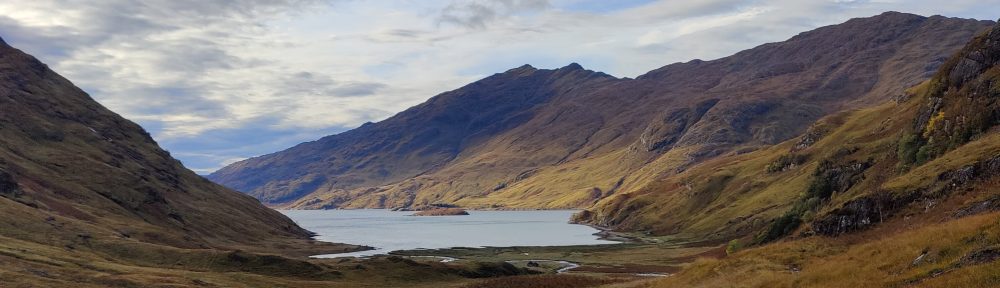
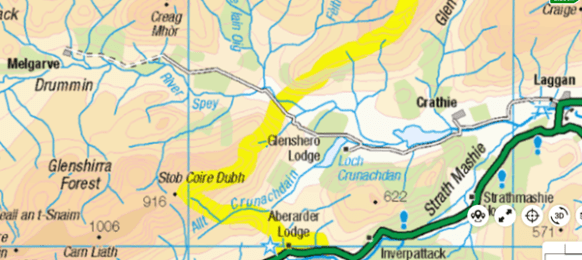

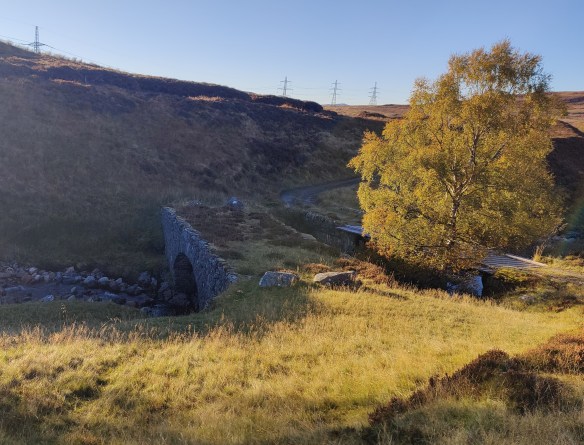
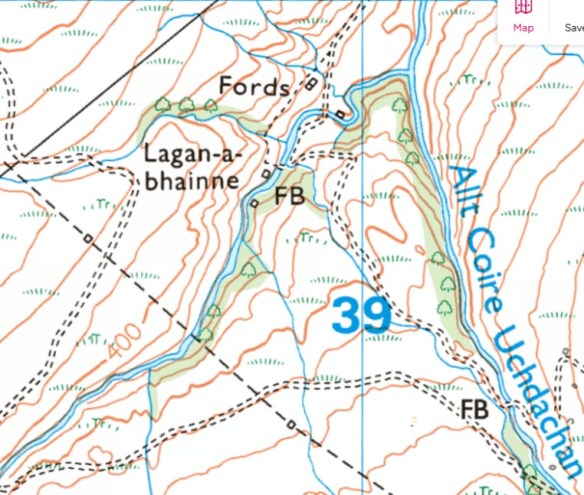
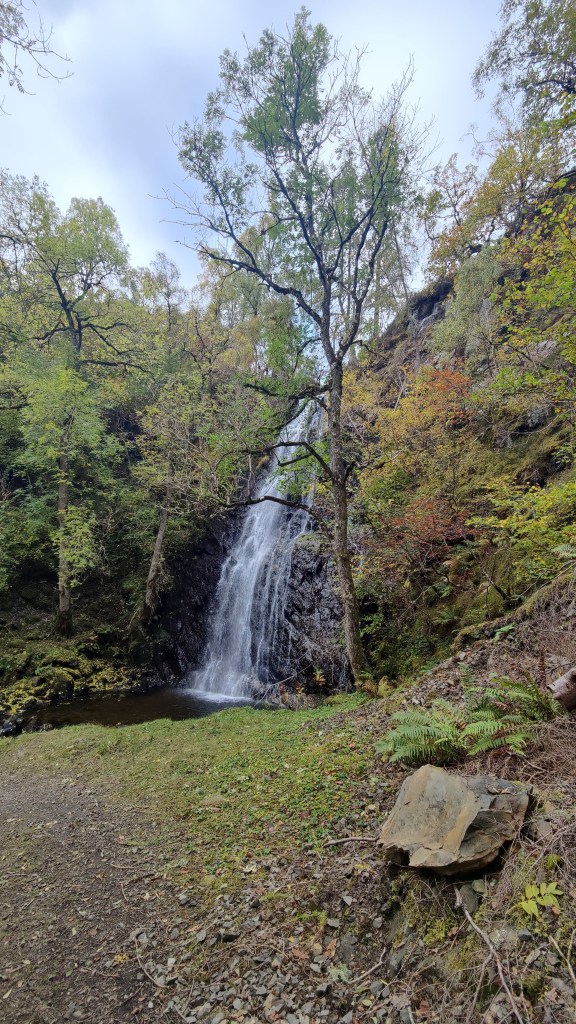
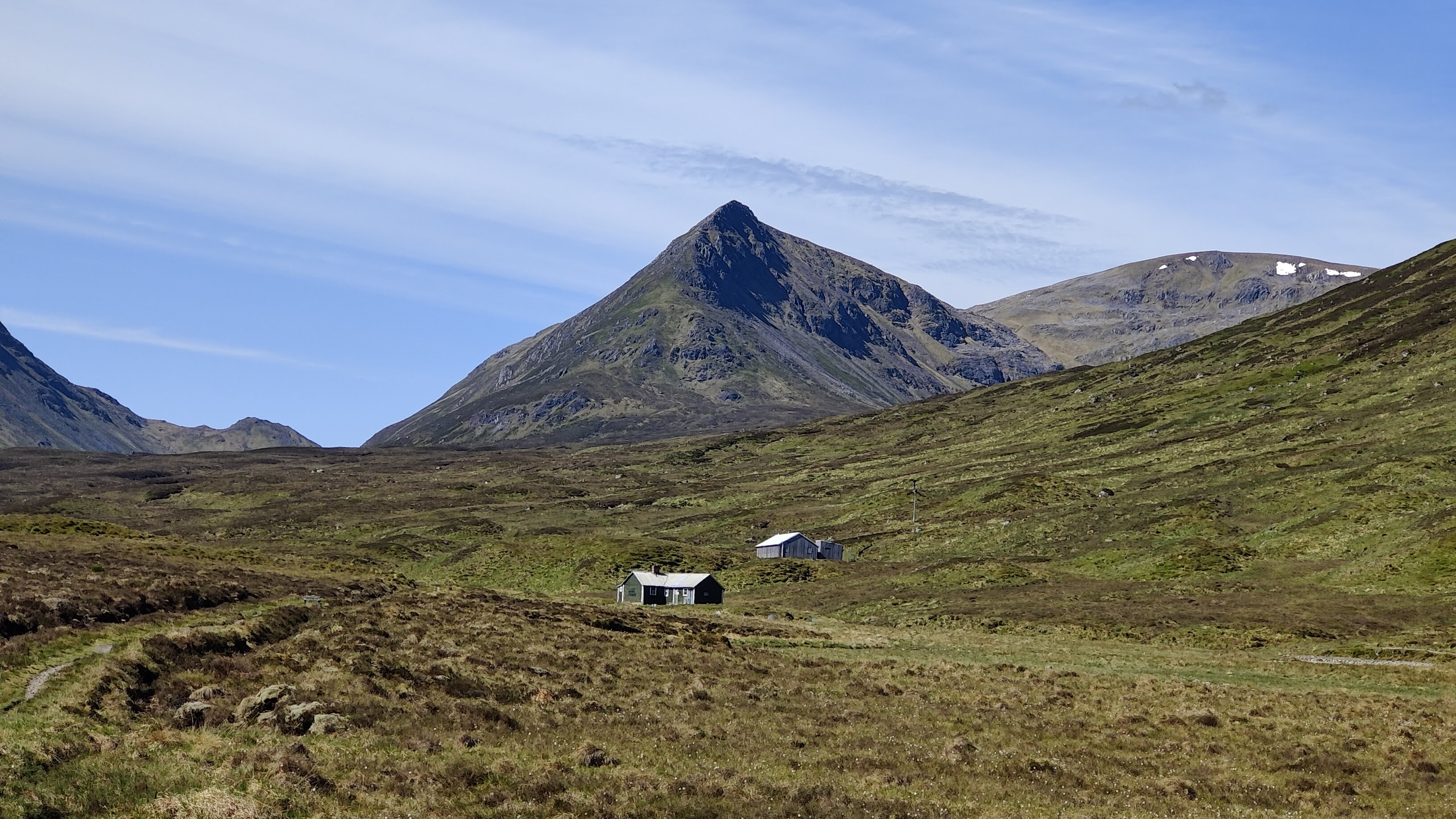
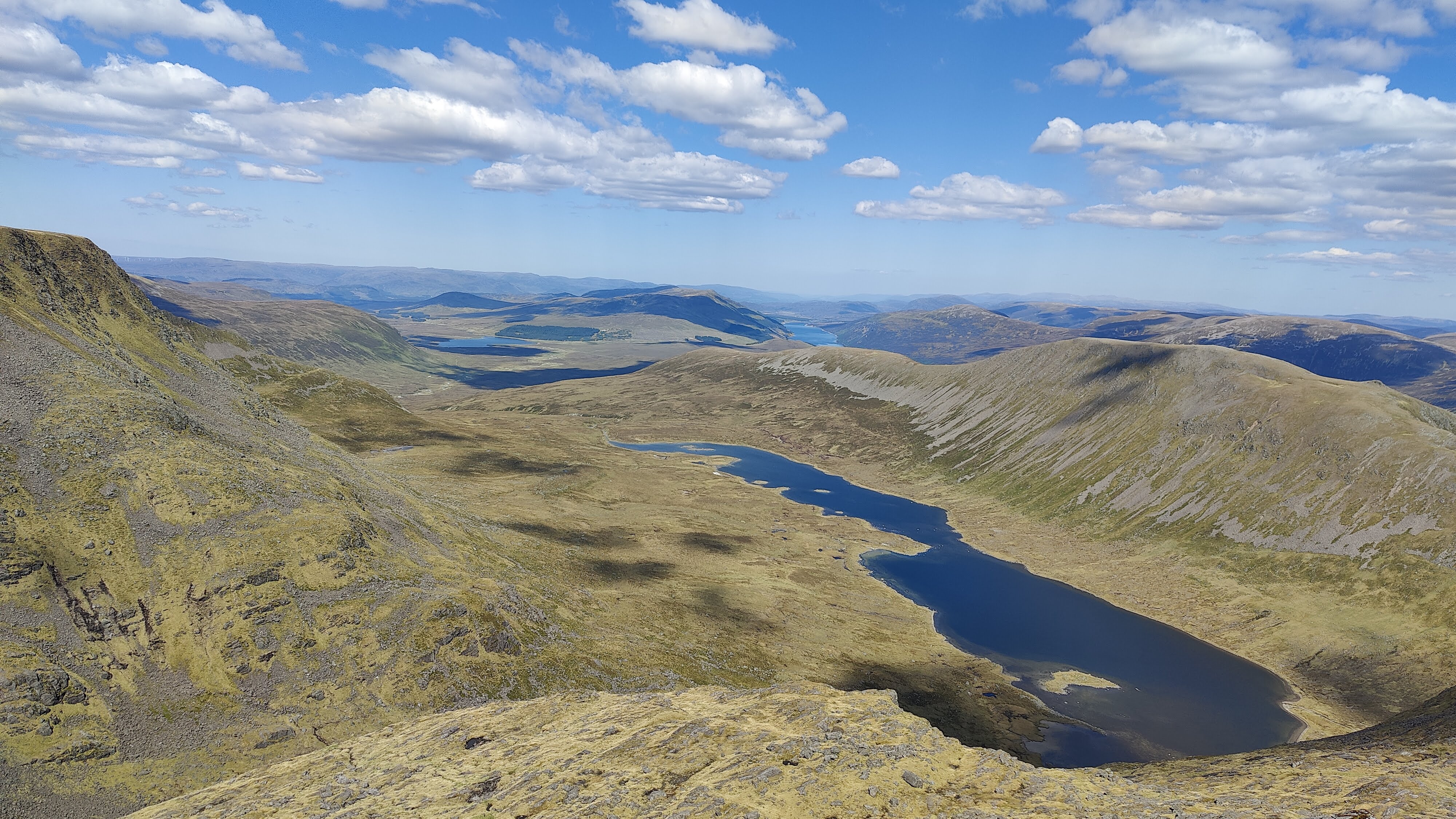
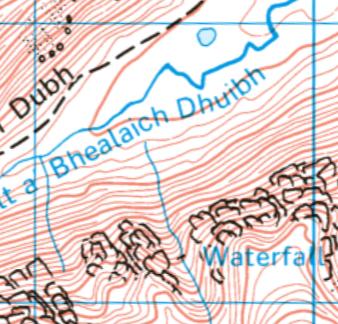

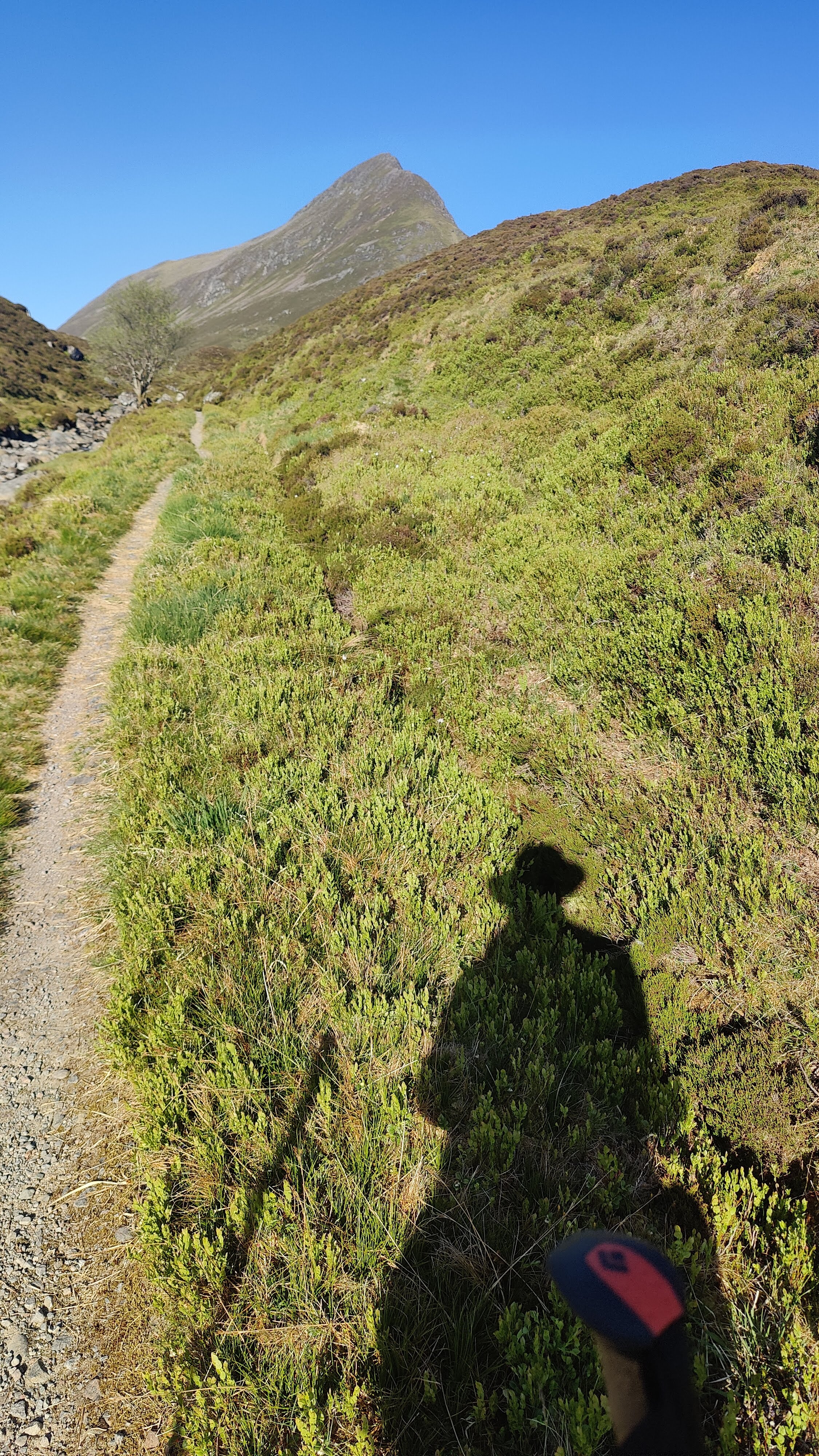
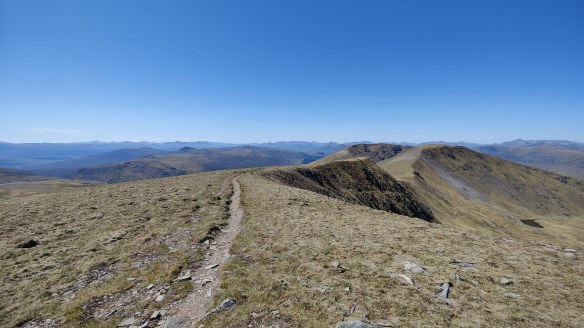
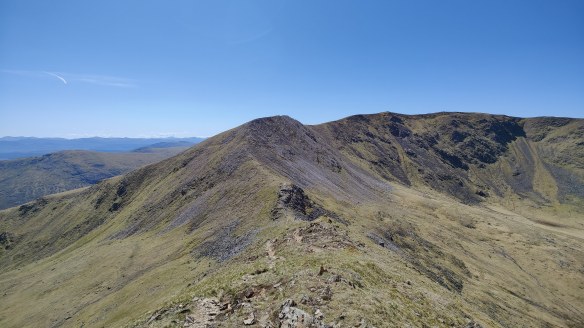
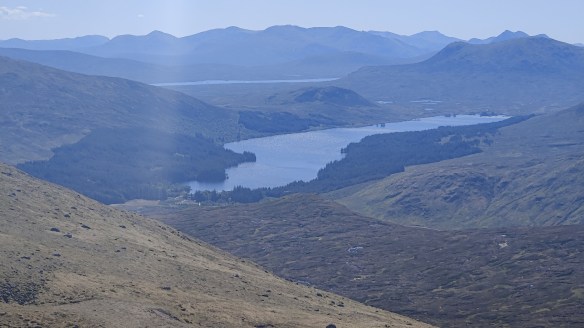
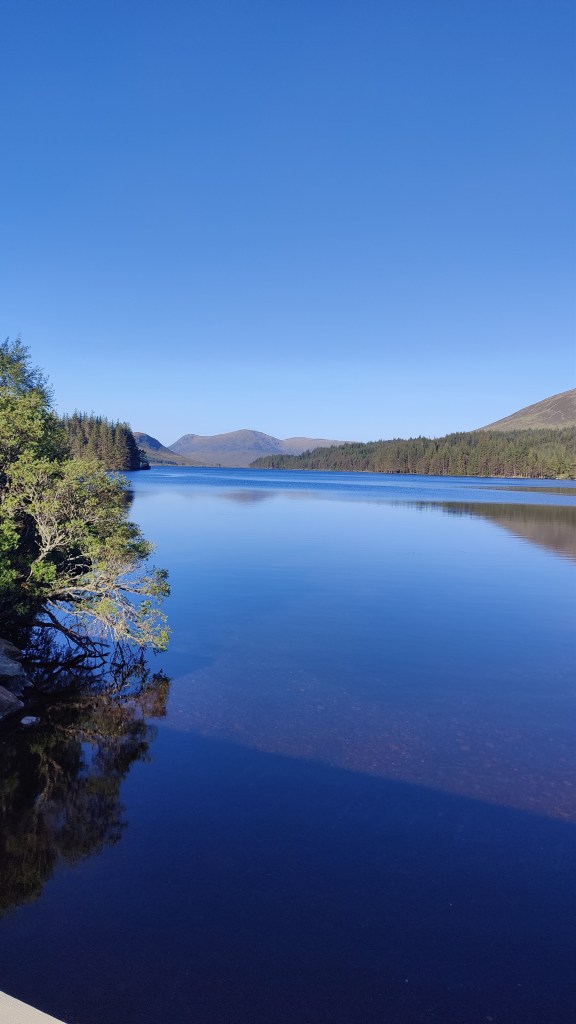
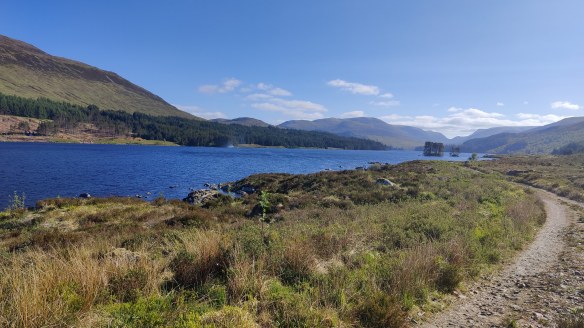
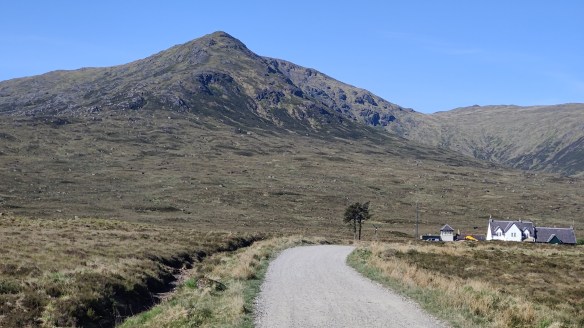
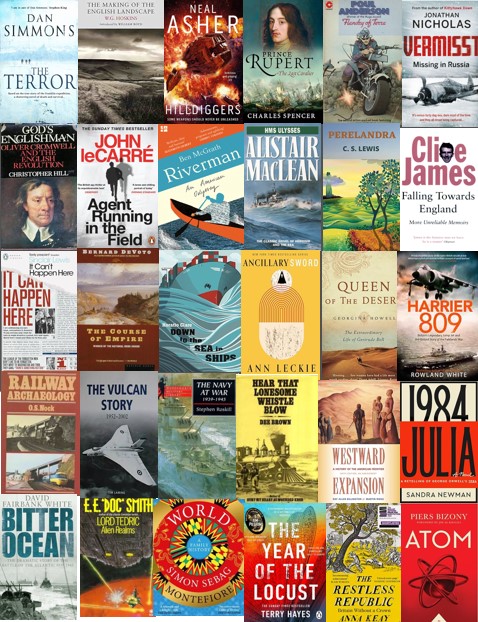
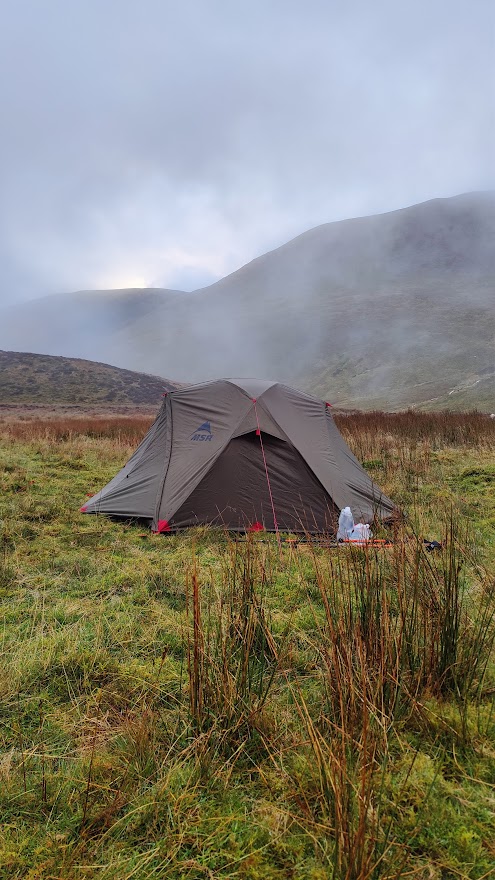
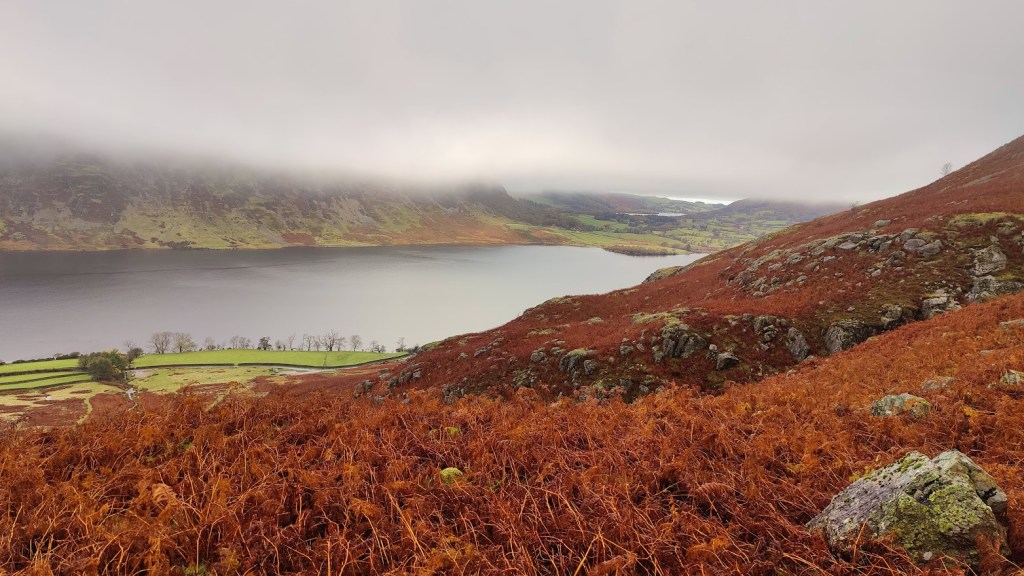

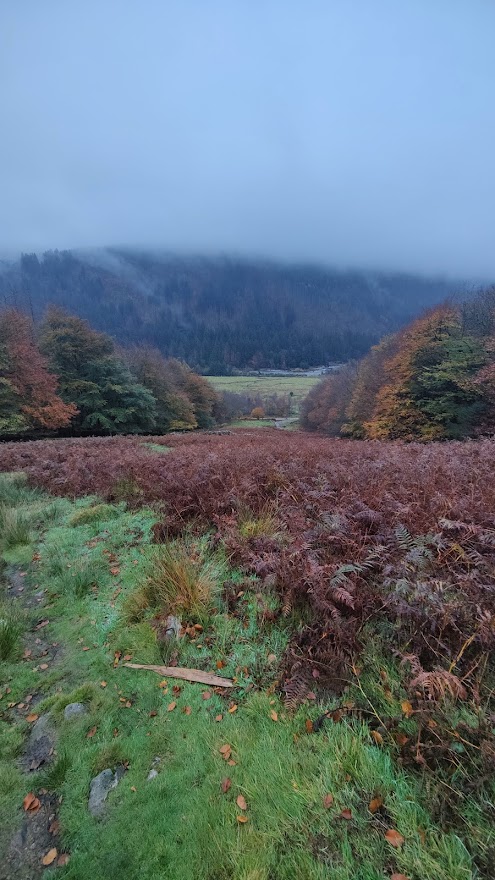
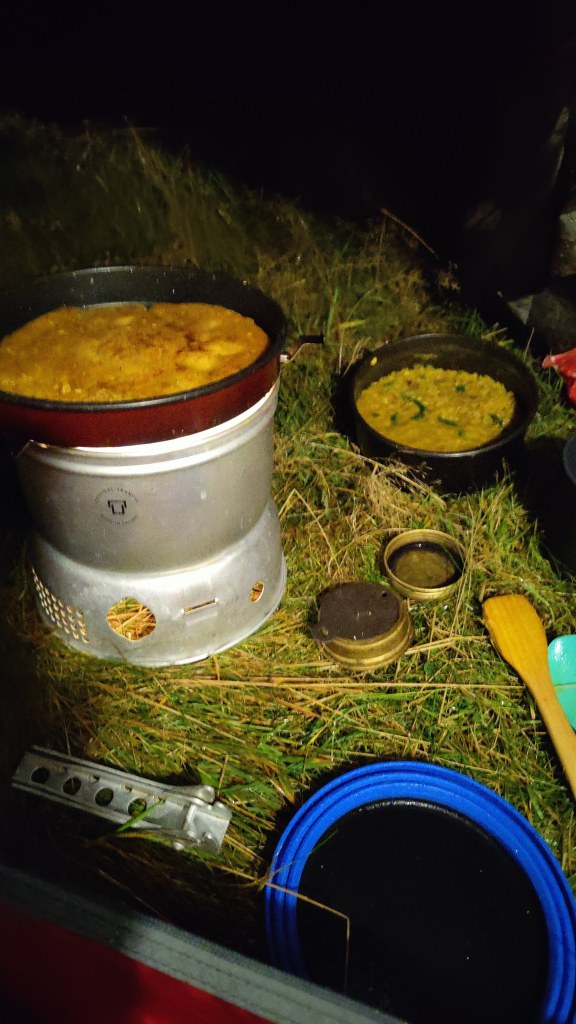
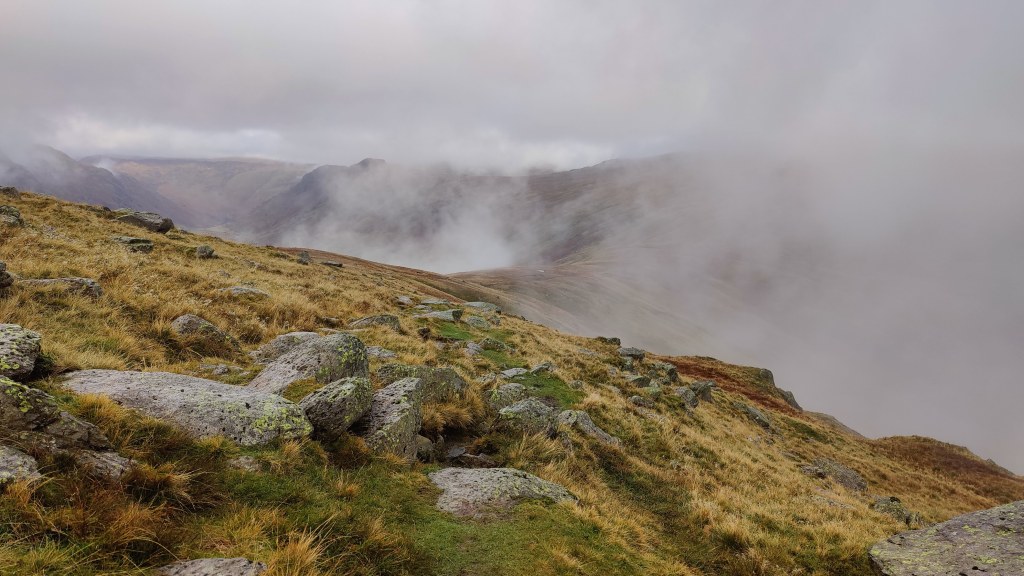
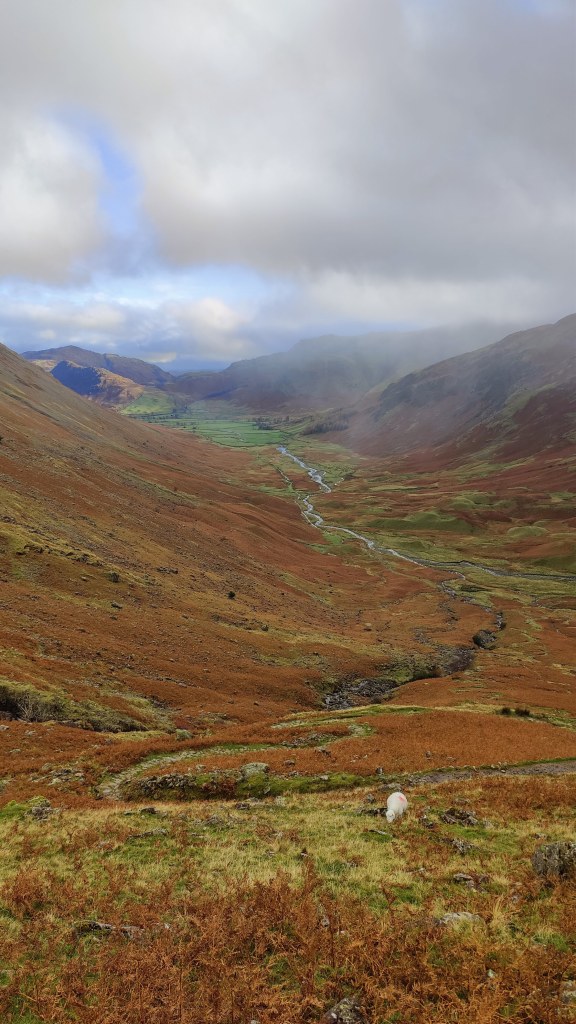
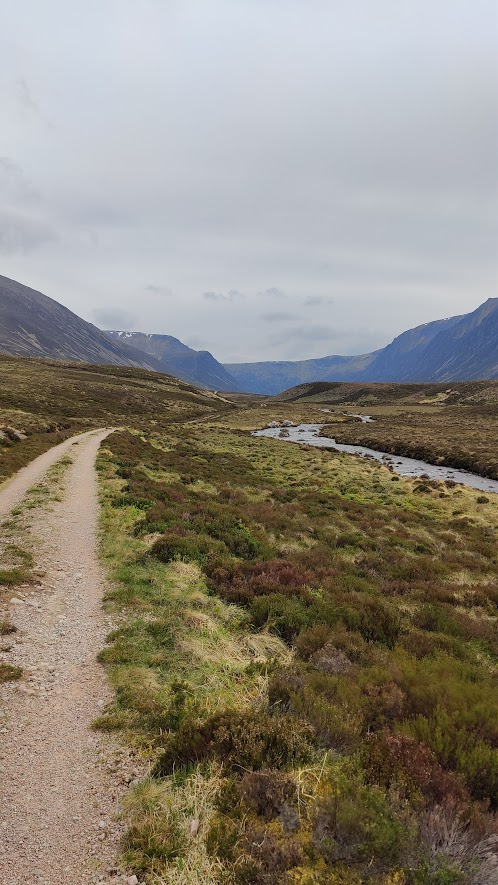
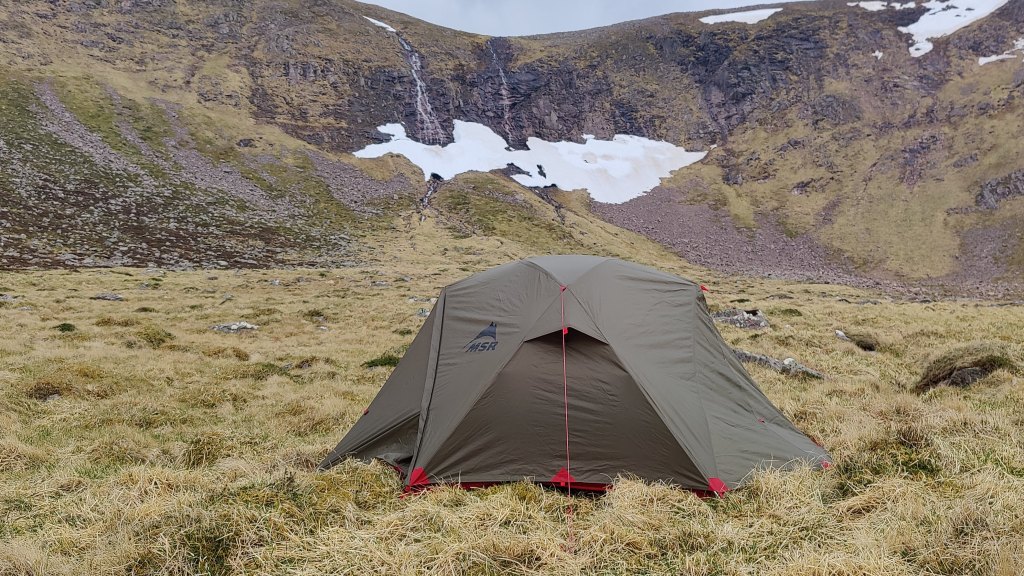
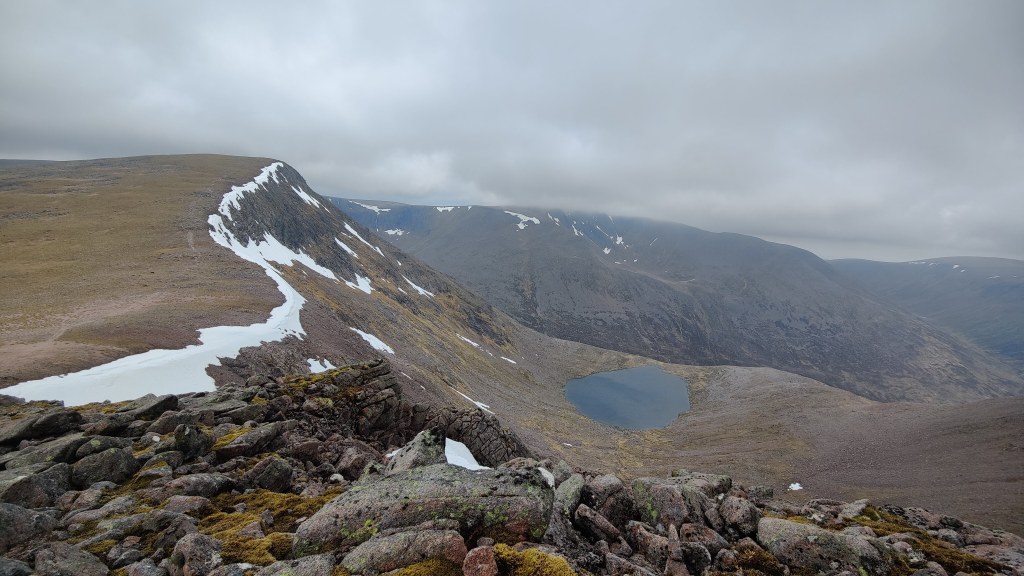
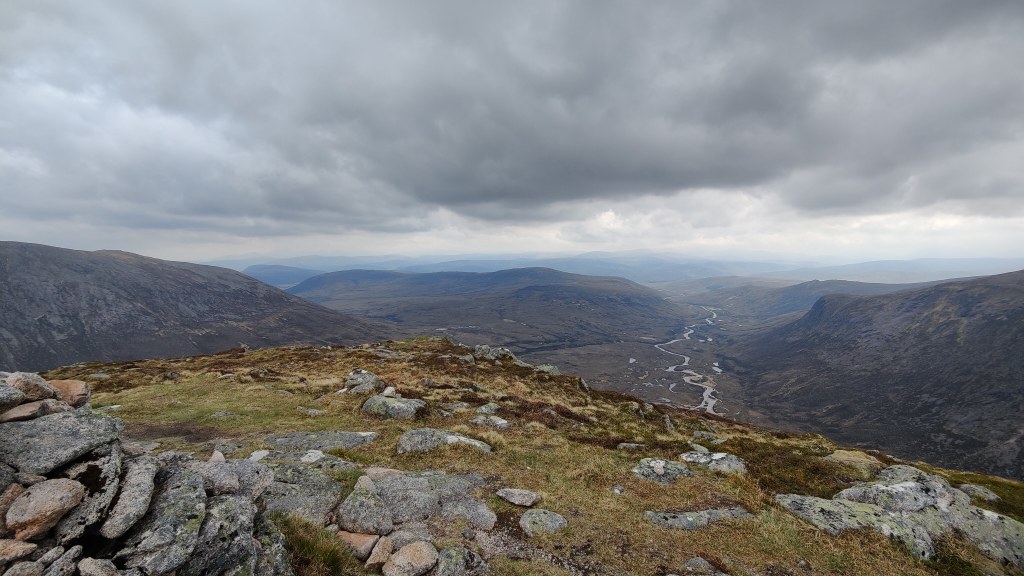
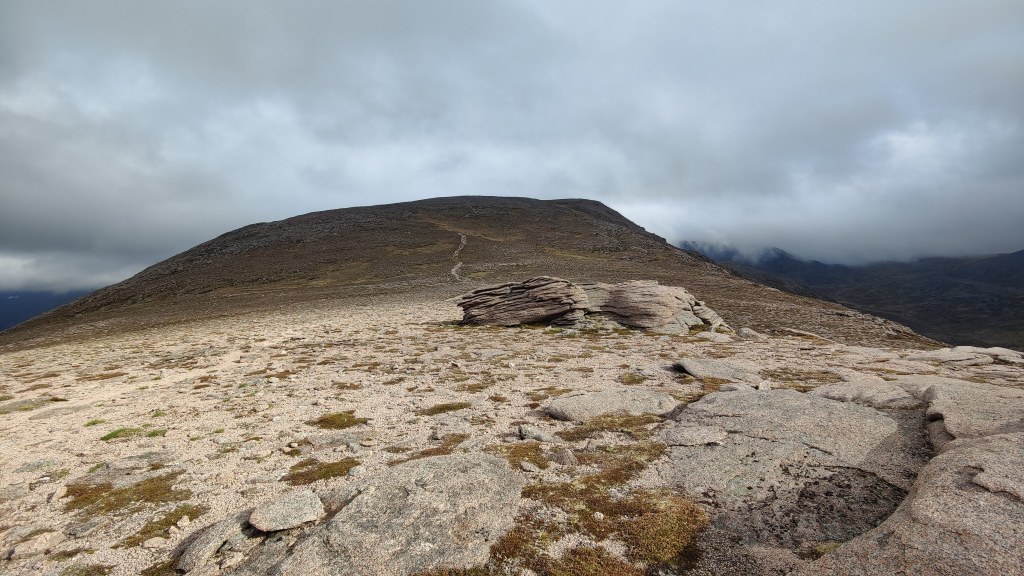

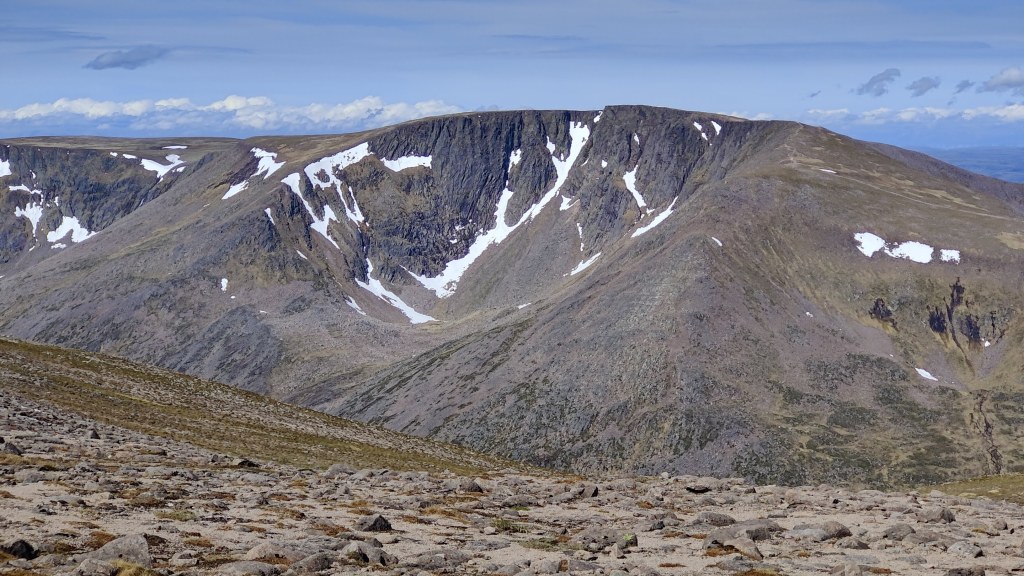
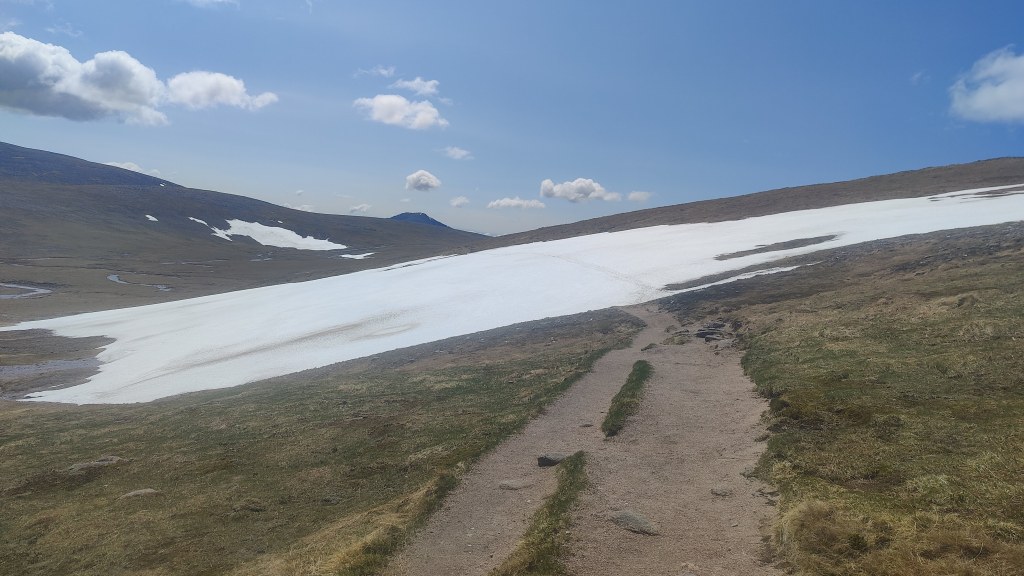

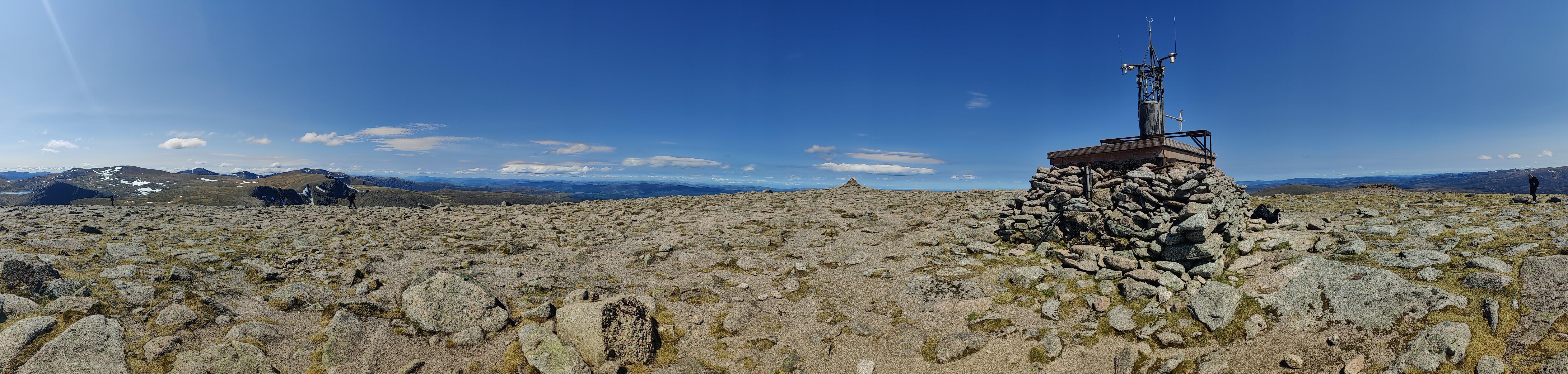
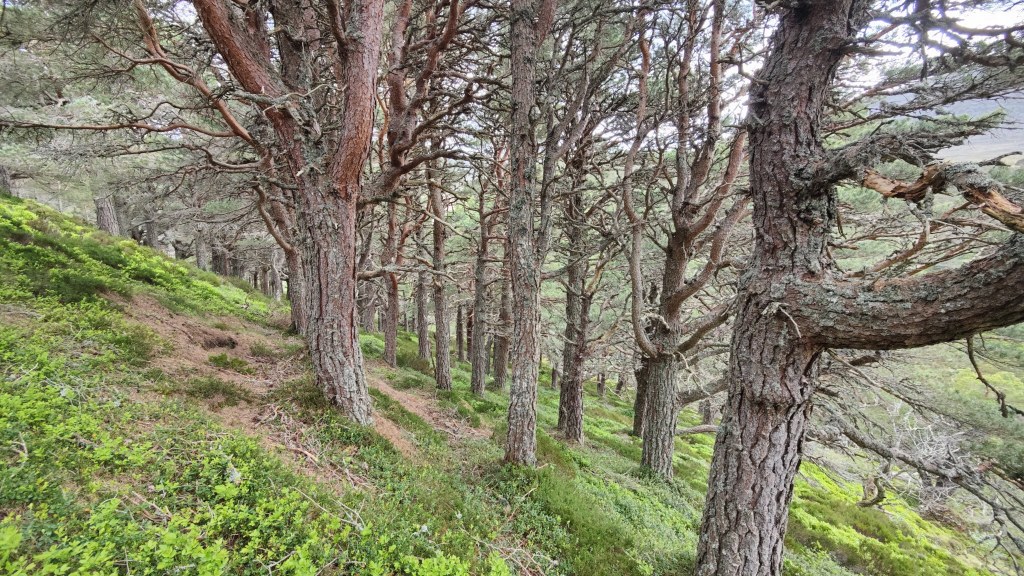
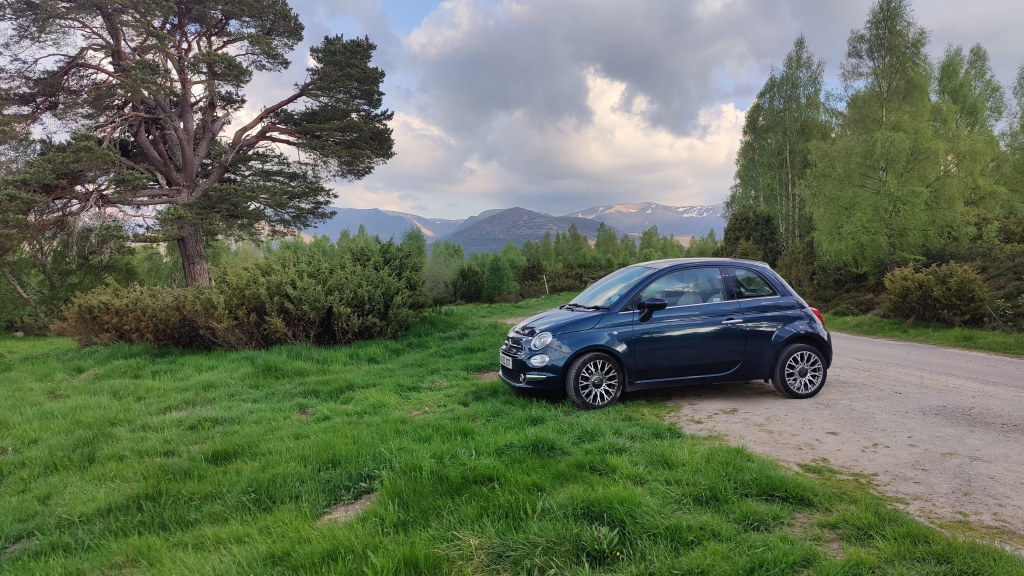
 Plateroom 28