A visit to Rum

I made a short stop at Bellabeg, to the west of Aberdeen, and with eager anticipation, bought a “locally sourced” Scotch Egg. I thought, that’ll do me. I chatted with the affable English shopkeeper, who waxed lyrical about his local Scotch Eggs. But then he ruined the moment by telling me that his Alford-based local butcher had sent him a Scotch Egg with a Cadbury’s Creme Egg inside. “FFS” is the politest response to that!

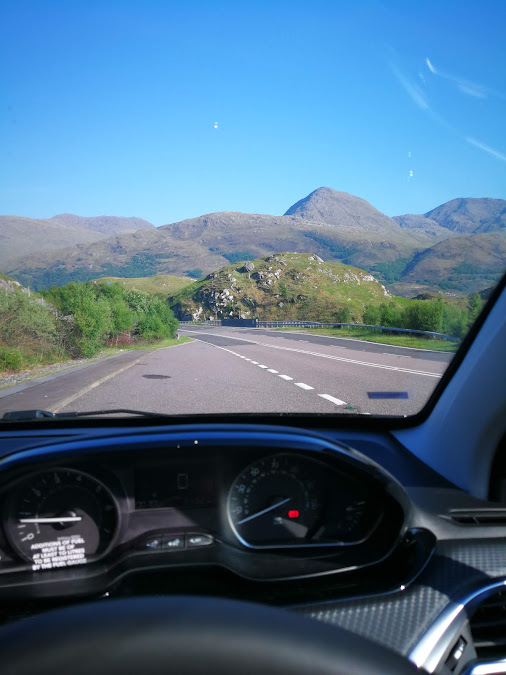
I crossed Lecht, did not stop in Tomintoul, and went on through Nethy Bridge, and onto the long, long pull through the central Highlands to Spean Bridge. Lovely motoring; the weather was kind, not a cloud in the sky. I refueled opposite the Ben Nevis Distillery, with the snow-spattered majesty of Nevis behind, against the blue sky of late afternoon. I say late afternoon: it was 8.30pm. At this latitude, in late May, it doesn’t get dark until almost midnight.

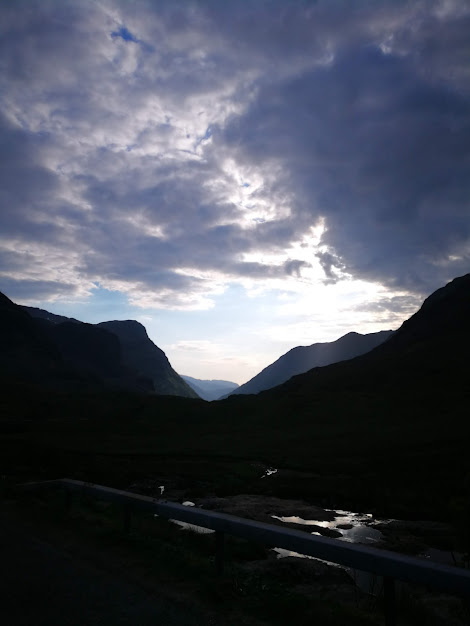
I camped wild not far from the shore of Loch Eilt. Apart from midges, which were, to be honest, a bit out of order, it was all I could have wished for. Dry, quiet, beautiful scenery. A lovely gloaming. At one point, a train clattered along the Mallaig Extension, which ran along the other side of the Loch. As soon as my tent was up, I lit a fire, and also got my trusty 35 year old Trangia stove going. Camping, whether wild or no, should not mean roughing it. I had Fillet steak, mushrooms, courgettes and fried potatoes, with tomato and avacado. A bottle of Badger beer to wash away the dust of the road, and a bottle of Malbec with dinner. I sat outside until 11.30pm and even then it wasn’t fully dark. It was a moonlit night. As I prepared for bed, I was casting a shadow in the silent, silvery moonlight.

In the morning, the midges were biting. I flung the tent into the back of the car, and made a swift, itchy escape. I arrived in Mallaig before 8am, and had a full cooked breakfast in the Seaman’s Mission, served by a cheery Polish lady. The Mission here in Mallaig has a remarkable second-hand bookshop. I picked up a little book of photographs of Derbyshire railways (I was brought up in Derby) and Jeremy Bowen’s account of the Six-Day War of 1967.

Later, I sat with coffee as the terrace of the Tea Garden Café. A very expensive latte at £3.40, but worth it to be able to sit outside in this glorious sunshine. Sitting watching the people go by, it was interesting to be able to spot the tourists. Generally older, thinner, English, German. And the songbirds here are tame.

MacBrayne’s ferry “Loch Nevis” sailed at 12.30p.m. Crossing to Rum and Canna, my fellow passengers were young families on holiday, older and younger sea-canoeists, mountaineers, and quite a few hard-drinking holidaymakers.

On the first evening, we took a stroll and walked into a First Response drama. A lady hillwalker had fallen ill, and advice was sought from the mainland. Modern mobile telephony can make these outlying islands much less remote and difficult to access than they formerly were.

The Air Ambulance was dispatched from Inverness. From far-off Inverness, realistically almost a day’s journey from here by ferry and road, in 45 minutes. The chopper swooped in and took the poorly lady off to hospital. It later transpired that she had a brain aneurysm. Whilst this drama was unfolding, we got talking with a gentleman I’d seen on the ferry – one of the hard-drinking holidaymakers. Turned out my sister knew him; a local electrician who had helped build the Rum Bunkhouse. A very friendly and helpful fellow with a strong Skye accent.

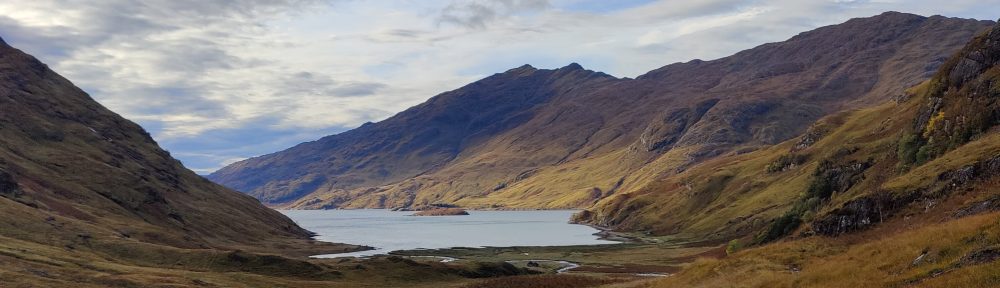
Next day, by Jeep over mountain roads to a beautiful and deserted beach, for a picnic. Pale sand, blue sky, hot sunshine. In the distance, the Black Cuillin of Skye could be seen. The sea listlessly gathered itself into miniscule ripples. Even in a full wetsuit, the water temperature could best be described as “Baltic”.

Someone noted of “island life” here, that there was not a glimpse of reality in any direction. Just this morning for a run out through the woods on the south side of the bay. There, for all to see, is a hidden village. Here is a complete village, concealed from view by trees planted some time during the 1950’s. The village is deserted, I’m thinking, since the Highland Clearances. People once lived here: hidden in the woods, are derelict houses, even a complete street facing the shore. Long overgrown, they are a testimony to an almost unwritten history of sadness and pain.

Rum was never a wilderness, even if it is a “national nature reserve”. As someone with strong ideological views myself, the hidden village acts as a reminder how far from reality, how far from the needs of real people, you can drift when you have the means to put your ideas before reality.

On the way back from visiting the woods, I passed the new wooden bunkhouse. A man was sat outside at the morning sunshine. He was nursing a beer. It was not yet 7.30a.m. We finish where we started: not a glimpse of reality in any direction.

A ride on a mountain bike, over a mountain pass, through rocky countryside oddly reminiscent of the macabre fiction of H.P Lovecraft.

Everything seems to be arid and brown, yet this is no desert – there’s plenty of water around. I went to a place called Harris, to see the “mausoleum” built by the previous owners of the island.

Deer appear everywhere, even in the garden, and particularly at night and in the early morning. These are huge creatures, not at all like the tiny Muntjac and Roe deer seen in Surrey. In recent years, the deer fence surrounding the village of Kinloch has fallen into disrepair. It is a big deal, and would be expensive to repair. It is pointless to keep any kind of garden here. Any growing fruit or veg they will consume. Once resplendent bluebell woods have been eaten up. On the plus side, there are no foxes on Rum: the chickens roam free. They can safely go where they please. It makes for tasty egg yolks – if you can find where they were laid.

I visited my sister Fliss Fraser, who runs Ivy Cottage guesthouse on the Isle of Rum.
Jet: when Britain ruled the skies

Nostalgic, sentimental, patriotic, a little gushing, perhaps. These programmes are redeemed, for me, by the presence of Lord Tebbit. Tebbit is one of the few politicians who actually worked for a living before going into politics. We’ll learn a lot by him; when he goes, we shall not see his like again.

These programmes look back at the UK’s all too brief period of air supremacy in the ten years or so after the second war. It can be exemplified, distilled, as it were, by that image of a Vulcan bomber flying alongside a Lancaster. Two Avro machines, separated in design by a dozen years at best, but worlds apart. One, a creation of the late Thirties, the other, of the Atomic age.

We might look back on that period in the early 1950’s with a sense of wonder and not a little unbelief. From the end of rationing, until Suez, something golden was happening. A short renaissance of Empire, perhaps. A final gleam of sunshine out from under lowering clouds. A last fling of power; a final throw of the dice. We might well look back and feel justified in saying, hell, what went wrong? The historians might give a blunt one-word answer: Suez. But, it might just be a little bit more complicated than that.

Notwithstanding that potential complexity, it’s fair to say that our embarrassing failure at Suez was a milestone in the fall of the British Empire. After Suez, post-Imperial Stygian gloom. Before Suez, you might have kidded yourself, were you thus inclined, that the British Empire and it’s Commonwealth might have endured.

Directions were taken in those years that might have been otherwise. Were there really “cusp”points in those years? Could it have been different? Given the financial and economic reality – the Marshall Plan – post WWII, it seems unlikely.

But what, they built some magnificent flying machines.

China by train

From Guangxhou to Guilin by bullet train

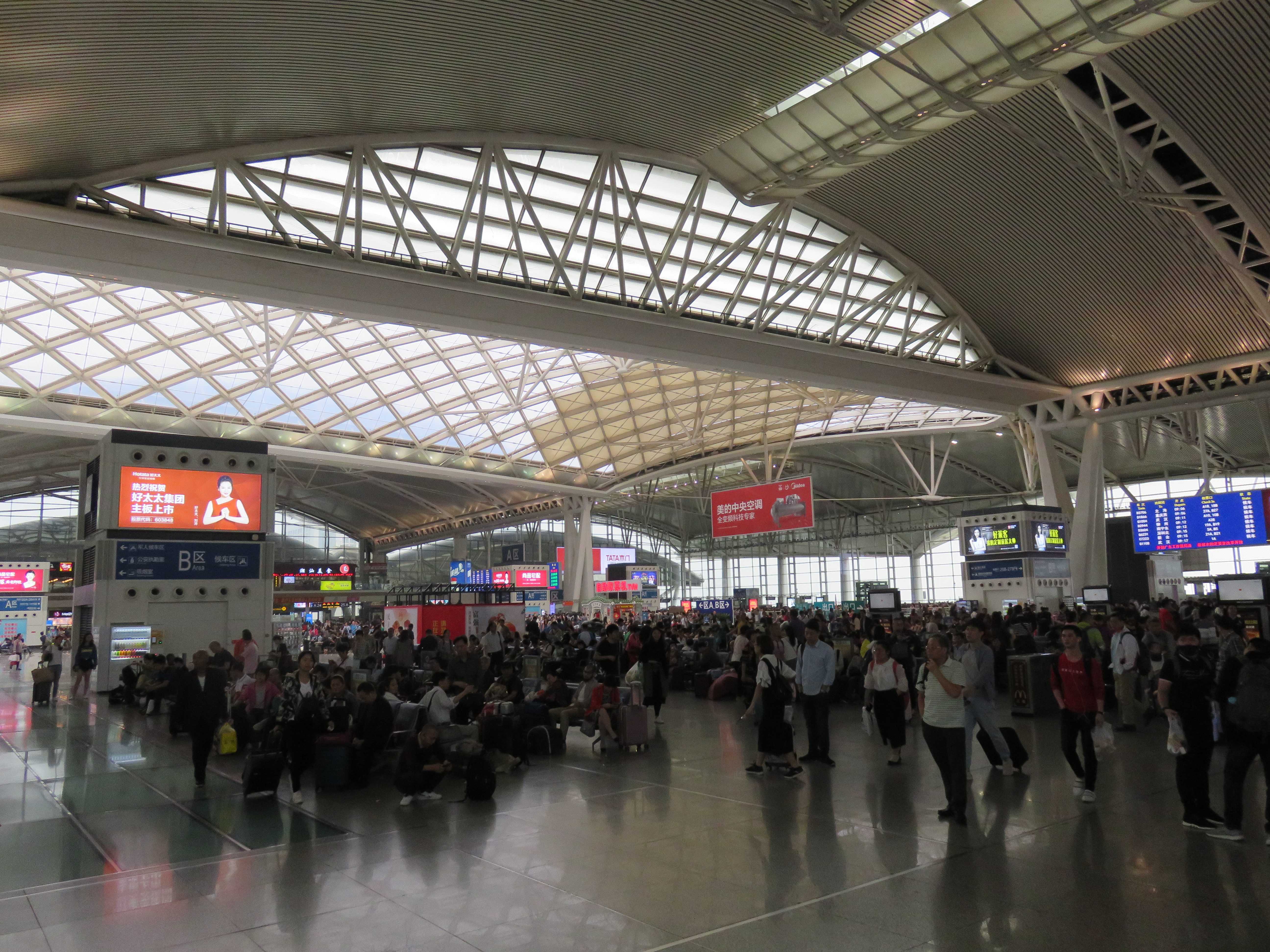
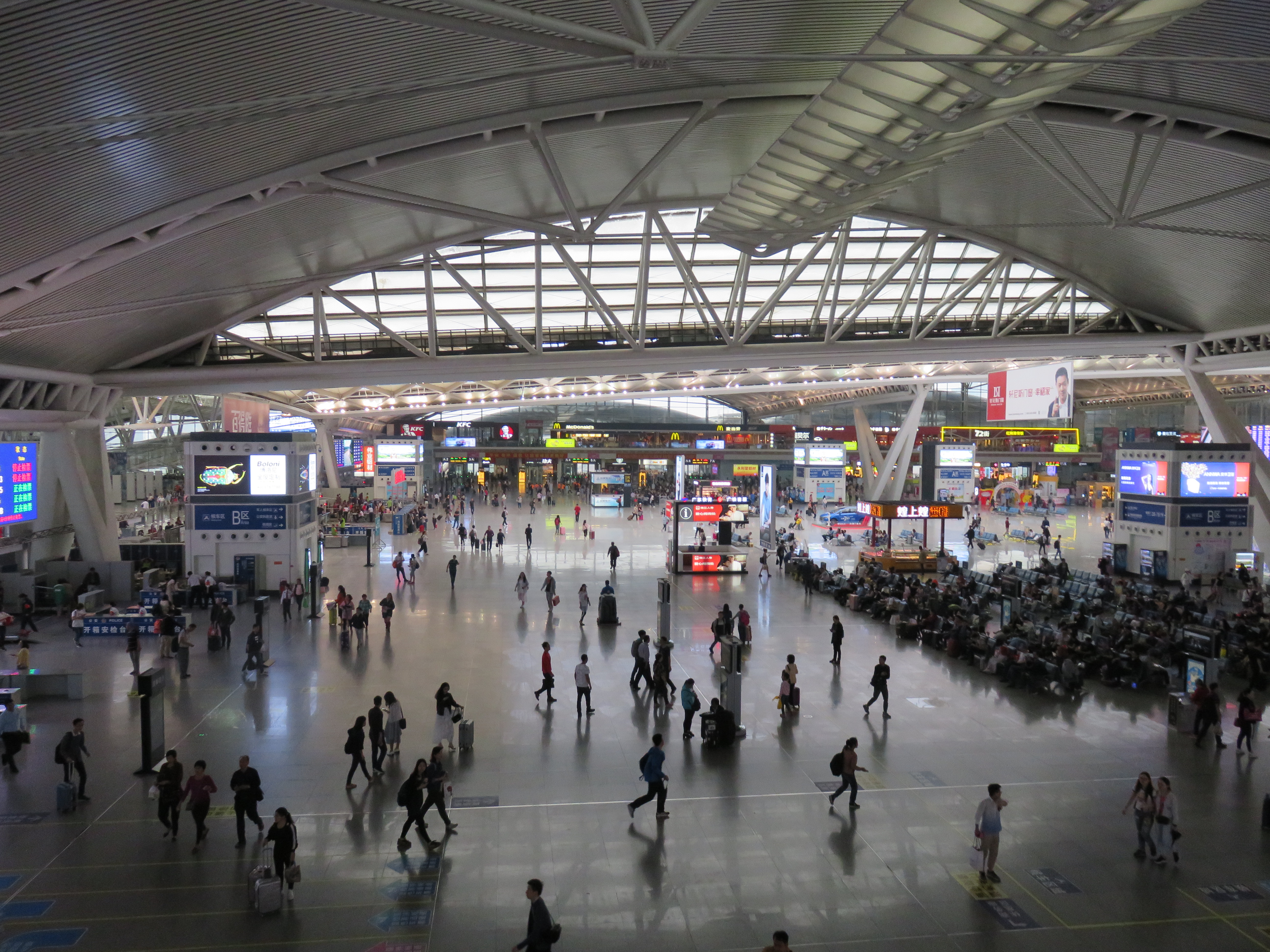
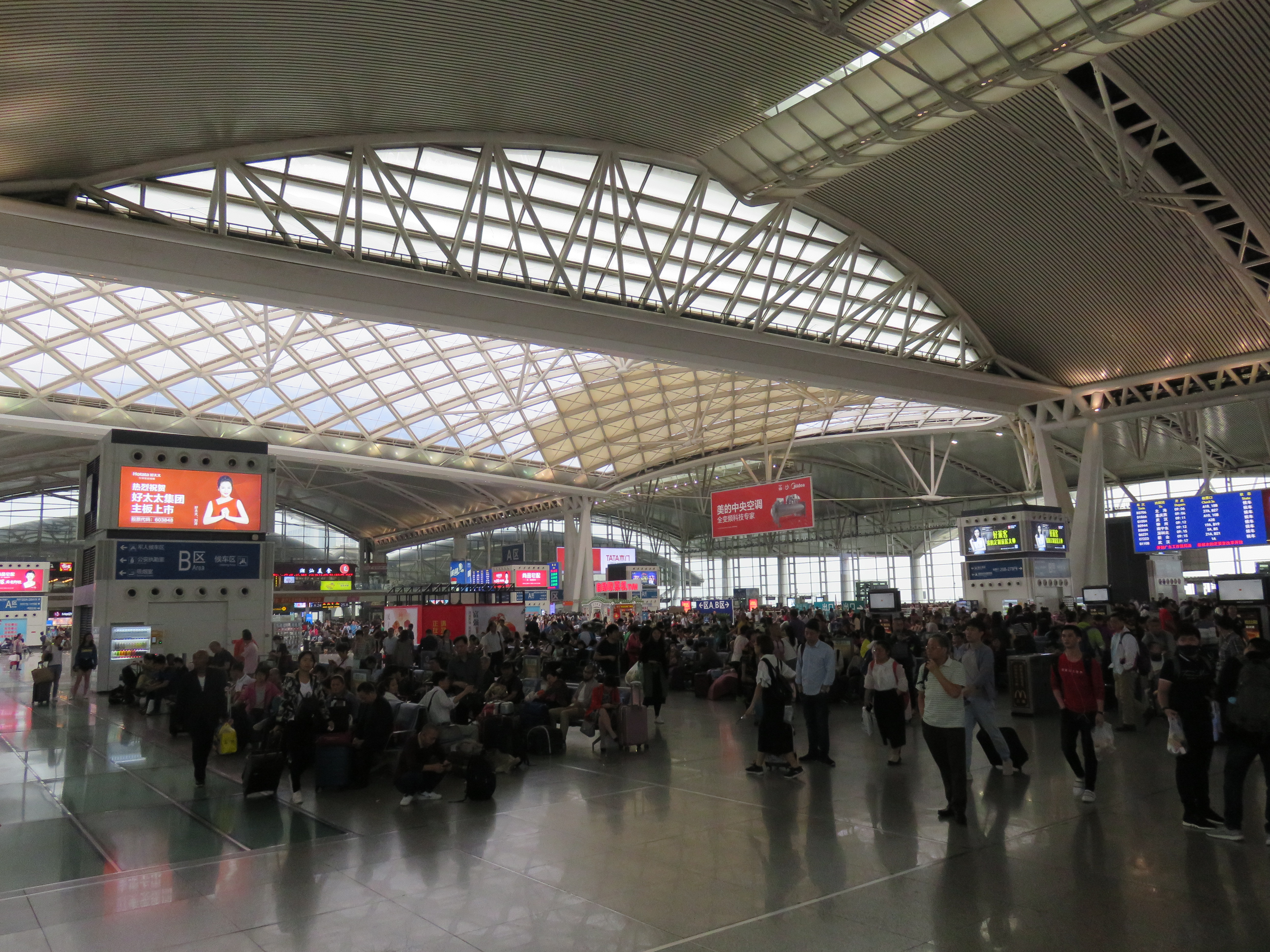
Arriving at Guangxhou South Railway Station, I am quite literally stupified by the size of the place.  It is a Terminal 5 amongst railway stations.  It is hardly distinguishable inside from a large international airport.  It is over three floors – like an airport, departures and arrivals are on separate floors.

IMG_1302
IMG_1304

This is a through station, not a terminal. Coming in by taxi, I counted at least 12 separate tracks coming out from under the canopy, all grey concrete on stilts.  The  floor is granodiorite tiles; the passengers are everywhere.  There are shops, booths, queues, scanners. It does not smell of decay and weak air-conditioning, as do so many large municipal buildings in hot climates.

IMG_1302

It is to my eye, no St Pancras: it is not built to last, and I suspect that, rather like Terminal 5, it may look distinctly jaded by 2050.

All must go through luggage scanners merely to get into the building. This is common enough at municipal buildings in China and increasingly so in the West. That said, the people doing the scanning and body pat-down work showed little interest – the scanning process is not strict.  Once inside, you then find what train you are on, and go through the ticket check to go “trainside” as it were.  Chinese high speed train tickets are not usable by any bearer, as train tickets are in the UK and elsewhere in the world – they are specific to you, as well as to a given seat in a given carriage.  Indeed. ours had our passport numbers on them in addition to our names.  But once through the ticket check, no-one was interested in our ID.  Once “trainside” and upstairs, it just felt like the airside of an big international airport. And the other similarity is, access to the platform is tightly controlled – no trainspotters welcome here.  We weren’t allowed onto the platform until only a few minutes before departure,  The train had already swept in.

The station is only a few years old. It speaks of tremendous economic growth, this outpouring of concrete: Bill Bryson once wrote something to the effect that half of all buildings in the United States had been built since 1980, and fully 90% of all American buildings, since 1945.  A similar thing is happening in China.  Natalie Merchant sings, in her song “Motherland”

Where in hell can you go
Far from the things that you know
Far from the sprawl of concrete
That keeps crawling its way
About 1,000 miles a day?

It is applicable here in China, at this time of expansion, as viaducts arc across whole cities, as 150mph bullet trains flash through tunnels so expensive as to defy understanding.  How do they do it? The growth of high speed rail in China today is rather like the development of the Interstate network in the USA of Eisenhower’s time.  And just as the Interstate highways changed America beyond recognition, high speed rail is changing China.  The old China is still visible, but it is disappearing. Go there and see it while it still exists. The old ladies brushing the street with straw brooms.  The scooter riders with no helmet but an umbrella. The little stalls selling foodstuffs. The little motorcycles converted into vans, burdened under seemingly impossible loads.

Off we go and there are almost continuous announcements in Mandarin.  Once through the suburbs, the train perceptibly speeds up and shoots along at 150 mph.  The acceleration is noticeable, and audible, an indistinct and distant hum rather like the sound of the original Starship Enterprise at Warp Factor 10.

We plunge through misty green forests and mountains, brown rivers, farms and rice paddies. There are endless tunnels. Some long, some short. Billions of dollars have gone into building this railway – and it is only one of many.

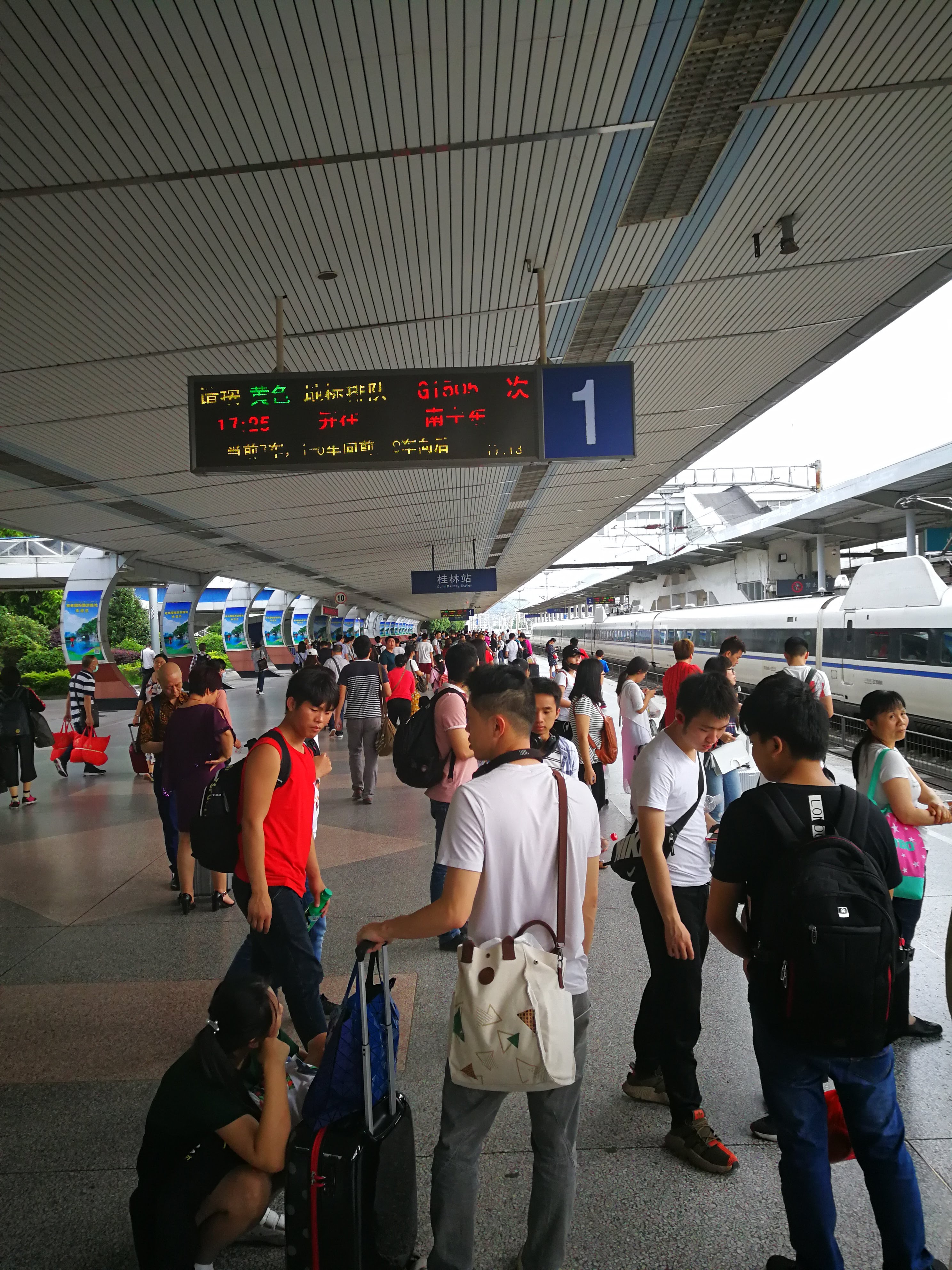
We arrived at Guilin Bey (North) Railway Station at 12,30pm on a hot and humid afternoon.  We  got off the bullet train, along with myriad Chinese, and followed them down the stairs into the underpass. Chattering, walking, kids laughing, suitcases on wheels rumbling along. The Chinese experience is to be surrounded by people.

IMG_1578

To Liuzhou and on to Zhiangziajie

Onwards: another city, another railway station.  This one is different; older, more prosaic.  The first two, at Guangxhou and at Guilin North, were grandiose to the point of being ridiculous.  This one is more intimate, more obviously a railway station rather than a palace, and very much older, dating from the 1970’s or even older.

In the huge waiting room (a departure lounge really) we’re enjoying massage chairs at Y4 (about 40p) for 10 minutes.  I say “enjoying”.  My wife and daughter think they are great, and had two goes each.  I found the massage a bit heavy handed.

cof

By bullet train from Guilin to a city called Liuzhou, from whence we will take sleeper train to another city called Zhiangziajie. So many cities I have never heard of.  Here is a train with a front like an aircraft, like a TGV, based in fact on a Japanese Shinkansen train, and the “dwell time” at this station (the time spent stationary in the platform) has been over five minutes.  That said, the train did arrive early.  As a commuter in the Home Counties, I’m accustomed to “dwell times” of less than a minute – in and out, quick quick quick…

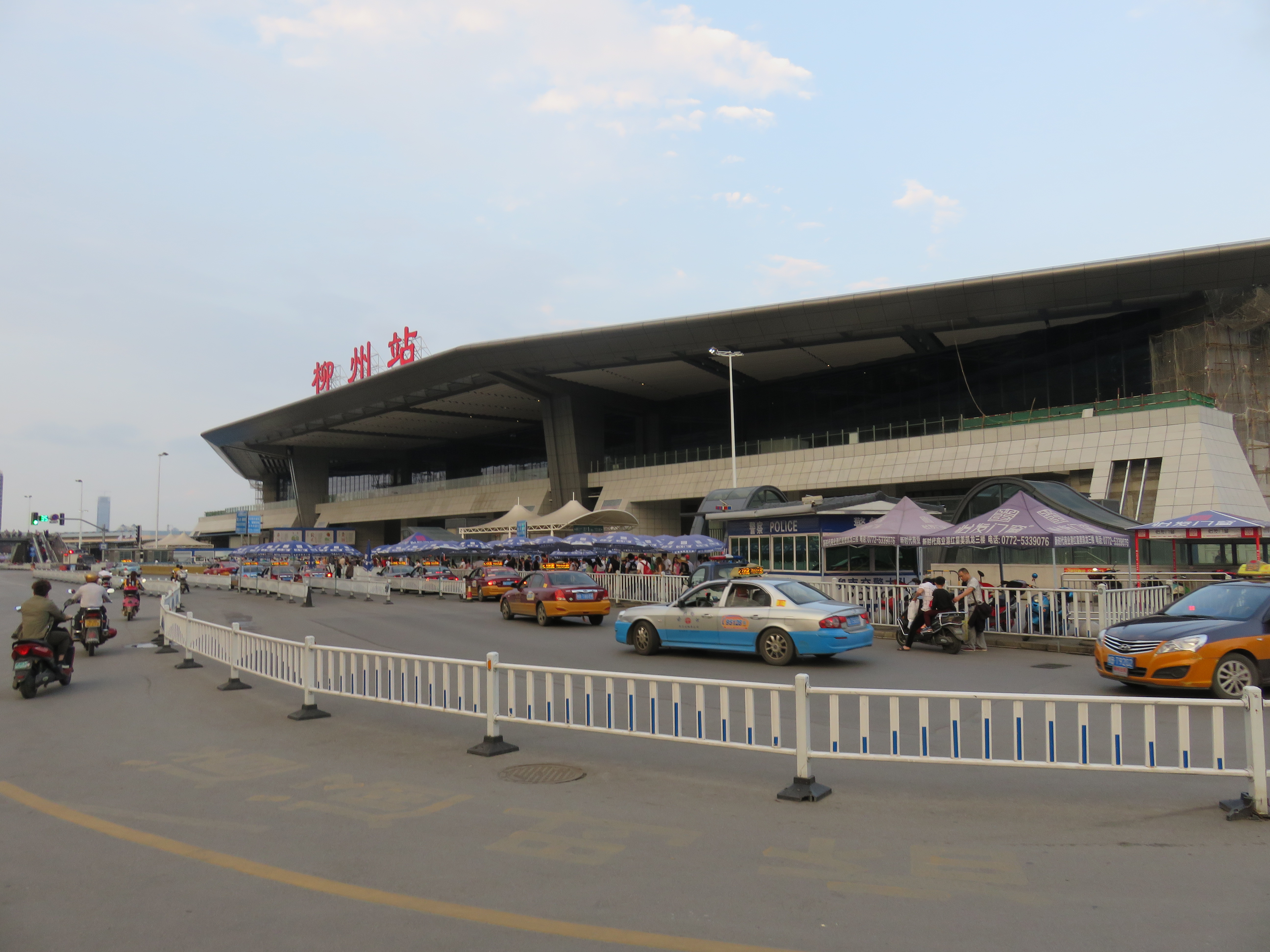
Liuzhou is a city of over three million people. I’d never heard of it, and it is just one of hundreds of cities of this size in China.  Here is the railway station:

IMG_1640

We walked a little away from the station, having to run some light interference from taxi drivers, in order to be far enough away from the station to find somewhere to hail a “Didi” (the Chinese equivalent of Uber) where it might safely and legally stop.  We took the taxi to a second railway station, called Liujiang, located in in an area of the city called Labao – a good 40 minutes by taxi.  The driver was an affable fellow; himself a Chinese teacher, and he took our photo when he dropped us off.  The second station, whence we arrived at dusk, was something of a disappointment.  More in the “Inter-Railing” style of railway station – just a single track, a single waiting room.  Outside, some shops and little cafes where we found something to eat.  Though not without some stress and difficulty in establishing what we might eat: no pictures, and of course no English menu.

The waiting room was stressful, to a degree: by now we were tired and the train was late.  “Do not lie down” the signs said. People laid down.  Our  tiresome wait was enlivened by the sign above the door for the “Security” people, where the proof-reading had failed.  The “r” and the “i” had blurred into an “n”. This slightly rude sign cheered us up as eventually the train roared in, and everyone got on.

A review of “Cool Hand Luke”, by Donn Pearce

A review of “Cool Hand Luke”, by Donn Pearce

dav

When set against the wider genre of prison literature, “Cool Hand Luke” is perhaps somewhat tame. This isn’t “Papillon” and it certainly isn’t in the same category as anything coming out of the prison-based suffering that took place in the Soviet Union. This story has nothing of the human privation and suffering shared with us by Solzhenitsyn in “The Gulag Archipelago” or “A day in the life of Ivan Denisovich”.

In spite of this book being made into to a classic film about torment and suffering in prison, it doesn’t really deal with the full horror of man’s inhumanity to man in prison.  To learn about that you’d be better off listening to Joan Baez’ wonderful song “Prison Trilogy (Billy Rose)”, and then weeping.

What we do have here, is prison guards and prisoners as real people. We get stories within stories. The author introduces his hero only gradually, delicately, subtly.  Even the narrator doesn’t tell the story but puts it in the mouth of one of his characters, “Dragline”, all of whose teeth were brutally kicked out by Miami detectives. “Dragline” is played in the movie by George Kennedy, in one of his best roles.

The story is an interesting reflection on post-war Florida. It’s difficult to pin down exactly when the story is set.  At one point, the narrator (the prisoner called “Sailor”) uses the term “diesel locomotive” making it clear that this is new and unusual.  He refers to a train called the “Silver Meteor’.  Most of the convicts are under thirty; some seem to have been WWII veterans. In the end, we learn that Luke’s experiences in the war have by no means left him unchanged.

There are hostages to fortune which may offend the modern liberal reader. Twenty-first century sensibilities will not take kindly to the frequent use of certain words describing African Americans. And then there is the passage describing “The Girl” – a schoolgirl of sixteen.

But in the end, this book was a thought-provoking, worthwhile and entertaining read. Have you got your mind right? That deep underlying question can keep some of us awake at night, for there’s a little of Cool Hand Luke in us all.

A sermon from the late Rt Revd Richard Hare

Here is a sermon that was preached at St. Alkmund’s, Derby, sometime in 1994. It was towards the end of Paul Corrie’s time, and occurred on the eve of the congregation moving to two morning services, St Alkmund’s having grown massively in the previous ten years, and the hall was no longer large enough for just one service of 500 or more people.

Richard Hare was a suffragan bishop well-known for his Charismatic tendencies. Though at this point he had been the Bishop of Pontefract for 21 years, he was heavily supportive of the Charismatic movement. He speaks here after his retirement, at the invitation of the vicar Reverend Paul Corrie.

I vividly remember the sermon being preached. Richard Hare’s beautiful spoken English, his “cut-glass accent”, and his exquisite professional timing as a public speaker, have remained with me ever since. It is fair to say that such public speaking and preaching as I have done myself, has been influenced by this one sermon – most particularly his professional timing.

At one point he recounts a poem created by a nun, in which the nun says to the Virgin Mary, thinking of her saying “yes” to the angel, as a young girl, when she replied, “it will be as you say”:

“In nine long months, in thirty-three short years, in three eternally long hours, did you never wish that yes…………………….unsaid?”

His pause between “yes” and “unsaid” was theatrical – and just exactly right.

Listen and enjoy here.

Kathryn Williams at St. Peter’s Church, Tandridge

In the evening, a short drive through light falling snow, to St. Peter’s church, in the village of Tandridge in East Surrey. Tandridge is tucked away on a slope of the North Downs that tilts away from the main road.

There’s a hidden, lost world up here, almost – a land that the 21st century forgot.

IMG_20180317_194104.jpg

Arriving at the churchyard, we’re greeted at the Lych Gate. It’s a winter wonderland. There is a dusting of late snow like icing sugar on a cake, and the ancient yew tree is decorated with fairy lights. Somewhere in the background, one of those little portable generators is grumbling away. Under a gazebo near the church door, some rather good curry is served, prepared by a local restaurant. Here, tonight, in this place, old England and modern 2lst Century England meet in agreement and in harmony.

Inside, there is beer available, and we are at liberty to sit eating our curry in these old wooden pews. Modern electronic concert lighting brings a magical atmosphere to this medieval building. The opening act is the Rector’s own band, The Effras. Encouraging, uplifting, human. Songs, as frontman Revd. Andrew Rumsey notes, about seaside towns, rural churchyards and… Sarf Landan. Here a song about couples canoodling “underneath the angel”, with a name-check for Pernod and black. Or, a song about “Some houses in Croydon”, or my personal favourite, “Penge in bloom”.

Kathryn Williams had the clearest, sweetest voice. She was engagingly nervous and human. At one point she left the stage to fetch some sweets to give to some of the children at the front. She seemed very vulnerable, revealing much of herself in her playing and her stories, such as her candid anecdote of emotional collapse in “Underground”. I was mightily blessed by her songs, her performance, her openness. She had some cool sampling and looping stuff that enabled her to double and triple her voice, and back herself on vocals, and her guitar playing was a delight.

All in all, as the Rector said the following morning, a “transformative” evening. No less than the truth.

A review of “Churchill and Orwell”, by Thomas Ricks

My two favourite writers: A review of “Churchill and Orwell”, by Thomas Ricks

As ever in my book reviews, the word “readable” comes near the beginning and is intended as a compliment. As Orwell himself wrote, the writer should be doing the hard work, not the reader.

Three writers of the last century, have influenced me greatly. Churchill and Orwell are two of them. The third is Ian Fleming. I knew I had to have a copy of this encouraging and inspiring work, the moment I set eyes on it on the shelf in a bookshop in Sevenoaks. A single book about two of my favourite writers, it did not disappoint. Part commentary, part biography, it revealed things that I did not already know. It made me think about my own position – how was I like Churchill, like Orwell? How was I dealing with the Lord Halifaxes, the Neville Chamberlains, the Franklin Roosevelts, in my own life? Neither man was perfect; both had feet of clay. As much can be learnt from a study of their flaws and failures, as from their successes and their greatness.

Churchill, as well he might, tends to dominate that part of the work dealing with their actual lives – the biographical section. Orwell is predominant in the latter part of the book dealing with their legacy. Orwell, virtually unrecognized in his lifetime, is today considered one of the most influential writers of the twentieth century. Ricks argues that Orwell was and is the more influential author and “thought leader” for today’s world, even if Churchill was the more influential at the time. It was interesting to read of the two characters being unrecognised and “in the wilderness” at different times.

There were a few unsure steps and odd passages, some occasional gushing and some arguably unnecessary detail in places, but in general, this was an excellent and worthwhile read. It is amongst those books which I might call “life-changing”.

Citizens of a country that no longer exists

An older couple get onto the train before me. In fact, I inadvertently got between the two of them, and allowed the gentleman onto the train before me. He thanked me with grave and particular courtesy.

The past is a different country. Any of us might be citizens of that country that no longer exists. An England, or indeed any land, that has passed away, ceased to be. We may be people whose allegiance is to a time, and place, and way of life, that is now forgotten.

I myself, never mind that polite old gent, am a citizen of such a land. Like someone standing on the seashore, as the wave recedes, who feels the water rushing past, draining away, eroding their footing in the sand of the present.

I know a younger lady, but lately married, who herself also belongs to that country. Though only young, she has dual citizenship in the countries of the present and the past.

GK Chesterton once replied to the accusation that he lived in the past, with the sharp and truthful observation that there was no room in the present.

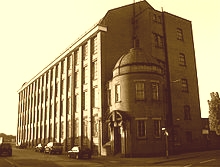
All the landscape was the mill

A crowd of ladies from a faraway land, each dressed in brightly coloured fabrics, would come chattering past the house each day. They would sweep along every morning and evening, their conversations bright, adult, and quite incomprehensible in some unknown language. The little boy asks, who are those ladies? His mother tells him that they all work in the mill at the bottom of the street.

The boy learned a lesson young: who you are and what you are can be seen from where you’re going – and when. The direction you’re walking, and the time of day, tells us something about who you are.

At the bottom of the street, a crossroads. Go left into a quiet lane past the allotments to the edge of town. Go right past a bowling green smooth like a billiard table, to a sweet shop. Straight on, to the park, to school, to Cubs. The crossroads of our lives – turn each way for different lives, different paths. People will know where you are going, when you walk through these streets. Here, brick and tarmac, there, woods and quiet shrubs and grasses. Straight on – for play, and for learning.

The sepia stains of history lie on these streets, or at least it seems so, to the boy and to the man he became. Here, a grandfather swam in an outdoor pool. There, a street where an unsmiling lady stood in a crowd of joy and cheers, struggling to see the good in VE Day. Over there, the flats, and the outlines of vanished streets. The streets are gone, but the memories remain, thick like dust, easy to discern if you’re the right sort. Listen carefully, even today, and you can hear the treble drone of bombers, or the wretched tears of poverty, the grinding life of the urban poor.

He came back to those streets in a kind of pilgrimage, thinking somehow to reconnect with the past, with the feeling of those early days. If he could represent his childhood. all the carefree years of boyhood, as an icon, that icon would be a little image of the mill at the bottom of the street. He walked past that mill every day for years uncounted, it seemed to him when he was young. Endless weeks, he went past that mill, morning, afternoon, evening. And he never went inside it, in all his life.

As a young man, he’d sat with this father watching old Laurel and Hardy movies. They were amusing; there were wry smiles. But even as he watched them, he found that they were just not as funny as they had been when he was a small boy. He’d mentioned this to his father, who’d shook his head with the greybeard wisdom of ages. “The boy who rolled around laughing on the floor at these movies, no longer exists”, he said. The boy became the man, the young man became the older man.

Could these streets ignite a kind of holy nostalgia? Could they form a harbour into which a pilgrim might sail, to sojourn briefly in the past – a visit only. Not to remain. The mill was still there; the streets were still there. The crossroads by the bowling green was unchanged. The municipal lines of alternating plane trees and lime trees in the park – still there, save for a few gaps caused by storms of old.

Walking in past the park, he’d noticed that no single youngster was out playing. It was 4.30pm on a spring weekday afternoon. The roundabouts were siezed and rusted, the swings abandoned, it seemed. Where was everybody? Where were they all? He knew, really. No Marie Celeste mystery here. Just the modern world, risk averse, focussed on itself, with smartphones, tablets and unwillingness to be out of doors.

The mill was the fixed point – all the landscape was the mill. But there was no river of bodies pouring down the street to find work there. That river had dried up long ago. Here had been a future for hands of skill. No longer. That much had changed even in his own youth. What remained now, was clearly foreseeable even back then – if you could read the writing on the wall. What had been a mill making clothes, was now a university department. It was a department covering such matters as textiles and art, so there remained a tenuous connection with what had been. On the river of time, you cannot paddle upstream. That river flows only in one direction.

He walked up the street, remembering the red and blue bricks in the pavement. He recalled cycling down the street on a baking hot day, trying to keep in the shade. The baleful sunlight of reality was upon him now, beating mercilessly on his head. No golden light of evening, nor delicate pink at dawn, but scorching tropical sunshine at noon. A sunshine, as Kipling wrote, that sometimes strikes men dead.

Yet, though saddened, he knew things had to change. There is no going back. There’s no returning to those places of golden childhood. Nostalgia is a hip-flask from which we can allow ourselves no more than a discreet sip, every now and then. If we look back, we must look in thankfulness, not in nostalgia.

Treading his way up what he thought was a dried up riverbed, he noticed that there was a new river of bodies making their way to the mill, young people, people learning. people looking to the future. And reassured somewhat, he left that harbour and sailed away back home.

Green Park

Here is a young man sketching the skeletal outlines of winter trees, using a blue pencil. Here is an older man, quietly reading a book. Here is an arrogant ass, sprawled on a park bench, with an expression like a King, as if he somehow owned the whole park. Groups of ladies run up and down. A helicopter buzzes somewhere up above – this is SW1.

A little yellow-breasted bird swoops down and lands two feet away from a Smartie, abandoned on the path. It hops smartly forward, picks it up in its beak, and flies off with it. A lucky find! Two men go past, of Mediterranean or possibly near Eastern origin, sharing the same bicycle.

A blonde lady of unknowable age, but svelte and curved in Lycra, is performing somewhat distracting (to me, anyway) stretching exercises on a nearby fallen tree, pressed in to service as a park bench.

Passing the Grand Sheraton on Picadilly, I spy a single open window amongst dozens, set against the sunlit white Portland Stone.

A review of “The Silk Roads”, by Peter Frankopan

A review of “The Silk Roads”, by Peter Frankopan

I got this book on the basis that it was about Central Asia. A legitimate assumption, perhaps, given it’s title. But no, it is not about “the Silk Roads” as such.

The expression “Silk Road” comes not from antiquity but from a 19th century German historian. Just thought I’d throw that into the pot, so to speak.

Peter Frankopan’s book is a new history of the world, starting in deep classical antiquity, and ending right now in the second decade of the 21st century.

Persia and other middle eastern “silk road” countries are mentioned early on. The importance of the nations and states through which what we now call the “Silk Road” becomes apparent, though Persia -Iran- seems to be considered paramount.

The book makes a detour, in order to gain a wider perspective, into a history of Western Europe and the adventures of Europeans in the New World.

In my view, the latter part of the book is tilted subtly against the west and against America. This is never shrill, but it is there nonetheless. In this, it only really reflects the zeitgeist. Me, I like the West, I like America, and I like what they stand for.

Overall, an excellent piece of work, in the “grand sweep of history” style which does appeal to me.

A review of Sapiens, by Noah Yuval Harari

A very readable canter through the entire history of humankind, from pre-conscious apes out on the Savannah, through to the possibility of post-human cyborgs and immortality.

Harari has taken a humanist and atheist standpoint throughout, which I found challenging and upsetting in places. I was warned by the person who recommended the book to me (who knew I was a Christian) that I would find it challenging. And it is, and rightly so. But my faith in a transcendent, caring and personal Cod is not shaken by the work of this liberal academic. Some might say I’m too thick to understand.

He has expressed some outrageous and refreshing ideas; a key theme throughout the book has been to question the established wisdom on economics, politics, history, culture and language. I was particularly impressed with his chapter on the individual, the market and the state, noting that the free market cannot really survive without the state. He avoids the espousal of Socialism, but manages nonetheless to articulate the main flaws in the free market, capitalist system. He acknowledges that, notwithstanding those flaws, it is that same system that has brought us so far this last five hundred years.

He notes that European cultures prevailed over comparable or even superior Islamic and Asian cultures because of the concept of credit. What he does not say is that there was little choice. Kings came before Parliaments seeking money: they needed credit, generally to fight wars. This development, of itself, fueled the rise of Parliaments and of democracy.

His final remarks on the future seem ill-at- ease and somewhat hurried. He describes a number of ideas as if they were new- ideas like immortality and post-humanity, cyborgs, genetic modification of people, to name a few. Some of these ideas have been discussed by modern science fiction writers such as Paul McAuley, Richard Morgan, and Alister Reynolds, for decades. He goes on to confuse science fiction as a whole genre with that small sub-genre we call space opera, demonstrating a perhaps understandable ignorance of sci-fi at the very part of his work that would call for an understanding of it. But his final chapter does articulate some of the potentially dreadful and also potentially changing possibilities that lie ahead of us.

Overall, refreshingly positive in outlook, once you are past the early sections where you could be forgiven for thinking that the author does not like the human race. Me, I do like the human race. I think it is excellent. I am a member.

Every glass tells a story

A selection of glasses seen here after washing up. Each glass tells its own story. Each glass has a history.

The red wine glass at the rear was made by my brother-in-law.  It is one of a pair gifted to my wife, his sister. They are not quite identical. My brother-in-law does a little glass blowing, or at least, he used to. He is a skilled craftsman living at Winsley near Bradford-an-Avon. See http://www.metal-arts.co.uk.

The pint pot on the right at the rear was a gift to me from my first employer. I got such a glass by serving on a commercial survey ship over Christmas. Originally I had three of them, one for each Christmas I worked offshore.  Two of them are now lost. One of these, I broke at New Year any days after I was given it. This was a long time ago. This glass dates from the late 1980’s. It is Norwegian lead crystal, engraved with the name of the vessel. And thereby hangs another tale.

The two sherry glasses in the middle are all that remain of a set of six which my wife and I received as wedding presents these 27 years ago. There were wine glasses too, and also, whisky tumblers. Most of them are now gone. As a married lady I know once remarked, “we’ve been married quite long enough that much of the crystal originally given us as wedding presents is long gone.” You can tell the half-life of a marriage by looking in the glass cabinet.

The small crystal glass on the right was inherited from my mother-in-law. It is one of six, very small, and they see much service for drinking malt whisky.

The silver tankard in the foreground is from my wife’s Aunt Josephine, who died last Spring.

2017 in reading

It has been a challenging year in a number of different respects. Difficulties at work, family bereavement, complexities in my volunteer role as a senior Scouter.

I’ve read nearly fifty books in 2017, though some of this reading will have been comfort re-reading – a bit like comfort eating or comfort shopping, but healthier. We’ll look at some of the more edifying reading, as well as some of the comfort food, here.

Peter Frankopan – The Silk Roads

I started off the year reading this excellent overview of world history from the standpoint of trade.  Trade goes along roads.  This was a history of the world in roads, and had little enough to do, however excellent and readable, with the Silk Road or with Central Asia.

Stephen King On Writing

Perhaps the best and most inspiring read of the year, recommended to me by fellow members of the Woldingham Writers Group.  This was an encouraging and stimulating autiobiography, telling the story of how King wrote his first novel – “Carrie” – in his lunch breaks whilst working at a laundry. 

Stephen King – The Stand

Thought I’d re-read quality fiction after my interest in Stephen King was re-ignited by his autobiography on writing. The opening paragraph is unforgettable, classic Stephen King – “Arnette, a pissant four street burg in East Texas”.  Yet, he is never disrespectful of such a humble place or of the humble folk who hail from ordinary places.  King’s heroes in The Stand are not the Walkin’ Dude or the old lady Abigail, but common folk like Stu Redman, hailing from “pissant four street burgs”. 

Nicholas Monsarrat – The Master Mariner

Read masterly fiction – it should sharpen your eye and make keen your appetite for good writing. This is classic tale weaving.  Our hero Matthew, guilty of cowardice at a battle in the 15th century, is cursed by a witch to live on and on until he learns courage.  Clearly he had not managed it by the time of Trafalgar, centuries later.

David Eugene Smith and Louis Charles Karpinski – The Hindu-Arabic numerals

This is a nineteeth century work on the history of numbers, and is, for something hailing from that era, surprisingly accessible and informative.

Len Deighton – Declarations of War

Another fine writer whose work we would do well to emulate.  Deighton here brings us a series of short stories about war, some with amusing twists in the tail. We read one about the rise of right-wing politics amongst honourable and upright men – ostensibly in the UK – and only in the last lines  do we see the name of Herr Goebbels mentioned.  In another, men battle in the home counties against the German invasion, as the front rolls inexorably toward London.

Richard Morgan – Altered Carbon

Richard Morgan’s characters are bitter and twisted.  You don’t need to read more than a few dozen pages of his fiction to feel anger and frustration boiling off the page.  Here we have a dark detective story set in the San Francisco of 500 years hence.  An immortal man has killed himself – and it is important to find out why.

Chuck Palahniuk – Fight Club

Why did I read this? It was on my daughter’s shelf.  It was certainly compelling, but ultimately a futile read about a futile subject.  And in any case, the first rule of Fight Club is, don’t write about Fight Club.  I should point out that I never watched the film, nor ever will I watch it.

W.H Murray – The evidence of things not seen

For me, the long-awaited autobiography of celebrated Scottish climber and environmentalist Bill Murray.  His work “Mountaineering in Scotland” is one of the best pieces of mountain literature available.  In this longer work we see the whole of Murray’s life laid out before us, from childhood, through his war service as a tank commander in the Western Desert, imprisonment in Germany, and onto his work in Everest reconnaissance in the Himalayas after the war.

Bruce Sterling – Holy Fire

I like Bruce Sterling; this earliest of the “cyberpunk” authors here tells a rather odd story of an old woman who through late twenty-first medical technology, is restored to full health and youth.  The holy fire, I think, is that of youth.

Peter Fleming  – Bayonets to Lhasa

Peter Fleming was the older (and today, less well-known) brother of Ian Fleming. Both brothers were capable and gifted writers. Here, Peter Fleming writes an account of William Younghusband’s assault on Lhasa in 1904.  It is an essential piece of reading for anyone like me interested in Central Asia or in “The Great Game”.

A. N Wilson – Our times

Another sweeping historical perspective work, covering the new Elizabethan era – our times – from the mid 1950’s until the early noughties.  Much changed in the first four decades of the reign of Queen Elizabeth II.  But, it might be said that more has changed in the UK since A. N Wilson finished this book, than in all the forty years before.

Geoffrey Wellum – First Light

A delightful boys-to-men account of a youth who longs to fly, joins the RAF, and becomes a great pilot, taking part in the Battle of Britain.  Even as I write this, I am reminded of Robert Mason’s classic “Chickenhawk” which tells a very similar story about a helicopter pilot in Vietnam.  But Wellum’s account is stiff upper lip throughout.  Mustn’t grumble, old boy….

J D Vance – Hillbilly Elegy

J D Vance has been condemned as a “poster boy of the right” for his Republican views, but what he surely is, is an example of conquering adversity and winning through against the odds.  It is the story of how a boy from the backwoods of Kentucky,  a hill-billy – made good.  Three things contribute to his success: the faith, love and support of his grandmother; serving in the Marine Corps, and a certain amount of luck.  Other reasons are available: ability, charm etc.  A very inspiring read.

Isaac Asimov – It’s been a good life

I set out deliberately this year, to read autobiographies of great writers.  Find me someone who thinks Asimov was not a great writer, and I’ll find you a fool.  Isaac was blessed with a mind far sharper than most of us, and as a writer was energetic, prolific, and wide-ranging in interest.  John Campbell said of him, I think, “Isaac Asimov once had writer’s block….it was the worst ten minutes of his life”.

Rick Broadbent –  Endurance – life of Emil Zatopek

This was encouraging to me as an erstwhile and very amateur 10km runner.  I first heard of Zatopek when I was just a boy.  I recall reading about his amazing triple triumph at the Helsinki Olympics in 1952. That year, he took the gold medal in the 5000m, 10000m, and in the Marathon.  I found the book much more interesting in the first half, which dealt with Zatopek’s upbringing and his early success as an athlete.  The second half, dealing with his fame and his struggles with the Communist regime in Czechoslovakia, whilst important enough a subject, I confess I found less stimulating.


R.A Heinlein – The unpleasant professional of Jonathan Hoag

Representing the many sci-fi books I read this year, this is Heinlein’s only real horror story.  It would make an excellent movie if only someone would write the screenplay.  The story opens with a man trying to find out from a doctor what the substance is that is stuck in his nails. He goes on to hire a private detective – to find out what he does for a living. After that, things get macabre.

Hampton Sides – Blood and Thunder: An Epic of the American West

This was spot on: whilst at one level, a biography of Kit Carson, at another level, it is a biography or history of the American nation in the late nineteenth century, as the imperial expansion out to the Pacific was made reality by the grit, determination and plain nastiness of men like Carson and his mentor Fremont.  A very worthwhile read.

Tim Harford – Fifty Things that Made the Modern Economy

A first rate canter through some interesting technical and cultural developments that shaped the modern world.  The book is basically an extended version of some chats given on the BBC World Service.  I wasn’t sure which one of the fifty I would have chosen, if any, as the most important, but if I had to pick any one, it would be the JOint Stock company or the concept the Limited Liability Company or LLC.

Len Deighton – SS-GB

I remember when this came out; I tried to read it then as a youth and could not make headway against it, however well-written it is.  Len Deighton is a master of the written word and you’ll learn a lot by him: read him, emulate him.  Unsurprisingly much-copied, this is the grand-dad of all alternative history spy thrillers.  I was particularly gratified to find in his story that the side-streets around the back of Victoria Station, on Vauxhall Bridge Road, were considered one of the roughest inner city areas in Europe.  Go there now!

Tim Marshall – Prisoners of geography

I go this in a charity shop in St Ives. A most excellent account of history as seen through maps, cartography and the importance of where you live, where your country lies.  Straits, river mouths and estuaries, mountain ranges,  cliffs and forests – these are the difference between life and death, wealth and penury.  Even in the days of cruise missiles and cybersecurity, your location still matters.

The Glenavon Hotel, Tomintoul

My third burger in a row is long gone.  This one was average, though the chips were splendid.  I’m halfway down a bottle of “Trade Winds”, that fine ale from Cairngorm Brewery which has brought me such pleasure the last two nights.  I didn’t know they had it – I had a false start of a pint of some form of horse-piss from Tennants, thinking it was all they had.

It is Halloween Rock Night. Eighties rock music at about 7 or 8 out of 10 on the volume scale – Guns n Roses, later Whitesnake, that kind of thing.  Even a little Bon Jovi.  The locals are in Halloween costume.  The bar is brown; all pine woodwork the colour of a sauna.  It may have been cleaned since smoking indoors was banned, but I couldn’t swear to it.

Here is a corner, like someone’s living room, with a flat-screen TV, a fireplace with a lit and nicely crackling fire, and the skull of a deer on the wall. Sofas are drawn up around the fire.  The rest of the bar is a tad linoleum rough – my kind of place – and the music only adds to the atmosphere.

Some ladies dressed as nuns have just walked in.  The eighties MTV rock has been replaced by Queen’s “Fat bottomed girls” at high volume as a band starts to set up.  As Paul Hogan said in the Fosters’ advert, “looks like it’s going to be a good night”.

Later, out into the night air to once again appreciate the holy silence. Nearly full moon and it is very cold tonight at this highest village in Scotland.  Me and Tomintoul go back a long way.  I first came here in 1996, stopping for tea after crossing Lecht for the first time, on the way to visit my sister on the West coast.  Now, as then, I was in Aberdeen at my employer’s expense and took time off for a short break.

I am drawn to Tomintoul, though as a work colleague from Aberdeen notes, somewhat unkindly, “there’s nothing there”.  It does not matter.  This place is woven into the fabric of times of leisure in my life this last twenty years, that have meant much to me.