Politics as seen though the lens of science-fiction

Politics as seen though the lens of science-fiction

Two classic novels appear to me to define very well the opposing political positions we generally refer to as “left-wing” and “right-wing” – or at least, the left and right-wing libertarian or anarchist positions. I’ll deal first with the left-wing position, as represented by “The Dispossessed” by Ursula K. Le Guin. This is at one level an adventure story about a middle-aged male academic travelling from a place that resembles more than anywhere else, the Soviet Union, to a place that may be rather like the West. A physicist, who has developed a theory for a tremendous technological breakthrough, must travel from his technologically backward home country to a technologically  more advanced land, in order to secure further funding, get his theory validated and to obtain some form of engineering assessment as to the commercial possibilities for his theory. Can it be translated into a device allowing instantaneous – faster-than-light – communication?

He travels from a culture where there are no possessions – a place where the words of John Lennon’s song “Imagine” have for centuries been worked out in practice. So much so that the language used in that country no longer has any possessive pronouns. There are no possessions, no way of expressing even the concept of ownership. Think of the handkerchief scene in “Brief Encounter: A man could not say “use my handkerchief” but would have to say “use the handkerchief in this pocket”. It is a collective land; a communal country, an association of anarchists who believe in the primacy of the community and not the state itself. Her anarchist country, after centuries of this, is not a repressive dictatorship, but neither is it a liberal democracy. It’s not the Soviet Union; it is better than that. You can see similar ideas in her earlier work “The left hand of darkness” which is set centuries later – the principle that collectivism need not automatically lead to tyranny. I am unconvinced; perhaps better and wiser people than I can convince me otherwise. In “The dispossessed” you see the idea that community can work – it is an almost “Bennian” (as in the late Tony Benn) vision, that the community is better than the individual, and that the community and the state are more or less one. Le Guin’s world is one where – at least to my eyes – they have avoided totalitarianism, the “tyranny of the majority” and the so-called “tragedy of the commons” – where the individual does not in general act in the interests of the community.

Personally I think it is a utopian vision. I take F.A Hayek’s view that collectivism does in fact ultimately lead to tyranny – it is literally “The road to serfdom” (the title of Hayek’s book on this subject). To paraphrase Hayek I think that for collectivist politics and economics to survive in the long term, coercion and ultimately naked force would be required.

The other side of this essay on politics as seen through the lens of science-fiction is a novel that outlines the right-wing libertarian or anarchist position. We look now at Robert A. Heinlein’s “The moon is a harsh mistress”.  This short novel, set in 2075 but written in the 1950’s, tells the story of a revolution at a private sector penal colony on the moon. Convicted felons are transported, serve their sentence, and are then left to live or die on the moon – there is no return to Earth. The company running the prison makes no allowance for the former convicts, and in theory at least, does not care whether they live or die. They do in fact live and prosper in a network of caves under the surface, growing grain and other foodstuffs for the colony and for the prison. In fact, they grow so much grain that the company exports it at a huge profit back down to a hungry and wildly overpopulated Earth.

These ex-convicts survive in a society where there is no state, no welfare, and no rule of law, except what the company requires or provides. Yet it is an orderly and civilised place. Could that even be possible? Is Heinlein utopian in suggesting that such an anarchic arrangement could survive and prosper?

It all works well enough until the company levies a tax too much, a rule too far, and provokes a revolution. That is merely adventure and need not concern us here. The part that interests me is the story of the private sector judge.

A visitor from Earth is caught doing something considered worthy of death (in fact his crime is trying to hit on a girl, in a place where women’s rights are held absolutely sacrosanct); he is caught in the act by local people and is about to be lynched. Our heroes see this, intervene, and cause this man to be taken to “Judge X’s courtroom”. The mob agrees to put up the money to have the man tried in this entirely unofficial private sector courtroom, and agree to abide by the decision of the judge. The man is tried and acquitted. Why does the mob abide by the judge’s decision? We in the west struggle even with the concept of a private sector judge – why would you trust such a judge? But then again why not? Why would you trust a public sector judge? From the Bible down to the present day we have any number of examples of untrustworthy judges. For much of human history and even today in many places, the fact that a judge was or is a public sector employee has been and would be no guarantee of honesty nor even of impartiality.

American “anarcho-capitalist” theoretical economist Murray Rothbard asked this question: Who provides any given good or service? If it is the state, why? Is it the job of the state to provide goods and services?  This is a fundamentally American question, a question perhaps rooted in the American experience on the “frontier” in the 17th to 19th centuries, where for long periods in many places, there was no state – but some people prospered. Heinlein – a contemporary of Rothbard – puts this question in story form. To the modern 21st century mind, particularly in the UK and Western Europe, to even ask this question is offensive. I remember getting into very hot water socially after publicly quoting Barry Goldwater’s infamous phrase “It is not the job of the state to make men moral”.

The view of the French philosopher Rosseau was that the people are children that should not be allowed out on their own and need their hand holding – by the state. It is such a commonplace view as to be effectively the norm. It is not a view I share. I take John Locke’s view that the state is only a necessary evil.  
“Civil War” – should stories make sense?

I’ll admit I was attracted to this film because Nick Offerman plays the President. As someone else said to me, if Nick Offerman is in it, it’s gotta be worth a watch! I write as an admirer, with tongue only partly in cheek, of Nick Offerman’s deadpan public servant Ron Swanson, in the old TV sitcom “Parks and Rec.

Nick Offerman’s POTUS appears on screen only in the very first and very last scenes of this film. SPOILER ALERT!! The film is set at the climax of a second American Civil War, a 14-month long insurgency by the so-called “Western Forces of California and Texas”. The film opens in New York City with a number of journalists seeking the ultimate interview, the ultimate photo. They decide to drive to Washington DC in search of this prize. This quest by a journalist for that last great photo, leading to a catastrophic road journey, reminded me of an old James Woods film, “Salvador”. In “Salvador” James Woods’ photographer travels to El Salvador and witnesses the murder of Archbishop Oscar Remero in 1980. A better film, if I may say so, then this one.

The first half of “Civil War” takes the form of a typical road movie – disparate and initially hostile characters bond together in fellowship during a long and arduous car journey. We see the war itself mainly in the dystopian landscape crossed by the journalists. A military chopper, crashed and burnt in the car park of a suburban mall, a “JC Penney” store prominent in the background. Freeways full of abandoned cars. Silent and eerie landscapes. The story-telling principle “Show not Tell” is taken to breaking point here with not even a glimmer of an explanation of what has happened. We see the flicker of munitions from the distant frontline. Madmen with guns – some in uniform, some not – commit atrocities. Although to be fair, that last sentence could quite easily describe the United States of America at any time.

Something I found jarring was the willingness of the photographers to document and witness, but not to intervene. It’s one thing to photograph a predator and its prey for a wildlife show, and not intervene, watching dispassionately as some poor furry creature is consumed. It is quite another to photograph the killing and death (or worse, in a nightmare sequence near the beginning clearly drawing on the photographers’ memory) of fellow human beings, and not intervene. What right do we have – though it may cost us our life – to not intervene? Of all the excuses there are in the world to walk by on the other side, I find the photo-journalists’ excuse – document but don’t intervene – one of the weakest.

The turning point of the film is a scene where one of the journalists saves the lives of the rest of them by mowing down armed men with a big SUV. My suspension of disbelief left the theatre at that point. For this scene to be even remotely convincing, the hero of the piece (who dies as a result of wounds sustained in the rescue) would have had to start and then drive the SUV a few hundred metres at high speed, without two armed soldiers hearing it – and this on a quiet summer’s day in an eerie, silent, war-torn landscape. Lazy writing is what it is. No matter: the scene is there only to facilitate a paradigm shift to the second phase of the film, where we do see actual war.

The journalists accompany the “Western Forces” into Washington DC; we find that the United States Army has without any explanation at all, mysteriously, suddenly and very conveniently given up. Unlikely as it may seem. The entire film (even if in principle a second American Civil War is possible) can be described with the words “unlikely as it may seem”. We see the taking of the White House, and the shooting dead of the President by common private soldiers of the “Western Forces”. These soldiers seem unconvincingly open, friendly and willing to engage with journalists, rather than just ignore them or shoot them on sight – as would be more likely in reality after 14 months of brutal civil war.

There are so many unanswered questions in this film. Why is Nick Offerman’s sitting President seen as the villain by the journalists? That makes no sense, even though he is transparently played as some form of Trump-like character. It’s almost as if the journalists – who would be liberal and almost certainly tribal Democrats, are sympathetic to the invasion of the USA by Texas, a secessionist state that would surely be Republican. The invasion makes no sense either. The entire war makes no sense. States (Texas and California) have seceded. If that actually happened, the reality is that (as with the original Civil War) the USA would have little choice but to invade those states to restore the status quo, not vice-versa.

Fortunately the film is not really about the geopolitical or military details of a second American Civil War, but about its effects on people, which of course, is much more important. If I am honest with myself, story has always inhabited a “post-truth world” and ignored inconvenient things like facts. It just annoys the inner geek within me. Overall, I found the first half watchable but jarring in places, I found the second half typical Hollywood flash-bang tosh – the battle, the chase, the adrenaline, taking priority over all. And I thought the music was great, particularly in the ending credits.

Some notes on the new “Dune” films

When the first new Dune film came out I never went to see it. I just wasn’t interested, even though I’m very familiar with the story. I’ve read the book often enough, and I was a fan of David Lynch’s 1984 film from before it was even released. I remember watching the trailers in the cinema with great anticipation. What is the story? At one level it is two great houses battling for supremacy in an empire in some star-flung future. It is literally space-opera. It would make a very good opera. At another level, it is an exploration of the relationship between science, technology, religion and politics. The original book, I very briefly review here: https://plateroom28.blog/2018/06/09/dune-by-frank-herbert/.

But in the end I was drawn to these two new Denis Villeneuve films. When the second one came out I came to the realisation that I would have to watch the first one before I watched the second. (Villeneuve has divided Frank Herbert’s original book, which David Lynch made into one very long film in 1984, into two films). I rather suspect Villeneuve has a series of more than two films in mind, for the second film ended almost literally on a cliff-hanger, or at least on the edge of a sand dune.

Speaking of both films now as one: I found both very atmospheric, with cinematography and special effects obviously forty years in advance of the state of the art in 1984. One of the problems I have with modern sci-fi films is that they are so very often a triumph of special effects over plot and story. Others must be the judge of that in the case of Dune: I am too intimately familiar with the original story-as-written, to be an objective judge. But the effects and the atmosphere were stunning.

The plot and screenplay of the first film is almost but not quite the same as David Lynch’s film. Denis Villeneuve differs at the beginning – whereas David Lynch begins with meeting of the Guild Navigator with the Emperor, in Villeneuve’s first film the Emperor is always a sinister effect, never seen, frequently referred to. The Guild of Navigators, fundamental though they are to the original story, are as good as irrelevant, and are not mentioned at all in the second film. Many of the scenes and set pieces are the same – and comforting and familiar thereby. The Emperor, played by Christopher Walken, only appears in the second film.

The dark stars of Villeneuve’s films are the Bene Gesserit sisterhood, who emerge from the films as behind the scenes manipulators of Emperors and great houses, twisters of the truth, spreading religion and lies for their own ends. And indeed, that is more or less the case in the original story.

We see the same characters. Gurney Halleck – which is better, Patrick Stewart (long before Jean-Luc Picard) in the 1984 film, or Josh Brolin? Duke Leto is brilliant in the new film, if a little overplayed a little too conscientious and self-important. The sinister cleaning lady “the Shaddap Mapes” again, pretty much the same in 1984 as today. Duncan Idaho. Dr Yueh. A particular shout-out to Javier Bardem who plays the Fremen leader Stilgar brilliantly – although Stilgar is let down to a degree, as we shall see later. An inspiring move was to cast the Imperial ecologist Dr Liet Kynes not (as in the book) as a rather high-handed white man of a certain age, but as a female of Afro-Caribbean heritage.

Rabban, the Harkonnen enforcer, even LOOKS like he did in the 1984 film. A flaw of the 1984 film was to pitch the House Harkonnen as pantomime baddies. There is none of that here. There is the same dark, weird, Lovecraftian menace, but without the unredeeming vice of out-of-place pantomime humour. One area completely missed in the Lynch film is the gladiator scene on Geidi Prime, where Baron Harkonnen attempts to have his nephew Feyd Rautha Harkonnen assassinated. In the second film, we see that scene played straight from the book, including the mysterious and Machiavellian Lady Fenring seducing the young na-Baron. Although her husband, the equally Machiavellian Count Fenring, is written out. Feyd Rautha himself I thought was excellent, if only a little over-played by Austin Butler as a rather cliched psychopath. But the bar was very low: Sting played him in the 1984 film as a spoilt and petulant buffoon.

All the set-piece scenes are broadly the same in both films; the newer films have time to treat them in more luxurious style, using time and thundering music to create atmosphere. The first film was never boring; I found the second film overlong and it only kept my attention because of my familiarity with the story. The music, though loud, did not really get into its stride, except for moments towards the end of the first film. The music to the 1984 film remains superb to this day and in my view has not dated, which is more than you can say for the rest of it.

Paul Atriedes, the fifteen year old boy: Kyle Maclachlan in the original film, conveys Paul as a much older, more mature man. I was going to make some comments about how young the Lady Jessica (played by Rebecca Ferguson) looks in the new film (compared to Francesca Annis on the 1984 film) but then I looked it up and found that Rebecca Ferguson is quite old enough to have a 15 year old son! One thing I am liking, is the story arc in Paul’s personality, as seen in his face, his mien, his character. We see him hardening from a Duke’s son, to a bereaved youth becoming the Duke himself, and onwards toward the lonely and unwanted destiny of becoming Paul Muad’Dhib. However, towards the end of the second film, we see the mystical, the spiritual, abandoned, and Paul Muad’Dhib morphing slowly into a demagogue and dictator. It will be interesting to see how the screen-writers handle the story from here on in. I will now have to go and re-read Dune Messiah, a book I have not read since my teens. Or perhaps I needn’t bother, as they may just make up the story as they go along.

If I were to criticise the second film, it would be in the way the scriptwriter and director have made a rather coarse over-simplification of the difference between the secular and religious positions. There is even one little bit lifted straight out of Monty Python’s Life of Brian. See my comment above on the unredeeming vice of out-of-place humour. They have drawn a clear line between the ostensibly rational and secular on the one hand (represented by Paul Muad’Dhib’s lover Chani, played with a face like thunder for the latter third of the second film) and fundamentalism and religion on the other (represented by Stilgar, whose noble character in the book is badly let down and maligned in this second film). No such line between the rational and the religious exists. Not in the real world, nor in the fictional universe of the book created by Frank Herbert. It’s all a bit more complex and nuanced than that. Whilst it is understandable, given the times we live in, for people of a certain education and background to effectively dismiss religion as bad, it doesn’t mean it actually is. I found this aspect of the film rather put me off and left a bad taste in the mouth. All that said, if I’m honest, it was a worthwhile reading of the underlying philosophical tension in the story, even though it displeased me and I disagreed with it.

Another criticism I might raise, would be in the inconsistent use of weapons: Frank Herbert quite deliberately restricted the technology in his Dune universe – his soldiers fought with point and edge, not with projectile weapons, and only rarely with what we used to call “ray guns”. Yet we see the use of projectile weapons – machine guns – and laser-like “ray guns” of one kind or another, as and when it suits the film-makers’ needs for a dramatic battle scene.

As someone who is quite literally an aficionado of the original book, I have to dig deep not to find fault with this sort of film adaptation. Yet – adapt, the screenwriter and director must. We can’t slavishly copy something from the past, particularly as it was written to address ideas at a certain time and place, ideas which are only partly timeless. Overall, good entertainment, good cinema, with plenty of room for bar-room discussion and disagreement.

Five trends for the coming years

Whilst I am in no sense someone who thinks daily about the zombie apocalypse, some thoughts about the future are in order. It is worth being prepared, so far as is possible without ruining your daily life. It is worth embracing the idea of thinking ahead, albeit with care. Care is needed for two reasons. Firstly, R.A Heinlein noted that an authentic soothsayer (someone who really can predict the future rather than a mere charlatan making it up as they go along) doesn’t get half the kicking they deserve. Secondly, whilst it is no prophecy to say that an egg placed on a table will probably roll off to fall to the floor and smash, many people don’t want to hear that – particularly if that egg forms part of theirs and their children’s dinner.

For the end of the world as we know it – global nuclear war, apocalyptic plagues, the Yellowstone Caldera exploding, hostile aliens landing – the individual cannot really prepare. All we can do is feel fine, as Michael Stipe sings in the R.E.M song “It’s the end of the world as we know it”. Here then, are five trends I think will matter to people in the UK particularly, in the next 10-15 years. In all of this I try to make no judgement on the good or bad of it all, just noting that I think that this or that will happen.

A rise in authoritarianism: We’re seeing a rise, not only in authoritarian politics, but in people’s tolerance of, and demand for, authoritarian politics, both in the UK and right across the west. Deplorable though it is, I think Trump will be re-elected, and you know what, I don’t think there WILL be a significant election in the USA in 2029/30. I hope I’m wrong…

Right here in the UK, only in recent weeks a poll indicated that as many as a fifth of people think being masked up whilst in public transport, should be mandatory even now. We live in a country where the state has the right to forbid you from going to the pub – and a majority of people approve of that. But others, a minority perhaps, would rather live in a country where they are free to go to the pub, rather than in a country where it is free to go to the doctors (but you can’t get an appointment for three weeks). 

Restrictions on travel: A few years ago someone I knew travelled on her own from the south of England to the very top of Scotland, and back again. Why? Because she could. No-one stopped her; no-one asked her to produce ID, no-one asked her to justify or provide a reason for her journey. Today you can still travel as you please through the UK without producing ID, and without justifying your journey to the people around you or to officious officials in epaulettes and peaked caps. I doubt if this will be possible in ten years from now, much less 15 years from now. Somebody somewhere, pretty soon, will start saying – “Is your journey really necessary?” Travel the world NOW if you can, because pretty soon people will try to forbid it as being bad for the planet. As a small aside on domestic politics, apart from any of the above, I think (and I am only half tongue-in-cheek saying this) that English people may need a passport to visit Scotland in ten years from now!

The effective collapse of the NHS and the welfare state: The NHS is in crisis, but no-one will admit that; no-one will say out loud that the NHS is failing. It does a great job in many ways, but in other ways, not so much. Part of the problem is that, as others have said, belief in the NHS has now become a national religion, complete with untouchable sacred cows. To even question the basic Bevanite principle of free at point of use care for all, is to commit the gravest heresy. An entity calling itself “The National Health Service” will probably exist on paper well into the 22nd century – but the NHS we had only thirty years ago has already gone. It is like the parrot in the Monty Python sketch – it is dead. It has shuffled its mortal coil. But no – it is “just sleeping“…

People think the NHS is in crisis now! In ten years from now people will look back with nostalgia and affection at the NHS we had way back in 2024! I don’t want to even think about what sort of care will be available in 2044 – when I will be in my late seventies. We may yet escape the partial collapse of the welfare state and the effective failure of the NHS, but I suggest that we will do so only at the expense of liberal democracy. People want goods and services, but no-one wants to pay for them. The NHS has to paid for, and it may end up being funded by levels of taxation and confiscation of wealth not possible in a liberal democracy. See above on authoritarianism – we may favour free healthcare over free-dom.

Increasingly violent and extreme weather: I can’t say “unpredictable” weather for the obvious reason that I am predicting it right here, right now. We’ve recently seen a tornado tear off a roof in Stalybridge. In the coming years we’ll see all kinds of things – snow in June, 24 degrees Celsius in February. We’ll see summer heat with 40 degrees Celsius right here in the UK. We’ll see a Big Dry where it doesn’t rain from June to September…and then more rain falling on one October morning than in all the previous two years. The effects of all that on houses, cars, roads and insurance premiums, can hardly be imagined.

Unreliable power, water and internet: Most of us in the UK take it for granted that we have exceptionally reliable 24/7 mains electricity and clean running water. The younger generation also take for granted, 24/7 access to the internet. For any number of reasons, I find it unlikely that we will be taking all three of those things for granted in 15 years from now. The political, regulatory and technical requirements imposed to reach #Netzero will eventually mean power cuts become an everyday part of life in the UK. Aging and unrepaired infrastructure, and the above-mentioned extreme weather, will likewise take their toll. Another thing that I see as inevitable, is a cyber-attack on the internet, rendering all electronic funds transfer impossible for 60, 70, 80 hours – days even. And that will happen on the day you need to refuel your car and buy groceries. How much cash have you got on your person?

Fifty-two shades of…something better than grey

Well I’ve done it! I’ve read fifty-two books this year! I think I can be proud of that. Some of them I have even reviewed properly. We’ll not go through them all in excruciating detail here, but we will discuss broadly, my year’s reading. I never set out to read a book a week, but I did set out for sure, to read many dozens of books in the year.

Of the 52, 15 of them were in my Kindle – I can do both paper books and e-reading. Eight of the books were re-reads. A few of those only, will I highlight. Nicholas Monsarrat’s “The Cruel Sea” which I re-read after seeing the film one Sunday afternoon. C.S Lewis’ “The Great Divorce” remains one of my favourite reads, being an account of a man who dreamt of going on a day trip to Heaven – from a certain another place. Another re-read was R.A Heinlein’s “The moon is a harsh mistress”, at one level, a story about a rebellion in a prison colony in 2075: at another, the greatest manifesto for libertarian political views, you will ever read. Eighteen of the 52 books were fiction – an oddly low number, although it just means that my interests have been well satisfied by non-fiction.

I started the year reading Dr J.H. B Bell’s “A progress in mountaineering”. Bell, as a 16-year old in 1910, cycled 47 miles from Newtonmore to the foot of Ben Nevis, and climbed Nevis alone. And then he cycled back 47 miles again: the account does not make it clear if he cycled 90+ miles in hobnail boots, or if he climbed Nevis in plimsolls. What seems clear, is that when compared with our elders, we have become a nation of wuss.

I enjoyed Jonathan Nicholls’ “Kittyhawk down”, a well-researched story about RAF pilots in the Western desert during WWII. In February I also read Murray Rothbard’s short pamphlet “The Anatomy of the State” (Murray Rothbard also wrote “The fatal conceit” about the errors of socialism), and a book called “The road to Mecca” by Muhammed Asad, a Jewish convert to Islam, who later became a senior diplomat for the government of Pakistan. In March I read Robert Winder’s “The hidden springs of Englishness”, and started Neil Sheehan’s “A bright shining lie” reviewed here – if you read one book about Vietnam, make it this one.

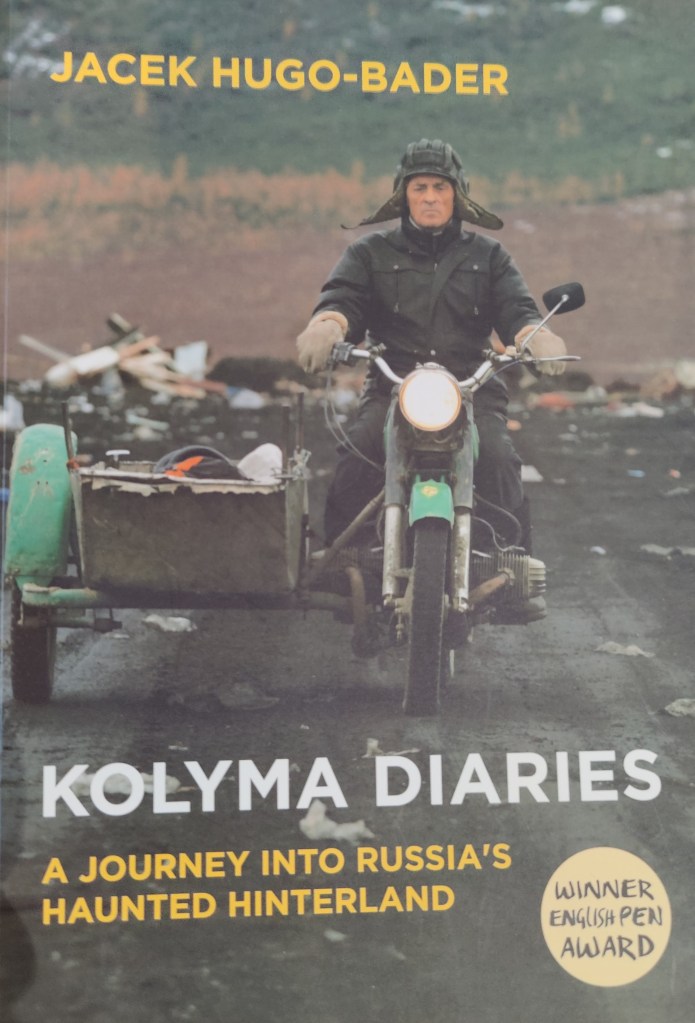
My sister sent me an old copy of Rich Roll’s “Finding Ultra” about an overweight man who turned his life around and became one of the fittest ultra-marathon runners in the world. As much for the appendices on plant-based diet, did I find that book interesting. William Wordsworth’s original travel guide to the Lake District proved oddly relevant centuries after it was written. Having tried and failed to source a copy of Varlam Shalamov’s rare Kolyma Tales, instead I read Hugo Jacek-Bader’s excellent “Kolyma diaries” and “White fever”, about travels in Eastern Russia – startling stuff about a very different world.

I read some science-fiction: Amongst others, Paul McAuley (“The war of maps”), Iain M Banks (“The Algrebraist” – again), an old Keith Laumer novel and two works of the modern writer Adrian Tchaikovsky. Also Heinlein – “Glory Road” (is that even sci-fi??) and “Harsh mistress” as already mentioned. Becky Chambers’ “The Long Way to a Small, Angry Planet” I review here.

I read three books about India: Shashi Tharoor’s (perhaps understandably) bitter and twisted “Inglorious Empire”, William Dalrymple’s account of the East India Company entitled “The Anarchy”, and finally Katie Hickman’s “She-merchants, buccaneers and gentlewomen: British women in India”. All very informative and enabling one to gain a more accurate perspective of world history. The lesson from Shashi Tharoor’s “Inglorious Empire” is that bitterness and negativity, however arguably justifiable, is deeply unattractive.

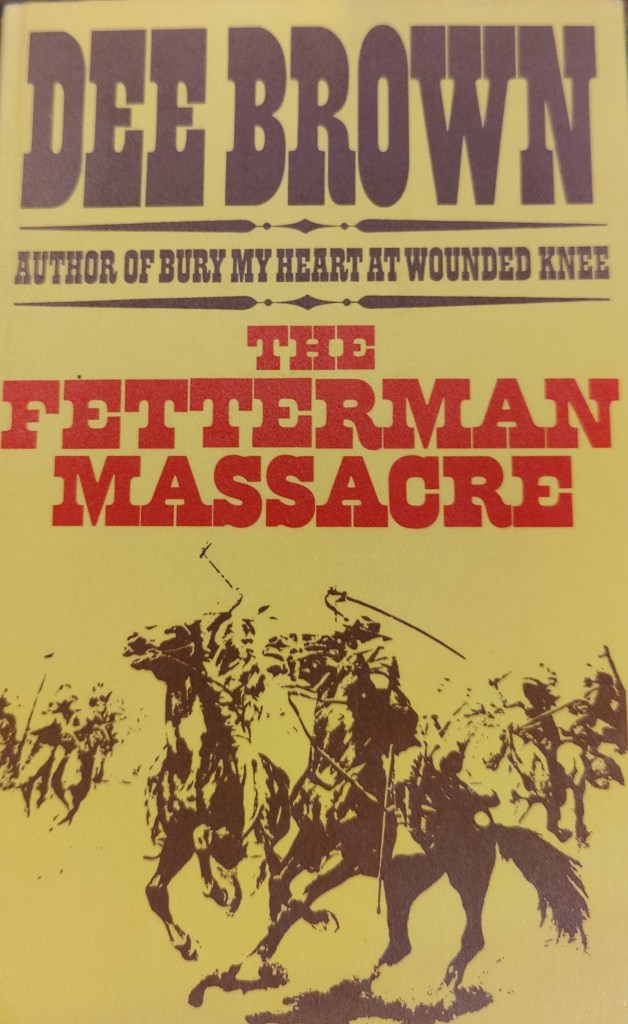
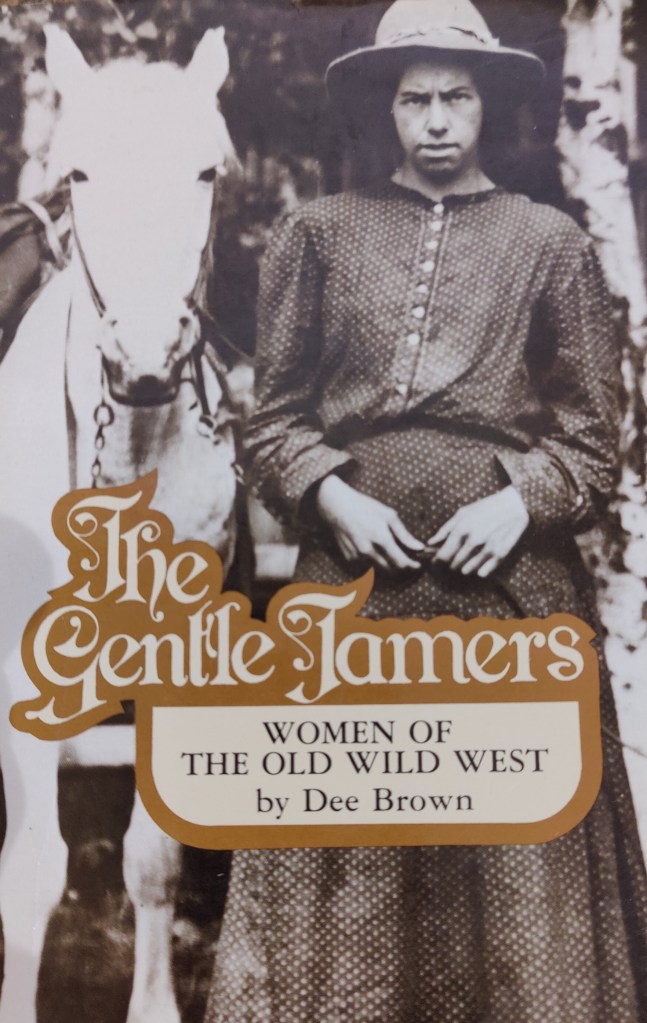
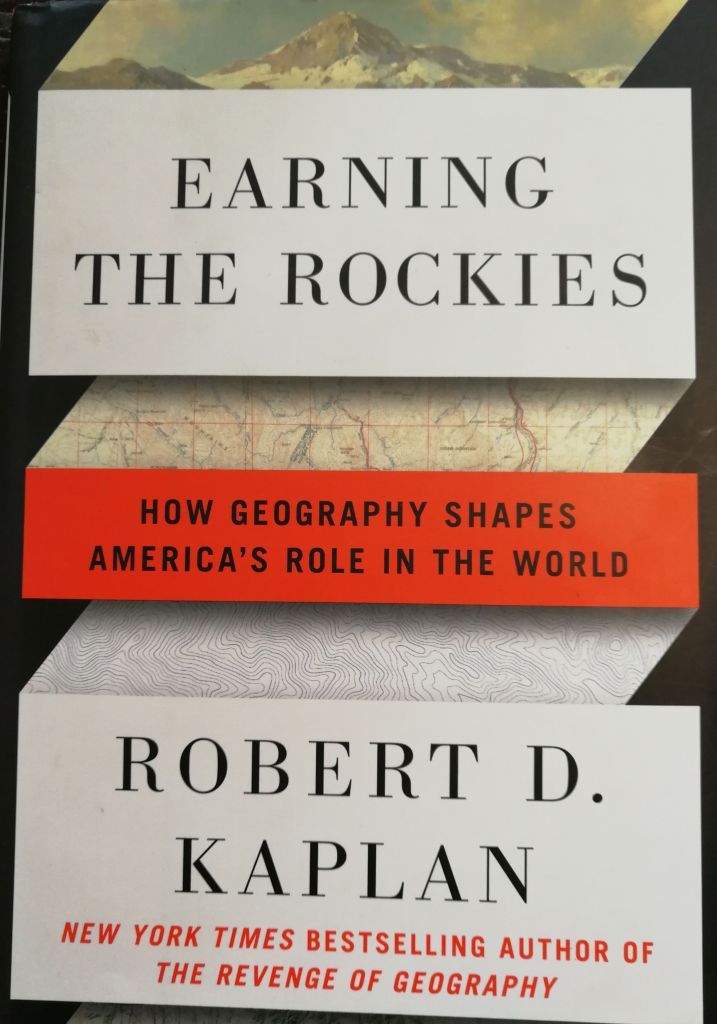
I have read much about America: I am a fan of America. I believe in what America stands for, though it seem to be in trouble in these times and full of vice and failings. Robert Kaplan’s “Earning the Rockies: How Geography Shapes America’s Role in the World”, reviewed here, proved very interesting at the start but perhaps a little disingenous towards the end. A great interest of mine is American history, particularly the westward expansion. I read Bernard Devoto’s; “1846: the year of decision” and John Anthony Caruso’s “The Appalachian Frontier” , was well as several of Dee Brown’s books – one on the Fetterman Massacre, the other on women in the wild west. Dee Brown’s greatest and most famous book, all should read: that is “Bury my heart at Wounded Knee”, an account of the destruction of the native American tribes.

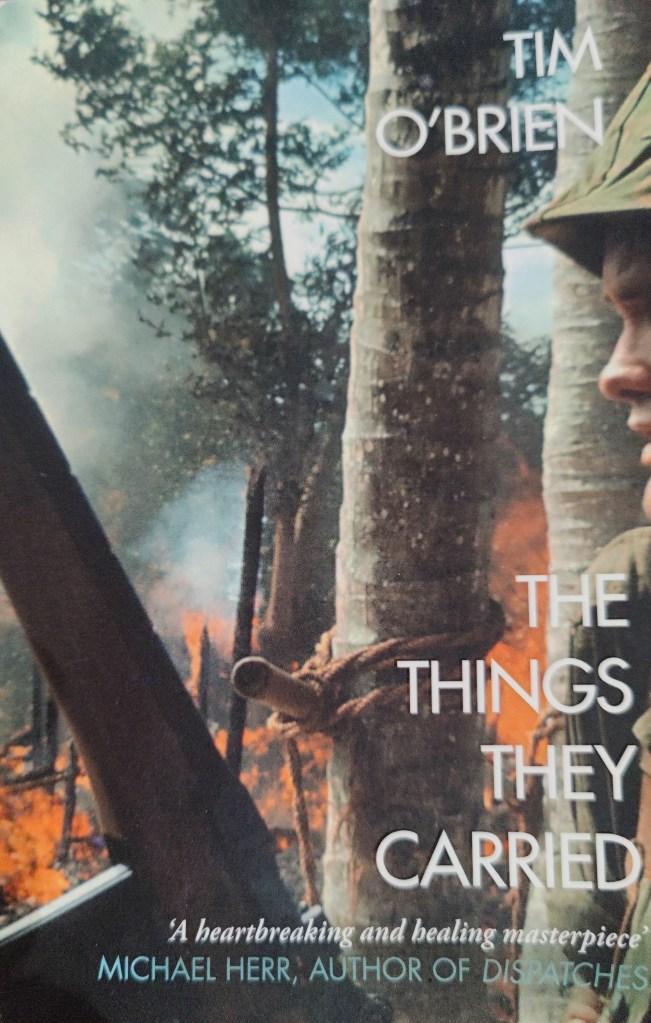
Later in the year I read Tim O’Brien’s “The things they carried” – the Vietnam war as seen through the lens of what soldiers carried with them. One soldier carried a pair of his girlfriend’s tights as a neckscarf, and wore them even after she dumped him. Also, I read Stephen Hough’s “The Great War at sea” – most informative – and Alice Roberts’ “Tamed – ten species that changed our world”. Self-explanatory title there, and rather a lot of detailed biology which I had to skip.

I read Ed Husain’s troubling account of journeys in certain cities in the UK – “Among the mosques”. In order to get published, Ed Husain has to be upbeat and positive about what is happening with Islam in the United Kingdom today, but I find that he can’t possibly be as naive as he comes across in his writing. A deeply worrying travelogue.

Tim Butcher wrote “Blood River”. The age of great explorers, opines one of the reviewers, is not dead. Butcher attempts with only partial success to navigate overland by motorcycle and boat, from the eastern Congo through to the Atlantic coast. The Congo is a messed-up place, and it is deeply messed up for a number of very complicated reasons. It will get worse – much worse. Certain important minerals essential for modern Lithium-ion batteries, required for what some people call “the energy transition”, are most easily sourced in the Congo. In the coming decades the extraction of those minerals, to salve the western conscience and enable electric cars, will do as much damage to Africans in the Congo as King Leopold ever did in his extraction of rubber in the early 20th century.

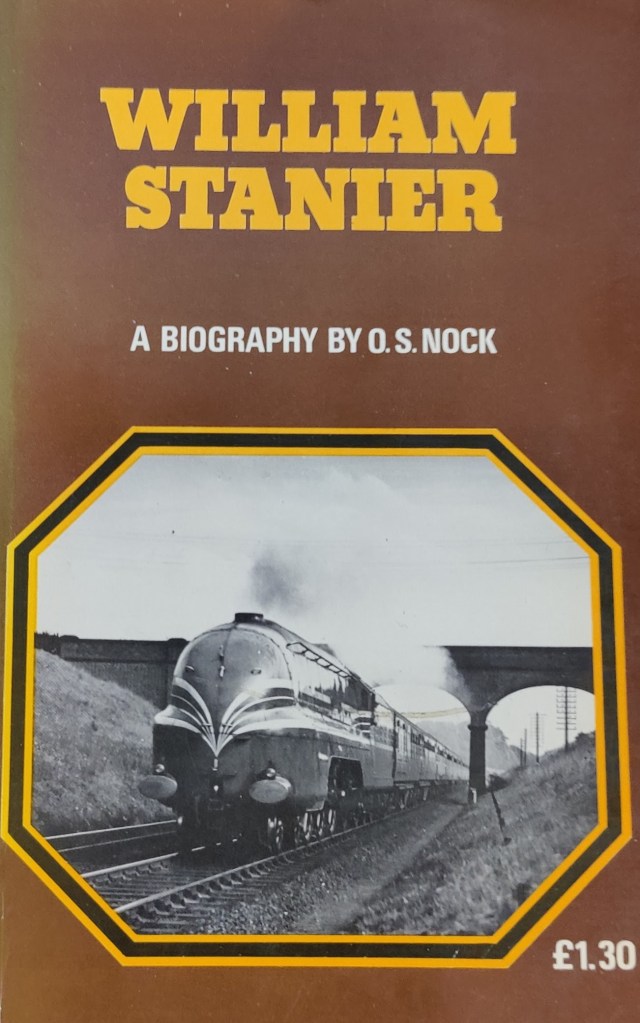
I read a useful and informative biography of Sir William Stanier by the ever-readable and prolific railway author O.S Nock. This one I found in an excellent second-hand bookshop in Bridport. I read Ryzard Kapuchinsky’s “Imperium” about Soviet Russia – including an unforgettable two-page interlude on how to make peach brandy. What drives my reading, is this – not what is in plain view, but what is not. Sometimes something tangential – a fact or anecdote of paramount importance or of deep interest, is almost literally found “in between the lines”.

I ended the year with David Halberstam’s “The Coldest Winter”. This is a brilliant account of the Korean War. Another great Pulitzer prize winning author covering vast sweeps of American culture and history. Though some of the descriptions of battles are a little too detailed for me, what made the book is the wide arc of history, the bigger picture. In a book about Korea, I learned much about the “New Deal” and the life and times of Franklin Roosevelt. I learned about changes to domestic politics in the USA that are still very much of importance today. I learned about McCarthyism, and also about Douglas MacArthur – a horribly fascinating, perhaps deservedly reviled, but nonetheless important 20th century figure. What’s it like to have no self-doubt at all? Lack of self-doubt is not one of my qualities.

Earlier in the year, I chanced across Francis Rossi & Rick Parfitt’s “Just for the record”, being an autobiography of Status Quo. This rock autobiography was a disappointment for me; it was potentially great story written in the most perfunctory manner. You would think that lyricists could write! No, obviously not. One thing I recall though is Rick Parfitt writing of himself as a teenager (when his guitar teacher patronised him) “No-one calls me laddie“. See my point above about lack of self-doubt.

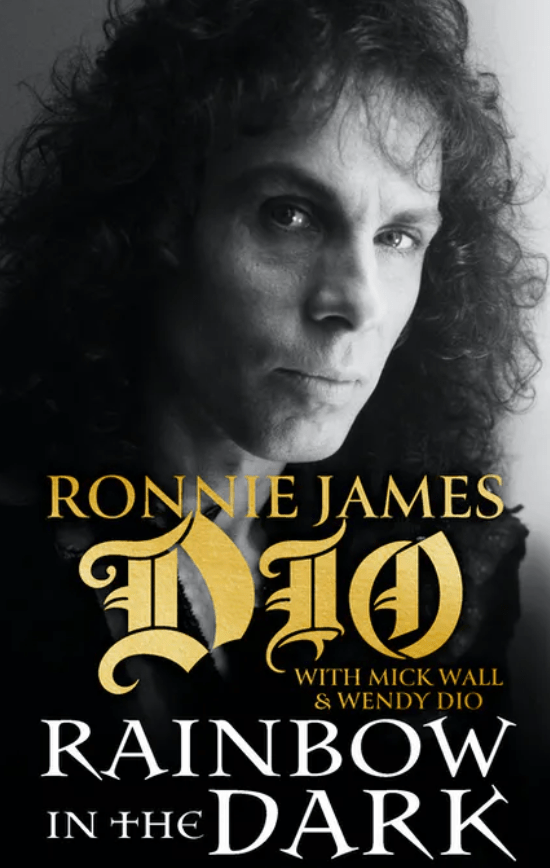
Over Christmas I was given “Rainbow in the dark”, the autobiography of Ronnie James Dio. We learn that as a boy he swore to himself that one day he would headline at Madison Square Garden, in his own name – and he did! A readable enough tale of ambition fulfilled, of the virtues of hard work and persistence, and of some of the other less agreeable habits of rock ‘n roll stars. Reading it, I’d like also to read a biography of the guitarist Ritchie Blackmore, if and when such a book becomes available.

This is for balance, for unfortunately, Dio’s account of those years is somewhat self-serving. It is a shame, for I regard him as a great lyricist, and the distinctive sound of his voice, be it in the heavy metal music of Rainbow, or Black Sabbath, formed a background to my youth.

The full list here:

Chris Anderson The official TED guide to public speaking
Paul McAuley The war of maps
J. H B Bell A Progress in mountaineering
Iain M Banks The Algebraist
Jonathan Nicholls Kittyhawk Down
Murray Rothbard Anatomy of the state
Muhammed Asad The road to Mecca
Robert Winder The Last Wolf: the Hidden Springs of Englishness
Adrian Tchaikovsky Cage of souls
Nicholas Monsarrat The Cruel Sea
C.S Lewis The Great Divorce
Neil Sheehan A bright shining lie
Jacek Hugo-Bader Kolyma Diaries
Rich Roll Finding Ultra
William Wordsworth The Lakes
Keith Laumer Doorstep
Jacek Hugo-Bader White Fever
Shashi Tharoor Inglorious Empire
Robert D. Kaplan Earning the Rockies: How Geography Shapes America’s Role in the World
Ryzard Kapuchinsky Imperium
Dee Brown The Fetterman Massacre
Bernard Werber Empire of the ants
William Smethurst Writing for television
William Dalrymple The Anarchy
Sven Hassel Court Martial
Becky Chambers The Long Way to a Small, Angry Planet
Bernard DeVoto 1846:The year of decision
Len Deighton Blitzkrieg
Dee Brown The Gentle Tamers: Women of the Old Wild West
John Anthony Caruso The Appalachian Frontier
Larry McMurtry Lonesome dove
Larry McMurtry Dead man’s walk
Larry McMurtry Comanche Moon
Francis Rossi & Rick Parfitt Just for the record – autobiography of Status Quo
Michael Bonavia The birth of British Rail
R.A Heinlein Glory Road
R.A Heinlein The moon is a harsh mistress
O.S Nock William Stanier
Katie Hickman She-merchants, buccaneers and gentlewomen: British women in India
Stephen Longstreet War cries on horseback
George Orwell Animal Farm
Ed Husain Among the mosques
Richard Hough The Great War at sea
Tim O’ Brien The things they carried
Tim Butcher Blood River
C.S Lewis That Hideous Strength
O.S Nock The Settle and Carlisle railway
Adrian Tchaikovsky Children of time
Alice Roberts Tamed – ten species that changed our world
Jeff Long Deeper
David Halberstam The coldest winter: America and the Korean war
Ronnie James Dio Rainbow in the dark

A review of “Earning the Rockies”, by Robert D. Kaplan

A review of “Earning the Rockies“, by Robert D. Kaplan

The first Kaplan I read was “To the ends of the earth”, an account of travels through dusty, broken lands. I became a fan of his writing on the instant. This book is about the United States: dusty in places certainly, broken in places perhaps, but vital, he argues, to the future of our world.

It is a book full of quotable truism. “Comparison”, he opines, “is painful and not always polite, but it is at the root of all serious analysis”. This is something we learned in geography in school. Our teacher laboured to teach us the importance of the word “whereas”. Kaplan’s father, a truck driver, gifted Kaplan with what he calls a “cruel objectivity”. This work is neither cruel nor objective. Not a hymn of praise to America, more a reasoned defence of the American imperial project, which he argues, has grown out of the physical geography of the American continent. He seeks to “rediscover what is vital, yet forgotten, what is commonplace, yet overlooked.”

He roots the book in the influential work of an almost forgotten man of American letters, Bernard DeVoto. DeVoto’s understanding of the American West was like Devils Tower, Wyoming, towering over the surrounding plain of knowledge. Kaplan’s book is one whose moral and philosophical heart is west of St Louis, at the one hundredth meridian. It is a book that acknowledges the continuing power and importance of the frontier in American thought. Kaplan has to deal robustly with that depressingly popular school of thought that the settlement and conquest of the American West was just a terrible crime. Those grave injustices can’t be swept aside, of course. They are dealt with very well in such seminal works as Dee Brown’s “Bury my heart at Wounded Knee”, which should be required reading for all students of the American West.

I rather like his travelogue style of writing. His observations of places like Wheeler, West Virginia, and Portsmouth, Ohio, are fascinating commentary about the human condition as well as a discussion of the American psyche. Rather like Neil Sheehan in “A bright shining lie” (reviewed here), he draws attention to the Scots-Irish or “redneck” heritage, noting that “America as a democracy has a highly developed warrior ethos”. Americans are a fighting people, he suggests. Civil society in the USA has a far closer and more respectful relationship with the military than you’ll find elsewhere in the world.

Of the politeness found throughout the United States, particularly perhaps in the South and in the Mid-west, he suggests that it is just politeness – it goes no further than that. He writes that we must not confuse politeness with hospitality, such as that found in the Middle East or in Africa. Hospitality helps social stability, he writes, but politeness helps efficiency and production.

His road journey is completed at San Diego when he reaches the Pacific and sees the gathered grey hulls of the U.S Navy. At that point he does get a little misty-eyed, like Natalie Merchant’s youthful soldier in her song “Gun shy”:

So now does your heart pitter pat with a patriotic song
When you see the stripes of Old Glory waving?

The final third of the book seems quite distinct from the rest, and was not quite as readable – although still interesting. The mordant pen of an observant and humane travel journalist is gone. It is replaced by that of the geopolitical analyst with a distinct, refreshing, and quite understandable bias for, and love of, the United States of America. Modern left-wing liberal culture, particularly in western Europe and in the UK, does tend to be dismissive of the USA.

He does mis-step on occasion and say some odd things. To describe Israel, the Baltic states and Taiwan as “robust, venerable and iconic democracies” (as he does on page 136 of my copy) is pushing it a bit, to say the least! But mostly he is right on the money, as when he writes that the European Union, and globalisation itself, would be impossible to contemplate without the “overarching fact of American power“. That’s the plain truth, if an unpalatable truth to some. The bill for defence of western Europe, from Pearl Harbor down to the present day, has been paid for by American taxpayers and in American lives. Because the Americans have 300 warships, the Royal Navy can get away with a few dozen. European nations are able to spend as little as 1-2% of their GDP on defence, primarily because the Americans spend twice that much.

A note on sustainability: he notes in one place that California and the great cities of the American southwest, use the water of the Colorado River in a wasteful, unsustainable way. In another place, he notes that most European countries maintain an unsustainable level of social welfare, broadly made possible because of American power. It’s the juxtaposition here that interests me. These two unsustainable practices may be connected or linked in some way. There’s no maybe about the fact that both will change.

What would America and the world look like today had the continent been settled eastwards from what is now California, rather than westward from the water-rich Thirteen Colonies in the east? Or if the USA had never existed at all? Or if the United States ceased to exist? Not many writers have dared to even think about that last. The continuance and survival of the USA is not inevitable.

The travelogue in the first part of the book is deftly observed and humane. The second part, his analysis of world order as seen from San Diego, is more partisan and more complex to read and understand. In places I don’t agree with his analysis and in places it is arguably disingenuous.

Kaplan’s central premise is that the world needs the USA, and that the USA is an exceptional country with exceptional, even imperial, responsibilities on the world stage. He argues that the reasons for that derive from the physical geography of the American continent – there is no other like it. Similar conclusions are drawn, on a more general basis, by Tim Marshall in his excellent book “Prisoners of Geography”.

This is a book about America, for Americans, and America-phobes need not pick it up. Their view, in the end, is not sought. “Finding the Rockies” was very interesting, very readable, clear sighted and instructive – one of the best books I’ve read this year.

Some notes on the late Tom Bingham’s “The Rule of Law”

I bought this book some years ago in a bookshop near Westminster station, after an oddly encouraging and uplifting visit to Parliament, to have a tour round and tea with an MP (who will have to remain nameless). We won the tour and tea at a raffle at a village fete in the midlands.

“All persons and authorities within the state, whether public or private, should be bound by, and entitled to the benefit of, laws publicly made, taking effect (in general) in the future and publicly administered in the courts”

This, he argues, is the core principle of the rule of law – that is, that everyone is bound by and subject to, the same law, and everyone is entitled to the benefit of that same law. 

The law should be publicly known – that is, it can’t be secret or hidden.  You might need to be a lawyer to know it at all well – but the basic principles and the full text of the law should be freely available to all people at all times. The state and it’s agents can’t just make up crimes, offences or law as they go along. Nor can the law be kept secret: it should be known what is, and what is not, against the law.

The law should be dispensed or administered in courts of law that are public rather than in private. Trials should be held in public and reporters and interested parties should be allowed to witness what is happening. There should be no secret trials – though this principle can be challenged in certain circumstances such as national security, or when dealing with copyright matters, or in divorce courts.

The law applies in general to the future – what this means is, you can’t be prosecuted for something that was not against the law at the time of the alleged offence. The state can’t make something in the past retroactively against the law: you can’t – or oughtn’t –  criminalize the past. To me this is important, because doing just that – criminalizing or demonizing past behaviour –  has become a common practice in our society today.

Tom Bingham quotes someone called Dicey:

  • No person is punishable or can be lawfully made to suffer in body or goods unless there is a breach of the law established in the ordinary courts.

That is, everyone should be free from arbitrary or random treatment of any kind whatsoever, unless they have broken a law which was already known about at the time of the offence. You can’t just be imprisoned, or your property confiscated, because you offended someone powerful. That of course may well happen to you even here in the UK – but because there is generally respect for the rule of law, you would be able to bring the case to court. There are plenty of big important countries where doing that would be a waste of time or worse.

A side-effect of this principle is that you can’t be treated in an arbitrary way by anyone – much less the state or it’s representatives. If someone assaults you in the street, or someone refuses to trade with you because of your ethnicity, or someone breaks your windows or harasses your family – you can take them to court, because all these things are forbidden in law that is known and respected now.  

  • No-one is above the law – the law is above all persons and all authorities.

The same law applies to the Queen, the Prime Minister, captains of industry, the richest and most powerful in the land, as applies to those who sleep rough in the streets. This is another vital principle – that no-one is above the law. It can be quite hard to understand. King Charles I asked his Lord Chancellor to do something, and that man declined to do what the King asked, as it was against the law. The King replied that HE, as King, was above the law. The Lord Chancellor replied, “But I, Sire, am not”.  But if no-one is above the law, who then can make law?

  • The constitution springs from precedent and case law, not vice-versa.

This is subtle; it means to me that the law springs UPWARDS from the people, not DOWNWARD from the state. (This may be a peculiarity of English Common Law not applicable in Europe.) Who then, makes the law? An agreed body of elected people, representing the wider population, have the authority to make the law – a parliament. The authority to make law ultimately springs from the people who voted them in. This body is called the legislature. The law is administered, interpreted and applied by judges and magistrates – the judiciary. They do not enforce or execute the law – this is done by the executive. In the UK though the Monarch in theory has executive power, in practice the Executive is the Prime Minister and the Cabinet – informally known in the media as “the government”.

Habeus Corpus: This Latin expression means “have a body” and a “writ of habeus corpus” means a legal requirement to demonstrate in court whether you are or not holding any given person or persons, as a prisoner. The principle effectively prevents imprisonment without trial, and renders it very difficult for the state to cause people to just “disappear” overnight with no explanation (as in Nazi Germany, Stalin’s Russia and diverse other locations.)

Bingham argues that a writ of habeus corpus can be issued for someone arguably illegally committed to a mental hospital – “sectioned” as we say today. I argue that this is important, for having someone confined as insane or a danger to themselves and others under the Mental Health Act is an obvious way to imprison someone without trial.

Reasonableness

A side-effect of the rule of law is that where the law is concerned, there can be no black and white, nor absolute right and wrong. Two people can be take opposite views and yet both be right.  There can be no sacred cows. Bingham writes:

  • Two reasonable persons can perfectly reasonably come to opposite conclusions on the same set of facts without forfeiting their title to be regarded as reasonable
  • Not every reasonable exercise of judgement is right
  • Not every mistaken exercise of judgement is unreasonable

An “inescapable consequence”, he  goes on, “of living in a state governed by the rule of law” is that judges can and will challenge the (legality of) decisions made by the government and (sometimes) they will be successful in those challenges. He notes “there are countries where all judicial decisions find favour with the powers that be” but none of us would wish to live in such places.

Terrorism

He quotes Cicero: SALUS POPULI SUPREMA EST LEX which is translated into English as, “the security of the people is the supreme law”.  He notes John Selden (1584-1654) who said “there is no thing in the world more abused than this [Cicero’s] sentence.” As Bingham himself notes, it was Benjamin Franklin who said “he who would put security before liberty deserves neither”.

I take Selden’s view and Franklin’s view: Cicero was quite wrong. If you’ve done nothing wrong, you have MUCH to fear. Be afraid: be very afraid.

Bingham writes “we cannot commend our society to others by departing from the fundamental standards which make it worthy of recommendation”.

As with much of these Bingham quotes, it is well to say it out loud several times, keep it on your tongue and savour the taste and sound. He says that by relaxing or removing those hard-won civil liberties, we become no better than the terrorists themselves. We cannot and ought not “fight fire with fire”.

All of this seems particularly apposite at present when in the last nine months, in defence of the NHS, we have tossed aside civil liberties that date back centuries. I could wish that in the next 10-15 years we will see the Coronavirus Act 2020 repealed, but I don’t see it as likely. Far from it: I foresee a time when negative public criticism of the restrictions on our civil liberties – designed as they are with the best of intentions – may be treated as public order offences.

A review of “The divided country” by Michael Anthony

A review of “The divided country” by Michael Anthony

I was given a copy of this book by a family friend. She may have bought her copy direct from the author, for we read in the endpapers that Michael Anthony lives at Melbourne in Derbyshire, only miles from where our friends live in the big-sky country of the Trent Valley. The cover of the paperback has a drawing of a little African girl drawing the title of the book on the wall.

I had no expectations other than the recommendation of my friend, which was enough. I was not disappointed. The author covers a tremendous amount of ground. The action moves from Ulster during the Troubles, to South Africa in the time of apartheid, and on through to the modern era. We move from seeing things from the viewpoint of the Catholic Irish in Ulster, to seeing the position of native black and coloured Africans in the rural Transvaal, during the time of apartheid. SPOILER ALERT: Feel free to stop here if you don’t want the plot revealing!

The author is a former special forces soldier and will have seen and done much. Experience always illuminates good writing. We start, following a rough Belfast childhood, with the IRA’s guerilla war in the cold, damp darkness of Ulster in the 1970’s. Very “Harry’s Game” – there’s even a Catholic priest working toward the spiritual and practical support of the IRA. On that note, this would make an excellent film.

The action moves from the Emerald Isle to the Transvaal – a place not unlike Ulster in that it was fast stuck in the deep-rooted hatred, bigotry and intransigence of a Protestant overlordship. The story continues, skipping lightly over years, until suddenly, something dramatic happens. Then, there is a moment when you hear the sound of “lock and load” and you think the book is going to descend into traditional “lone wolf military hero takes on the baddies and wins” territory – as have a hundred lesser books and films.

But it never happens! Interestingly, the author puts some words into the mouth of a senior IRA officer, describing our hero thus: “he does not operate within the parameters of predictability”. I paused at that point to stare into space: do I act within “the parameters of predictability”? Am I predictable? Of course I am. For me and for most of us, it is no weakness to be predictable. But for the professional guerilla soldier, being predictable is death. For such people, to be unpredictable is an essential strength. Michael Anthony’s novel has this strength. It take unpredictable turns. The author does not always “operate within the parameters of predictability”.

From a moment of wild violence, to a court room drama – our hero ends up in prison. And you think, he’ll be out soon. But again, this is not a predictable book. It does not become a prison memoir, and he is not released. In the turn of a page, nineteen years have passed and our hero is a white-haired old man whose life has been spent in hard labour. I’ve not even mentioned the little girl on the cover of the book yet! She plays a central role. I will say this and no more: I mentioned “Harry’s Game” earlier; in Gerald Seymour novels, the hero always dies before the end…

The book covers the indomitability of the human spirit and shows human courage unto death. We see the deep-rooted nastiness and hatred that can arise when things turn sour for generations without end, even for centuries – as in Ireland, as in South Africa, as in the Balkans and elsewhere. Whilst this was an excellent and captivating read, in the end, I thought the author kept redemption and reconciliation under tight control. I think redemption needs letting loose – it cannot be kept in or caged.

Arundel

We started out with brunch in an Italian cafe. For her, some very sweet waffles. For me, a sausage bap but the sausages were from a boar. Tasty. Then, a short tour round in the summer sunshine. To my eye Arundel resembles Uckfield with its steep main street and pleasant buildings. It’s nearly all cafes and restaurants, though we did find an actual grocer trading on one side-street. And there were antique shops, which is always a good thing when we’re out together.

Thence to Arundel Castle, which I found eye-opening and not entirely refreshing. Whilst it is in superficial appearance a Norman castle, the majority of it is Victorian. It is, rather like Bamburgh Castle in Northumberland, something of a reconstruction, a Victorian ideal of what a Norman castle should be like. That may be a little unfair, but only a little. Both had been “real” castles back in the day. Both, interestingly enough, were reduced during the Civil War. Bamburgh by artillery, Arundel, by siege and thirst. The Parliamentarian besiegers cut off the water supply – game over, as they say. Surprising to find the Royalists held out for so long – for 18 days.

Arundel is a centre of Roman Catholicism. The large and very French looking cathedral church in the town is not Anglican but the seat of the Roman diocese of Arundel. The owner of the castle is the Duke of Arundel, also known as the Duke of Norfolk. I already knew that Norfolk was a Catholic peer, and also the most senior nobleman in England. What I learned today was that the Duke of Norfolk is also the hereditary Earl Marshal of England. It is he to whom would fall the burden of organising the Queen’s funeral and the coronation of her successor. It is fascinating to me that right at the heart of the ceremonial State, right next to the Crown, to a protestant monarch, you find this high Catholic nobleman.

Going round this home of a Catholic peer, this tremendous castle, made me feel very Protestant. I recall a time some years ago when I was sat one lunchtime praying in Westminster Cathedral, and the priest started talking about the uniqueness of the virgin Mary, and I found I had to get up and walk out – I just could not be doing with listening to such stuff. I didn’t realise how deeply Protestant I was until thrown into that Catholic environment. It’s not sectarian hatred – there’s no orange and green with me. It’s just doctrinal differences. I’m aware that in writing this I may set myself up for “POT/KETTLE/BLACK” responses…

The other clear learning from the visit – though I knew it in my heart – is that had I lived in the English Civil War, I would have taken the Roundhead or Parliamentary side – at least in the war itself. But I am no fan of the coup, overthrow of parliament and military dictatorship that followed the Civil War, nor any respecter of Cromwell’s memory. He has so much to answer for in England and Scotland, to say nothing of the lasting damage he did in Ireland. Some years back in less stable parts of the world than ours, there was a spate of politically motivated toppling of statues. I’d nominate the statue of Cromwell in London: not for toppling of course, but perhaps for egging, or some of that horrible string that squirts from a can – or perhaps a student to put a traffic cone on his head.

History has much to teach us; we miss much by forgetting the fact that we are deeply shaped and moulded as a people over centuries. You want to understand the EU? Study the second world war. Where did the Troubles come from? Learn about Cromwell and even further back into Irish history. It’s worth going back and remembering that the Catholic/Protestant divide in the 17th century was as much about who was in charge, about state power, as it was about religion. The superpowers of the day were underpinned by these ideologies, even as in our youth, they were underpinned by Communism and Capitalism. Then, as now, we ask: who is in charge? A leader, a hereditary King, or an elected Parliament? Who should be in charge? And should they who are in charge account for themselves to the common people? Do we follow the status quo and leave things as they were, or do we embrace change? These were and of course are, vital questions. That most of the answers to these questions seem obvious, and come easily to the mind, does not mean that it will always be so. We should take nothing for granted.

A review of “Collapse”, by Jared Diamond

A review of “Collapse”, by Jared Diamond

“The past”, writes Jared Diamond, “offers us a rich database from which we can learn, in order that we may keep on succeeding”. This is powerful truth and it is one of the reasons why I keep a journal. R.A Heinlein writes of people uninterested in their historical background that “a generation without a past is a generation without a future“. George Orwell tells us, more bluntly, that “he who controls the past, controls the future“. All of this points to the fact that we can and should learn from the past, as individuals and collectively, as a society or a culture. Jared Diamond’s book bring us lessons on how societies and cultures collapsed, or survived, and draws some broad conclusions for our time.

Starting with a perhaps counter-intuitive look at the potential problems faced by modern Montana, he goes on to look at a number of cultures the collapses of which we may all be aware of, and examines in some detail why those societies failed. The Anazazi Indians of the American southwest; the Maya. The island settlements in the Pacific – Easter Island. The Norse settlements in Greenland and on the North American continent.

He then moves on from consideration of those collapsed ancient societies, to consider some modern cultures which may or may not be facing collapse: Why are some in great shape, why are some in crisis? Papua New Guinea. Modern Australia. Haiti and the Dominican Republic – two widely differing cultures on the same island. If there is any conclusion to be drawn here, it is that there is no sound-bite solution, no quick or straightforward answer, but instead, case-by-case complexity and nuance.

The Anazazi in Chaco Canyon grew crops in multiple locations and then distributed it, ostensibly (but probably not) equally. In describing this he artlessly demolishes command economics or the economics of state-sponsored redistribution of wealth. The risk of redistribution is that “it required a complex political and social system to integrate activities between different sites”, and “lots of people ended up starving to death when that complex system collapsed”. This is an inherent problem with command economics: when a planned economy goes wrong, thousands or even millions of people end up starving to death – as in Bengal in 1770 in the days of the East India Company, as under Stalin in the Ukraine in the 1930’s, and as in Ethiopia in the 1980’s. When a market economy goes wrong, there may be widespread malnutrition, but there won’t be mass starvation. It’d be interesting to see how many people actually starved during the Great Depression – but you may be sure it won’t be many.

Moving onto some success stories, he spends some time discussing an area he does know something about, the Highlands of Papua New Guinea. Here we have a culture that has embraced innovation, a culture that has found it necessary to abandon conservatism or resistance to change. Conservatism though, he argues, comes from being on the edge, facing a survival situation. We dare not change things, if changing things pushes us over the edge to destruction. And yet, the adaptable highland tribal people of PNG have done just that – embraced change, done things differently, and not only survived but have prospered. In contrast he notes that the Norse settlements in Greenland ultimately failed (though climate change was also a causal factor) because of conservatism – what worked in Norway, should work in Greenland: but it didn’t. The differences were subtle and complex, and were difficult to understand or comprehend given the knowledge and technology of the time.

Is “progress” sustainable at all? He notes that Inuit hunter-gatherers lasted 500 years in Greenland. But aboriginal hunter-gatherers in Australia lasted 40,000 years. What’s the difference? Is “progress” itself a bad thing? Me personally, I don’t think it is. I don’t think a culture that doesn’t change or grow is healthy at all. That’s as true for hunter-gatherers as it was for the more advanced Roman state which remained at broadly the same technical level for a thousand years. Underlying all of this discussion is the importance of engaged, enthusiastic and committed citizens, insightful and courageous leaders, and a willingness to look at the bigger picture and think about the long term.

Diamond draws some thought-provoking conclusions, some of which are truism, to a degree; others, less obvious and more challenging to me. He suggests that we need to challenge our deeply held core beliefs – some of them are compatible with the survival of society; some of them, have to be given up in order to survive. As true for individuals as for cultures.

More challenging though, “in all politically complex human societies in which people encounter other individuals with whom they have no ties of family or clan relationship, government regulation has arisen precisely because it was found to be necessary for the enforcement of moral principles”. This is about what he calls the “tragedy of the commons” – people in general do not behave in a way that prospers the common good, but in a way that prospers them as individuals. But there is always a “commons”; we need the common good. Therefore – though it break my heart to write it – I have to acknowledge that it IS the job of the State to make men moral.

In the end, Diamond is hopeful. He argues that (in our market economy) it is the PUBLIC – the customers – and not the State, and not businesses or corporations, who have the ultimate power to change the behaviour of businesses and ensure we move forward in a sustainable way.

A review of “The Pigeon Tunnels”, by John le Carre

A review of “The Pigeon Tunnels”, by John le Carre

I was at the same time inspired and daunted by “The Pigeon Tunnels”. It’s a kind of autobiographical work, consisting of a series of short essays, just a few thousand words each. The essays detail some of the people he has met, and the places he has been, as a world-famous writer, researching novels in trouble spots; hob-nobbing with the great and the good; burying old ghosts. Inspired – because a thousand-word essay, almost anyone can write. Daunted, because le Carre’s craft, and his connections and background, both seem miles from my own.

For someone like me who comes from dust, out of a comprehensive school/polytechnic background, he makes little of his own patrician roots. For this I am thankful. But it is clear that many of his heroes are in fact he, or possibly, more likely, his father. That said, le Carre does note (of the writer’s trade) that at some point, you have to get out and meet people – stories come from people, and the people are out in the world.

In an account (“In deep cover”) of burying an old Cold Warrior, some old spy, he speaks well of the Cold War infiltration of subversive groups. But he writes that he is ostensibly repelled by such infiltration today, arguing that it is not justified. I think this is disingenous. But then, later, in “Son of the author’s father”, le Carre writes about “the writer as conman“. He describes the similarity between himself (a successful writer) and his father (a successful conman) relating the two arts – that of conman and writer.

The writer and the conman:

  • Spin stories out of the air, from nothing
  • Sketch characters that do not exist
  • Paint golden opportunity where none exist
  • Blind you with bogus detail
  • Clarify knotty points
  • Withhold great secrets
  • Whisper those same secrets in your ear

This chapter on his father Ronnie is as moving and as revelatory a chapter as ever I have read, and was most enlightening. How far from my own experience. I have been a very different kind of father, and my own father, though perhaps not much more flawed than I, a very different kind of man again.

I always used to say of his writing, you could read a dozen early John Le Carre novels, and you would learn little or nothing about the writer’s own personal politics. You need read only a dozen or so pages of a Tom Clancy “Patrick Ryan” novel to know his. But that’s not true of his later, post-Cold War material – stuff like “Our kind of Traitor”, where his politics – and his anger – almost boils off the page.

Writing about documenting and reporting on the horror of the Eastern Congo, he says that “cameras don’t work for me. When I write a note, my memory stores the thought. When I take a picture, the camera steals my job”. This is important. The writer paints pictures with words: the camera exists; it cannot be un-invented. But just as pen and paper render memory less necessary, even as GPS erodes our innate sense of direction, and even as wristwatches mean we no longer need a sense of time or duration, so the rise of the universal camera is making the written story rarer and harder to create.

A history of violence in England – a review of a book by James Sharpe

A review of “A fiery and furious people – a history of violence in England”, by James Sharpe

Take that! Blam! And that!! Oww!!

I saw this title a good few years ago and I thought, that’s one for me, that’ll be interesting. Are we English violent? Are we more violent than other races? Is it our Anglo-Saxon or Norse heritage? The Duke of Wellington famously said of his own troops that they were the “scum of the earth”, and it is possible that propensity to violence does make for good soldiers. One feels that crossing the street to avoid soldiers need not be completely unnecessary. The purpose of soldiers, after all, is to visit physical violence on others, hopefully, but not always, other soldiers.

James Sharpe traces the social, cultural and legal history of violence from the Middle Ages to the present. It’s mostly readable, although there were a few sections I had to skip, particularly the section about serial killers. Not because I’m particularly squeamish, but because the work in those places was in danger of being about crime and legislation, rather than violence per se. That said, you can’t today discuss violence without discussing crime and punishment, and that, of itself, is an important finding of the book. What passes for violence has changed through the ages. The degree and type of violence that the common people, the law, and indeed the State, will accept or put up with, and where the line is to be drawn, has changed much over time.

Sharpe has chapters on various themes, as well as moving in a logical way from the past to the present. He covers violence in the middle ages, where he draws in the influence of the Norman French feudal aristocracy and the effect of the concept of “Chivalry”. He covers dueling, and domestic violence, rape and sexual violence, and also serial killers. Of families, he notes: “It was only as feudalism succumbed to capitalism, and a traditional, community-based kinship dominated society started to give way to one in which individuals began to come to the fore, that the family as we understand it today, emerged”

He does note that most (although not all) violence is visited by men, and mostly, to be fair, on other men. It is men who are violent. Aggression plays a part. I’m reminded of Sebastian Junger’s excellent book “War”, about the young men fighting in Afghanistan. Here, we read of the importance, particularly for young men, not of war as such, but of combat. Most men understand this instinctively, even if today, that combat is no longer always physical.

Alas, he does not mention the story quoted I think by Churchill, that the Venetian Ambasssador was so intimidated by the physical presence of Henry VIII that whenever he was in that king’s presence, he never stopped worrying that the king would actually lay hands on him and do him violence.

Several more important conclusions are drawn. We should be careful of the danger of reading too much into crime statistics (or any statistics). Reporting of violent crime is not the same as violent crime. An example of this is the suggestion (reasonable certainty, really) that some police forces today – as in the past – do not have the funding to prosecute as many violent criminals as they otherwise ought – which will affect crime figures. Prosecuting people is expensive. Another: our world and the people in it are very much more complicated than it would appear from social media or from the pages of the Daily Mail. The nature of violence is changing; I don’t think it is getting less, although our tolerance of casual violence is lower than it was – just as it should be.

We come into a world now where social violence – trolling, online bullying etc – may need much more tightly regulating: because who needs a judge and jury when you’ve got Facebook?

From the Gulag to the Killing Fields – notes on Totalitarianism

A few musings on totalitarianism, brought on by a work-related visit to Vietnam. I have juxtaposed this with a recent re-reading of Orwell’s “1984”. I read a lot of books at once, mind, and I am also ploughing my way through a collection called “From the Gulag to the Killing Fields: Personal Accounts of Political Violence and Repression in Communist States”. It has been put together by an academic called Paul Hollander, himself a victim of the political violence of the Hungarian uprising of 1956. It’s certainly not bedtime reading. It makes uncomfortable reading for me, much less for anyone with remotely left-wing sensibilities. We tend to look at Russia and China as the worst offenders in terms of the sheer volume and quantity of communist political oppression and violence, and this book tends to support that view. But reading books these upsetting personal stories, other places take the record for sheer horror and human tragedy (Cambodia and Vietnam). For the ill-treatment of political prisoners, I’d look at Cuba, where there was a peculiar and toxic mixture of Latin machismo and the malevolent foolishness of Marxism.

It never fails to be a pleasant surprise to me that books like this collection are in print in the UK at all. It is not beyond the bounds of darkest fantasy that a time will come for the UK when having a copy of such a book could put someone at risk of being sent to prison.

It’s always good to pick up a few points from Orwell. His character “Bernstein” who ostensibly writes the “book within the book” plot device allowing Orwell to lecture us on totalitarianism, says that the rise of machines has, “by producing wealth which is sometimes impossible not to distribute”, led to an increase in average living standards. Our standard of living has indeed improved from the early 20th century (earlier really) until now, and should continue to improve all this century. This is not politics, nor economics, but technology – the rise of machines. Orwell notes that “an all-round increase in wealth threatens a hierarchical society” and “A hierarchical society is only possible on the basis of poverty and ignorance”. Amen. This truth lies at the very heart of “1984”, and at the heart of opposition to technology for it’s own sake. Opposition to “machines taking over men’s jobs” is at heart a desire for order and hierarchy, a vote for the established order, an endorsement of the status quo. And I believe the status quo is almost invariably worth upsetting. Technology and machines, of themselves, create wealth and hence threaten the status quo in hierarchical societies.

Extraordinary complexity

We live in times of extraordinary complexity. Perhaps it was ever thus: were there ever truly simple and straightforward times? Yet, our willingness and our ability to discern complexity is under attack as never before. It is under attack from social media; it is under attack from the rise in sentimentality we’ve seen over this last twenty years or so, and it is under attack because of the fashion for hyperbole and over-statement.

The deplorable rise of “spin” – the use of language to conceal, obscure or divert people from the facts – has much to answer for.  The use of carefully chosen, politically charged, and nuanced phrasing, has, paradoxically, eroded our capability to discern nuance.

We look back at events like the Great War, and perhaps see simple causes, straightforward effects, obvious and clear protagonists and antagonists.  We view such events through the simple lens of modern thinking.  Cliches such as “senseless slaughter” come to our lips; we take off our hats, and rightly, spend a moment in silence to remember the fallen. 

But it was never that simple: that war was no simple struggle between good and evil, nor even a titanic battle between two great empires, the British and the Austro-Hungarian.  Britain, even the British Empire, was part of an alliance, and not even the senior partner at that.   

And then, consider what else was happening at the same time as the Great War.  The struggle for female emancipation and women’s suffrage.  The Easter Rising and the struggle for independence in Ireland.  The Russian revolution.  The technical innovation happening as a result of the war; the changing relationship between the New World and the Old.  

All of it points to a time of complexity to which we don’t do justice by over-simplifying what happened. It is not less true today.  I’m minded to reflect on our shortening attention span.  My boss wants 3-5 bullet points, size 21 font, one slide in Microsoft PowerPoint – just the salient facts to present to the Board.  In the second war,  Churchill reputedly turned to his underlings and asked them to provide for him a “report on the current state of the Royal Navy – on one side of a sheet of paper”.  As writers we do have a duty to keep things simple, to use short words, sentences and paragraphs, and to cut out unnecessary waffle. There is a case for simplicity – but we have made the case for simplicity our idol. 

How are we going to comment meaningfully and profitably on the hideous complexity through which we are now living? Three bullet points won’t cover Brexit nor explain the reasons for and against it.  One side of a sheet of paper may not cover the reasons for our changing culture.  A few photographs will not explain the balance of power between the West, China and Russia.  The job of the commentator is made doubly difficult by the fact that everyday folk have lost interest in complexity.  Today we have Twitter and Instagram – but think of the walls of text in a Victorian newspaper.  Today we want to see things reduced to three bullet points, the sound bite, the black and white. We want to see the spectacle of wrong and right, of bread and circuses.  Who needs a judge and jury when you’ve got Facebook?

Jet: when Britain ruled the skies

Nostalgic, sentimental, patriotic, a little gushing, perhaps. These programmes are redeemed, for me, by the presence of Lord Tebbit. Tebbit is one of the few politicians who actually worked for a living before going into politics. We’ll learn a lot by him; when he goes, we shall not see his like again.

These programmes look back at the UK’s all too brief period of air supremacy in the ten years or so after the second war. It can be exemplified, distilled, as it were, by that image of a Vulcan bomber flying alongside a Lancaster. Two Avro machines, separated in design by a dozen years at best, but worlds apart. One, a creation of the late Thirties, the other, of the Atomic age.

We might look back on that period in the early 1950’s with a sense of wonder and not a little unbelief. From the end of rationing, until Suez, something golden was happening. A short renaissance of Empire, perhaps. A final gleam of sunshine out from under lowering clouds. A last fling of power; a final throw of the dice. We might well look back and feel justified in saying, hell, what went wrong? The historians might give a blunt one-word answer: Suez. But, it might just be a little bit more complicated than that.

Notwithstanding that potential complexity, it’s fair to say that our embarrassing failure at Suez was a milestone in the fall of the British Empire. After Suez, post-Imperial Stygian gloom. Before Suez, you might have kidded yourself, were you thus inclined, that the British Empire and it’s Commonwealth might have endured.

Directions were taken in those years that might have been otherwise. Were there really “cusp”points in those years? Could it have been different? Given the financial and economic reality – the Marshall Plan – post WWII, it seems unlikely.

But what, they built some magnificent flying machines.